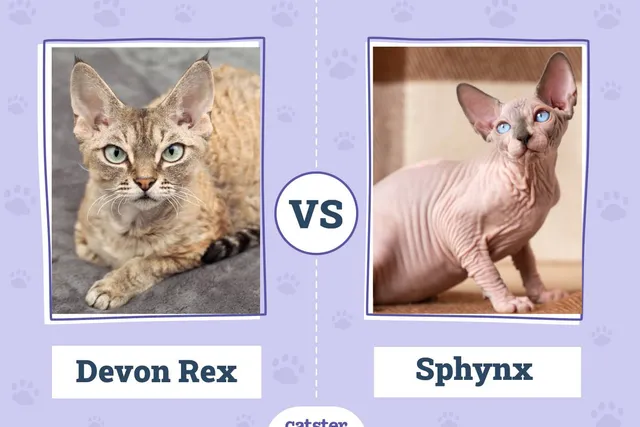
Cornish Rex vs. Sphynx: Differences Explained (With Pictures)


In this article
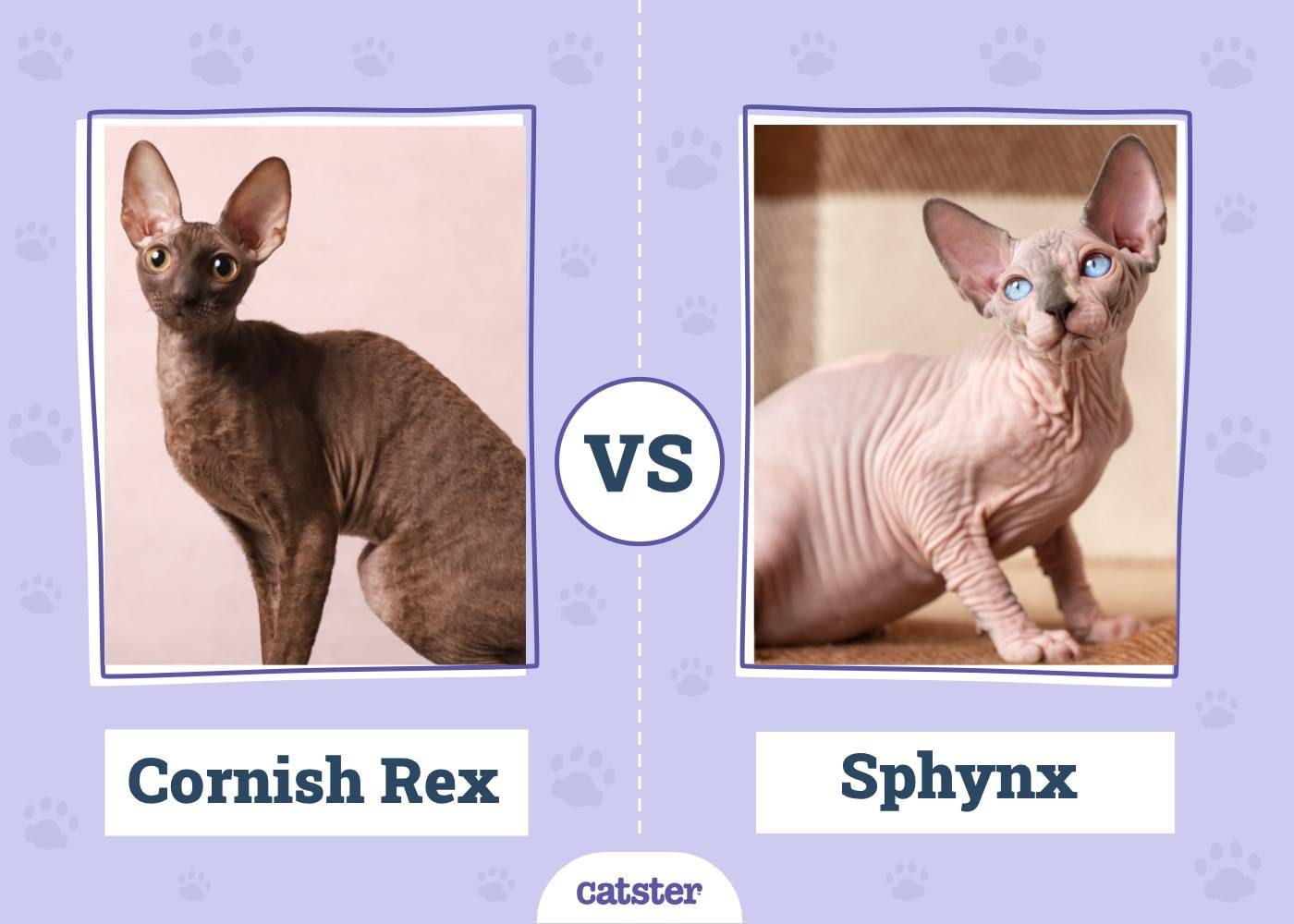
The Cornish Rex and Sphynx are both charming, diminutive, and low-shedding cat breeds known for their respective distinctive looks. As with many cat breeds out there, though, there are more precise and subtle differences that might not be readily apparent at first glance. If you’re interested in short-haired and hairless cat breeds, you’re in the right place. In this article, we’ll compare the Cornish Rex and Sphynx in all the major categories you need to know about, from appearance to character and much, much more. Read on for those details ASAP.

Visual Differences

At a Glance
Cornish Rex Overview

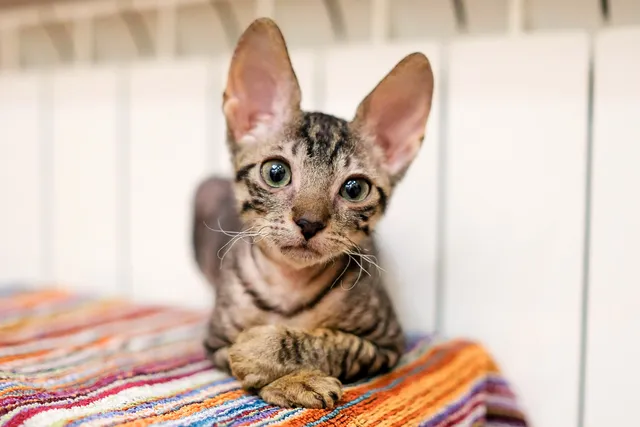
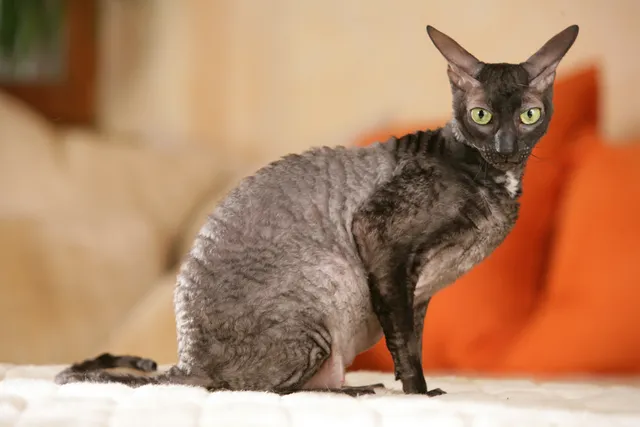
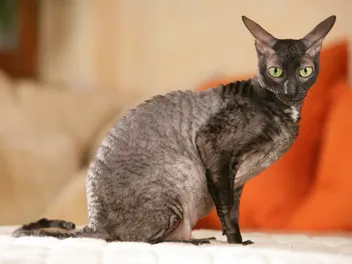
The Cornish Rex is a relatively new cat breed that appeared in a single litter of English barn cats that developed a unique Rex gene that gave them a short, curly coat without most guard hairs. The texture has often been compared to rabbit fur, another species that sometimes sports the Rex gene. The coat wasn’t all that was remarkable about them, though.
Cornish Rexes are sprightly felines that are a joy to be around, and they’re always bright-eyed at the prospect of playing with their favorite people. Even when you’re just going about your day, the Cornish Rex has an infectious, inquisitive nature that compels them to follow you around like a lithe little shadow. When bored, they might get into some clownish antics that just happen to always end up with you giving them chin scratches. Simply put, they’re clever little buggers.
Grooming
The Cornish Rex coat has very few coarse guard hairs, giving it a wavy, rippling “washboard” look and a downy feel. You’ll be pleased to hear that translates into much less shedding than the average cat breed, making the Cornish Rex an ideal companion for people with pet allergies. They do still produce some loose fur and dander, however, so we recommend investing in a HEPA-rated vacuum with a telescoping wand to seal away the allergens. On the grooming side, the most you’ll need to do is run a soft-sided brush over their fur to keep it silky smooth and clean.

Exercise
The Cornish Rex is an active breed that will gladly create their own fun, but it goes without saying that they go nuts for interactive toys like bells, feathers, laser pointers, and faux prey. They need about half an hour of vigorous exercise, whether that’s playing, walking outside on a leash, or learning how to do tricks with their favorite people. Cornish Rex cats are generally inclined to be lap cats as long as you satisfy their athletic aspirations, but honestly, they’re also happy to follow you around the house too.
Health
Cornish Rexes are a fairly healthy breed with a robust constitution, but their short fur and lack of most guard hairs make them susceptible to direct sunlight. If they go out in the sun, we suggest using cat-safe sunscreen to minimize the risk of sunburn and skin cancer, which can occur with repeated long-term exposure to the sun. Lastly, Cornish Rexes are more at risk of developing hypertrophic cardiomyopathy, a heart disease that causes the heart’s muscle walls to thicken.

Suitable For
Cornish Rexes are friendly curly-haired Velcro cats that love to explore, skulk, play, and shadow you around the house. Any moderately active household that’s looking for a low-shedding cat will fall in love with the Cornish Rex’s luxurious coat and lovable temperament, so long as you make sure to protect them from the sun and give them plenty of quality attention. Conversely, this breed might not be great if you work long hours away from home because of their clingy nature.
Sphynx Overview

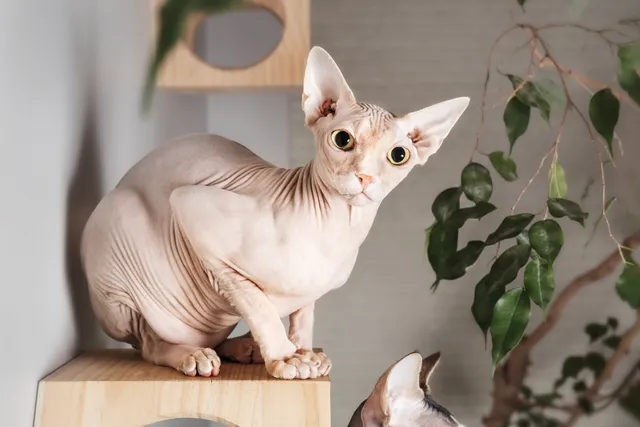
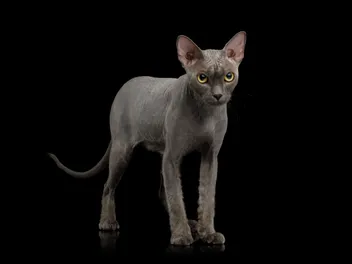
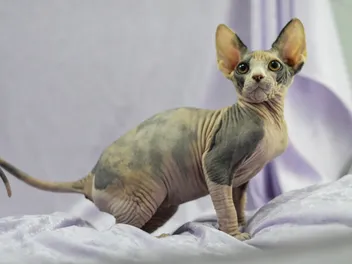
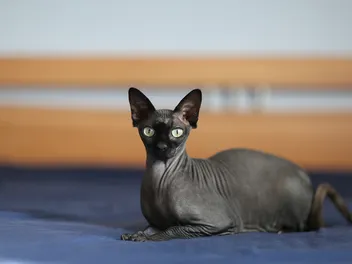
The Sphynx is a strikingly hairless breed with a gentle, affectionate spirit that fits in with any home that can give them lots of attention. Despite the vaguely Egyptian name and wrinkly demeanor straight out of a hieroglyph, Sphynxes hail from cosmopolitan Toronto, and early breeding programs incorporated breeds including the Devon Rex to help establish and maintain the breed.
Sphynxes will gladly be your wingman when you go to the bathroom, romp around with kids or other pets, and will welcome you home every day with a warm meow. This breed thrives with human attention and can become stressed if they don’t get enough, but they adore living with other cats they can play with, and might even settle for a dog as a playmate!
Grooming
No fur means no fur tufts on your furniture or hair-covered clothes when you own a Sphynx, but that doesn’t mean you’re totally off the hook with grooming. The Sphynx’s delicate skin is more vulnerable to skin irritation and overgrowth of bacteria or yeast, and their skin folds can trap oils and debris that contribute to skin problems. To keep them away, wipe down your Sphynx with a clean damp cloth every week or as needed, and many Sphynx cats also benefit from regular bathing. This helps prevent not only skin irritation and odor but also skin oils from accumulating and causing acne.

Exercise
The Sphynx tends to mirror your level of activity and can become an overweight couch potato if you don’t keep them busy. They’ll certainly make their own fun if they’re bored enough, but they love having another feline playmate to keep them company when you’re away from home. As smaller cats, their total exercise needs are lower than larger, more robust breeds, with about 30 minutes or so per day being average.
Health
Besides skin problems and ear infections, the Sphynx is prone to developing heart conditions like hypertrophic cardiomyopathy and has trouble regulating their temperature in extremely hot or cold weather. To keep them comfortable and healthy, make sure your cat has plenty of fresh water on hot days and provide warm resting areas or clothing designed for cats during cooler weather if needed.

Suitable For:
Sphynxes are sweet, loving cats that do well in homes that can give them lots of attention, or homes with other social cats. They don’t need a ton of exercise and have minimal coat grooming needs but will need your help to keep their skin and ears clean, plus to keep their body temperature regulated in the hot/cold seasons.
Which Breed Is Right for You?

The Sphynx and Cornish Rex are both very low-shedding, social, and even clingy cat breeds that need a lot of quality time to stay happy and mentally stimulated. The Cornish Rex is overall livelier and more low-maintenance but tends to shed a teeny bit more than the Sphynx. On the flip side, the Sphynx is more docile and doesn’t shed but requires you to help keep their skin clean and support them in staying comfortable during very hot or cold weather.
See also:
Sources
Featured Image Credit: Left - VIS DE ANIMALIS, Shutterstock | Right - Alexander Piragis, Shutterstock
Expert cat care, straight to your inbox
News, insights, and useful advice, delivered to you.

No spam — unsubscribe anytime.
By signing up, you agree to our Terms & Conditions and Privacy & Cookies Policy.
How useful was this post?
Click a star to rate. You can leave written feedback afterwards. (We read all feedback.)
Catster is a cat magazine and cat website where cat lovers come together and get expert advice about cat behavior, cat health and cat news.