What Do Cats Do All Day? 7 Usual Things

Pet cameras may be all the rage these days, but unless you have one in every room, you won’t constantly have eyes on your cat. This is especially true if your cat spends all or part of the day outside. So, what exactly do cats do all day?
Well, the most common thing cats do during the day is probably the least interesting: sleep. In this article, we’ll examine how much time your cat spends sleeping during the day and some other more exciting activities they may perform when they’re awake.

The 7 Usual Things Cats Do All Day
1. Sleep

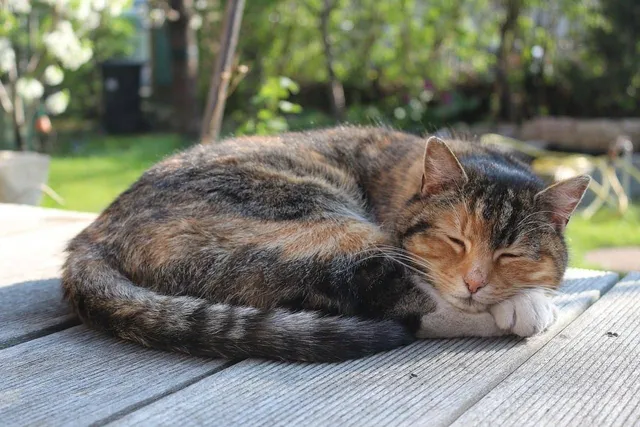
Whether your cat lives indoors or out, they spend most of their day sleeping. It is estimated that outdoor cats spend 97% of their time sleeping or resting. Overall, cats may spend 12–16 hours per day (or more) asleep, although most of it is spent in a very light “cat nap” cycle. Cats are often believed to be nocturnal, but they’re technically crepuscular or most active at dawn and dusk. Indoor domestic cats often adapt their sleep schedule somewhat to match their humans.
2. Eat

If you free-feed your cat, they likely spend a portion of the day at home eating. Even without unlimited access to kibble, your cat may still focus on food for part of the day. Perhaps they lick dirty dishes in the sink or scavenge the floor for breakfast crumbs. Your cat may also attempt to break into the cabinets or their food storage container in search of yummy snacks.
3. Explore

Because of their natural curiosity, cats probably spend part of their awake time exploring. The same study on outdoor cats we mentioned earlier also found that when they were awake, stray and owned outdoor cats roamed over many acres at a time. When living indoors, cats may climb, burrow, and investigate all corners of the house. If you don’t want your cat spending time in certain rooms, you should keep the doors shut and hope your cat doesn’t figure out how to open them!
4. Play/Hunt

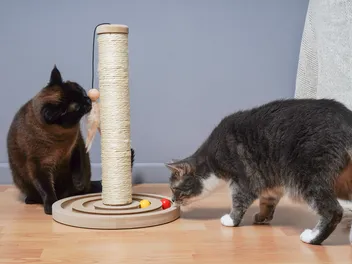
One reason that outdoor cats roam so much is to hunt for food. Cats still spend part of their day indoors, engaged in hunting-type play activities. Cats may stalk and play with toys, bugs, or other pets. If you don’t provide them with toys, they’ll find their own, possibly with unfortunate consequences for your possessions. Some cats like to collect and hoard items from around the house as part of their hunting activity.
5. Get Destructive

Cats can become bored and destructive during the day without adequate attention and stimulation. Scratching floors or furniture is one of the most common of these behaviors. Your cat may knock books or breakable objects off shelves, chew on houseplants, or pee outside the litter box. To avoid these situations, ensure your cat gets plenty of attention when you are home and consider asking or hiring someone to come and play with them during the day. Provide plenty of toys and scratching objects as well.
6. Observe

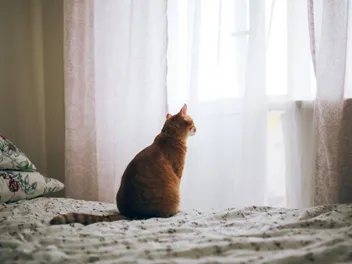
Indoor cats especially love to observe the outside world. All cats love to get up high and watch the activity below them. If you place a cat tree or perch near a window, expect your cat to spend part of its day in observation mode. Cat shelves and walkways provide another opportunity for your cat to climb and perch. Outdoor cats climb trees or fences to look around safely.
7. Miss You

Separation anxiety is often considered a canine problem, but cats can also miss their humans. Despite their reputation for being independent, many cats bond closely with their owners. Certain breeds are especially “dog-like” in their interactions with humans. You can and should keep your cat busy with toys and food while you’re gone, but they will probably still make time to miss you.
Conclusion
Cats spend most of their day snoozing, but the time when they are awake can be problematic if you aren’t careful. Outdoor cats are more at risk of disease, accidents, and intentional injury by other animals or people. Indoor cats may face fewer dangers but can still get into trouble, thanks to destructive behavior. To keep your cat safe and occupied, house them indoors if possible and provide a cat-proof, stimulating space for them to spend their day.
Featured Image Credit: Another77, Shutterstock
Expert cat care, straight to your inbox
News, insights, and useful advice, delivered to you.

No spam — unsubscribe anytime.
By signing up, you agree to our Terms & Conditions and Privacy & Cookies Policy.
How useful was this post?
Click a star to rate. You can leave written feedback afterwards. (We read all feedback.)

Elizabeth Gray is a lifelong lover of all creatures great and small. She got her first cat at 5 years old and at 14, she started working for her local veterinarian. Elizabeth spent more than 20 years working as a veterinary nurse before stepping away to become a stay-at-home mom to her daughter. Now, she is excited to share her hard-earned knowledge (literally--she has scars) with our readers. Elizabeth lives in Iowa with her family, including her two fur kids, Linnard, a husky mix and Algernon, the worldʻs most patient cat. When not writing, she enjoys reading, watching all sports, and spending time outdoors with her family.