Get

In Your Inbox

Catster is reader-supported. When you buy via links on our site, we may earn an affiliate commission at no cost to you. Learn more.

Kittens Meowing: When, How, & Why Baby Cat’s Meow (Vet-Approved)

Share

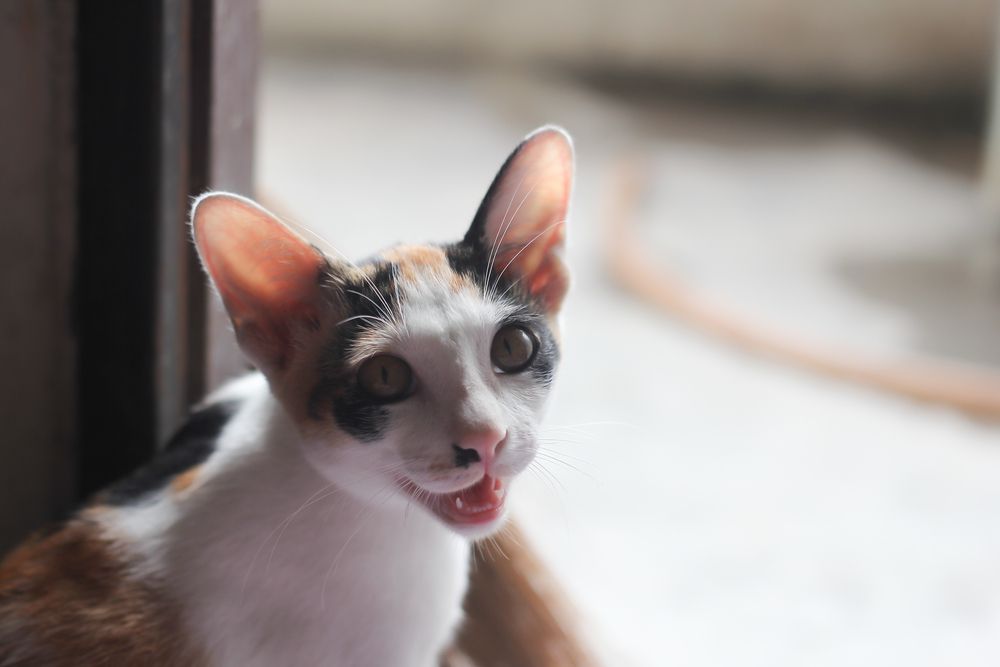
cat-meowing-or-trilling-by-the-door

Kittens rely on meowing to communicate their wants, needs, and feelings. Most kittens meow at their siblings and mothers for the first few weeks of their lives but they primarily meow at humans as adults.

A kitten’s meows can have different tones depending on what they are trying to communicate. Some kittens are more vocal than others, while some kittens are quieter, and reserve their meows for specific needs like food.

If you are interested in learning more about when, how, and why your kitty is meowing, this article has the answers for you.

divider 2 cats

When Do Kittens Start Meowing?

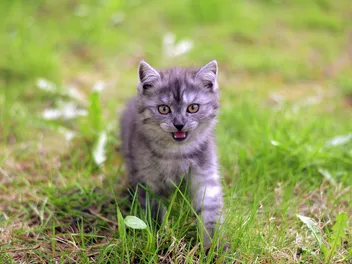
Kittens can start mewing a few days after they are born.  Newborn kittens are deaf and blind but they will mew and wriggle if they are handled. However, their mews will sound more like high-pitched whines or chirps rather than a distinguishable “meowing” sound. Kittens make sounds soon after birth as it’s an important form of communication between them and their mother. Mewing usually stops at about 2-3 months old.

As kittens get older, their mews turn into meows.  Their noises start to become more distinctive around the same time they begin walking and playing with their siblings. It’s normal for their meows to become deeper as they get older and they lose their adorable high-pitched meows by about 9-14 months of age.

Kittens generally produce a wider range of meows with various tones, volume, and duration as they get older. It’s normal for kittens to meow more often than adult cats because they are dependent on their mother for food, warmth and protection, so they meow to make sure those needs are met.
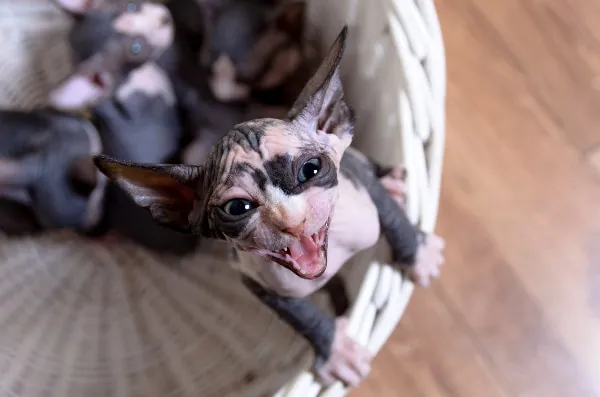
Sphynx kittens meowing.
Image Credit: Oleg Mikhaylov, Shutterstock

divider 2 cats

How Do Kittens Meow?

If you have been listening to a kitten’s meows for some time, you might notice that their meows have different tones. Although you may find it difficult to decipher what their different meows could mean, each tone has a meaning that mother cats can interpret.

Kittens produce much higher-pitched meows than adult cats. The maturity of a kitten’s vocal cords, larynx, and sinuses generally affects the pitch of their meows. Their meows and other vocalizations start to sound deeper when their vocal cords mature.

Cats have a vocal fold on each side of the larynx which they use to make both high pitched meows and low pitched purring sounds.  Connective tissue embedding in the vocal folds are used to produce the low-frequency sound of purring.

divider 2 cats

Why Baby Cat’s Meow

Kittens primarily meow to communicate specific needs to their mother. These needs range from hunger to warmth, and protection. However, they can also meow to communicate these needs to us or to express their emotions. Some kittens may also meow because they are looking for attention or want to alert that something is wrong. Mother cats will communicate with their kittens by meowing too.

As kittens get older, they generally start meowing less towards their mothers and more towards people instead. This is likely because cat to cat communication amongst adult cats very rarely involves a meow.  They use their tails, whiskers and body language when communicating with other adult cats. Communication through meowing is mostly reserved for cats to “speak” to their humans, once adulthood is reached.

Cats might start to meow at us and quickly realize that their meow makes things happen for them; they get fed or cuddles or let outside.  This positive reinforcement means that cats continue to meow at their humans in order to get what they want or need.

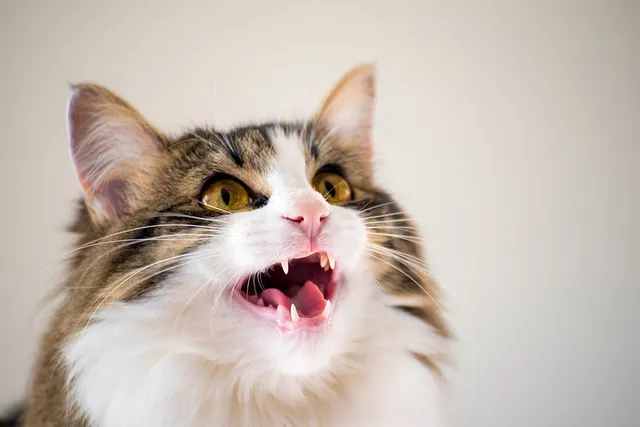
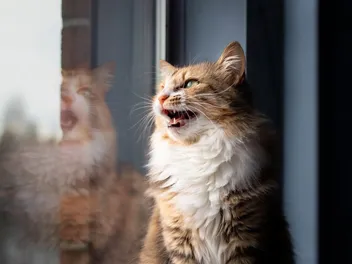
cat meowing
Image Credit: Stanimir G.Stoev, Shutterstock

divider 2 cats

Conclusion

Kittens start mewing when they are only a few days old. They use these noises to communicate with their mother and she meows back at them. Their meows generally sound much higher pitched than adult cats because their vocal cords and larynx haven’t matured yet.

Kittens primarily meow to have one of their needs met, such as hunger and warmth. They also meow to express themselves to humans and demand attention.


Featured Image Credit: Chan Deshpong, Shutterstock

Want content like this delivered to you?

Sign Up For Our Newsletter

News, insights, expert advice, and everything cat

* By submitting, you agree to our Terms & Conditions and Privacy & Cookies Policy.


How useful was this post?

Click on a star to rate (you can leave written feedback after clicking submit)

Help us improve Catster for pet parents!

Your feedback really matters.

What did you like about this post? Also how can we improve it?

Join the conversation

4 Responses

  1. I was gifted a kitten at birth and she has some to very little meowing. She is about 6 months and I am concerned about her communication? should I be concerned?

    1. Geneka, it is perfectly normal for some cats to be naturally "quiet," especially if they were raised in a calm environment where their needs were met before they ever had to ask. In the feline world, meowing is primarily a behavior developed to communicate specifically with humans (adult cats rarely meow at each other), so if she feels secure and you are already attentive to her cues, she simply may not feel the "need" to be vocal. However, you should observe her body language as these are the primary ways she is likely communicating her feelings to you. While a lack of meowing is rarely a medical issue on its own, if you notice any physical signs of distress like wheezing, a change in her "silent" meow to a hoarse sound, or lethargy, we recommend a 1:1 consultation with our experts at www.PangoVet.com to rule out any underlying respiratory or vocal cord issues and to help you better interpret her non-verbal signals.

  2. I found this kitty alone in 205 degree heat. He was only about 3 weeks old. Anyways he was dehydrated and very hungary and so skinney.
    Hes all well now. This Kitty does not meow at all. He can purr but that's it.
    I was wondering if you know why.
    Thank you.

    1. HI Jennifer,

      Thank you for sharing your story and for rescuing that little kitty—it sounds like you’ve given him a second chance at life! It’s heartwarming to hear that he is doing better now.
      Regarding your concern about him not meowing, there could be several reasons why a kitten might not vocalize. Some kittens are naturally quieter than others, while some may have experienced stress or trauma that affects their behavior.
      If you’re still concerned about his lack of meowing or if he shows any other unusual signs, it might be helpful to consult with a veterinarian. At Pangovet.com, we offer online consultations where you can speak with one of our veterinarians who can provide more insight and guidance tailored to your kitten’s situation.

      Best wishes,

Leave a Reply

You’re very welcome to leave a comment or question. Please know that all comments must meet our community guidelines, and your email address will NOT be published. Let’s have a positive and constructive conversation.


Talk With A Vet Online

Peace of mind,
anywhere, anytime

Affordable vet advice

The 10 Common Causes of Sudden Death in Cats (And Which Ones Are Preventable)

Most cat owners don’t think much about heart disease, internal hemorrhage, or viral infections until they’re staring at an empty bed. Sudden death...

Ask Dr. Paola – Help! My Cat Suddenly Has Dandruff! (March 30, 2026)

Welcome to our “Ask Dr. Paola” series, where every Monday we bring expert advice straight from Dr. Paola Cuevas (MVZ) to help our...

Your Cat Keeps Vomiting After Eating: Here’s What’s Going On

Cats vomit. It’s one of the less glamorous facts of life with a feline, and most cat owners have cleaned up more than...

Ask Dr. Paola – Help! My Cat Gets Diarrhea from Wet Food! (March 23, 2026)

Welcome to our “Ask Dr. Paola” series, where every Monday we bring expert advice straight from Dr. Paola Cuevas (MVZ) to help our...

More related

How Do You Give a Cat Lactulose? (7 Vet Approved Methods)

Lactulose is a stool softener often prescribed to ease feline constipation. The product pulls moisture into your pet’s feces, encouraging regularity by making...

8 Common Litter Box Issues & How to Fix Them

It’s a common myth that cats always use their litter boxes without issue. For the most part, cats indeed learn to use a...

Emotional Support Tigers? Give Me a Break!

Hi, I’m Dr. Karyn! Read my introduction to learn more about me and meet my five hilarious cats: Clutch, Cyril, Alex, Zelda, and...

Are Hydrangeas Poisonous to Cats? Common Houseplants Examined

Hydrangeas are beautiful blooming flower bushes that are a stunning addition to any home garden. If you have cats, however, you should tread...

Keep reading

Cat Resource Guarding: Vet-Reviewed Causes & What to Do

When you get a new pet, you hope for the best. You want the cat to fit in with your household and all its members, humans, and other pets. The most common reason for unsuccessful adoptions is behavior, particularly with...

angry cat

Is Freeze Dried Food Good for Cats? Vet-Reviewed Nutrition Facts & Tips

Cats are notoriously fussy eaters, and finding food they won’t turn their noses up at can feel like a never-ending challenge. There are many different types of cat foods, from canned food to kibble to raw diets and everything in...

Is Freeze Dried Food Good for Cats

How Does Flea Medicine Work for Cats? Vet Approved Facts & FAQ

Fleas are the most common parasites that cats suffer from. Even if you have an indoor cat, they can get fleas from other pets or rodents that may sneak their way into the house. Regardless of how they get them,...

vet holding magnifying glass searching cat fleas

Can Two Male Cats Get Along? Interesting Facts & FAQ

Cats can be kept in pairs or groups in a multi-cat household. If you have one cat and are tempted to get another, it’s difficult to predict if your current cat will accept a new one. Felines are socially flexible,...

Can Two Male Cats Get Along

How Do Cats Show Affection? 12 Vet-Reviewed Body Language Cues

If you have a cat at home, you may wonder if your buddy loves you. And if so, how can you tell? Since cats can’t speak, it’s reasonable to wonder how they show affection. Cats show their love in several...

young woman holding cute siberian cat with green eyes

Injection-Site Sarcoma: 9 Vet-Verified Facts

Injection-site sarcomas, also called feline injection-site sarcomas (FISS), are cancerous skin tumors that can develop in cats after they have received an injection, more specifically a rabies or leukemia vaccine 1. This is an uncommon but serious adverse reaction that...

vet injecting a cat at the clinic

Why Does My Cat Walk on Me? 7 Vet Approved Reasons for This Behavior

If you have a cat that walks all over you either when you’re awake or when you’re sleeping, you may find it strange and possibly even annoying. It’s natural to wonder what the cause of this behavior could be, and...

cat on lap

Is Food Coloring Safe for Cats? Vet Approved Facts & FAQ

In addition to taste and smell, the color of food plays a large role in making our food look tasty or a drink look refreshing. Certain colors can stimulate the appetite or turn it off, and the culinary arts consider...

Catster_Is Food Coloring Safe for Cats

Love Cats? So Do We! Join the Catster Community

Stay informed with expert pet care insights delivered straight to your inbox! Discover professional guidance on animal behavior, feeding tips, trusted product picks, and much more.


Sign up for the Catster Email Newsletter

Stay informed with expert pet care insights delivered straight to your inbox! Discover professional guidance on animal behavior, feeding tips, trusted product picks, and much more.