Get

In Your Inbox

Catster is reader-supported. When you buy via links on our site, we may earn an affiliate commission at no cost to you. Learn more.

How Do Cats Show Submission? Vet Reviewed Behavior Explained

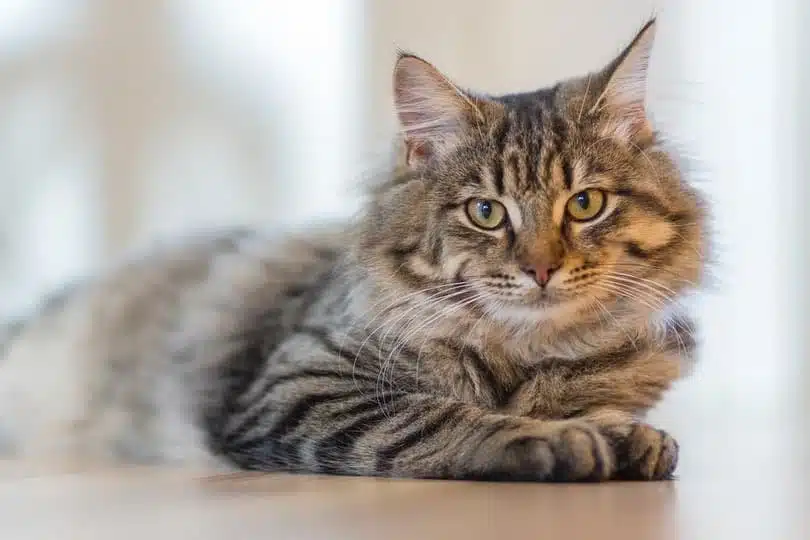
submissive cat lying on the floor

Like dogs, cats exhibit submissive behaviors, but how they demonstrate these differs from the often less-subtle manner of canines. For example, felines change the position of their ears or tail, crouch their body, or expose their belly. Essentially, they show submission with all the elegance and subtlety that characterizes them so well.

Read on to learn more about what submission means in cat language!

divider 1 paws

What Does Submission Mean in Cats?

Subordinate behavior has been widely described in many carnivorous species, such as wolves. However, it is relatively rare among felines due to their more solitary nature. That said, the lion, the cheetah, and the domestic cat all tend to group together and have complex social structures. Interestingly, biologists and other researchers who have looked at the social relationships of these felids have noticed both aggressive and submissive behaviors.

In an established group of cats, the lower-ranking cats (the subordinates) show that they “respect” the dominant ones by using subtle signals instead of fighting. When encountering a dominant cat, a subordinate cat might look away, lower their ears, turn their head, or lean back. In more intense situations, the subordinate cat may flatten their ears, lower and curl their tail to the side, turn their head, and crouch their whole body. In extreme cases, the submissive cat may roll over and show their vulnerable belly as a sign of submission.

Therefore, submissive behaviors in cats include:

  • Low, crouched body posture
  • Flattened ears
  • Vocalizations (meowing or purring)
  • Rolling posture (rolling on the back with splayed legs and belly exposed)
  • Tucked tail
two domestic cats sleep together on the sofa
Photo Credit: Magui RF, Shutterstock

Is There a Difference Between Showing Submission and Showing Affection?

Yes, there is a difference between showing submission and showing affection, with submission generally being considered a sign of respect.

Common signs of affection in cats include slow blinking, headbutting, kneading (also known as “making biscuits”), purring, and for cats allowed outdoors, bringing you little “presents,” such as dead birds or rodents.  Conversely, showing their belly can be a sign of both affection and submission. Your cat is demonstrating how much they trust you.

Should You Train Your Cat to Show Submission?

While some cats may naturally be submissive, others may not, and this is entirely normal. So, instead of trying to make your cat more submissive, it’s best to focus on creating a calm, less stressful environment for them. Also, never force your cat to submit, as it can lead to anxiety and fear. Positive reinforcement can be used to encourage desirable behaviors while respecting your cat’s individuality.

Building trust and a positive relationship with your feline pal is often more effective than trying to change their natural behaviors. However, if you have concerns about your pet’s behavior, it’s best to seek advice from a vet for proper guidance.

If you need to speak with a vet but can't get to one, head over to PangoVet. It's an online service where you can talk to a vet online and get the advice you need for your pet — all at an affordable price!

PangoVet_Mention-in-Content for PangoVet2 save money

What Does Dominance Mean for Cats?

The American Veterinary Society of Animal Behavior defines dominance in animals as a “relationship between two or more individuals that is established by force, aggression, and submission in order to gain priority access to resources.” However, dominance in domestic cats can be a confusing topic, as a few studies have shown that these small felines don’t always demonstrate “explicit hierarchies,” even in feral groups.

That said, some cats can sometimes show signs of aggression toward their owners or other pets, which can be perceived as a form of social dominance. For example, if your cat blocks the path to the stairs by sprawling on the steps and snapping at anyone trying to pass, this is potentially a form of status-induced aggression. According to the experts at Cornell Feline Health Center, the best way to combat this type of behavior is to ignore your cat completely. Any form of attention, including play and food rewards, only reinforces this behavior.

divider 1 paws

Final Thoughts

Cats use subtle signals to show their submission. These involve lowering their ears slightly or flattening them, curling their tail against the thigh, crouching their body, rolling over, or exposing their belly. These signs can be seen in an established group of cats, but they are not so easy to spot. Among their owners, the signs of submission can sometimes be confused with those of affection, but these are subtle differences. In any case, cats should not show aggression toward their humans or other pets in the home, so it is essential to seek advice from your veterinary team if your cat is overly aggressive.

Also see: 


Featured Image Credit: Benny Marty, Shutterstock

Want content like this delivered to you?

Sign Up For Our Newsletter

News, insights, expert advice, and everything cat

* By submitting, you agree to our Terms & Conditions and Privacy & Cookies Policy.

How useful was this post?

Click on a star to rate (you can leave written feedback after clicking submit)

Help us improve Catster for pet parents!

Your feedback really matters.

What did you like about this post? Also how can we improve it?

Join the conversation

Leave a Reply

You’re very welcome to leave a comment or question. Please know that all comments must meet our community guidelines, and your email address will NOT be published. Let’s have a positive and constructive conversation.

Talk With A Vet Online

Peace of mind,
anywhere, anytime

Affordable vet advice

Pet Poison Prevention Awareness Month: When & What Is It?

Pet Poison Prevention Month takes place in March each year. It’s a time dedicated to raising awareness about the items in and around...

Can Cats Eat Rice Krispies? Vet Approved Facts & FAQ

Rice Krispies are a beloved breakfast cereal made from puffed rice. Kids love this sweet food for its fun popping sound. Some may...

7 Best CBD Oil for Cats With Cancer in 2025 – Reviews & Top Picks

We all want our cats to have a healthy and happy life, but sometimes, it’s just not possible. When the hard days come,...

How Silver Vine Affects Cats: Olga’s Experience With Hallucinogens

Hi, I’m Christopher! Read my introduction to learn more about me and my silly Russian Blue cat, Olga. Indoor cats don’t live very...

More related

Is Gladiolus Poisonous to Cats? Vet Reviewed Advice

Also known as the “sword lily”, gladiolus is a popular garden flowering plant, though it can adapt to life as a houseplant. If...

Ask Dr. Paola – Epilepsy, Skittish Rescues & Shivering (June 9, 2025)

Welcome to our “Ask Dr. Paola” series, where every Monday we bring expert advice straight from Dr. Paola Cuevas (MVZ) to help our...

7 DIY Fun Fleece Toys for Cats To Make At Home Today

Many cats love fleece. It’s also very easy to work with, making it a great option for new DIYers. There are many ways...

Meet 10 Famous Black Cats Who Stole the Spotlight in Pop Culture

Black cats have been wrapped in myths of mystery, magic, and even bad luck for centuries. But, when it comes to pop culture,...

Keep reading

Siberian Cat Grooming: 4 Vet-Approved Tips & Tricks

Siberian cats have long, thick coats, and it’s necessary to maintain their coat as part of keeping your cat healthy and happy. Coat problems, like tangles, mats, and oil buildup, can all lead to discomfort, pain, and infection, so it’s...

siberian cat in wood

5 Signs of Aggression in Cats: Vet-Reviewed Behavior Problems to Watch For

Aggression is a relatively common feline behavior problem, and it can have several causes, from pets getting a bit too carried away while playing to pain and fear. Feline aggression can be quite serious, it can cause injuries and make...

Scottish fold cat very angry and aggressive

Can Cats Eat Jell-O? Vet-Approved Nutrition Advice

Cat parents are always on watch when it comes to what their kitties eat. As a responsible owner, you need to ensure that your feline eats nutritious meals that are intended to keep them happy and healthy. As anyone who’s...

Can Cats Eat Jell-O

Why Does My Cat Suck on My Fingers? 3 Vet-Reviewed Reasons

Cat parents understand that felines are peculiar creatures who sometimes engage in odd behaviors, such as napping in tight spaces, head-bumping you, and chewing or suckling on bizarre objects, such as blankets and towels. Cat suckling is generally harmless and...

grey cat sucking finger

Why Does Your Cat Rub Their Head on You? 5 Vet-Reviewed Reasons

You’ve likely had your cat rub their head on you multiple times. While cats are independent creatures that don’t trust easily, they are usually loyal for life once they do. However, even after you’ve established a bond with your cat,...

cat rubbing its head against the owner's legs

Why Does My Cat Sit on My Face? 7 Common Reasons & FAQ (Vet Reviewed)

Cats sometimes behave in ways that baffle even the most seasoned cat parent—one of these is choosing our face or head to sit and sleep on even though there’s plenty of room on the bed or couch and they’ve got...

Black and white cat lying on a girls face

Can Cats Eat Nutella? Vet-Reviewed Health Risks & Safe Alternatives

The world loves Nutella, whether it’s served on bread or eaten right out of the jar. It’s soft, creamy, tasty, and wonderfully portioned with 30% chocolate and 70% hazelnut. It’s so popular that there is even a World Nutella Day,...

Can Cats Eat Nutella

What Does It Mean When a Cat Is Panting? 7 Vet-Reviewed Reasons

Panting is very common in our canine pals, but is much more rarely observed in cats. It’s important not to shrug your cat’s panting off like you do when your dog does since this can be an indication that something...

cat walking outdoor and panting