How To Tell Which Cat is Dominant? 5 Vet Approved Signs To Look For


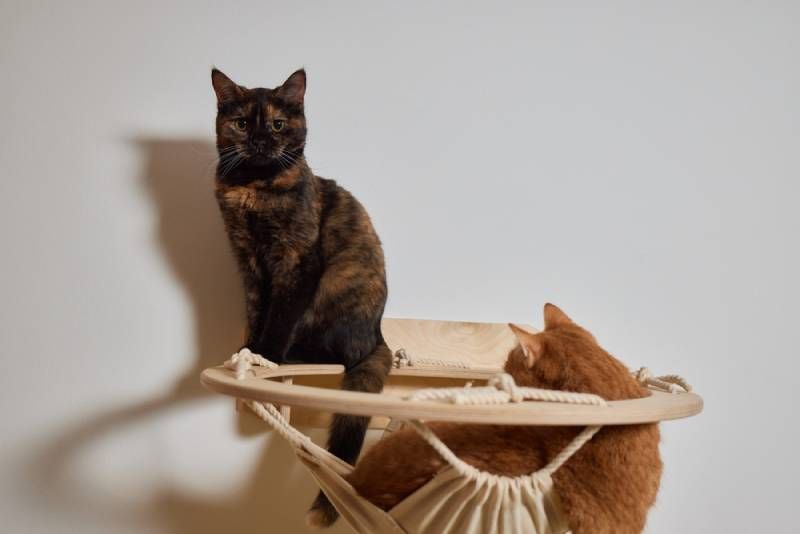
Contrary to the aloof and standoffish stereotype that’s been given to cats, cats have a wide range of personalities and temperaments. Some may have the independent personality that they’re known for, but many domesticated cats are very social and love being the center of attention.
Unlike wolves and other pack animals, the social hierarchy amongst cats is more fluid. This means that a cat can act differently depending on the situation. While domestic cats can have social groups, they’re not pack animals.
So, a “dominant cat” doesn’t share the same meaning as a dominant dog or wolf. “Dominant” cats simply have more assertive temperaments. If you think you have a cat with a “dominant personality", check our list to see if the behaviors line up with your cat.

The 5 “Dominance” Signs to Look For
1. Relaxed Demeanor
“Dominant” cats will be confident, which means that they’re relaxed. Cats that feel confident can be more friendly, playful, or inquisitive. They can approach you and interact with you, and once they’ve had their fill, they’ll go off and do their own thing.
“Dominant” cats can still hide from people, but it’s not fear-driven. Instead, they will just prefer not to be around people and would rather be left alone to do their own thing.
2. Tail Communication
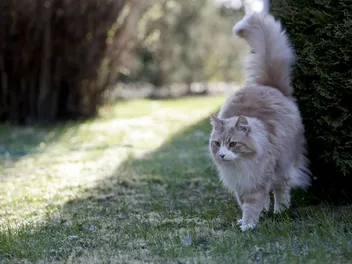
Cats communicate a lot with their tails. An erect tail shows that a cat is friendly and feels content.
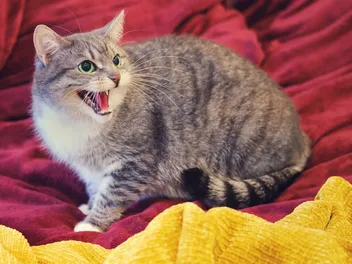
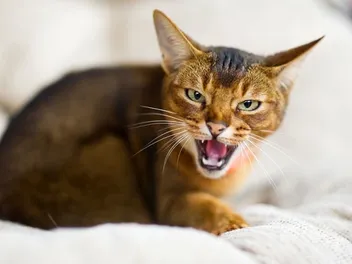
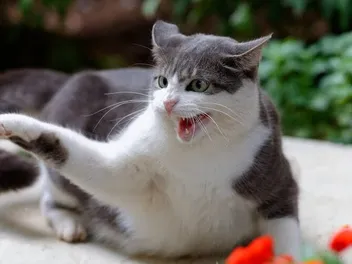
Cats that feel aggressive will often wag their tails or hold their tail down. When they’re ready to lunge, they’ll usually fluff their tail up and make themselves appear bigger. Their back will also be arched and their ears will be turned back on their head. However, in most cases, these postures reflect arousal or fear rather than true social dominance.

3. Doesn’t Back Down Easily
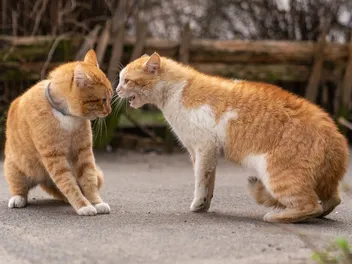
“Dominant” cats aren’t willing to back down so easily when they’re faced with confrontation. For example, if they’re eating and another cat tries to steal the food, they’ll be quick to defend their resources instead of running away. In many households, this behavior is more accurately described as resource guarding rather than dominance; however, it does take some bravery not to run away and get the other cat to simply eat their food. It is important to note that standing ground during resource conflict reflects competition or confidence rather than an attempt to establish a hierarchical position.
4. Direct Confrontation
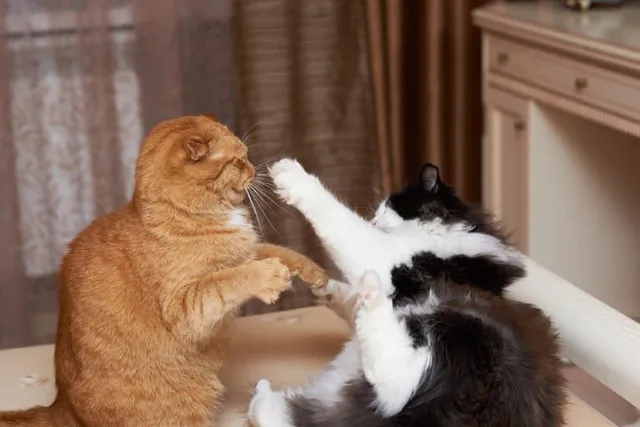
Some “dominant” cats are confident enough to instigate and initiate a confrontation with other cats. They may size up another cat and decide to steal their food or a toy because they know that they’ll most likely win and gain a new resource.
Confident, dominant cats can also be very direct with you. They can engage in “conversations” with you by being more vocal and making demands for pets or treats. It is important to note that in feline behavior research, these interactions are usually considered expressions of confidence or assertiveness rather than attempts to achieve a higher rank.

5. Urine Marking and Spraying
Some cats may try to display “dominance” with urine marking or spraying. They can engage in this behavior when they want to mark their territory and deter cats or other animals. Most cats that engage in this sort of behavior are intact male cats.
However, cats that feel threatened or distressed can also start to experience litter box issues. Cats in multi-cat homes with little space are susceptible to engaging in urine marking because they feel conflict with other cats and can feel either anxious or angry. In reality, urine marking is most often linked to environmental or territorial stress anxiety, and social tension rather than dominance, and both male and female cats, including those that are neutered or spayed, may urine mark.
Is It Okay if My Cat Is “Dominant”?
The answer to this question depends on your definition of dominance. Some people see dominant behavior as motivated by confidence and self-assurance. Some cats just have stronger personalities than other cats. So, if these types of cats are labeled as dominant cats, it’s really not an issue.
However, some cats may start to display “dominant behavior” if they’re feeling anxious, agitated, or threatened. These types of behaviors are negatively charged and have to be addressed before they escalate to aggression.
If a cat is bullying another cat because they're charged by resource scarcity, then the issue needs to be corrected. However, if a cat isn’t afraid to back down from another cat because they're feeling confident, then there’s really no issue unless the two cats want to engage in a fight.

Is the Alpha Cat a Myth?
“Dominant cats” are often referred to as “alpha cats”. However, this claim is backed by little research, and the research is fairly irrelevant because most cats are solitary animals. Lions are the only big cat species that live in groups. Feral cat colonies do exist, but they don’t have clearly defined hierarchies like wolf packs.
So, the perception of alpha cats is mostly based on incorrectly viewing cats through a dog lens. While they’re both furry and cute pets, they’re completely different species. Cats don’t really have a clear pecking order, and they’re not fighting to become the alpha cat because the concept of alpha cats doesn’t really exist in their natural world. Feline social organization is best described as flexible and cooperative when resources are abundant and competitive when resources are limited, rather than rank-based.
Conclusion
The meaning of “dominant cats” will vary based on the situation. In one sense, “dominant cats” can refer to cats with naturally confident and assertive personalities. In another sense, they can refer to insecure cats that are fighting for their resources. Depending on the context, a “dominant cat” can be either a positive or negative thing.
If you sense that your cat is displaying dominant behavior due to feeling threatened or unsafe, make sure to address the situation right away. Behavior focused on gaining access to resources is more common than true dominance and improving environmental enrichment and resource distribution often resolves the problem. You can also recruit the help of a reputable cat behaviorist to help restore calmness and contentment to your cat. Identifying triggers and ensuring adequate litter boxes, feeding stations, resting areas, and vertical space can significantly reduce conflict in multi-cat homes.
Featured Image Credit: Vershinin89, Shutterstock

Expert cat care, straight to your inbox
Vet-reviewed advice, behavior tips, and the best of Catster. Free, and you can unsubscribe anytime.
By signing up, you agree to our Terms & Conditions and Privacy & Cookies Policy.
Jessica is a freelance writer who spends most of her day researching and writing while her fluffy Cavapoo, Nora, naps beside her. She loves and appreciates pets and animals because there’s so much to learn from them, and they do so much for people. As a dog owner, she understands the special connection that pet owners form with their pets. She loves sharing helpful information that people can use to better understand their pets. When she’s not writing, you can find her walking dogs, tending to her plant babies, or drinking her nth cup of coffee.
Join the conversation
Ask a question, share your story, or send private feedback.