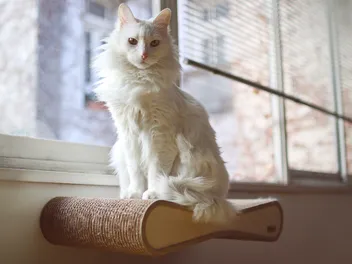
18 Vet-Verified Persian Cat Colors & Patterns (With Pictures)

In this article
The beautiful, ancient Persian cat has been around for quite some time. Throughout the existence of the breed, there have been several different color variations. A Persian is extremely versatile in their colors and patterns, hitting just about every category on the spectrum.
In this article, we'll learn a little bit more about the different colors associated with Persians so you can see what your ultimate options are when selecting a kitten.

The 13 Persian Coat Colors and Patterns
Persians can come in a variety of colors and patterns. We’re going to list the most common ones.
1. White

Perhaps the most well-known Persian coat color is white, as this is the color many people think of when they think of a Persian. White Persians often have blue eyes and are commonly seen in pop culture, such as Snowball in The Simpsons, and a white Persian is the face of the cat food brand Fancy Feast. White Persians are certainly beautiful, and we can see why they are so popular!
2. Black

Black is another Persian coat color, and black Persians usually have golden eyes. Black Persians can look pure black or can have a brown tint to their coat when the sun hits it. Bobbie the Persian of TikTok is probably one of the most famous black Persians.
3. Blue

Blue Persians aren’t really blue, but are actually gray in color. The exact shade of gray (or rather, blue) can range from lighter to darker, but most blue Persians have golden or slate-colored eyes. This is another really common Persian color.
4. Chocolate

Chocolate Persians are brown in color, as you can probably guess from the name. Brown is a rarer color in all cats, so you don’t often see chocolate Persians, but they do exist. Chocolate Persians often have golden eyes, and again, the shade of brown can be lighter or darker.
5. Cream

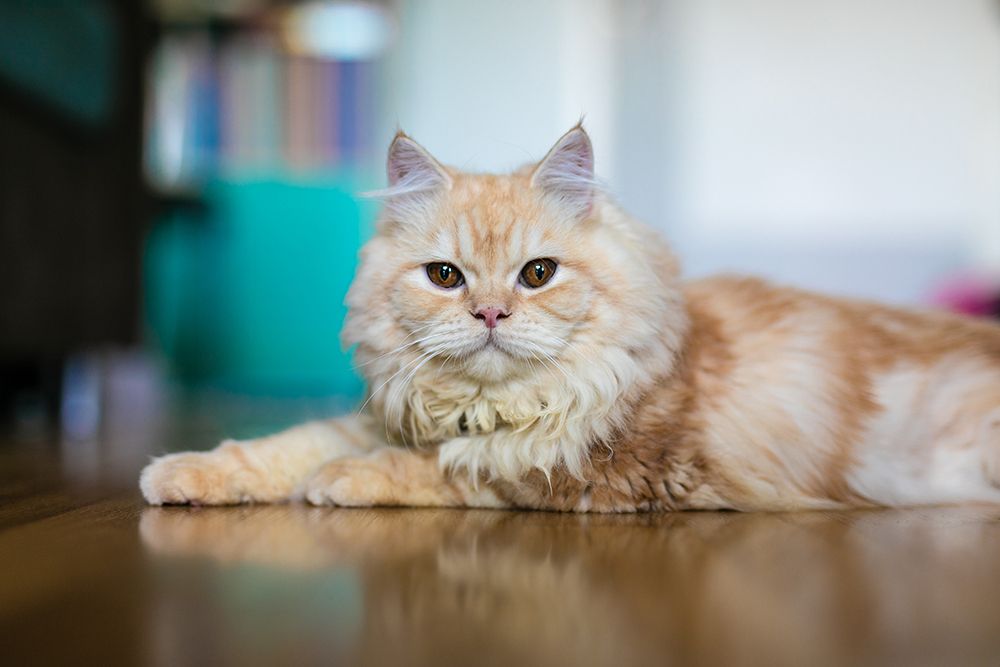
Cream Persians are darker than pure white but lighter than red. Some of them can look off-white, while others can be closer to a dilute orange color, kind of like a creamsicle. They usually have greenish or golden eyes, and they may be cream all over or have cream patches with white mixed in.
6. Lilac
Lilac Persians are similar to blue Persians in that they aren’t really purple but are more of a dilute gray color that can look lilac in certain light. They often have light blue- or slate-colored eyes, and like the cream Persian, can be “lilac” all over or in patches.
7. Red

Red Persians aren’t actually red, but are more orange or apricot in color. They are a darker version of cream Persians, but aren’t as dark as chocolate Persians. Their eyes are usually golden to brown in color, and they may be solid red or have red patches.
8. Calico

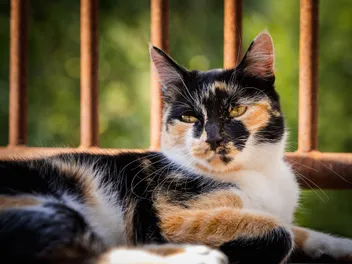
Calico is not a solid color, but calico Persians have three different colors in their fur. They are predominantly white, with black and red patches of fur. There is also a diluted version, called diluted calico, in which they are white, cream, and blue. Most calico Persians will be female since the calico coloring is a trait that is linked to the X chromosome.
9. Tortoiseshell

Tortoiseshell is sometimes confused with calico. Tortoiseshell Persians are predominantly black with patches of red or softly intermingled areas of red on both body and extremities. Tortoiseshell can also have a chocolate version, and most tortoiseshell Persians are going to be female as well, for the same reason as calicos.
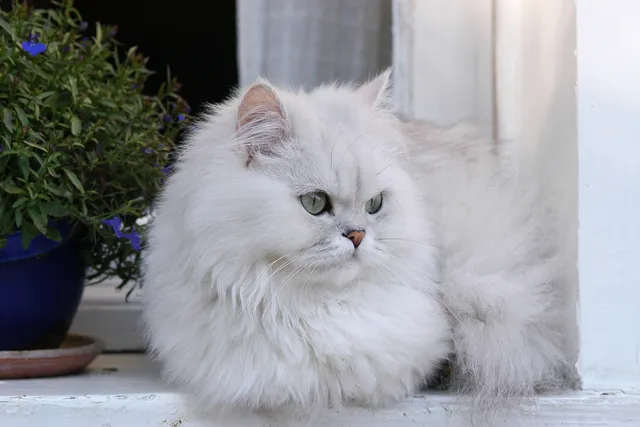
10. Chinchilla Silver

Chinchilla Persians are absolutely gorgeous. They are two-toned, with a pure white undercoat and black-tipped fur on their back, flanks, head, and tail. This gives them a coloring similar to the chinchilla, an adorable South American rodent.
11. Shaded
Shaded Persians come in a variety of color combinations. They have a white undercoat and different colors of shading on their sides, face, and tail. They can be found as shaded cameo, cream, tortoiseshell, blue-cream, black, and blue.
12. Smoke

Smoke Persians have a white undercoat deeply tipped in different colors. They are basically a darker version of the shaded coloring. Smoke Persians can be black, blue, cream, red, tortoiseshell, blue-cream, chocolate, lilac, chocolate tortoiseshell, and lilac cream.
13. Cameo

A cameo Persian has a white undercoat with shaded red tipping. There are two varieties: shell cameo or red chinchilla with slightly tipped fur on the back, flanks, head, and tail; and the shaded cameo, which appears much redder than the previous one. They have red shading down the sides and tail with deeper shading in the face and legs.
The 5 Persian Cat Divisions
Persians are divided into 7 divisions by the Cat Fanciers’ Association (CFA) depending on their different patterns, so we're going to show you what colors can constitute the majority of each division!
1. Solid

Solid Persians are stunning, long-haired cats with only one color in their coat. There are 7 recognized main Persian colors for solid coats. As you can see, they can really be any basic color in the spectrum, but tend to have a soft cast to the coat.
- White
- Black
- Blue
- Chocolate
- Cream
- Lilac
- Red
2. Tabby

Persians can come in the tabby variation, having one of four distinct patterns: mackerel, classic tabby, ticked, or spotted. More rarely, they can have a patched tabby look. Tabby Persians usually have at least two of the following colors in their coat.
- Blue
- White
- Silver
- Brown
- Cameo
- Cream
- Red

3. Bicolor

You guessed it. Bicolor patterns are any color combination that includes two distinct colors. Each one of these colors consists of one other classic Persian color and white.
- Black and white
- Blue and white
- Chocolate and white
- Cream and white
- Lilac and white
- Red and white
4. Particolor

Particolor cats consist of two or more colors of any color pattern in combination with white. So essentially, they wind up being at least three different colors in total. In this particular color variation, you see a lot of tortoiseshells.
Remember that tortoiseshell and calico cats are mostly female. So if you fall in love with the color, you're going to want to have a female kitten. If the sex of your cat matters, keep this in mind.
- Blue-cream
- Lilac-cream
- Chocolate tortoiseshell
- Tortoiseshell
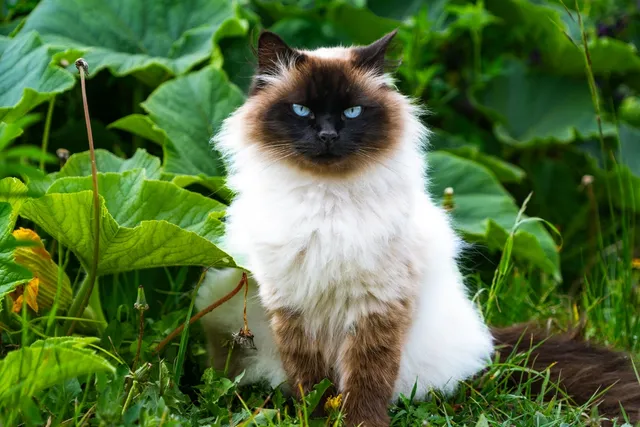
5. Himalayan (Point) Pattern

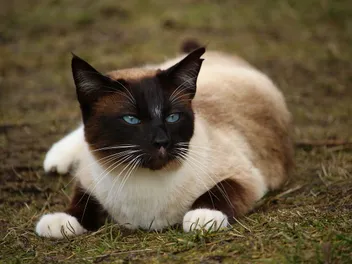
The pointed color pattern is also referred to as the Siamese or Himalayan pattern. That is because the Persian takes on the very familiar markings of these particular breeds, having darker ears, masks, feet, and sometimes tails.
The pigmentation in the coat slowly diminishes, giving it a faded look. Interestingly, the overall color of your cat's coat will depend on the temperature. If a cat is colder, the pigment will be darker, while warmer temperatures create warmer tones.
- Seal point
- Blue point
- Chocolate point
- Lilac point
- Flame (red) point
- Lynx point
- Cream point
- Tortie point
- Tortie lynx point

All About Persians
If you’re looking for Persian coat colors because you’re thinking about getting a Persian, you may be interested to know a little more about the breed and how to care for them. After all, coat color is definitely not the most important part of Persian care. Here’s everything you need to know about Persian cats.
Like many early cat breeds, it's hard to pinpoint exactly where the Persians originated, but it is suspected that they came from present-day Iran, formerly called Persia. However, some documentation suggests that the Persian ancestors might have been
imported into Italy during roughly 1620. While no definitive answer exists, we know that they've been around for several hundred years.
Appearance
The Persian can come in any color variations we mentioned above. However, there are also two very different-looking variations of the breed. One is the traditional Persian. This is the classic variety with the pushed-in face, giving them an instantly recognizable look. The other is referred to as the doll face Persian, which has a longer snout and daintier appearance than the traditional Persian cat.
No matter the face shape, Persians have sturdy, thick bodies and solid legs. Because of their bodily composition, Persians aren't known to be jumpers. So if you like a cat that stays off counters, a Persian is certainly a fantastic choice.
One of the main attractions to a Persian is their long, flowing coat. Persians tend to be a little fluffier than some other long-haired cats. In addition to their ever-evolving coat colors, they also can have quite a few different eye colors, including slate gray, blue, blue-green, golden, or copper.
Remember that despite their beautiful coat, your Persian is prone to excessive tearing. This can cause discoloration and streaking around the eyes. To prevent staining, cleaning this area with a cotton ball or soft cloth is important to prevent smudging.

Personality
Persians are known for their extremely docile, affectionate temperament. They love spending time with their owners and grow very attached to the people in the household. Because Persians are so loving, they often do very well with strangers, children, seniors, and other pets.
They are a wonderful companion to have in a multi-pet household or growing families. The Persian will impress you with their intelligence from time to time. Although this breed does prefer the more lackadaisical approach to life.
Your Persian will definitely have their own personality, having their own set of quirky behaviors and eccentricities. So keep in mind that every cat will be different. Even though these little cuties are known for being super affectionate, you might run into one that's a little shyer, reserved, or even aloof with strangers.
Grooming
Grooming is definitely going to be a big deal when you own a Persian cat. These kitties have long, luxurious locks that need constant maintenance. It’s probably one of the things that draws you to the breed.
To prevent mats and tangles, you’re going to need to brush your Persian every day. Get in all the little nooks and crannies. If you don’t keep up with routine brushing, you’re going to be dealing with a lot of shed in your home on your furniture and fabrics.
Exercise
The Persian is known for being a more relaxed breed. They don’t need a lot of exercise in a day to keep them fit and happy. On average, a Persian requires two 15-minute intervals of exercise per day to stay happy and healthy.
Each cat is different, but your Persian will love toys, games, and teasers. You will likely need to pick out several things at first to try different options. If your cat gravitates towards a specific type of toy and doesn't play with another, you'll know how to buy in the future.
Health
Persians are predisposed to certain health problems. We recommend contacting a reputable breeder to avoid those health issues that can be passed on to future generations.
Persians might suffer from brachycephalic obstructive airway syndrome (BOAS), polycystic kidney disease (PKD), hypertrophic cardiomyopathy, and different eye disorders such as entropion, corneal ulcers, tear duct problems, cataracts, and progressive retinal atrophy (PRA).
To stay ahead of any developing health issues, it is important to keep up with routine vet care. Your vet can determine if they think anything is off with your cat’s general testing to take a deeper look into the problem.

Special Considerations
The Persian is a brachycephalic breed. Because of the unique nose and facial structure, it can cause some breathing difficulties. If they have any airway obstruction, it might require veterinary care, including surgery. Because this is a potential extra cost to anticipate with Persian care, we found it important to mention.
Plus, the facial structure can make your Persian very susceptible to extreme hot temperatures, as it can further cause issues with labored breathing.
Finding a Breeder
Be very selective when you're looking for a Persian breeder. Because this breed is relatively popular, you should be able to find breeders in your area, but that doesn't mean all are created equal.
Some breeders are highly educated and diligent about producing the best offspring possible. Others might be turning out kittens just to make a fast buck. It's important to understand the difference when you're purchasing.
If someone seems relatively quick to sell you a Persian cat, refuses to give you vital information, and seems overall very vague, you might want to stay away. A solid breeder will be able to provide any information that you request, including vet records, parental testing, and licensure or certifications.
Buying from a quality breeder is essential to the quality and overall longevity of your cat.
Conclusion
Now you know a little bit more about the amazingly beautiful colors and patterns that Persians can wear. Their patterns are plentiful, and their colors are even more so! Because of all of these beautiful variations, it can be very hard to commit to a particular color.
After a little explanation and a visual, which Persian color is your favorite? Do you plan on bringing one of these beautiful cats into your home?
See also:
Featured Image Credit: CKYN stock photo, Shutterstock

Expert cat care, straight to your inbox
Vet-reviewed advice, behavior tips, and the best of Catster. Free, and you can unsubscribe anytime.
By signing up, you agree to our Terms & Conditions and Privacy & Cookies Policy.
As a freelance dog writer and passionate pet enthusiast, Ashley Bates is pursuing studies in animal therapy. A mother to four human children and 23 animal companions, Ashley is dedicated to volunteering at shelters, advocating for animal rights, and rescuing animals in need. Her goal is to spread awareness, provide education, and offer entertainment about pets to reduce homelessness. Ashley's specialties include dogs and cats.
Join the conversation
Ask a question, share your story, or send private feedback.