

In this article
View 2 More +Hybrid cat breeds can occur when a domestic cat breeds with another domestic cat or a domestic cat mates with a wildcat. Due to the genetic diversity involved with hybrid cats, they can vary widely in markings, colors, and temperament. Although they are usually medium to large, they can be relatively small, too.
Most hybrid breeds are a relatively recent phenomenon, and most are not yet registered with cat registries. So, we put together this list of common hybrid wildcat breeds and popular domestic crosses.

Hybrid Cats: Domestic Cat Mixed With Wild Cat
Domestic and wildcat hybrids can be challenging to care for since they are fairly unpredictable and still have a somewhat “wild” nature. They typically do not get along well with other cats and have a fussy appetite, making them a challenge to feed. Some wildcat hybrids are also primarily nocturnal, so be prepared to be kept up into the night with their antics, especially if they are kept indoors.
Hybrid cats left to roam outdoors can wreak havoc on the local ecosystem; they are superior hunters and far larger than their domestic cousins. Most domestic cats weigh 8 to 10 pounds, but hybrids can reach 25 pounds or more. They typically have shorter digestive systems incapable of processing foods derived from plants and need a diet of predominantly meat.
Again, owning a hybrid cat is a real challenge even for experienced owners, so we recommend not taking the decision to bring home one of these cats lightly. However, they are truly unique pets if you are prepared for the responsibility. Without further ado, here are the most common Wildcat hybrid breeds.
The 21 Hybrid Cat Breeds
1. Bengal Cat
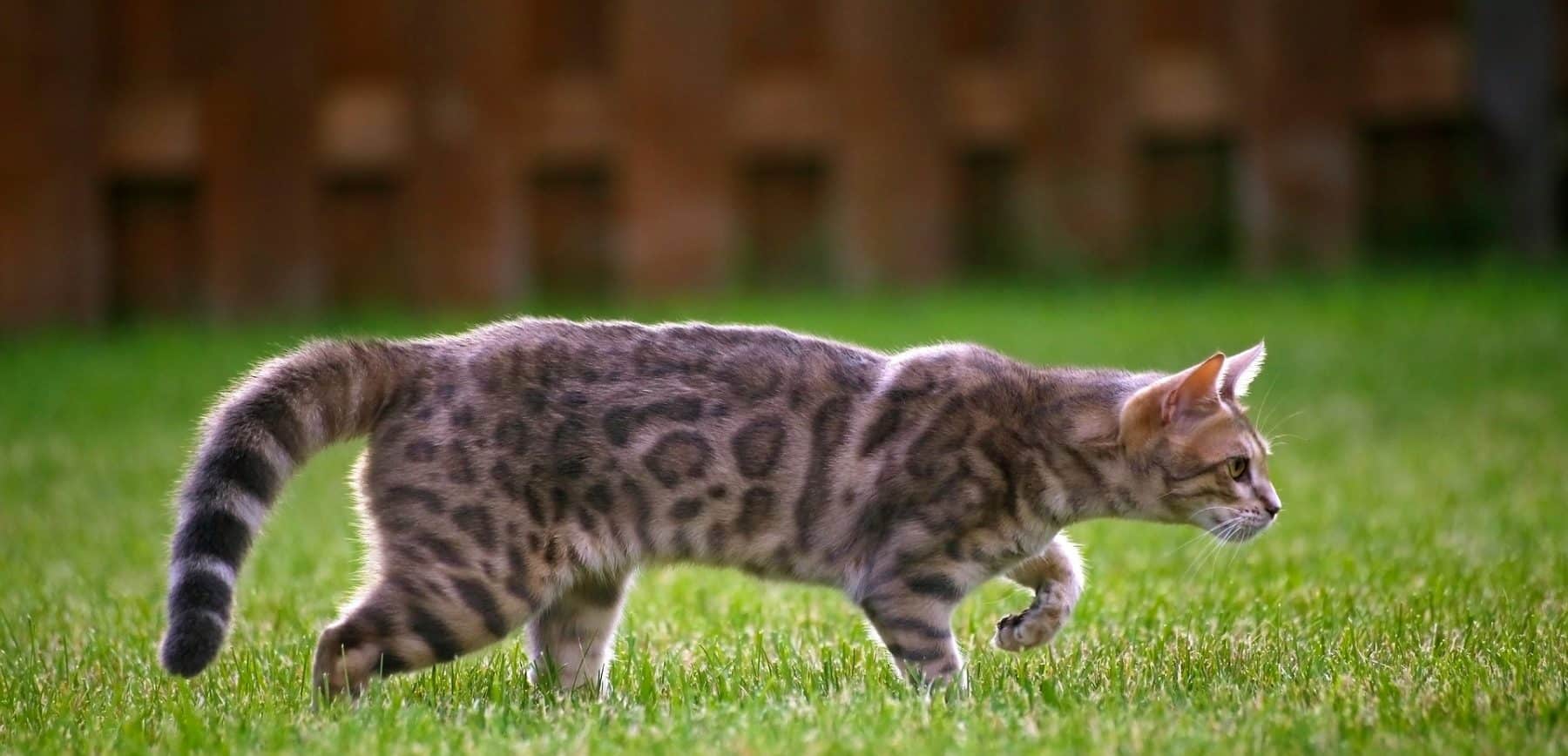
The regal Bengal is one of the most popular hybrid cat breeds. They were created by crossing a domestic cat with a small Asian Leopard Cat and must be separated from their parent breeds by at least three to four generations to be considered a domestic cat.
First developed in the early 1960s, Bengal cats are fairly calm and even-tempered, considering their wild heritage. They retain their wild look with “Leopard-like” spots on their back and belly and tend to be larger than most domestic breeds, weighing in at 15 pounds and reaching 16 inches tall.
2. Caracat

Caracats are stunningly beautiful, wild-looking hybrids that are domestic Abyssinian cats crossed with Caracals. They can reach up to 20 inches tall and weigh up to 30 pounds! They are rare and controversial cats, and there are only around 30 of them in the world today.
Because of the difference in size and the gestation periods of the parent breeds, the kittens rarely survive. They are popular in Russia, and all 30 Caracat owners are reportedly Russian.
3. Chausie Cat

These cats have a startlingly similar appearance to Mountain Lions, with their large muscular frame, broad chest, and long legs. They were created from crossing domestic Abyssinians with the wild Asian cat Felis Chaus.
Chausie cats are accepted by The International Cat Association (TICA) as long as they are at least four generations removed from their jungle cat ancestors. Due to their wild heritage and Abyssinian parents, Chausies are highly energetic, active, and athletic animals that can weigh up to 16 pounds.
4. Cheetoh Cat

The Cheetoh is a strikingly beautiful hybrid with a spotted coat like a Cheetah that can also be marbled in various colors and patterns. They were created by crossing a Bengal and Ocicat and are usually eight generations removed from their Wildcat parents.
Even though they look wild, they have the personality of housecats and are one of the most loving, gentle, and docile of the wild hybrids, but they are by no means small, weighing in at around 15 pounds. They commonly bond strongly with their owners, and they are better off living with large families and love to have other cats around to play with.
5. Highlander Cat

The Highlander is an experimental breed that can have various sizes, markings, and temperaments. They were created by crossing a Desert Lynx and a Jungle Curl. They are commonly bobtailed like Desert Lynxes and have spotted or marbled markings resembling a Bobcat.
They are large, muscular cats that can weigh up to 20 pounds. Despite their wild appearance, they are typically affectionate, friendly, and highly people-oriented cats.
6. Jungle Curl Cat

A cross between an African Jungle Cat and a domestic cat, typically an American Curl, the Jungle Curl is a rare breed. They are active cats with the high intelligence of their wild ancestors and the affection and friendliness of domestic cats.
Jungle curls are known to have a dog-like personality. They will play fetch, guard the home, and follow their owners around like dogs. Jungle Curls are large animals and can weigh up to 25 pounds or more.
7. Pixie Bob Cat

The Pixie-Bob is a naturally occurring hybrid cat, a cross between a female Domestic Shorthair and a male Bobcat. They typically have a wooly, spotted coat and short tale reminiscent of Bobcats but are more easy-going and docile in temperament.
While they appear to have wild ancestry, DNA testing has failed to detect Bobtail marker genes, so their true heritage is still under investigation. They are a relatively large breed but still only reach a weight of around 12 pounds, similar to a large domestic cat.
8. Safari Cat

Safaris are a recent breed, and only an estimated 70 individuals exist. They are a cross of a domestic cat and the Geoffroy’s Cat, which is a wild species from Bolivia. They are large cats that can reach up to 30 pounds!
Little is known about this new breed, but they are usually short-haired with tabby coats and large, muscular bodies typical of wild hybrids. They are also highly active and adventurous.
9. Savannah Cat

As a cross between typical domestic cats and the large African Serval, the Savannah cat resembles a small Cheetah with long legs and a characteristically spotted coat. TICA accepted them in the early 1990s and regarded them as great family pets. They are tall and slim, giving them the appearance of being larger than they actually are. Still, they usually weigh around 25 pounds.
Savannahs are known for their loyalty and follow their owners around like dogs, and they can be easily trained to fetch and walk on a leash. They are also known for their jumping ability and can jump as high as 8 feet from a standing position.
10. Serengeti Cat

Developed by crossing a Bengal and Oriental Shorthair, the Serengeti Cat has a characteristically spotted coat and powerful, athletic build. They typically have long legs, large, round-tipped ears, long necks, and large heads.
TICA recognizes them in tabby, ebony, silver, smoke, and solid black colorations, and they can weigh up to 15 pounds. Although Serengetis are friendly and affectionate with their owners, they are highly energetic animals that need space to play.
11. Toyger Cat

Toygers get their name from their “tiger-like” appearance. They were developed from a cross of a domestic cat and a Bengal hybrid, and their creator has stated that they were developed to inspire the conservation of tigers around the world.
They have distinctive tiger-stripe patterning that should be almost black, with a pumpkin background that fades to white along the belly. They are intelligent, active, and playful cats that adapt well to domestic living.

Popular Domestic Hybrid Cats
Domestic hybrids can and often do occur naturally, but some are specifically created to exploit their most desirable traits. Here are common domestic hybrid cat breeds.
12. Australian Mist Cat

The Australian Mist was first developed in Australia by crossing an Abyssinian and Burmese cat. They are medium-sized cats with short coats and large eyes.
These cats are known for their easy-going temperament and don’t mind being handled, and they seldom scratch. They are rare outside of Australia, but they are growing in population in the U.K., U.S., and Germany.
13. Burmilla Cat

As a cross between the Chinchilla Persian and Burmese, the Burmilla originated in the U.K. in the early 1980s. They come in various patterns and colorations and typically have medium to short length coats. They are independent cats in nature yet love to be close to their owners, and they retain kitten-like traits well into adulthood.
14. California Spangled Cat

The California Spangled has several breeds in their makeup, including Angora, Siamese, Abyssinian, and Manx, and they were bred to resemble a wild cat. While they have Leopard-like spots that add to their wild appearance, they are anything but in personality.
They are highly affectionate, loving, and social animals that love to be close to their owners—so much so that they will act out if left alone for extended periods.
15. Exotic Shorthair Cat

These adorable cats were bred as short-haired versions of Persians and retain almost all the same characteristics besides their shorter coats. They were developed by crossing a Persian with an American Shorthair and, later, Russian Blues and Burmese breeds.
Exotic Shorthairs are affectionate cats that are happiest when with their human owners and are said to be slightly more playful than their Persian parents.
16. Havana Brown Cat

The Havana Brown was developed by breeding domestic black cats and Siamese in the early 1950s. They are muscular, short-haired cats with a distinctive reddish-brown coat that has no obvious tabby markings.
Havana Browns are social cats known to greet visitors at the door instead of hiding. They become attached to their owners and do not enjoy being alone for extended periods.
17. Ocicat Cat

First developed in the 1960s, the Ocicat is a cross of three domestic breeds: the Abyssinian, Chocolate Point Siamese, and Seal-Point Siamese. Although the breed looks wild, with a spotted coat and large ears like the Ocelot, they have no wild cat genetics. They are friendly and social cats that can be easily trained to fetch, walk on a leash, and even sit and lie down on command.
18. Oriental Shorthair Cat

The Oriental Shorthair is closely related to the Siamese Cat and was developed from the breed in an attempt to bring out different colorings. They consequently share many traits with Siamese cats, including their almond-shaped eyes, large ears, and elongated body, and they only differ in their coat length.
They are active cats that are curious about their surroundings and make great playful companions for families with children.
19. Ragdoll Cat

Named for how they go limp when picked up, Ragdolls were developed in the United States by crossing several Burmese-like cats and Persians, which were then selectively bred for their color-point coats.
They are one of the largest domestic cat breeds and can reach up to 20 pounds. They are calm, docile, and even-tempered cats that are often referred to as “puppy-like” due to their easy-going nature.
20. Snowshoe Cat

Snowshoe cats were developed in the U.S. when a breeder’s Siamese cat gave birth to three kittens with white feet. The breeder then crossed the peculiar kittens with bi-color American Shorthair cats to further develop the trait.
Despite their fairly long history, they are a rare breed due to the difficulty of reproducing the characteristic “snowshoe” markings. They are highly intelligent and have an affectionate and docile nature that makes them ideal family companions.
21. Tonkinese Cat

As a cross between a Siamese and Burmese, the Tonkinese shares many traits with their parent breeds, including their playful, lively personalities and pointed coats.
They are medium-sized cats with long, slender, deceptively muscular bodies, and they are surprisingly heavy when picked up, considering their size. They are known for being fairly vocal cats and engaging in dog-like activities, like fetching and following their owners around, and they make great family pets.
See Also:
Featured Image Credit: AJR_photo, Shutterstock







