Devon Rex vs Sphynx Cat: What’s the Difference? (With Pictures)
In this article
There are few cats as unique and head-turning as the Devon Rex and Sphynx. Their stunning features set them apart from other domestic breeds. If you’re considering adopting a new pet, both family-friendly breeds are worth considering. They’re loyal, playful, and easygoing, which can make choosing between the two somewhat difficult.
Despite their similarities in personality, there are crucial differences between the two that you should know about. Keep reading to learn what sets them apart so you can make an informed decision about which will be the better fit for your family.

Visual Differences

At a Glance
Devon Rex Overview

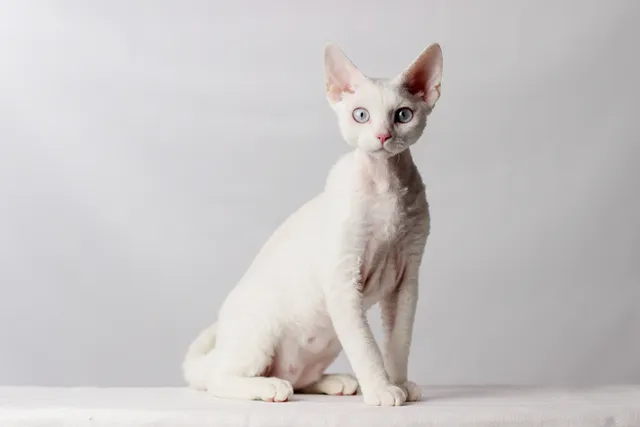
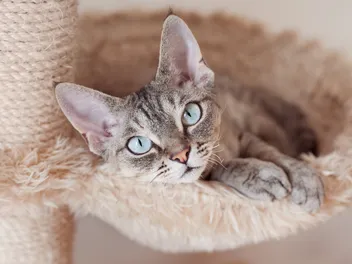
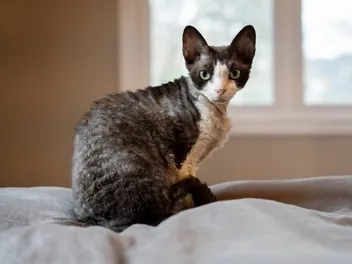
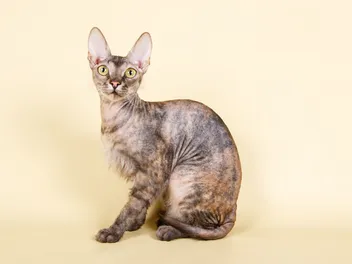
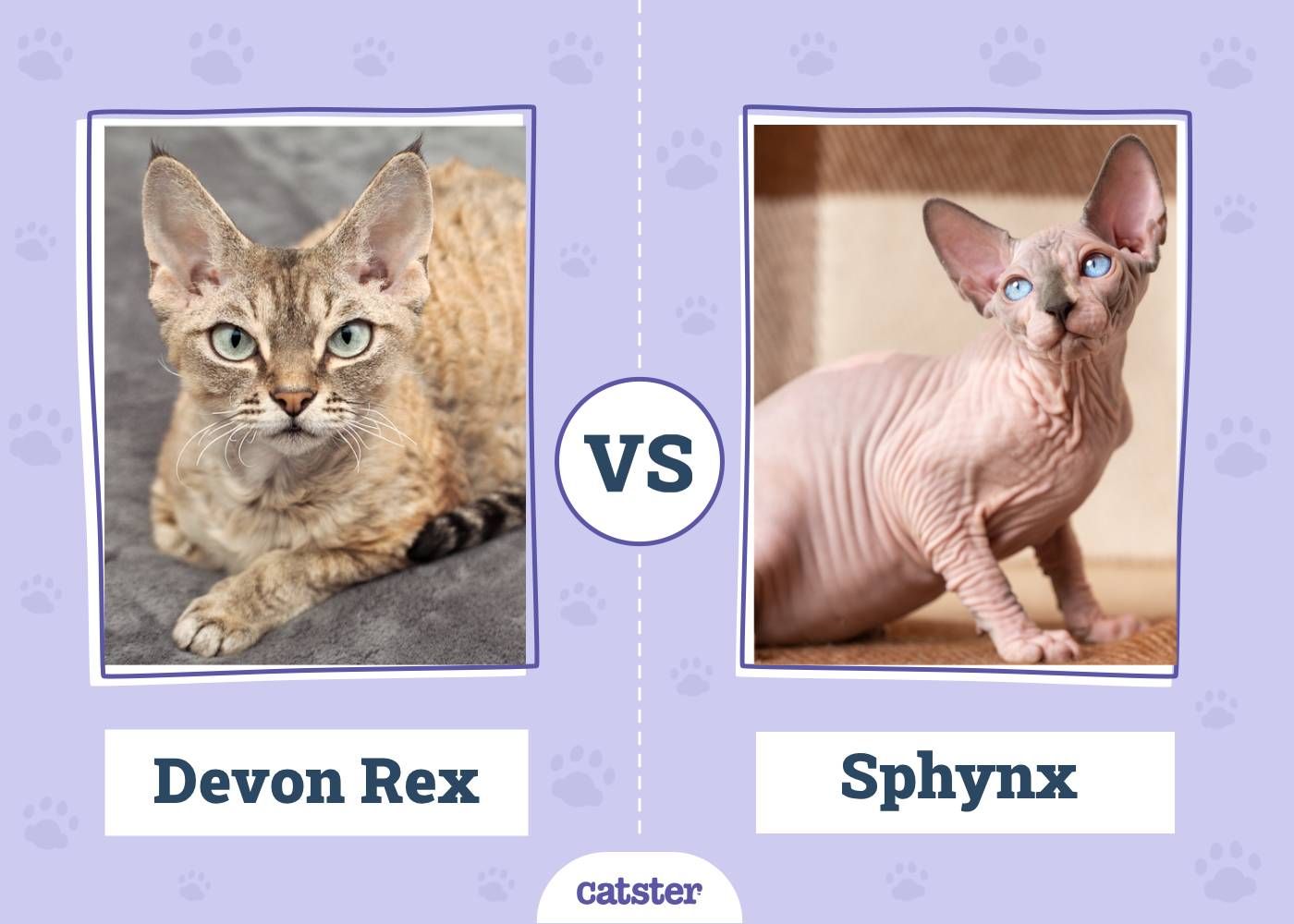
The Devon Rex has a very unique appearance. Their slightly elfin face, strong, angular features, and large eyes are just part of what makes them so visually striking. Their tall ears and wavy coats add further allure to their appearance.
They originated in the late 1950s in Devonshire, England. Many people believe that the Devon Rex must share genetic makeup with the Cornish Rex due to similarities between the two. Test breeding, however, showed that the Devon Rex developed through a natural genetic mutation.
Personality
The Devon Rex is very sociable and curious, and they’re interested in everything and everyone. They are a little mischievous and often have no interest in self-preservation. They can be fearless and usually get themselves into a bit of trouble.
They have a high energy level and crave attention. A Devon Rex thrives best in an environment with plenty of toys and enrichment activities. Their high intelligence makes training them to do tricks a little easier than other breeds.
Most Devon Rex cats get along well with other cats and dogs. Another pet in your home can provide the companionship they need when you’re away.

Health Concerns
The Devon Rex can sometimes develop congenital hypotrichosis, which is caused by a recessive genetic defect. This condition causes thinning hair and baldness and often occurs in patches.
Hypertrophic cardiomyopathy is another potential health concern. It is a common form of heart disease that affects 10-15% of the domestic cat population. Hypertrophic cardiomyopathy causes an enlargement of the heart muscle and is hereditary.
Devon Rex cats have a genetic predisposition for patellar luxation. This condition occurs when the kneecap shifts out of place. Less severe cases are easily treatable, while more serious cases may require surgical intervention.
Request evidence from your breeder proving their kittens have been screened for heart conditions and patellar luxation. All reputable breeders should be able to provide a written health guarantee that states the screenings have taken place.

Care
You don't need to brush the Devon Rex too often since their wiry hairs are very prone to breakage. Instead, use a damp cloth on their fur or bathe them in warm water with a mild cat shampoo once a week. Regular bathing will prevent greasy skin. If greasiness becomes an issue, your cat may develop yeast infections and skin irritation.
Devon Rex cats don’t have many outer guard hairs in their coats. Since their coats are so thin, you’ll need to take extra care if they like to spend time in the sun or outside in winter. We recommend installing UV protection window film on your home’s windows to provide the protection your Devon Rex needs while sunbathing indoors. If you live in a cold climate, you might find your Rex hiding under blankets to keep warm. They might need a sweater to stay cozy during the cold months.

Suitable for:
The Devon Rex is a perfect breed for families who plan to spend a lot of time with their pets. They can be prone to separation anxiety, and if you’re away from home often, you might reconsider this breed. Their home should provide plenty of space for play and exploration to keep them occupied.
Sphynx Overview

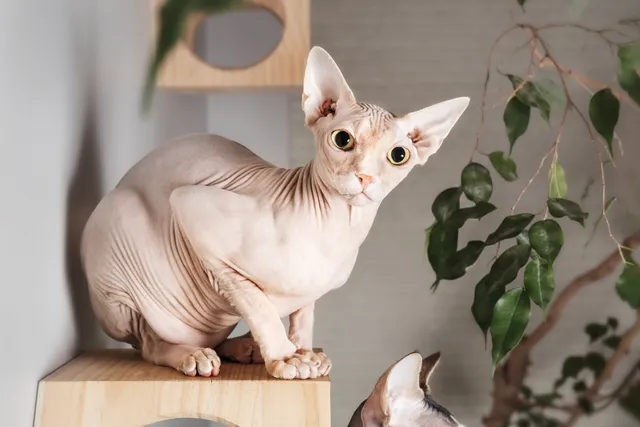
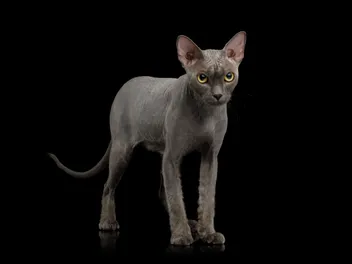
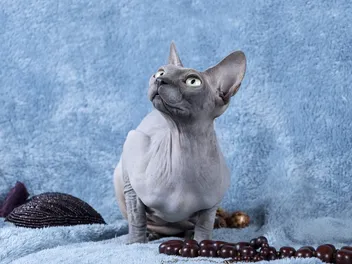
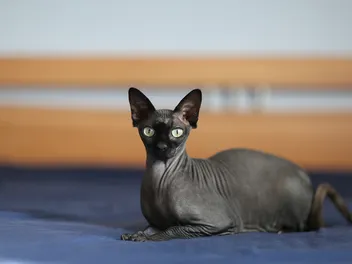
There is no denying the distinctive appearance of the Sphynx. These hairless and attention-grabbing cats have large ears, muscular bodies, and wrinkly skin. Their prominent cheekbones and triangular heads provide a callback to the cats of ancient Egypt, after which they’re named.
While hairless cats have been around for hundreds of years, the Sphynx is the first cat bred specifically for hairlessness. Breeders began developing the Sphynx we know and love today in the 1960s.
Personality
The Sphynx is a devoted and fiercely loyal breed. They don’t like to be left alone for long periods and are known for their neediness. You might find it difficult to do anything without your Sphynx at your side. They always want to be involved in whatever activity you’re doing.
The Sphynx is a quirky breed that provides infinite entertainment for their owners. They are often quite vocal and aren’t shy about using their voice throughout your home. They’re very intelligent and can even learn to do tricks. Sphynxes respond well to positive reinforcement training.
If your Sphynx is being naughty, try rewarding them when they demonstrate good behaviors instead of punishing them for doing something bad. For example, if they’re sharpening their claws on the scratching post instead of your sofa, offer a treat.

Health Concerns
It should come as no surprise that Sphynx cats are prone to skin conditions. Without the hair that other breeds have as protection, the Sphynx can develop rashes and fungal infections easily. Excess oils on their skin can cause urticaria pigmentosa, which causes red spots and lesions.
Sphynx cats often run into issues with their ears. Dirt can find its way into their ears easily since no hair is there to protect them. Oils can also build up in the ear and act as an attractant for dust and dirt.
That same lack of fur can cause body temperature regulation issues. Sphynx owners often need to invest in sweaters, heated cat beds, and other warmth-inducing accessories for their homes. Since they can’t keep their bodies warm like other breeds, many Sphynx owners choose to keep their cats indoors.
Like other purebred cats, Sphynxes may be prone to heart issues. They can suffer from hypertrophic cardiomyopathy just like the Devon Rex. Regular echocardiograms are something to consider if you hope to catch it early.

Care
Sphynx owners must be prepared to spend time grooming their cats every week. Their skin requires weekly bathing or sponging to remove oily secretions that can cause irritations. These secretions can also occur in the outer ear, so the ears need regular cleanings to prevent ear infections.
Sphynx cats are often cold without a traditional fur coat to keep them warm. Many owners find their cats perched atop electronics like computers or televisions to keep warm. As with Devon Rex’s, Sphynx cats can suffer from sunburns if no sun protection is provided.
Suitable for:
Sphynx cats have very high social demands and require a lot of time and care to stay happy and healthy. They are an amiable and adaptable breed that can get along great with humans, cats, and other animals.
Sphynx owners need to be willing to provide physical and mental stimulation. They do not fare well on their own for too long, so they’ll need a home with a lot of love to give. The perfect Sphynx parent must be willing to sacrifice their laps for their hairless companion always to snuggle on.
Which Breed Is Right for You?

While Sphynx and Devon Rex cats have some definite similarities, they are separate breeds with several key differences. Perhaps the biggest distinction between the two is their coats. The Devon Rex's short, wiry hair is much easier to care for than their hairless Sphynx counterpart.
If you do not want to deal with cat hair, the Sphynx is better for you. However, if you live in a colder place, a Devon Rex will be slightly better for that climate than a Sphynx. Devon Rexes and Sphynxes are family-friendly and loyal breeds. The choice between the two will ultimately come down to how much time you must put toward grooming and playing. No matter your choice, either cat will make a loving companion with the proper care and attention.
Related Read: Blue Sphynx Cat: Pictures, History, Facts & More
Featured Image Credit: Left - Veera, Shutterstock | Right - Alexander Piragis, Shutterstock
Expert cat care, straight to your inbox
News, insights, and useful advice, delivered to you.

No spam — unsubscribe anytime.
By signing up, you agree to our Terms & Conditions and Privacy & Cookies Policy.
How useful was this post?
Click a star to rate. You can leave written feedback afterwards. (We read all feedback.)

For Chantelle, writing and animals are the two driving forces in her life. Growing up on the Canadian prairies surrounded by pets, she now shares her home with five cats, two guinea pigs, and a bearded dragon. Chantelle, her husband, and their child pride themselves on being dedicated pet parent, even spending a fortune on wall-mounted cat shelves to provide their cats with an indoor jungle gym. When she's not snuggling with her cats or photographing their humorous moments, Chantelle is exploring the Rocky Mountains, rewatching her favorite Netflix series, and reading up on various random subjects.