Redirected Aggression in Cats: Vet-Verified Causes & How to Stop It


In this article
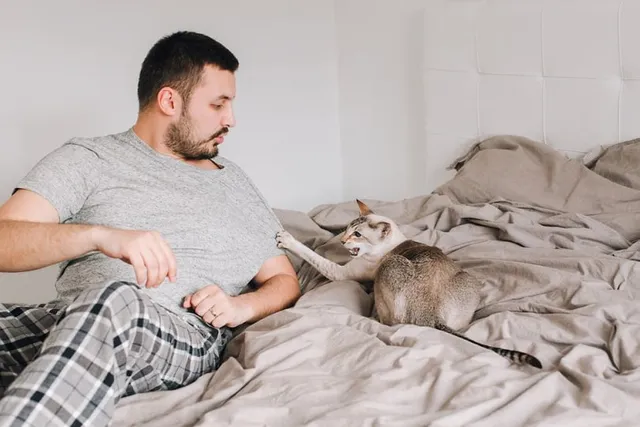
Redirected aggression occurs when a cat becomes frightened or overstimulated by something they can't get to or do anything about and then attacks a person or another pet who has nothing to do with the triggering event.
Redirected aggression can cause sudden attacks and lead to serious injuries. It's a concerning problem that can lead to cats being rehomed or relinquished due to safety concerns if the issue isn't addressed and remedied.

What Is Redirected Aggression?
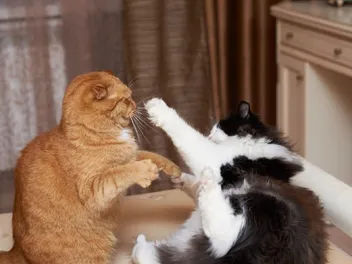
Redirected aggression can occur when an overstimulated cat cannot reach what is triggering them, which leads them to lash out at nearby people or animals.
For example, cats can become triggered by seeing animals scampering about outside. Sudden, loud noises can also lead to redirected aggression. Cats sometimes launch attacks after the triggering events, which can make it difficult to identify what prompted the behavior.
It can be unpredictable, but it’s a relatively common form of feline aggression and is responsible for some feline attacks on human family members.
Because the aggression is unleashed on innocent parties, it can cause serious problems in household relations and a breakdown in trust. It takes time and effort to identify the problem and correct it. Unfortunately, redirected aggression often leads to cats being rehomed.
Cats can stay on high alert for relatively long periods after a frightening or triggering incident, and some need a few days to return to a baseline. Attempting to interact with cats while still on high alert can sometimes lead to further attacks.

What Are the Signs of Redirected Aggression?
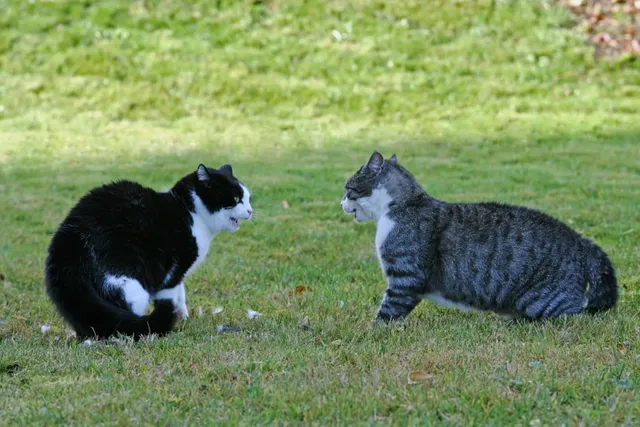
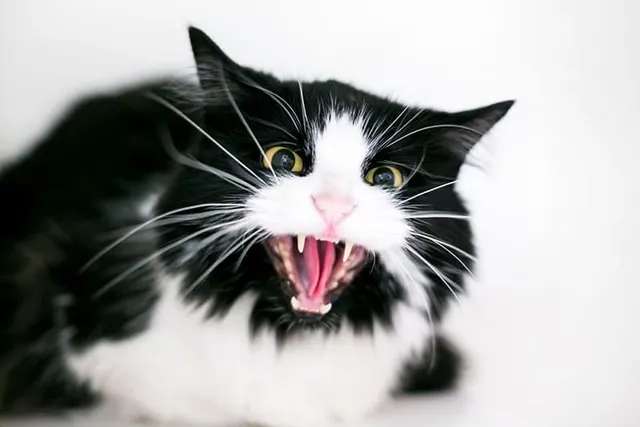
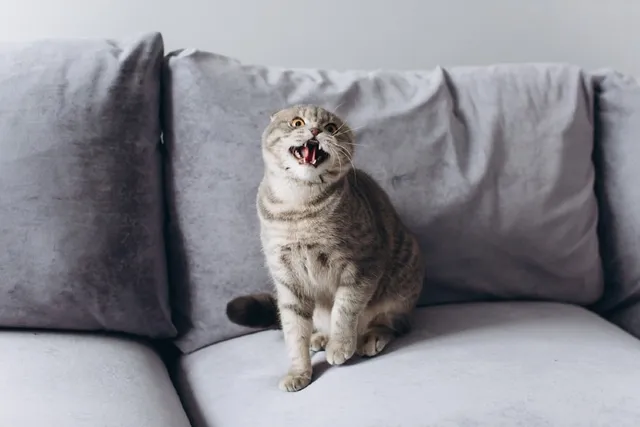
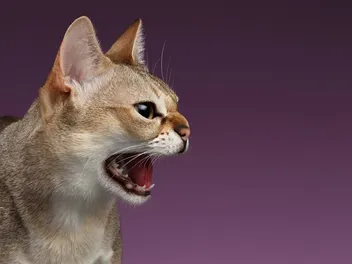
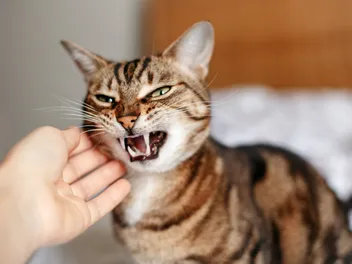
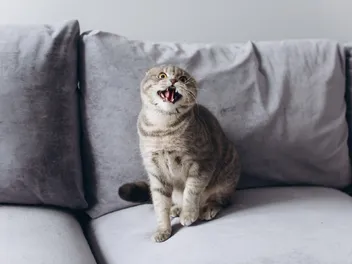
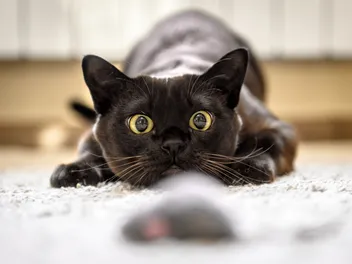
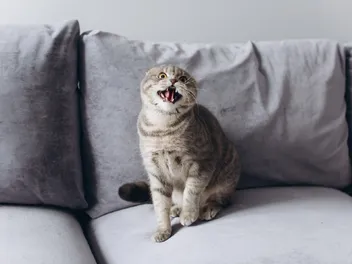
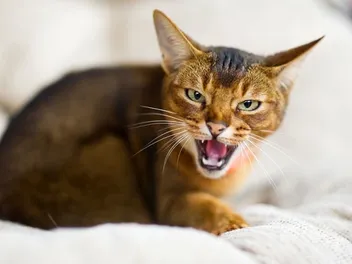
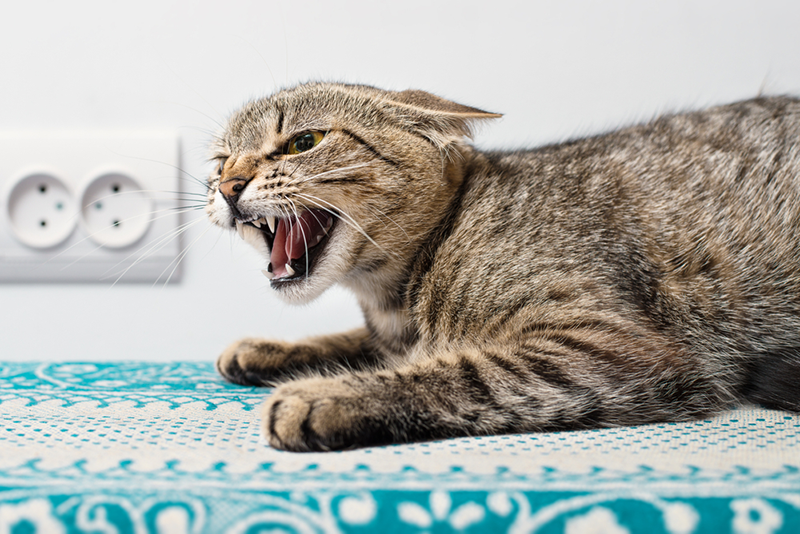
A cat's body language can let you know if they are about to get aggressive. Direct staring, a thrashing tail, crouching, and ear flattening are indications that a cat is veering towards attacking. Scared cats have dilated pupils and sometimes hiss to encourage threats to move on.
Giving cats space and calming them down is often enough to diffuse these situations. It's important not to engage with cats who show signs of fear, such as hissing, swatting, or crouching; approaching them can trigger aggression. If you are concerned about your cats behavior, we suggest speaking to a vet.
What Are the Causes of Redirected Aggression?
New guests, strange noises, and high-pitched sounds can trigger redirected aggression. It commonly occurs after cats see prey animals or (other cats) through windows, have problematic interactions with dogs, become scared after being outside (if they typically are indoor-only kitties), or smell other cats on visitors or loved ones.
Stressed cats may have more difficulty responding appropriately to scary situations, and there may be a link between stress and redirected aggression. Stress often results when cats are consistently exposed to negative environmental situations.
Cats exhibiting aggression should be seen by a veterinarian to ensure there is no health problem causing the behavior. The treatment depends on how serious the attacks are and what triggers them.
Veterinarians and veterinary behaviorists can use medication and behavioral management to address more serious aggression. If the trigger for the aggressive behavior can be identified, then a desensitization protocol is usually advised. This involves gradually exposing the cat to the trigger at slowly increasing intensities when they are calm and not aroused. If it is a sound this may be keeping it at a low volume to start off with, or by keeping the trigger further away from the cat.
This process takes time and patience and usually referral to a behavior specialist is advised so they can tailor treatment to your cat’s circumstances and triggers.

How Do I Care for a Cat With Redirected Aggression?
Happy, healthy cats are less inclined to become aggressive. Luckily, pet parents can follow a few easy steps to help their companions feel more comfortable in their environments.
Provide High Perches
High perches provide cats with places to go when they need space between themselves and something scary. Some cats feel more comfortable when they can retreat to an elevated platform, and having access to cat trees and shelves can reduce stress.

Set Up Safe Places
Anxious cats benefit from having calm places to hang out where they can de-stress and get away from stressors before they become overwhelmed.
Placing your cat’s bed and toys in a quiet room allows them to escape to a comfortable spot when the house is too chaotic.
Is there anything better than a happy cat? We don’t think so—that’s where the Hepper Nest Bed comes in.

- COMFY KITTY - Your cat or kitten will have an amazingly deep sleep in this self warming, nesting cat bed. The warm, fluffy cat bed lining provides calming stress relief for cats of all ages.
- PRETTY HOME - This round cat bed has a modern and unique design that’s perfect for a sleek indoor look. We don’t think of it as cat furniture but think of the Cat Nest as a “cat home”.
- SPACE SAVER - Reclaim your desk, window sill, or couch from kitten encroachment. This calming nest cat bed has an elevated, space-saving hideout so comfortable your kitty can't resist!
This product was designed with both your and your kitty's happiness in mind. While the comfortable bowl shape and wide lip to rest their heads on are ideal for sleepy kitties, you’ll appreciate the removable and machine-washable fleece liner for easy cleaning. It doesn’t get any better than this! Click here to try it out.
At Catster, we’ve admired Hepper for many years and decided to take a controlling ownership interest so that we could benefit from the outstanding designs of this cool cat company!
Provide Hiding Places
Some cats respond aggressively due to fear and stress, but others hide in response to frightening situations. Having hiding places to retreat to is essential to creating a feline-friendly environment.
If your cat likes hiding under the bed, you can remove the items you’ve stored there to make it more inviting.
Increase Their Mental Stimulation
Cats can become stressed due to boredom and a lack of mental stimulation. Food puzzles and cat trees can keep them engaged, and playing with them with interactive toys like cat wands and teasers can help satisfy their natural predatory behavior.
Looking for toys that will cater to the many needs of your cat? The Hepper Hi-lo Cat Scratcher is one of our favorite cat products, and it will encourage your cat to get active. Its clever three-angle design offers multiple ways for your cat to climb, stretch, and exercise. Made of a sturdy plywood base and a replacement cardboard insert, this scratcher is an option that cats can enjoy for years to come. If your cat requires a little encouragement for self-play, the Hepper Catnip Mice Toy Set is a fantastic choice for their instinctual needs. Made with natural, bite-resistant hessian fabric and filled with organic catnip. Cats can satisfy their natural prey instincts while getting the physical activity they need to thrive.
| Image | Product | Details | |
|---|---|---|---|

|
Hepper Hi-Lo Cat Scratcher |
|
Check Price |

|
Hepper Catnip Mice Toy Set |
|
Check Price |
At Catster, we've admired Hepper for many years, and decided to take a controlling ownership interest so that we could benefit from the outstanding designs of this cool cat company!
Stick to Routines
When cats have routines to depend on, they are less likely to become stressed. Establishing regular routines for meals, playtimes, grooming, and cuddles can help your cat feel more in control and comfortable.
Try Pheromones
Commercial pheromone products can help cats relax. Diffusers that release steady streams of calming pheromones can provide long-lasting stress relief.

Frequently Asked Questions
Are There Other Types of Aggression Commonly Seen in Cats?
Yes. Feline aggression can be caused by fear, territoriality, and medical problems. For instance, within multi-cat homes, cats may treat certain spaces as their property and exhibit aggression when other household cats encroach on this area or when a new cat is introduced to the home. Play (predatory) aggression is also fairly common, as is petting-related (overstimulation) aggression. The first step to dealing with sudden, unexplained feline aggression is making an appointment with your veterinarian to rule out health problems.

Which Health Issues Can Lead to Aggressive Behavior in Cats?
Pain from an injury or illness can cause cats to lash out. Other conditions that can lead to aggressive behavior include dental disease and arthritis. Cats suffering from feline dementia can also exhibit behavior changes which can be aggressive.
Can Punishing Cats Reduce Aggressive Behavior?
Punishment doesn't work for addressing feline aggression. It can make things worse by causing cats to become even more scared and anxious, which are often the very issues that lie behind the aggression to begin with.
Conclusion
Redirected aggression occurs when cats become aroused, agitated or scared by something they can't get to and then launch attacks on nearby people or pets. It can be sudden and unpredictable, and it also has the potential to be dangerous.
Recognizing the signs that a cat has become overstimulated and giving them space to calm down can prevent them from attacking. If your cat suddenly becomes aggressive, contact your veterinarian for an examination. They can determine if it’s a behavioral or medical issue and help you resolve it.
Sources
Featured Image Credit: SerPhoto, Shutterstock
Expert cat care, straight to your inbox
News, insights, and useful advice, delivered to you.

No spam — unsubscribe anytime.
By signing up, you agree to our Terms & Conditions and Privacy & Cookies Policy.
How useful was this post?
Click a star to rate. You can leave written feedback afterwards. (We read all feedback.)
Lorre Luther is a writer who is firmly convinced that cats are smarter than humans. She left her law career in the United States and moved to the Netherlands to follow her dream of becoming a writer. Lorre currently lives in Rotterdam, she enjoys traveling and greatly appreciates the beauty of nature. Lorre has a spot for animals and admires the intelligence of cats.