


In this article
Cats thrive in various environments and as long as some requirements are met, they can live happily with others in stray cat colonies, with one or more companions at home, or on their own. However, domestic cats are, by nature, solitary creatures who hunt on their own and are territorial. They are programmed to avoid encroaching on other’s space to avoid massive resource competition and conflict. If your cat dislikes other felines, it may be the consequence of not having enough positive experiences with other cats during the socialization period when they were kittens, between 2–7 weeks of age, and later in life.

Territoriality, Conflict Resolution, and Change
Cats are most comfortable when they have territories of their own to command, and they may not be well suited to conflict resolution since they didn’t develop in social groups. Unrelated cats living with each other can trigger cats’ territorial instincts, particularly if there’s resource competition.
Some cats, particularly those who have lived with others since kittenhood, enjoy the presence of other cats, while those who have spent lots of time on their own are often less than thrilled when asked to share space.
Introducing a new feline to the home brings changes, which can be particularly difficult for adult cats who have lived their entire lives as singletons to adjust to, which can lead to stress and aggressive behavior along with problems such as spraying and excessive grooming.

The 6 Factors That Cause Cats to Dislike Being Around Other Cats
Whether a cat gets along well with other cats has a great deal to do with their age, background, and personality, but other factors can also play a role, such as how they were socialized and whether your cat’s personality meshes well with that of the other cat.
1. Lack of Socialization
Cats that don’t receive sufficient socialization during their sensitive period tend to have severe difficulties understanding how to interact with other cats. Socialization involves exposing kittens to different situations and animals to allow them to become comfortable navigating unfamiliar situations, being handled by people, and interacting with other pets.
Kittens’ are most open to the process during their sensitive period, between 2 and 7 weeks old. Cats that never really learned how to play well, or interact positively with others, sometimes exhibit behavior that’s not appreciated by other cats and can easily be interpreted as aggression.
2. Routine Disruption
Cats enjoy routine and having a predictable environment. Since cats can’t rely on clocks to determine how late it is and what activity should come next, they typically rely on external clues from regular activities to tell them what to expect next during the day.
Significant disruptions, such as suddenly introducing another cat to the home, can create stress for some cats. They usually have an easier time accepting other cats when the introductions are taken slowly, and both pets have time to become used to the other. Cats that are feuding can calm down if given enough time apart and reintroduced to each other slowly.
3. Territoriality
Cats are territorial creatures that are often not interested in sharing their space with others. Cats use pheromones to mark their territory and let others know to stay away. They have scent glands around their chins and whiskers and in between their paw pads.
Cats may also use urine to establish their boundaries, and those who aren’t used to living with others can sometimes go into territorial overdrive when triggered by the presence of a new cat. Ensuring that the territory satisfies the needs of all cats in the household is crucial for creating a harmonious living situation.

4. Resource Competition
Pets in multi-cat households can fight over resources if asked to share things such as scratching posts, litter boxes, hiding spots, and cat trees. One resource per cat, plus an extra, is a good guideline for keeping things calm in multi-pet homes.
Having at least three water bowls for two cats, placed well apart from each other, for instance, can prevent aggressive cats from blocking the other’s access to resources. Put food, water bowls, and litter boxes in various locations to make it easy for pets to meet their basic needs without engaging in unwanted interactions. You can provide several scratching posts, beds, toys, and cat trees so the cats don’t have to share.
5. Maternal Instincts
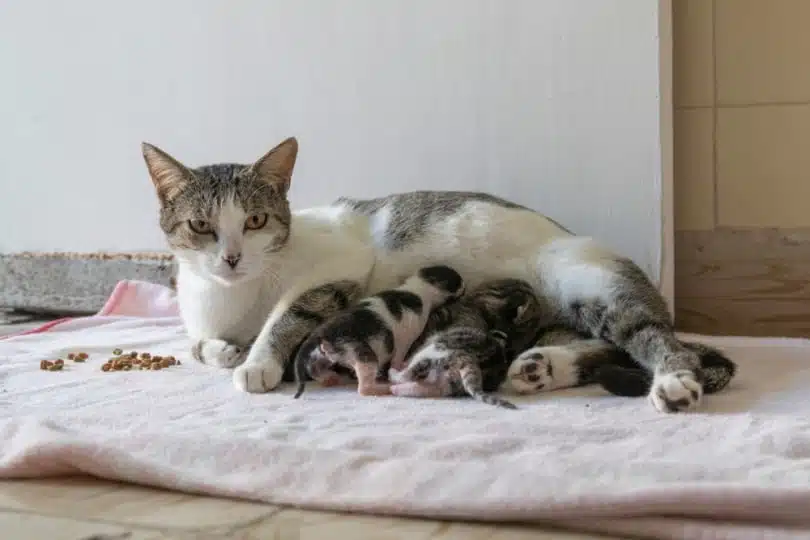
Queens who have just given birth can sometimes lash out aggressively to keep other cats at a distance, particularly when their kittens are young. Mother cats strongly prefer to give birth and spend the first few weeks after delivering kittens in calm, quiet environments.
They’ll often move kittens from one place to another if they’re concerned about the level of activity. Queens who are actively trying to keep a cat away from her kittens may hiss, growl, or even bite the intruder to encourage them to keep moving. These issues usually resolve once kittens are a bit stronger and able to get around on their own.
6. Differing Personalities
Some cats get along perfectly well with one cat but have zero interest in hanging out with others. Confident and spunky cats may not mesh well with timid pets, and two assertive, unrelated, unneutered male cats of the same age may have difficulty being around each other without aggression making an appearance. Older cats may be more inclined to accept kittens, but senior cats may not enjoy dealing with energetic felines.
Are There Ways to Help Cats Get Along?
In addition to having sufficient resources to minimize competition between pets and providing an enriched environment, there are also other steps you can take to encourage peace, such as ensuring that introductions are done very gradually and making sure they have safe ways to get away from each other when situations become too heated.
Hiding Places and Perches
You can install several high perches to provide places for cats to escape when feeling stressed. Cozy hiding places where they can rest in peace can also go a long way towards defusing conflict.
Distraction
Once patterns of aggression get started, they’re often hard to stop, so putting an end to conflicts before they progress is important to maintaining a calm environment. Distracting cats with loud noises or toys often convince them to engage in other activities.
Training
Cats generally respond well to positive reinforcement; punishment can increase stress levels and make things worse. Rewarding cooperative behavior and giving worked-up cats time to relax alone can sometimes lead to fewer household fireworks. Separating cats and giving them time to get to know each other (again) slowly under controlled circumstances may also help, and behavioral therapists or veterinarian can provide expert guidance as well.
Conclusion
Cats share many behaviors with their wild relatives, and they haven’t been domesticated for very long. Cats in the wild prefer living and hunting independently, but they can live in groups or pairs.
Cats are territorial; they like to live and hunt in spaces largely off-limits to other cats. When they live in groups, the members are often related, and there’s usually little resource competition. Unrelated companion cats can become stressed when asked to share space largely due to their innate territoriality, but how cats react to others also has to do with factors such as personality type and level of socialization.
Featured Image By: Konstantin Dem, Shutterstock





