Why Is My Cat Peeing on My Clothes? Tips to Stop It (Vet Answer)
In this article
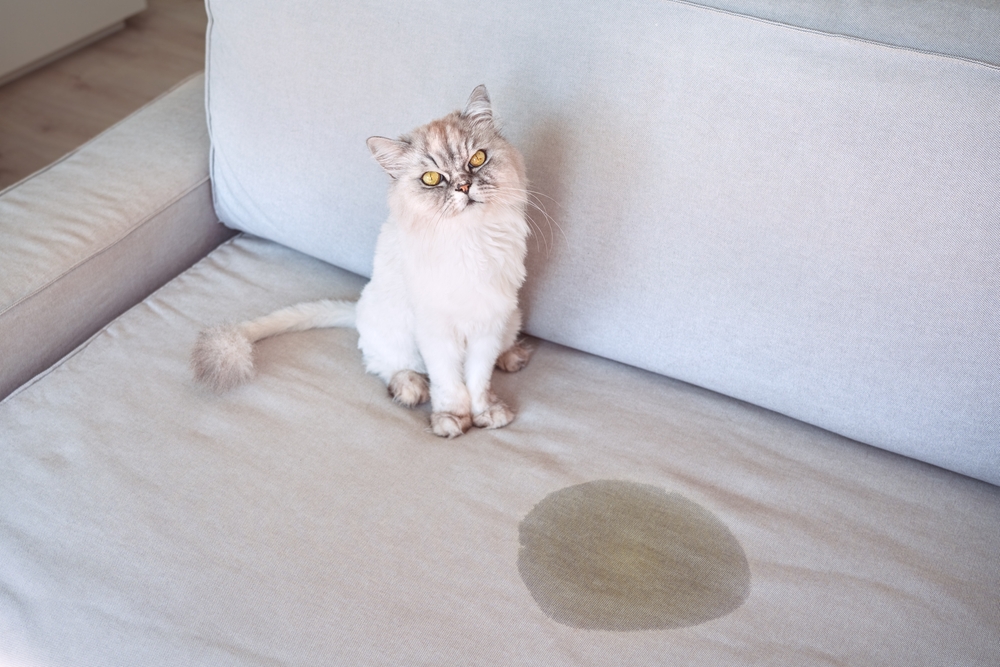
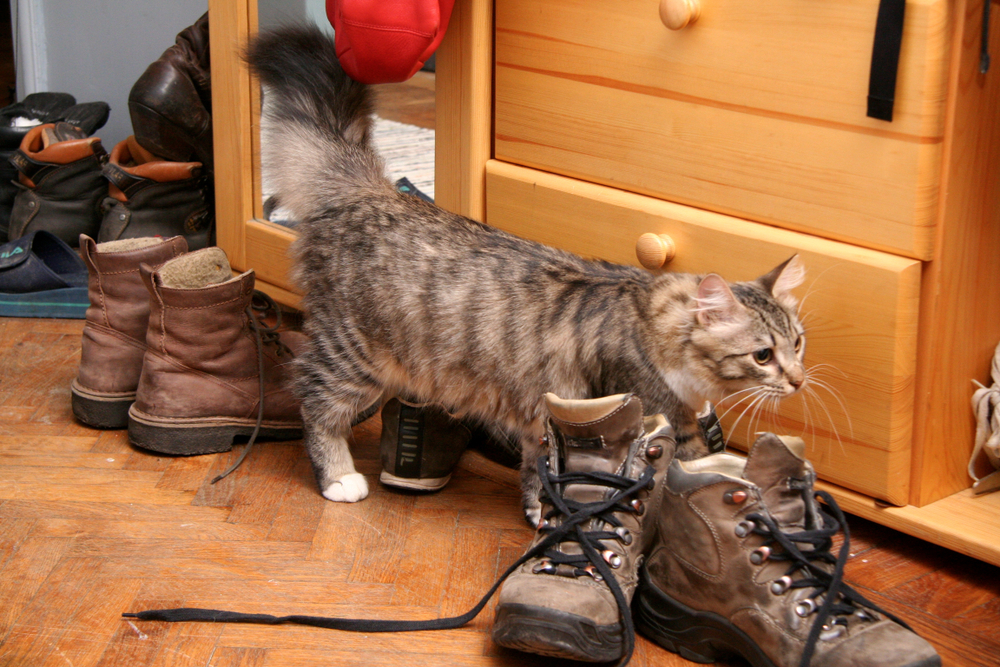
Finding out that your cat has been urinating inappropriately in your house can be incredibly upsetting. It is even more upsetting when you discover that your cat is peeing on your clothes. Does your cat have a personal vendetta with you that they are trying to settle? There are several reasons for a cat to be peeing on clothes, ranging from behavioral to medical problems, none of which is vindication on your cat’s part. Continue reading to learn more.

Cleaning Tips
You might find repeated accidents result from your cat detecting trace amounts of urine odors from your clothing or the surrounding storage areas. If that's the case, we suggest you use a pet-friendly enzyme cleaner designed to eradicate the tough smells that our noses may miss but our felines can sniff out. Secondly, maintaining a fresh litter box with frequent scooping and litter changes will encourage your cat to keep doing their business here. Dirty or soiled litter may make them want to find somewhere more welcoming to go pee.
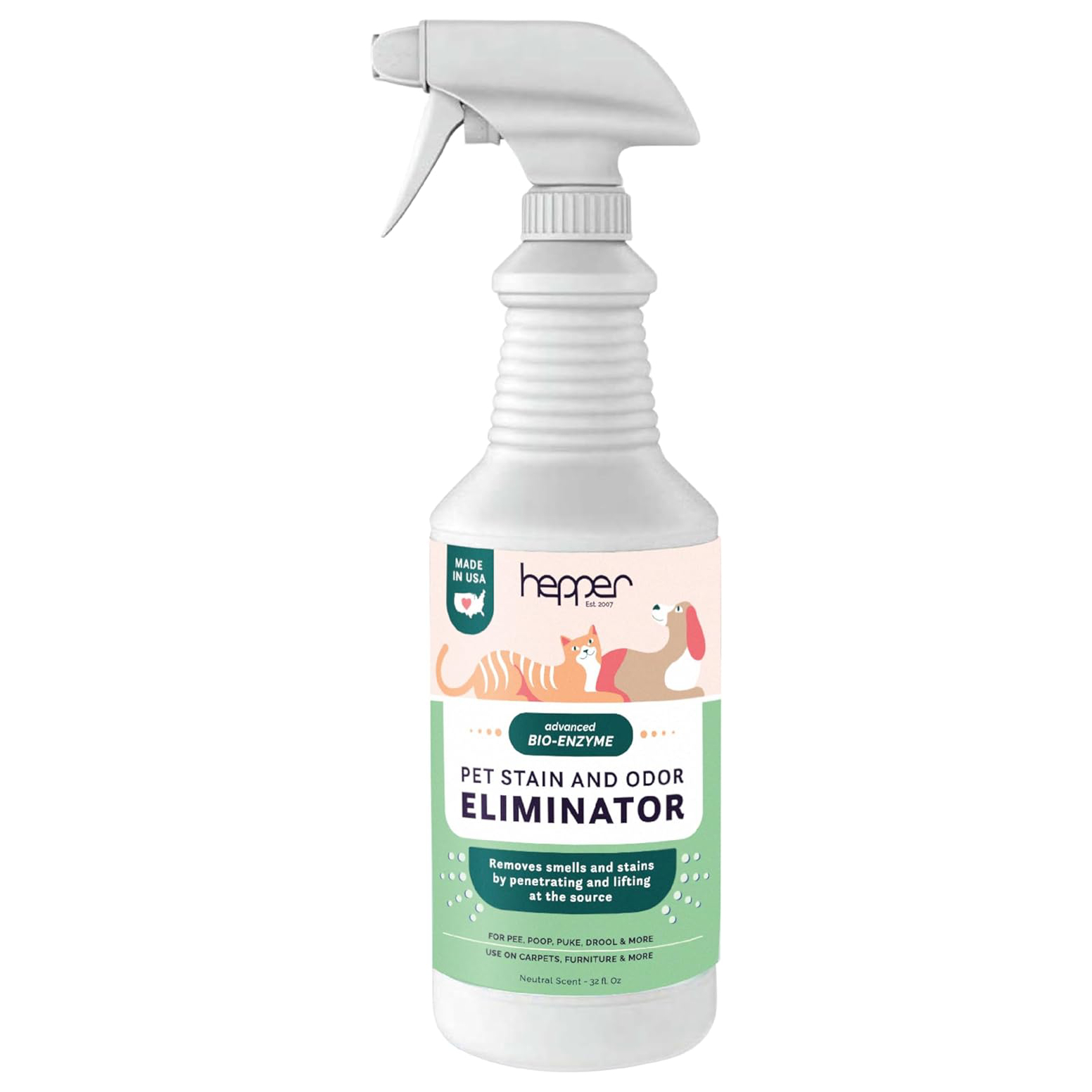
Combating tough cat litter smells is an ongoing battle for pet parents but luckily, there are products out there designed to help! One product that significantly reduces odors is the Hepper Enzyme Spray.
| Image | Product | Details | |
|---|---|---|---|
|
Hepper Advanced Bio-Enzyme Pet Stain & Odor Eliminator Spray |
|
Check Price |
At Catster, we’ve admired Hepper for many years and decided to take a controlling ownership interest so that we could benefit from the outstanding designs of this cool cat company!

The 5 Reasons Inappropriate Elimination Occurs
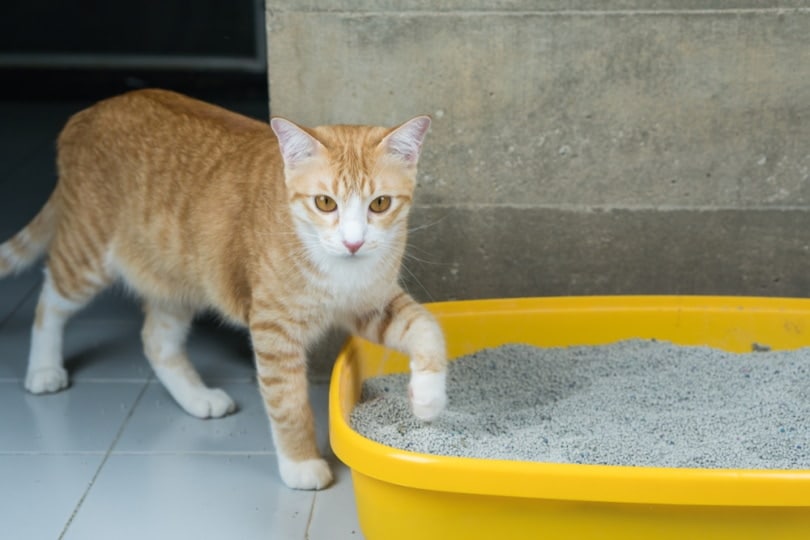
1. Poor Litter Box Conditions
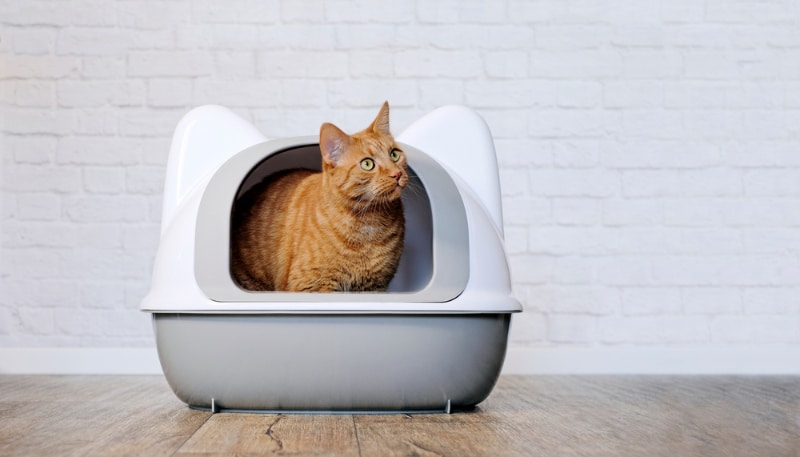
Cats prefer having a clean location to eliminate, and when their litter box doesn’t meet their standards, they might find somewhere else to relieve themselves. It’s good practice to clean the litter box at least one to two times daily to ensure appropriate conditions. Multi-cat households should be able to supply multiple boxes to meet their cat’s needs. A general rule of thumb is that there should be one more litter box than there are cats in the household. Other aversions to the litter box could be caused by odor, noise in the area, or difficulties entering the litter box, e.g., the box is too high for them to easily access. Some cats also have a preference for litter type or covered/uncovered litter boxes.
- Did you know that a litter deodorizer can significantly reduce litter box odors? Learn more about our favorite litter additives here!
How This Can Be Addressed
Ensure that the litter box is cleaned frequently. If you have a multi-cat household, provide numerous litter boxes in accessible locations throughout the house, but never in busy or noisy areas. This will encourage cats to use their preferred box. Make sure the litter boxes are big enough for your cat, offer a covered and uncovered box, and trial different litter types to find out what your cat prefers.

2. Stress or Anxiety
Cats are wary by nature. Often cats can have stress or anxiety, and the underlying cause may go unrecognized by their pet parent. When cats experience anxiety for any reason, they may urine-mark as a way of claiming their territory. Cats may be experiencing inter-cat turmoil, missing an owner who has gone away, or be anxious about house guests. Alternatively, maybe their home life has changed and they are anxious. Even something as small as rearranging the furniture can cause cats to urine-mark. Stress can also sometimes lead to inflammation of the bladder in cats, which needs veterinary treatment.
How This Can Be Addressed
Trying to lessen your cat’s stress is essential. Provide your cat with their own space, where they can be away from other cats and stressful stimuli.
Pheromone sprays and diffusers are available, like Feliway, that are designed to be calming. Having these in your home can reduce your cat’s overall stress levels. Closely observe your cat or cats. Are there territorial behaviors that are being noted? Ensure that litter boxes are not kept near a certain cat’s claimed territory. Have litter boxes available throughout the household. In some severe cases, your pet may benefit from an anxiety medication. Some cats may require this for a short period of time, whereas others may need this for life.
3. Arthritis
As cats age, they become more prone to arthritis. Arthritis may make posturing to urinate and getting in and out of the litter box more painful to accomplish. In cases where this is occurring, the cat may find an area that is more easily accessible to empty their bladder.
Treatment and Intervention
If you suspect that your cat is not able to easily gain access to their litter box due to their joints, consider moving the box. For example, if your litter box has always been upstairs, but now it is more challenging for your cat to make it upstairs, consider moving it downstairs. Alternatively, if your litter box has deep walls, you may want to try a shallow pan so your pet doesn’t have to jump over the high walls. Additionally, reach out to your veterinarian to see which arthritis interventions are best for your cat.
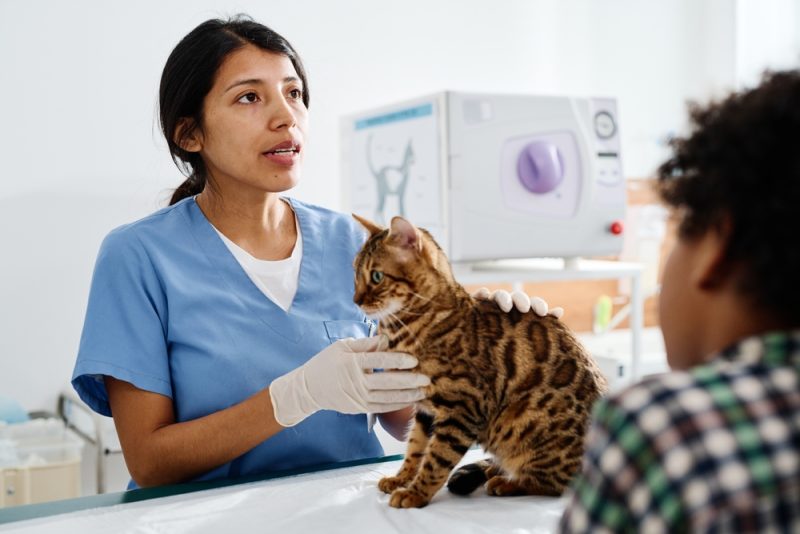
4. Urinary Tract Concerns
Unfortunately, cats urinate inappropriately when they are battling certain health conditions.
Cystitis, or inflammation of the bladder, causes cats to urgently need to urinate and they may do so outside of the litter box. These cats will generally urinate in small volumes and may have blood in the urine. Urinary tract infections, cancers of the bladder, and bladder stones are all causes of cystitis. However, it can also occur due to stress. When no underlying cause of cystitis can be identified, it is referred to as feline idiopathic cystitis, and stress is the likely culprit. If at any point your cat becomes unable to urinate, this suggests a urinary blockage. Please seek immediate care for your cat, as this condition is life-threatening if not addressed quickly.
Certain disorders will cause cats to drink and urinate more than usual; diabetes, kidney disease and an overactive thyroid gland are common causes. These cats may urinate in large volumes around the house because their bladder is so full.
Treatment and Intervention
Your cat will need to visit a veterinarian. Feline idiopathic cystitis is inflammation of the bladder wall which typically occurs due to stress. Reducing stress within the household and appropriate pain control is critical in resolving this condition. Alternatively, urinary tract infections often need appropriate antibiotics and pain relief to resolve signs. Other problems often need ongoing veterinary treatment.
5. Hormonal Behavior
In intact males and females urine marking may signal availability for mating. This behavior is very similar to territorial marking but only occurs in unaltered cats. It may occur on upright surfaces and in cats that have no problem using the litter box at other times.
Treatment and Intervention
Once all medical causes or inappropriate urination have been ruled out, your cat should be desexed to reduce any hormonal motivation for urine marking.


Veterinary Intervention
If your cat is inappropriately urinating, reach out to your veterinarian. Your veterinarian will ask you several questions to better understand your household and patient needs, and examine your pet. The veterinarian may recommend a urinalysis, bloodwork, and potentially an ultrasound or radiograph to screen for medical problems. If everything appears normal, your veterinarian will likely shift their concerns to trying to lower stress and anxiety within the household. There are several ways this can be done, including environmental changes, pheromones, medications, probiotics, and enrichment.
Your veterinarian may recommend adjusting the litter box to make it more desirable. This may include trying a new substrate in the box, replacing the box entirely, or moving the box to a new location. Because cats are finicky creatures, it is important to not make too many changes at once, as this could further their stress and litter box aversion.
Setting Your Cat Up for Success
Tips for Getting Your Cat To Use the Litter Box:

- ADVANCED ENZYMATIC CLEANER - Penetrates the most stubborn smells and stains at the deepest molecular levels to dissolve any pet mess you encounter and lift it away at the source.
- FOR ANY MESS, ON ANY SURFACE - This pet odor eliminator cleans your carpets, floors, furniture, fabrics, and more. Whether it's urine, feces, vomit, or drool, you can erase all foul spots and smells!
- FRESH, NATURAL ODOR - Our unique formulation doesn't rely on dangerous or unpleasant chemical fragrances to get the job done. We eradicate smells and stains, not just cover them up.
At Catster, we’ve admired Hepper for many years and decided to take a controlling ownership interest so that we could benefit from the outstanding products of this cool cat company!

Conclusion
It is important to recognize that your cat isn’t urinating outside of their box to upset you. Cats who are peeing on your clothes may be under stress due to an unclean litter box or be battling a medical condition. It is important to closely monitor your cat and seek professional help as soon as possible. Quick intervention will be beneficial to you and your cat. If at any point your cat is unable to urinate, this is considered a medical emergency and your cat must be seen by a veterinarian as soon as possible.
Related Reads:
Sources
Featured Image Credit: AJSTUDIO PHOTOGRAPHY, Shutterstock

Expert cat care, straight to your inbox
Vet-reviewed advice, behavior tips, and the best of Catster. Free, and you can unsubscribe anytime.
By signing up, you agree to our Terms & Conditions and Privacy & Cookies Policy.
Dr. Ashley Darby BVSc (Veterinarian)
Ash has worked in mixed and small animal emergency clinics and general practice ever since 2017 after graduating from Sydney University. She grew up in South Africa and England before moving to Australia, and her passion for animals came from many childhood safaris in the Kruger National Park.
Ash lives with her husband Ben, two energetic Springer Spaniels, and one very tolerant black cat. She also competes in dressage, eventing, and show jumping with her horse, Atlas.
Join the conversation
Ask a question, share your story, or send private feedback.