Why Is My Cat Chewing on Nothing and Purring? Our Vet Discusses Possible Reasons

Cat behavior is a complex world. On the one hand, cats are extremely intelligent animals that seem to empathize with us; they reflect our need for both social time and private time, and this is one of the reasons why we love having them as part of the family.
On the other hand, they sometimes demonstrate bizarre behaviors that defy explanation. Some cats have a tendency to chew, even when not eating. They might also be purring while they do this. Below are four vet-verified reasons for cats “chewing on nothing”.

The 4 Reasons Why Cats Chew on Nothing and Purr
1. Pain
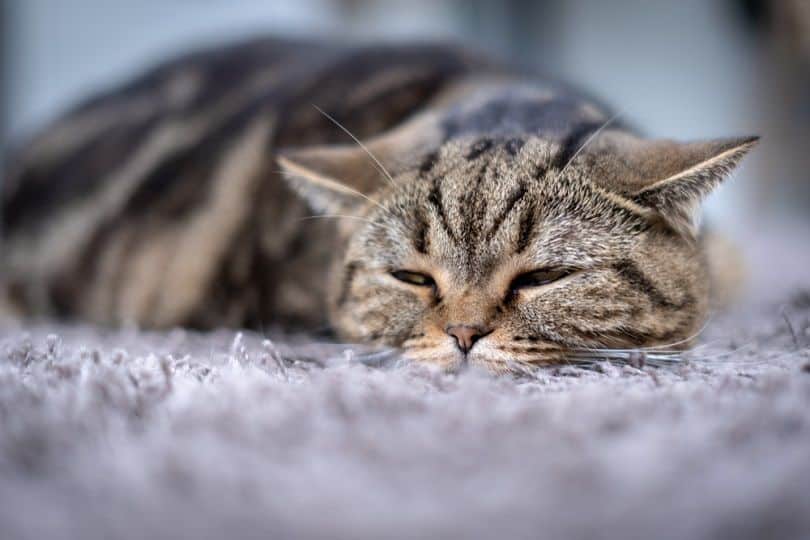
Pain is a common cause of excessive chewing in cats, even when not eating. In fact, most cats will continue to eat food with a sore mouth. However, chewing while not eating can be a sign that there is discomfort in the mouth. The chewing behavior is a cat’s effort to alleviate pain—think of it as rubbing a sore spot.
Common causes of oral pain in cats include dental disease, broken teeth, tumors, and ingestion of chemical substances.

2. Stress or Boredom
Some cats chew on nothing as a result of anxiety or stress. Over the past couple of decades, vets and cat owners have become more aware of feline stress. We know that cats are highly sensitive creatures, often independent, with a desire for routine. Some cats are stressed by the presence of other cats, young children, or excessive noise.
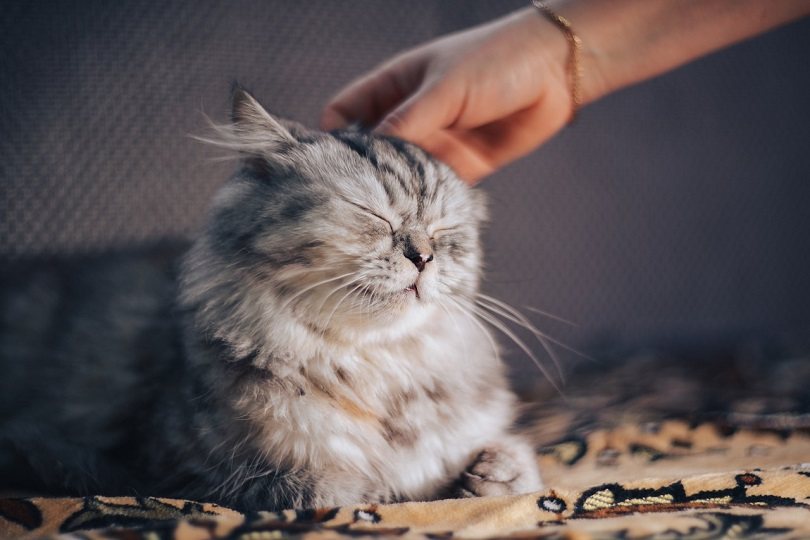
Other cats are anxious as a result of previous trauma or experiences. Regardless, stress can result in chewing and purring behaviors, which might be thought of as a cat’s equivalent to biting the nails.
Providing your cat with enrichment is important to keep them engaged, here are some of our favorite products to keep boredom at bay:
3. Chattering
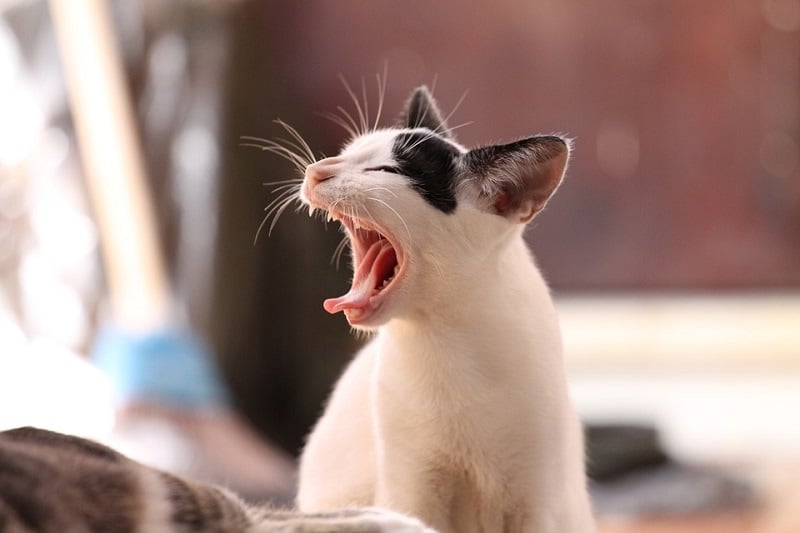
Chattering refers to the shuttering of the teeth, sometimes accompanied by vocalization. This behavior is completely normal, and nothing to worry about. We believe that cats chatter when they are watching a potential prey species such as a bird. While it may be hard to imagine, your cat has hunting instincts somewhere within them.
One theory proposes that cats chatter to mimic the sound of the bird, enabling them to sneak up on the bird (if there isn’t a window in the way).
4. Habit
Some cats will chew and purr out of habit. In other words, there may be no pain, no stress, and no prey species in sight—chewing and purring can be normal behavior, if it is infrequent and short-lived. Additionally, if cats have chewed on nothing as a result of pain or stress, it can be hard to eradicate this behavior, even after the pain and stress are corrected.

Conclusion
If your cat’s chewing is a new behavior, but he or she seems otherwise completely fine, it’s reasonable to adopt a “watch and wait” approach. If you have noticed any drooling, loss of appetite, or other signs of being unwell, it’s certainly worth arranging a visit to your veterinarian.
The vet will be able to check for any signs of pain or disease, as well as discuss stress and feline behavior with you.
Sources
Featured Image Credit: Liz Creative Studios, Shutterstock
Expert cat care, straight to your inbox
Vet-reviewed advice, behavior tips, and the best of Catster. Free, and you can unsubscribe anytime.
By signing up, you agree to our Terms & Conditions and Privacy & Cookies Policy.
Dr. Joe Mallat DVM (Veterinarian)
Joe is a veterinarian from Sydney, Australia. When he's not at his office, he enjoys cooking, exercising, and exploring the wilderness in Australia. He has worked for 2 years at a mixed-species practice on the mid-north coast of New South Wales, treating animals of all sizes. His areas of particular interest include internal medicine, wound management and oncology. Joe's love for the profession comes not only from helping cats, but also from helping their parents and working with wonderful teams of people.
Joe completed his Bachelor of Veterinary Biology and Doctor of Veterinary Medicine at the University of Sydney in 2020.
Join the conversation
Ask a question, share your story, or send private feedback.