Why Is My Cat Bleeding? A Full-Body Overview (Vet Answer)

In this article
Noticing bleeding from your cat is alarming, especially when you don’t know what’s causing it. As imagined, bleeding can occur for several different reasons, ranging from trauma to immune disorders to infectious diseases. Bleeding is not an illness but more of a sign of something else. If your cat is bleeding it is strongly recommended that you contact a veterinarian for advice. Continue reading to learn more about common causes of bleeding based on body location.

Body Location
Bleeding From the Eyes
If you notice blood from the eyes, there is a good chance trauma has occurred. Trauma could include scratching around the eye leading to skin irritation, or a more serious injury like trauma to the eyeball. Blood can sometimes be seen within the eye itself with certain types of injury or infections.

Bleeding From the Ears
Ear infections can lead to trauma from excessive scratching. Additionally, cats can develop polyps within the ear that can cause irritation and inflammation leading to bleeding. Significant trauma to the head can also cause bleeding to be seen from the ears.
Bleeding From the Nose
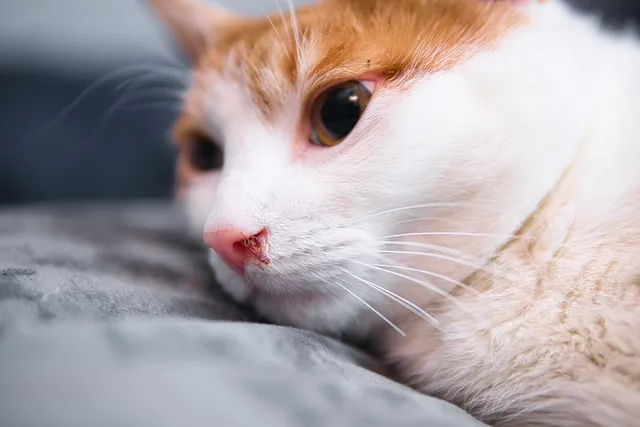
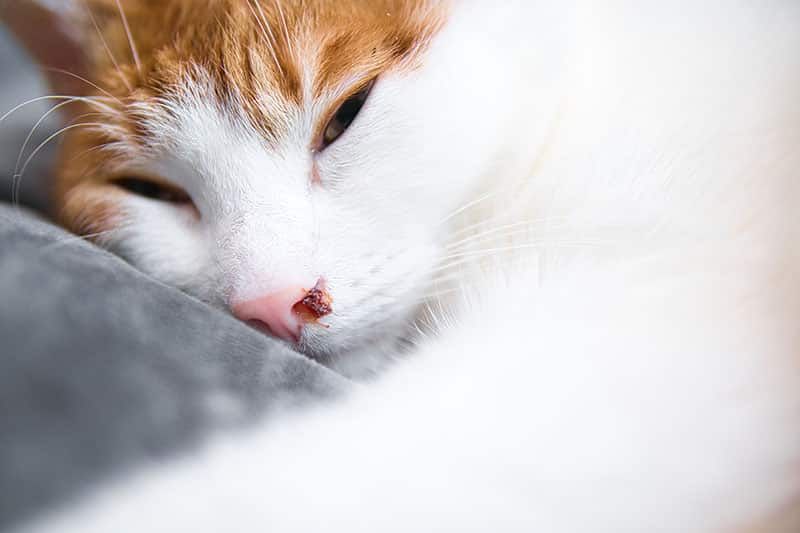
Bleeding from the nose can be alarming, especially as it can sometimes lead to blood splatter. This can occur from a series of things, including nasal passage irritation due to an ongoing upper respiratory infection, cancer, and possibly trauma including foreign bodies. Diagnosing the cause of bleeding from the nose may be made based on history, or it may require a more in-depth investigation, including rhinoscopy, or a placement of a camera into the nasal passages.
Bleeding From the Mouth
If blood is noted in your cat’s mouth, it is often the result of gingivitis. Bleeding can also be noted when teeth are fractured or pulled out, both of which are painful. If trauma occurs to the mouth through fighting or a foreign body, blood may also be noted. Injury to the tongue or mouth tissues or even oral masses can also result in bleeding within the oral cavity. Significant trauma to the body resulting in severe bleeding in the chest can cause blood to be seen in the nose and mouth. Sedation may be necessary to thoroughly evaluate your pet’s oral cavity.
Bleeding From Skin
Bleeding from the skin is often from trauma and is easy to recognize. It is important to note that bleeding can occur with superficial injury to the skin and more significant deeper tissue trauma. Bleeding can be severe in some cases.
Blood in Urine
An unfortunately common concern some cat owners have is noticing blood in their cat’s urine. Cats are unique creatures who can be easily stressed and develop cystitis, or inflammation of the bladder. When this occurs, blood is often noted in the urine. Infection, bladder stones, and cancer are three other common causes of blood in the urine.

Bleeding From Rectum
Bleeding can occur from problems higher up in the gastrointestinal tract, like ulcerations, or from the rectum itself. Cats with diarrhea secondary to infection or constipation may experience bleeding from their rectum due to irritation and straining. Polyps, growths, and foreign bodies are other possible causes.
Internal Bleeding
Patients can also bleed internally, which can be harder to recognize. Signs will be dependent on where in the body the blood is being lost. Some patients suffering from tumors impacting their liver or spleen may experience hemorrhage in their abdomen. When this occurs, abdominal distension may be noted. Alternatively, if bleeding occurs within the chest, labored breathing may be seen. If large amounts of blood are being lost, your cat may experience pale gums, lethargy and weakness.
Clotting Problems
Unfortunately, clotting problems in cats can lead to bleeding that can be severe, and bleeding may be noted from different orifices. When this occurs, immediate intervention is necessary. Some animals may develop immune-mediated disorders that impact platelets or they may have been born with abnormal clotting factors. Alternatively, some patients may have ingested a poison or toxin that causes problems with clotting. An example of a poison would be anticoagulant rat bait. In patients suffering from clotting disorders, bleeding may be noted from different locations.
If you are concerned about the above or have questions about your cat's health, you can also speak to a vet from the comfort of your own home to help make a plan. They can determine when an in-clinic vet visit should be made.
Treating Bleeding in Cats
As the possible causes of bleeding are vast, treatment varies greatly. The first thing that needs to be done is to determine the underlying cause of the blood loss. Often this can be done by listening to the patient’s history and performing a thorough physical examination.
Bloodwork may be recommended to check for other underlying problems and to check red blood cell levels. When anemia occurs, treatment may be needed to quickly increase the level of red blood cells through a blood transfusion. If anemia is noted in your pet, frequent blood checks will be done to see how the red blood cell levels are changing over time.
Depending on where the bleeding is occurring, additional diagnostics may include endoscopy, ultrasound, and radiographs.
Surgery may be necessary to repair wounds and stop bleeding. In other cases, supportive care through fluid therapy may be all that is required.

In Summary
You may notice blood on your cat and not be able to immediately pinpoint the origin. In any case, having your pet evaluated by a veterinarian is strongly recommended. Depending on the findings, the veterinarian will offer treatment recommendations and interventions. If bleeding is severe leading to anemia, ongoing monitoring of red blood cell levels will be needed.
Sources
Featured Image Credit: Kamil Zajaczkowski, Shutterstock
Expert cat care, straight to your inbox
News, insights, and useful advice, delivered to you.

No spam — unsubscribe anytime.
By signing up, you agree to our Terms & Conditions and Privacy & Cookies Policy.
How useful was this post?
Click a star to rate. You can leave written feedback afterwards. (We read all feedback.)
Dr. Marti Dudley is a small animal veterinarian with a passion for preventative medicine and pet parent education. She enjoys being a resource for pet owners as she believes that having a team approach leads to the best possible care of pets. Dr. Dudley enjoys writing and has been able to use this skill as another avenue to educate pet owners outside of the traditional office setting.
Dr. Dudley has been practicing veterinary medicine since 2014. She has an interest in preventative care and emphasizes the importance of pet owner education. Dr. Dudley’s experience in veterinary medicine is broad, as she has worked as a general practitioner, which has allowed her to see and treat many different types of conditions.
Dr. Dudley received her bachelor’s degree in biology from Longwood University in Virginia. She earned her Doctor of Veterinary Medicine (DVM) degree from Ross University.