What Causes Lumps on the Rear Legs of Cats? 4 Common Causes (Vet Answer)

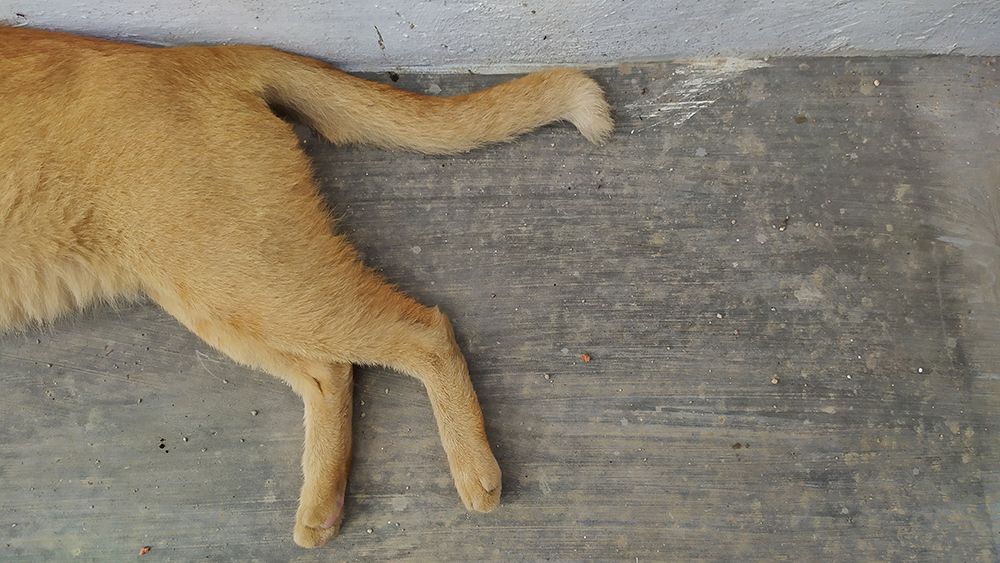
If you’re an experienced pet owner, you know that it is not uncommon that petting your beloved companion can reveal concerns, including lumps and bumps. However, this can come as a real shock to first-time pet parents. So, what are some of the most common reasons for bumps located on the hindlimb of a cat?
Some common reasons for the formation of lumps on the hind limb include infection, local reaction, and cancer. However, there’s a lot more to know about these kinds of bumps that you find. Continue reading below to learn more about lumps on the hindlimb of your cat and how to best address this concern.

The 4 Common Causes of Lumps on the Rear Legs of Cats
1. Cancer
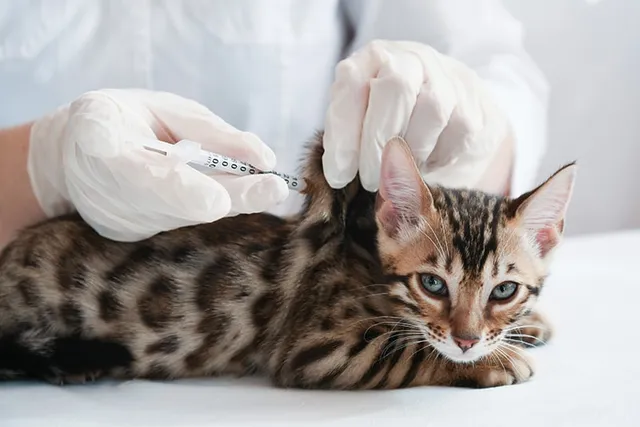
Cancers can impact any part of the body, including the muscles, skin, and bones. A persistent bump located on the hind limb should be closely evaluated by a veterinarian to see if it is potentially cancerous. Historically, a cancer often associated with limbs is an injection site tumor. Due to the loose skin in the hind limb and the distance from the mouth of a cat, hind limbs have been a preferred injection site for vaccines and other medications.
Injection site tumors have mostly been correlated to vaccinations but can occur from any type of injection and are considered to start as an exaggerated immune response. Injection site tumors, also referred to as vaccine sarcomas, were initially correlated to inflammation caused by the adjuvant in the vaccine. An adjuvant is an additive used to draw immune attention.
Since the uptick in sarcomas in the 1990s, fewer vaccines use adjuvants. Although vaccines cause fewer sarcomas since the replacement of adjuvants, these tumors can still develop as a sequel to any type of injection. It is heavily believed that some cats are predisposed to this condition. As a preventative measure, it is recommended that injections be given only as needed and that live vaccines be used when possible.
Furthermore, although injection site tumors are not terribly common, it is recommended to administer injections low on the limb and to avoid the scruff. This way, if a tumor does form because of an injection, it may be more completely removed through amputation, as injection site tumors are often treated aggressively.

2. Abscesses/Wounds
Wounds and abscesses can also result in the formation of a lump or bump on the hind limbs. Abscesses are the walled-off accumulations of pus. They often form following trauma like puncture wounds from biting or foreign bodies and are usually warm to the touch, painful, and fluctuant. Treatment varies, depending on the severity, but may involve surgical intervention or, in some cases, medical management. Antibiotics and pain medications are the main courses of treatment.
3. Allergic Reactions
Local reactions to insect bites or stings can often form lumps, otherwise known as hives. This is due to localized inflammation. These types of reactions can occur anywhere on the body but may be more noticeable on the limbs. These types of reactions are often itchy and can be painful. Antihistamines can be beneficial in these situations.
Flea bite dermatitis is also a possibility and is an allergic reaction to the saliva of a flea. This can cause intense itchiness and can result in the formation of small bumps. These bumps are clustered around the neck and tail base, although they can occur elsewhere too. These bumps can be referred to as miliary dermatitis.

4. Lipomas
Lipomas are fatty deposits often found underneath the skin, or occasionally associated with muscles. Lipomas are non-cancerous, whereas liposarcomas are. Lipomas are incredibly common in canine companions but less common in feline patients.
Generally, lipomas are soft and freely moveable underneath the skin, although exceptions exist. Over time, lipomas can increase in size, although the growth is less impressive in cat patients. Surgical removal of lipomas is recommended if they are locally aggressive, interfere with mobility, or negatively impact the patient’s quality of life.
Diagnosing the Cause
If a lump is persistent, it will be important to have it evaluated by a veterinarian. The veterinarian will do a thorough evaluation of your cat and gently palpate the lump. Based on the exam findings, the veterinarian may recommend different interventions that may include diagnostics, like a fine needle aspirate.
The fine needle aspirate involves aspirating the mass with a small needle and syringe and then evaluating the cells collected underneath the microscope. This can be an initial test that can help point the doctor to a final diagnosis. Additional diagnostics may or may not be needed.
In Summary
If a mass is noted on your pet and it is persistent or painful, an appointment should be scheduled to have the mass evaluated. The treatment of a mass will vary, but the first step in intervention is determining the cause. A veterinarian will be helpful in talking to you through interventions and treatments, so be sure to make your pet an appointment if you’re concerned about any lumps or bumps you find on them.
Sources
https://www.avma.org/resources-tools/pet-owners/petcare/vaccines-and-sarcomas-concern-cat-owners
https://vcahospitals.com/know-your-pet/post-vaccination-sarcoma-in-cats
https://www.vravet.com/site/blog/2022/03/30/lipoma-in-cats-symptoms-and-treatments
https://www.merckvetmanual.com/multimedia/image/fine-needle-aspiration-of-a-skin-mass
Featured Image Credit: Ilham ardiyansyah, Shutterstock
Expert cat care, straight to your inbox
News, insights, and useful advice, delivered to you.

No spam — unsubscribe anytime.
By signing up, you agree to our Terms & Conditions and Privacy & Cookies Policy.
How useful was this post?
Click a star to rate. You can leave written feedback afterwards. (We read all feedback.)
Dr. Marti Dudley is a small animal veterinarian with a passion for preventative medicine and pet parent education. She enjoys being a resource for pet owners as she believes that having a team approach leads to the best possible care of pets. Dr. Dudley enjoys writing and has been able to use this skill as another avenue to educate pet owners outside of the traditional office setting.
Dr. Dudley has been practicing veterinary medicine since 2014. She has an interest in preventative care and emphasizes the importance of pet owner education. Dr. Dudley’s experience in veterinary medicine is broad, as she has worked as a general practitioner, which has allowed her to see and treat many different types of conditions.
Dr. Dudley received her bachelor’s degree in biology from Longwood University in Virginia. She earned her Doctor of Veterinary Medicine (DVM) degree from Ross University.