Hemolytic Anemia in Cats: Our Vet Explains the Causes, Treatment & FAQs

In this article
Many people may have heard the word anemia before, but don’t really understand what it means. Anemia is the term for a low red blood cell count, or a low circulating amount of red blood cells. While anemia as a blanket term can refer to a low red blood cell count from a number of reasons (loss, destruction, decreased production), hemolytic anemia is a specific type of condition. Hemolytic anemia is a type of anemia where your cats’ immune system destroys its own red blood cells. In this article, we’ll discuss what exactly hemolytic anemia is and what causes it, in addition to how we both diagnose and treat this disease.

What Is Hemolytic Anemia?
Hemolytic anemia is a specific type of anemia that occurs due to the destruction of your cat’s red blood cells. This occurs due to your cat’s own immune system seeking out and destroying the red blood cells. This may seem like a strange concept, but it can occur in any cat at any age.
The normal life cycle of a red blood cell includes production in the bone marrow and then release into the bloodstream. After a red blood cell has served its purpose, the body naturally breaks it up and disposes of it. Different parts of the red blood cell are circulated through the spleen, liver, and bone marrow and either recycled or destroyed. In particular, the liver recycles the iron portion of a red blood cell called bilirubin. These body systems work to continually keep old red blood cells broken down, their components either used/recycled or disposed of, all while pumping out new red blood cells from the bone marrow to keep the body’s circulatory system balanced.
If the immune system is triggered by something (discussed more below), then the red blood cells are “marked” for destruction. This may not sound like a big deal, but it can become critical if the body is unable to keep up with an adequate production rate of red blood cells to offset the amount being destroyed. Both the liver and spleen will become overwhelmed with the number of red blood cells and red blood cell “pieces” to process, causing issues in these respective organs. In addition, all of the red blood cells will become marked and/or coated with antibodies. These antibodies will cause red blood cells to stick together, causing potentially fatal blood clots. The antibodies also trigger other systems in the body to further destroy them. All in all, it’s a vicious cycle.

What Are the Signs of Hemolytic Anemia in a Cat?
Hemolytic anemia, and anemia in general, can sometimes be very difficult to notice until your cat’s condition has become severe. Many cats, as we all know and love about them, can be very chill and lazy. Therefore, it may be difficult to notice one of the more common abnormal signs of anemia, which is lethargy and weakness.
Because the red blood cells are responsible for circulating oxygen throughout the body, a low red blood cell count means that all of the organs of the body are lacking in oxygen. Over time, this will cause your cat to feel and act much weaker than normal. They may be sleeping more frequently and/or be reluctant to get up. In addition, when the anemia has become severe, your cat may also start to have a faster respiratory rate as their body is trying desperately to circulate what few red blood cells they have. Unfortunately for cats who already lead a sedentary lifestyle, or who tend to hide frequently, these signs may not be noticed at first.
Other times, you may notice that your cat has a decreased appetite or is even nauseous and vomiting. We will frequently notice GI upset in cases of anemia. Your cat may have pale to white colored gums, tongue, and conjunctiva (the lining of their eyes and eyelids). However, over time, these tissues may actually take on a yellow color referred to as icterus.
Depending on the cause of the anemia and progression of the anemia, you may notice changes in the color of the urine and feces as well. The urine may appear anywhere from an orange color to what we commonly refer to as a port-wine color. The feces may also appear orange in color. Over time, your cat will have difficulty walking, may stumble, collapse, or even become non-responsive should their condition worsen.
If you are concerned about the health and well-being of your pet, we recommend getting in touch with a vet for guidance.
What Are the Causes of Hemolytic Anemia In a Cat?
Oftentimes we never find a cause for hemolytic anemia. This is called idiopathic. However, your veterinarian will want to run other tests to rule other causes out. Some cats, especially if they are outdoor only, or indoor/outdoor, will have an increased chance of being infected with different tick-borne diseases, blood parasites, and even viruses such as FeLV (Feline Leukemia Virus) and FIV (Feline Infectious Virus). All of these can trigger hemolytic anemia.
Other times hemolytic anemia may be triggered by other diseases such as cancer. The cancer does not need to be directly associated with the spleen and/or liver, and can be anywhere in the body. The thought is that the presence of the cancer and potentially some of the markers may be the trigger for the red blood cell destruction to occur. Some of these tests to diagnose anemia can be run in-house, but oftentimes specialized tests sent out to laboratories need to be completed for confirmation.

Diagnosing Hemolytic Anemia in Your Cat
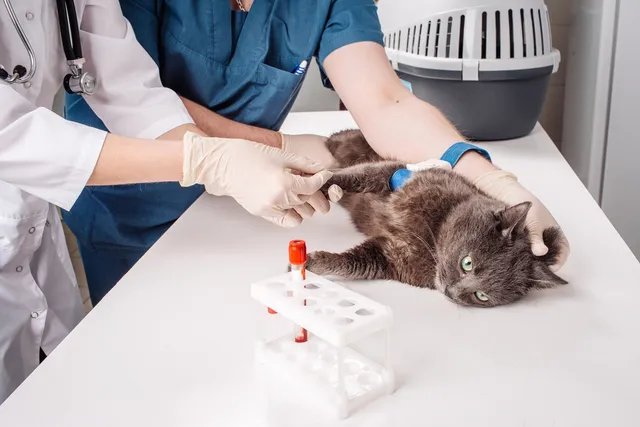
A diagnosis of hemolytic anemia must be made by a veterinarian. While you may suspect your cat is anemic due to pale or icteric gums, weakness, etc., the exact diagnosis must be made with a few different types of blood tests. First, your veterinarian will likely run a full CBC (Complete Blood Count) and Chemistry. These tests will look at your cat’s red blood cell count, platelet count, white blood cell count, kidney/liver values, etc. If your cat is anemic, likely your veterinarian will then look at a blood sample under a microscope. They are looking to see if there truly are decreased red blood cell numbers and not just a machine error. They are also looking for what are called spherocytes, which is a type of red blood cell shape that may be present during destruction.
After your veterinarian has confirmed anemia, they will then likely complete a test looking for “autoagglutination”. Remember when we mentioned above that during this process, all of the red blood cells are coated with antibodies, making them stick together? Well this test confirms just that – the red blood cells clumping together. This should not happen in an otherwise healthy cat and the presence of autoagglutination, in the face of anemia, is confirmatory for hemolytic anemia.
How Do I Care for a Cat With Hemolytic Anemia?
First, I want to stress how important it is to follow all diagnostic and treatment options as directed by your veterinarian. Cats who are anemic, especially if severe when diagnosed, are often very unstable. Your cat will need aggressive care within the first few days, and then extensive care and monitoring for weeks to potentially the rest of their life. Just starting your cat on one medication is often not enough and it’s imperative that you take your cat in for regular recheck exams to have their blood levels monitored.
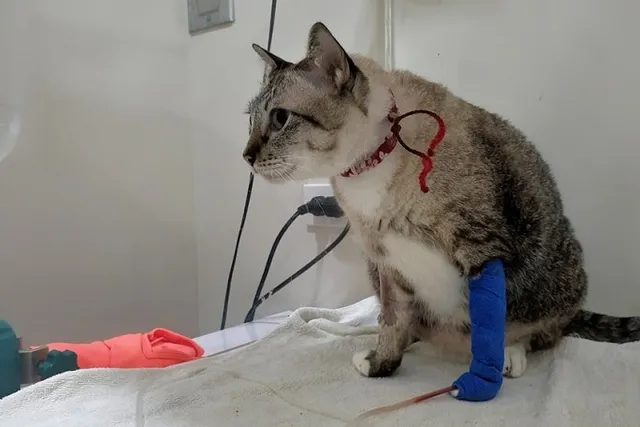
Depending on how critical your cat is when diagnosed, a blood transfusion may be recommended. These are often only completed at specialty or university clinics. Cats have very specific blood types and many regular veterinary clinics will not carry both types of blood, or even the blood typing kits, so that the correct kind can be administered. In addition, transfusions are not without risks and your cat will need around the clock care while they are receiving a transfusion. However, keep in mind that your cat’s body is still destroying red blood cells, even those that are transfused. So in addition to getting a blood transfusion, your cat will also need to be started on medications to help slow down and/or stop this destruction. Without them, the blood transfusion will just be immediately destroyed by the body.
The medications needed are referred to as immunosuppressants. There are many different kinds on the market today, and the exact medication(s) that your veterinarian will prescribe will be dependent on your specific cat. Steroids are by far the most common, least expensive, and easiest to administer. But there are other options that may work better for your cat, or even be given in combination with steroids.
If your cat has also been diagnosed with an infectious component such as a blood parasite or tick-borne disease, then your cat will also need to be on long-term antibiotics.
It is never recommended to give your cat OTC iron supplements or feed them red meat to increase their iron. Many OTC products can be toxic to cats and just trying to increase their iron content does nothing to increase the number of circulating red blood cells. Hemolytic anemia should always be managed by your veterinarian.

Frequently Asked Questions (FAQ)
What Happens if My Cat Goes into Remission?
Many cats will improve on aggressive therapy and stabilize to the point where your veterinarian has determined that they are in remission. However, there is always the chance for relapsing which is why regular bloodwork and exams are recommended for any patient with hemolytic anemia or anemia in general.

Will My Cat Die from Hemolytic Anemia?
Unfortunately, this is not uncommon. As we discussed, many cats are not even diagnosed until they are critically ill, and by then the medications may not work faster than the body’s ability to destroy the cells. In addition, many cats will not take medications, making administration or appropriate treatment difficult if not impossible.
Conclusion
Hemolytic anemia is a specific type of anemia that occurs due to the body’s destruction of its own red blood cells. In cats, this can occur at any age and in any breed. While some cats can develop hemolytic anemia from certain infectious diseases, many times we never find a cause (referred to as idiopathic). Diagnosing hemolytic anemia is not difficult, though it does require a few different types of blood tests. There are often other tests done to rule in/out infectious causes or even cancer being a catalyst for the condition. You may not notice any obvious abnormalities with your cat at first, as they may not be diagnosed until they have become critically ill. Once diagnosed, your veterinarian may want to give your cat a blood transfusion, but at minimum they will start aggressive immunosuppressive medications. Hemolytic anemia is a serious disease that needs to be treated quickly and aggressively. Many cats will go into remission, though fatalities are not uncommon.
Sources
Immune Mediated Hemolytic Anemia (IMHA) in Dogs and Cats - Veterinary Partner - VIN
Hemolytic anemia in cats: Infectious or immune-mediated? (Proceedings) (dvm360.com)
Anemia in Cats | VCA Animal Hospital | VCA Animal Hospitals (vcahospitals.com)
Anemia in Cats: Causes, Treatment & Prevention | Hill's Pet (hillspet.com)
Anemia in Cats - Cat Owners - Merck Veterinary Manual (merckvetmanual.com)
Featured Image Credit: Prystai, Shutterstock
Expert cat care, straight to your inbox
News, insights, and useful advice, delivered to you.

No spam — unsubscribe anytime.
By signing up, you agree to our Terms & Conditions and Privacy & Cookies Policy.
How useful was this post?
Click a star to rate. You can leave written feedback afterwards. (We read all feedback.)
Dr. Kim Podlecki DVM (Veterinarian)
A graduate of The Ohio State University College of Veterinary Medicine, Dr. Podlecki has more than 12 years of experience working with small animals in the United States. Dr. Podlecki worked almost exclusively in emergency and specialty medicine for more than 10 years before transitioning to relief in both general practice and ER. Dr. Podlecki also owns her own consulting company (renewvetconsulting.com) with the focus of helping veterinary hospitals prioritize their staff to promote a healthier internal culture.