Hemangiosarcoma in Cats: Causes, Signs & Care Guide (Vet-Answer)

In this article
You've noticed a lump growing on your cat, and you do the responsible thing, which is talking to your vet. Your cat's veterinarian takes a skin biopsy after not seeing any other issues on the exam, and the results come back a few days later. Your cat has hemangiosarcoma. What does that mean, and what can you do?

What Is Hemangiosarcoma?
Hemangiosarcoma is a type of cancer. It tends to have very malignant behavior, likely related to the fact that it is a tumor that arises from blood vessels. It can spread anywhere, but it mainly spreads to the lungs. Because it is a cancer associated with blood vessels, the primary tumor can be found practically anywhere in your cat's body, from the skin layer to the base of the heart.
Hemangiosarcoma is more common in dogs than in cats, and your vet might have never treated a case of hemangiosarcoma in cats. Hemangiosarcoma has four forms in cats:
- In the skin or dermal layer
- Under the skin in the subcutaneous layer
- Within internal organs like the spleen or heart (visceral)
- From the gums or oral tissue

What Are the Signs of Hemangiosarcoma in Cats?
Cats may show various signs that could indicate hemangiosarcoma. The signs are usually non-specific and can be hard to interpret.
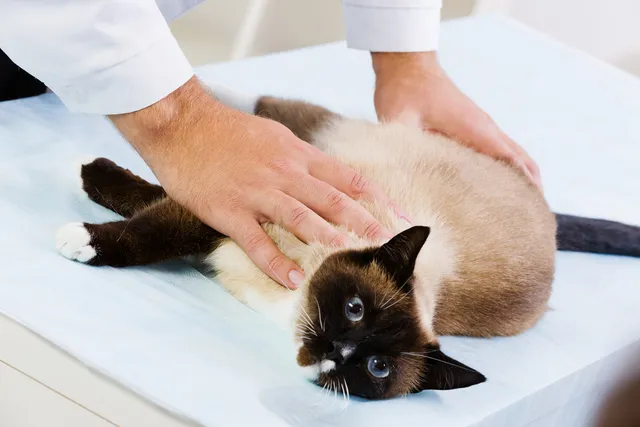
Your cat might develop a swelling or lump that you can feel. Your veterinarian should test the lump to look for evidence of cancer. Sometimes, vets detect visceral cancers during abdominal palpation, where an organ like the spleen or liver feels larger or has an associated mass.
You or your vet might realize something is wrong if your cat shows signs of blood loss, such as:
- Weakness
- Lethargy
- Pale gums
- Distended abdomen from bleeding
- Tachycardia (elevated heart rate)
- Tachypnea (elevated respiratory rate)
These signs tend to occur when your cat's mass is bleeding. Some masses bleed small amounts into the abdomen, causing the abdomen to distend slowly. Others can rupture and cause massive internal bleeding very quickly.
Unfortunately, some cases of hemangiosarcoma are only diagnosed after a pet suddenly passes away.
What Are the Causes of Hemangiosarcoma in Cats?
We don't know the exact cause of hemangiosarcoma in cats, and it may be multifactorial or caused by various factors. One potential cause of cutaneous hemangiosarcoma is exposure to the sun. It occurs more frequently in cats with shorter hair and lighter fur than in longer or darker-haired cats.

How Do I Care for a Cat With Hemangiosarcoma?
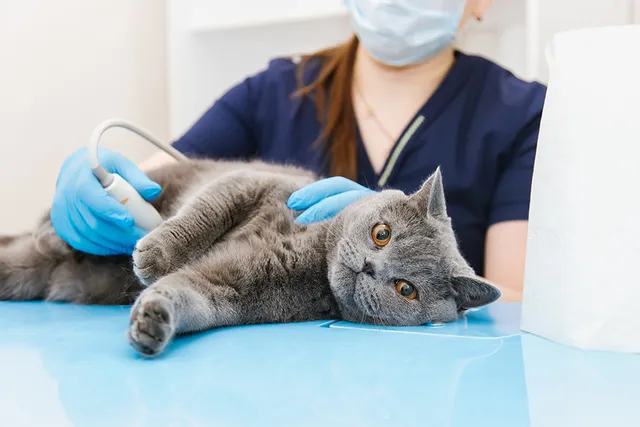
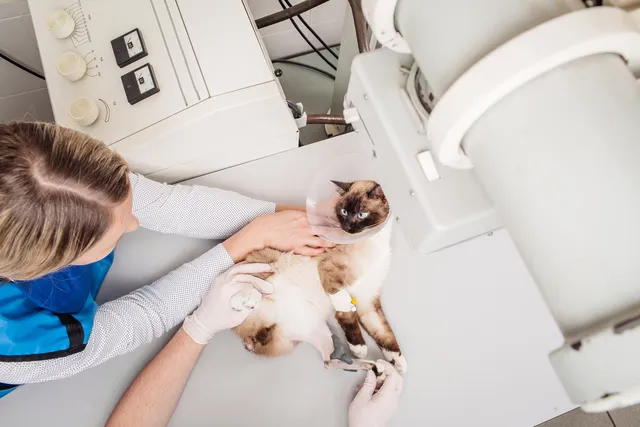
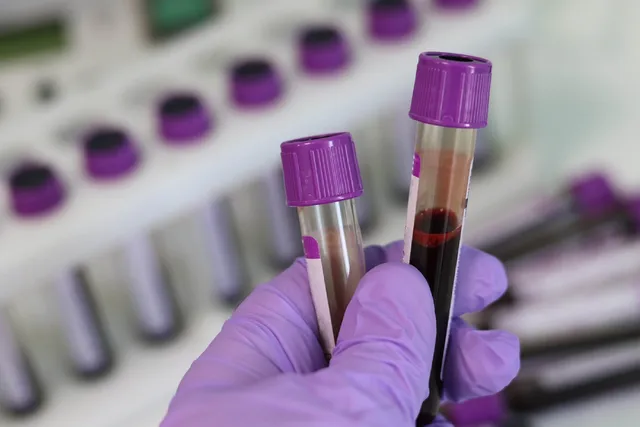
If your cat is diagnosed with hemangiosarcoma, it'll likely need a full-body workup. Your veterinarian will recommend that your cat have blood work done, radiographs (X-rays), or possibly an ultrasound. These tests help look for changes, such as metastasis.
Most pets with hemangiosarcoma need surgical intervention. The spleen is often affected and can cause bleeding, so pets may need a splenectomy. Surgery can sometimes be curative, usually when it's just a tiny skin mass. Unfortunately, if your cat is affected by a deeper primary tumor, such as one involving the liver or spleen, surgery is not likely going to be curative.
Many pets with hemangiosarcoma have bleeding. Your cat may need supportive care through blood transfusions or fluid therapy.
Your veterinarian may recommend chemotherapy for your cat. Different protocols and medication combinations could be used, but doxorubicin is one chemotherapeutic agent that is often used.
Your veterinarian might also suggest using an herb, Yunnan baiyao. This herb helps stop bleeding, although the mechanism of action is unknown. It could be used as a palliative measure, especially if you elect not to perform surgery.
Due to the limited number of cases, researchers have little data on treatment effectiveness in cats. According to Long Island Veterinary Specialists, the life expectancy for many cats is around three months with surgery alone. It extends to roughly 6 to 9 months with a combination of surgery and chemotherapy.

Frequently Asked Questions (FAQ)
What is the treatment for hemangiosarcoma in cats?
The treatment plan your veterinarian or veterinary oncologist creates will depend on where the hemangiosarcoma is located and whether there is evidence of metastasis. According to the Veterinary Information Network, roughly 30% of visceral cases of hemangiosarcoma in cats are so severe that cats need to be euthanized at the time of diagnosis. In these other cases, surgery may help prevent or stop bleeding, but chemotherapy combined with surgery gives the longest life expectancy.
What are the signs of heart-based hemangiosarcoma in cats?
A heart-based mass can be challenging to diagnose without advanced imaging. You might notice that your cat is weaker or lethargic. In some cases, pets will develop an arrhythmia. If the mass bursts or starts to bleed, your cat may collapse or be found dead.

Conclusion
Hemangiosarcoma is not common in cats, which is good because it's a very aggressive type of cancer. Treatment tends to be most successful if your cat has a small skin mass rather than a tumor associated with internal organs like the heart or spleen.
Sources
Featured Image Credit: Maria Sbytova, Shutterstock
Expert cat care, straight to your inbox
News, insights, and useful advice, delivered to you.

No spam — unsubscribe anytime.
By signing up, you agree to our Terms & Conditions and Privacy & Cookies Policy.
How useful was this post?
Click a star to rate. You can leave written feedback afterwards. (We read all feedback.)
Dr. Samantha Devine DVM (Veterinarian)
Samantha Devine is a practicing veterinarian who loves to share her experience with animal species and their health. Whether it's a guinea pig question or a pressing matter about something your cat ingested, she strives to provide clear answers. She is passionate about preventative care and firmly believes in the old adage, "An ounce of prevention is worth a pound of cure."
Dr. Devine has been practicing veterinary medicine for over 12 years and has spent a great deal of that time writing online to educate pet owners. In addition to general practice small animal medicine, she has worked with horses. zoo animals and aquatic species. She enjoys all aspects of preventative medicine, from nutrition to vaccines.
Dr. Devine received her degree from the Virginia Maryland Regional College of Veterinary Medicine.