Get

In Your Inbox

Catster is reader-supported. When you buy via links on our site, we may earn an affiliate commission at no cost to you. Learn more.

Does Catnip Help Cats With Nausea? Everything You Need to Know!
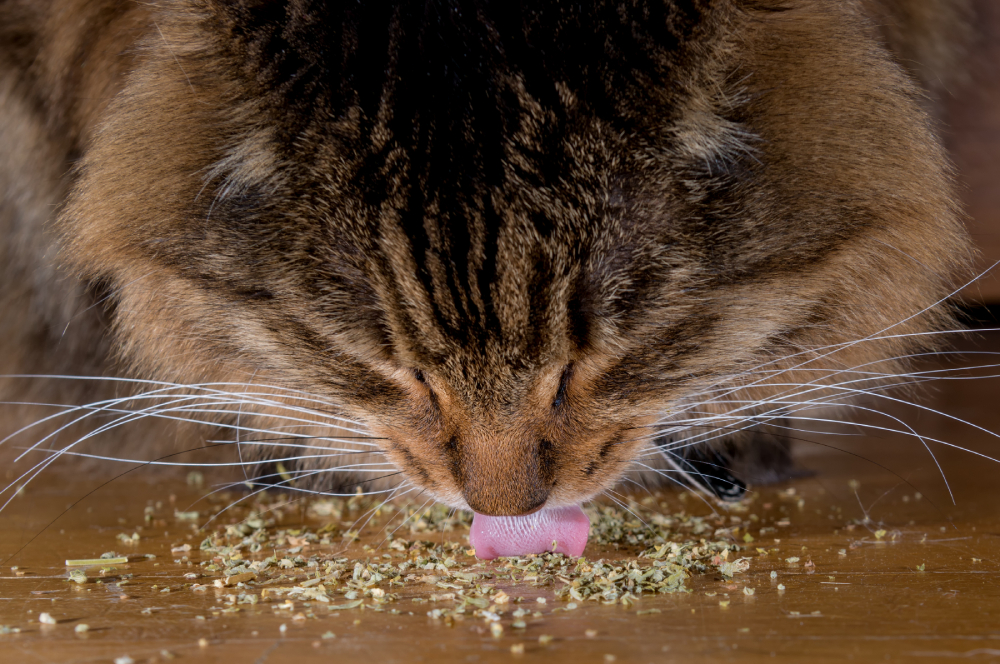
Closeup of a cat eating catnip

While popular in traditional and alternative medicine, there is little research or scientific evidence about the catnip plant’s (Nepeta cataria) benefits for nausea in people, let alone cats. This makes it hard to say whether catnip could help a cat with nausea, but anecdotally, some people say it works for them.

Since too much catnip can cause signs like vomiting and diarrhea in cats, we recommend keeping this herb away from your nauseous kitty.

divider 2 cats

Benefits of Catnip

For cats, the main benefit of catnip is behavioral since about 60% of cats just seem to love it! For sensitive cats, smelling catnips provides a high for 10–30 minutes, with cats showing signs like relaxation, rolling, rubbing, and purring. Many cats don’t react to catnip until they are over 6 months to a year old.

The herb contains nepetalactones, the main compounds in the essential oils from catnip, which are thought to be responsible for the behavioral effects on cats. These nepetalactones may have other effects like repelling and killing insects.

Other plant compounds like flavonoids, polyphenols, and steroids may provide anti-inflammatory, antioxidant, and antimicrobial benefits. Catnip is thought to have an antispasmodic (relaxant) action on smooth muscles in the body.

Smooth muscle is in the airways, gastrointestinal tract, and uterus of people and cats, which could explain the use of catnip for menstrual cramps and indigestion in people. However, this effect is only apparent when used as an essential oil and tested on guinea pig tissue.

Since essential oils are not recommended for cats, and evidence is lacking in this area, we can’t say that catnip will work on your cat’s gastrointestinal system.

cat smelling catnip plant in the backyard
Image Credit: Nils Jacobi, Shutterstock

Risks of Catnip

Fresh or dried catnip plants or catnip-based products designed for cats are very safe to use in moderation. Too much catnip can cause vomiting, diarrhea, trouble walking, and disorientation.

We recommend starting with a tiny amount when introducing your cat to catnip, and if your cat is showing any signs of illness, it may be wise to forgo the catnip lest you make things worse. As mentioned earlier, catnip essential oils are not recommended for cats.

How Can I Help My Nauseous Cat?

If your kitty is not eating, drooling, or vomiting, you have probably concluded that they are nauseous, and you’re probably right! Cats can be nauseous for a variety of reasons, from minor cases of upset stomachs to life-threatening conditions like a gastrointestinal foreign body, kidney failure, and toxin ingestion.

If your cat appears nauseous, the first thing you should do is check the environment for access to anything that could be harmful to them if eaten. Household toxic plants are a good place to start if your cat is a plant muncher!

You should check if your cat is eating, drinking, urinating, and defecating normally and monitor them for additional signs of illness such as lethargy, wobbly gait, vomiting, pain, and tremors. Please note that drinking and urinating more than usual is a common sign of illness in cats.

Once you have assessed the situation, you should call your veterinarian. Depending on the urgency of your situation, they may recommend that your cat be seen immediately, within the next day or so, or recommend home remedies like a bland diet. If you take your cat to the vet, they can provide anti-nausea medication and perform further testing or treatment as necessary.

If you need to speak with a vet but can't get to one, head over to PangoVet. It's an online service where you can talk to a vet online and get the advice you need for your pet — all at an affordable price!

PangoVet_Mention-in-Content for PangoVet2 save money

divider 2 catsFinal Thoughts

If you have an upset stomach, you may have taken catnip tea and felt better. However, cats often mask their signs of illness and can’t tell you how they feel. Although their nausea could be a sign of a mild problem, it could also be related to a more severe condition. In any case, you should assess the situation and get professional advice. If you want to try catnip for their nausea, despite the lack of evidence, you should ask your vet first.

Also see: 


Featured Image Credit: Doug McLean, Shutterstock

Want content like this delivered to you?

Sign Up For Our Newsletter

News, insights, expert advice, and everything cat

* By submitting, you agree to our Terms & Conditions and Privacy & Cookies Policy.


How useful was this post?

Click on a star to rate (you can leave written feedback after clicking submit)

Help us improve Catster for pet parents!

Your feedback really matters.

What did you like about this post? Also how can we improve it?

Join the conversation

Leave a Reply

You’re very welcome to leave a comment or question. Please know that all comments must meet our community guidelines, and your email address will NOT be published. Let’s have a positive and constructive conversation.


Talk With A Vet Online

Peace of mind,
anywhere, anytime

Affordable vet advice

Vet Nurse Day 2026: Everything You Need to Know

If your pet has ever been sick or injured and you were able to get them to a veterinarian’s office, then you likely...

10 DIY Cat Scratching Post Ideas To Make Today (With Pictures)

Cats are known for their innate need to scratch and maintain their claws. Not only does scratching help them keep their claws healthy,...

Can Cats Eat Maple Syrup? Vet-Verified Nutrition Facts & Risks

Cats can be unpredictable creatures that aren’t big on abiding by the rules. If your cat wants to investigate something, they will. If...

How Cold Is Too Cold for Cats? Vet-Reviewed Facts & FAQ

It’s easy to overestimate a cat’s tolerance for the cold. When they walk around sporting several inches of insulating fluff and act nonchalant...

More related

Can Cats Eat Prunes? Risks & Safe Alternatives

For humans, the health benefits of antioxidant-packed dried plums can’t be understated. They’re commonly eaten to ease constipation and nausea. Therefore, you may...

7 Best Calming Aids for Cats in 2026 – Reviews & Top Picks

Cats can benefit from calming aids for a variety of reasons. If you have a cat that is particularly nervous, overly energetic, stressed,...

Manx Cat Breed: Info, Pictures, Temperament & Traits

Hailing from the Isle of Man in the Irish Sea, the Manx is a rare cat you’ll never forget. Their coat may not...

Lymph Node Enlargement (Lymphadenopathy) in Cats – Causes and Care Guide (Vet Answer)

Lymph nodes are found throughout your cat’s body, and are an important part of their immune system. Peripheral lymph nodes are located on...

Keep reading

Are All White Cats With Blue Eyes Deaf? Vet-Reviewed Facts & FAQ

At some point, you’ve likely heard someone say that all white cats are deaf—particularly those with blue eyes. But is this factual? Not entirely! While white cats with blue eyes certainly are more prone to hereditary deafness—white cats, in general,...

turkish cat with blue eyes_love pattern_shutterstock

How Much Does It Cost to Spay or Neuter a Cat? 2026 Update (Vet-Verified)

Spaying and neutering are both common medical procedures recommended by veterinarians, breeders, and shelters. Spaying or neutering your cat removes the possibility of them reproducing. Besides helping prevent unplanned litters of kittens, spaying and neutering can prevent a wide range...

Two veterinarians holding down a Persian cat at the exam table

6 DIY Cat Popsicle Recipes (Vet-Approved)

Popsicles are tasty treats, but they’re usually not safe for cats to eat because they can contain added sugar, artificial colors, and other unhealthy ingredients for cats. Fortunately, you don’t have to feel bad every time you decide to unwrap...

blue tabby maine coon cat licking homemade ice cream treat popsicle

Does My Cat Need a Cat Bed? Vet-Reviewed Facts & FAQ

If you’re a cat owner, you know how important it is to provide the best possible care for your pet. One way to make sure your cat is comfortable and feels safe and happy is to provide them with an...

tabby cat on bed

How to Take Care of Your Cat’s Teeth: 8 Vet-Verified Tips

Dental problems are pretty common in cats. When plaque sits on their teeth, it hardens and develops into tartar. Tartar around the gum line causes irritation and inflammation that results in gingivitis, which can lead to full-blown periodontal disease and...

hand showing the teeth of blue tabby maine coon cat

Why Does My Cat Want Me to Watch Her Eat? Vet-Verified Facts & Info

Cats have many quirky habits that make them beloved pets around the world. You are probably already aware that cats can be finicky about feeding time, whether it’s over the type of food, if they prefer to be left alone...

woman petting her cat while eating

Can Cats Eat Coconut Oil? Vet-Reviewed Nutrition Facts & FAQ

Coconut oil has long been used for cooking, particularly in South Asian cuisines. It appears to have some health benefits, and some studies suggest it may increase fat burning and decrease hunger in some people. But what about cats? Is...

Can Cats Eat Coconut Oil

Is It True That All Cats Shed? Vet-Reviewed Facts

If you’ve noticed a ton of hair around the house and your cat is shedding non-stop, you might be wondering if all cats shed. The answer is yes, all cats shed to some extent unless they are hairless. Cats shed...

white cat shedding

Love Cats? So Do We! Join the Catster Community

Stay informed with expert pet care insights delivered straight to your inbox! Discover professional guidance on animal behavior, feeding tips, trusted product picks, and much more.


Sign up for the Catster Email Newsletter

Stay informed with expert pet care insights delivered straight to your inbox! Discover professional guidance on animal behavior, feeding tips, trusted product picks, and much more.