Why Is My Cat’s Meow Suddenly Hoarse? 9 Vet-Verified Reasons


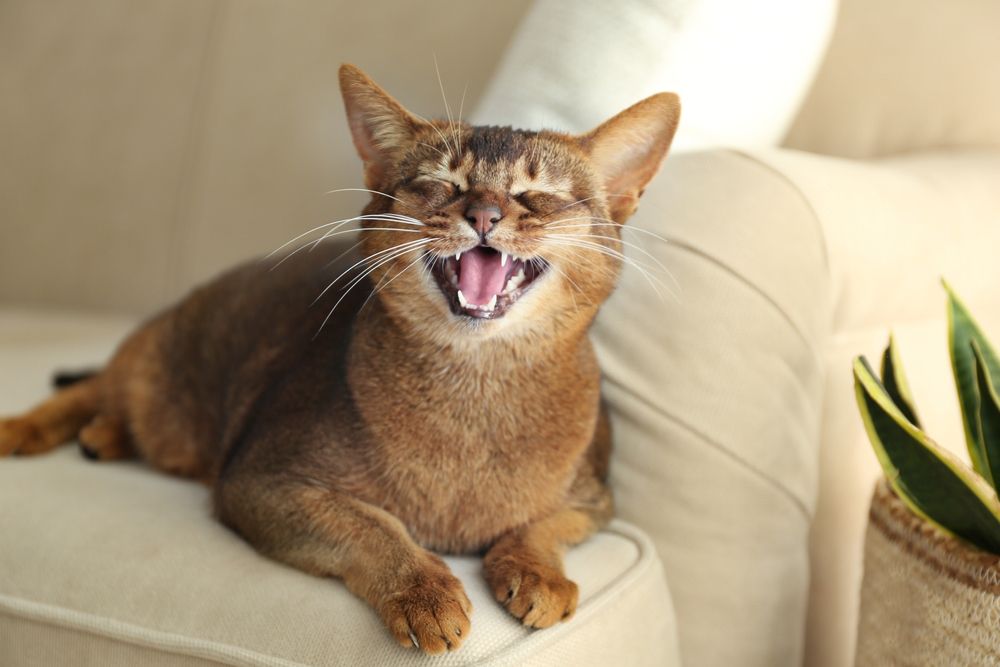
Cats are capable of making quite a few vocalizations. They meow, chatter, trill, purr, and hiss. All these sounds are unique ways that cats communicate with us and other animals (and sometimes, they're just talking to themselves). But what if your cat’s meow suddenly sounds different, almost raspy?
Cats are just as likely to experience laryngitis for some of the same reasons we do. It’s not typically caused by anything too serious, but there are signs that you should look out for.
Below, we'll cover a few of the causes of your cat sounding like they’ve lost their meow and what you can do to help.

The 9 Reasons That Your Cat’s Meow Is Hoarse
1. Strained Vocal Cords
Sometimes, cats can experience a weaker meow from overusing their voice. For example, if a cat is accidentally locked in a room or cupboard or otherwise trapped somewhere, they will meow to get someone’s attention. This strains the cat’s vocal cords, which could lead to the meow sounding more hoarse than usual.
If you hear your cat meowing incessantly, and it isn’t typical behavior, check on your cat. Cats usually meow at humans when they want or need something. Your cat’s voice will return to normal if they don’t keep straining their vocal cords with constant meowing.

2. Laryngitis
A cat losing their meow through too much meowing is a form of laryngitis, but in this case, it stems more from a health issue. It can develop from chronic coughing, pneumonia, tonsillitis, or allergies.
Common elements that lead to laryngitis are fluid build-up and swelling. Both conditions can lead to the obstruction of the upper airway, which prevents normal vocalization.
3. Upper Respiratory Infection
A common cause for a cat to sound hoarse is when they have an upper respiratory infection. Several infections can affect your cat’s upper respiratory system, such as feline herpesvirus and feline calicivirus, which are the most common. However, there’s also chlamydiosis, Bordetellosis, and mycoplasmosis, and a cat can have more than one of these at a time.
The signs of an upper respiratory infection are fairly similar to the common cold and include:
Take your cat to the vet if you suspect that they have an infection. If it’s bacterial, your cat will be prescribed antibiotics, but if it’s viral, you’ll treat them with other medications.
If you have other cats at home, it is recommended to quarantine the sick cat, as the infection is highly contagious. The signs typically last about 7 days. Once your cat improves, their normal meow should return!
4. Swelling & Inhalation
If a cat’s neck suffers a traumatic injury, inside or outside the home, swelling will occur, constricting the area around the vocal cords and leading to a hoarse voice.
This can also include foreign objects trapped in the larynx area of your cat’s throat, such as inhaling grass, string, smoke, or dust. If something is stuck in the throat, it can lead to a hoarse voice, and your cat should be seen by your vet immediately.

5. Cancer or Growths
Some growths can develop in a cat’s throat, such as nasopharyngeal polyps (typically benign), throat cancer, or other tumors. Depending on the growth, they can be treated, but the prognosis varies depending on the condition
6. Hyperthyroidism
Hyperthyroidism occurs when a benign tumor enlarges the thyroid gland, which is found in the cat’s neck. This isn’t a common way for cats to lose their voices, but it’s possible, particularly if the tumor is large.
Treatment is usually with an oral or transdermal medication to inhibit thyroid hormone synthesis, but occasionally radioiodine therapy and, in even rarer instances, surgical removal of the thyroid gland can be considered.

7. Laryngeal Nerve Paralysis
Laryngeal paralysis is a severe condition that results when the muscles in the cat’s larynx stop working properly, leading to an obstruction of airflow.
The signs include:
The most important thing is to take your cat immediately to your vet or an emergency clinic if you notice breathing issues. Without treatment, a cat can suffocate but should recover with the appropriate treatment.

8. Surgery
If your cat has recently had surgery and was intubated, it could have irritated their trachea (windpipe). During surgery, a tube is directed into the trachea so the vet can give the cat anesthesia and oxygen. This is likely to cause a raspy meow, but it should only last a few days.
9. Age
Many of these listed conditions are linked to age. Hyperthyroidism can affect cats of all ages, but it is more likely to affect older cats. In some cases, as a cat ages, the muscles lose resiliency, and the voice box might not work as effectively.

Conclusion
If your cat has a hoarse meow, but everything else seems normal, you usually don’t have anything to worry about. However, if the raspy voice is present alongside other signs, you should see your vet.
You know your cat best, and it’s usually easy to detect when there’s something wrong with them. Needless to say, if your cat is losing weight or struggling to breathe, it is an emergency situation, and your cat needs medical attention immediately. With the proper treatment and enough time, your cat's voice will return to normal.
Featured Image Credit: New Africa, Shutterstock
Expert cat care, straight to your inbox
News, insights, and useful advice, delivered to you.

No spam — unsubscribe anytime.
By signing up, you agree to our Terms & Conditions and Privacy & Cookies Policy.
How useful was this post?
Click a star to rate. You can leave written feedback afterwards. (We read all feedback.)
Kathryn was a librarian in a previous lifetime and is currently a pet writer. When she was a child, she hoped to work in ZOOs or with wildlife in some way, thanks to her all-consuming love for animals. Sadly, she's not strong in the sciences, so she fills her days with researching and writing about all kinds of animals and spends time playing with her adorable but very naughty tabby cat, Bella. Kathryn is hoping to add to her family in the near future – maybe another cat and a dog.