7 Health Benefits of Catnip for Cats – Based on Science


In this article
Most of us cat parents know that many cats have a weakness for catnip. So, while we might want to select a catnip-filled toy, are there actually any health benefits to allowing your cat to have catnip?
The good news is that yes, there are! In this article, we’ve rounded up seven health benefits that mean catnip is something you should consider keeping in your home, if you don’t already.
From the obvious uses that most of us know about to a few others that might surprise you, we’ve got you and your cat covered.

What Is Catnip?
You might see catnip also called catwort, catmint, field balm, or even menta de gato. They’re all the same thing!
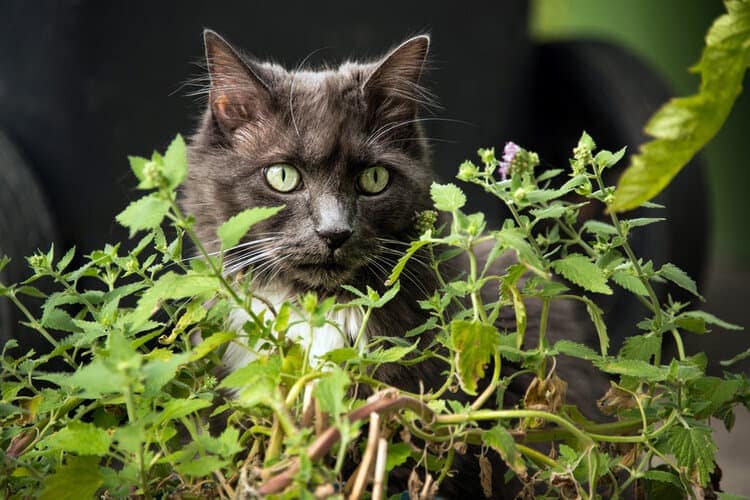
It’s also known by its Latin name, Nepeta cataria, and belongs to the same plant family as mint. Even the “cataria” part of its name hints to how long we’ve known this herb to affect felines. “Cataria” translates to “of a cat”.
Catmint is native to Mediterranean and North African regions but now grows wild across plenty of North America and Europe. Of course, it’s also cultivated, dried, and sold as catnip for our feline friends to enjoy.
As well as buying dried catnip, you can buy it as an oil, spray, or even grow it fresh in your garden.

Why Do Some Cats Love Catnip?
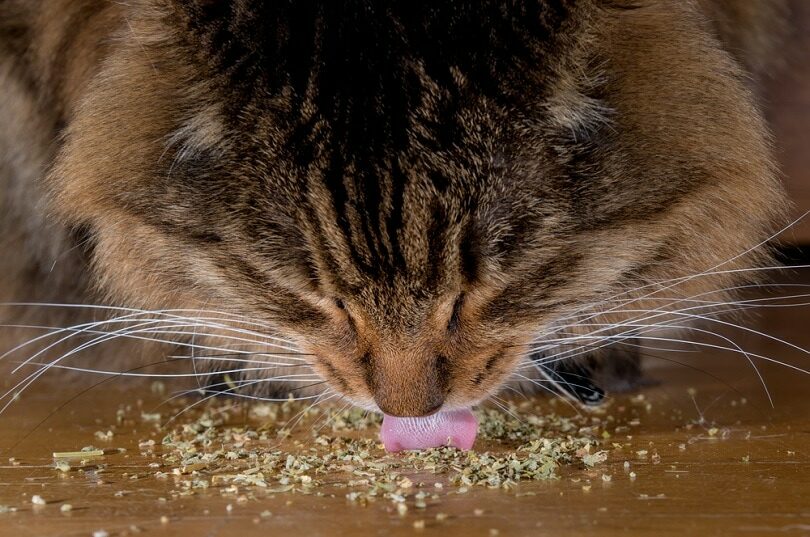
The leaves and stalks of the catnip plant contain the chemical nepetalactone. This is what triggers a stimulant effect, which is thought to mimic the pheromones associated with mating.
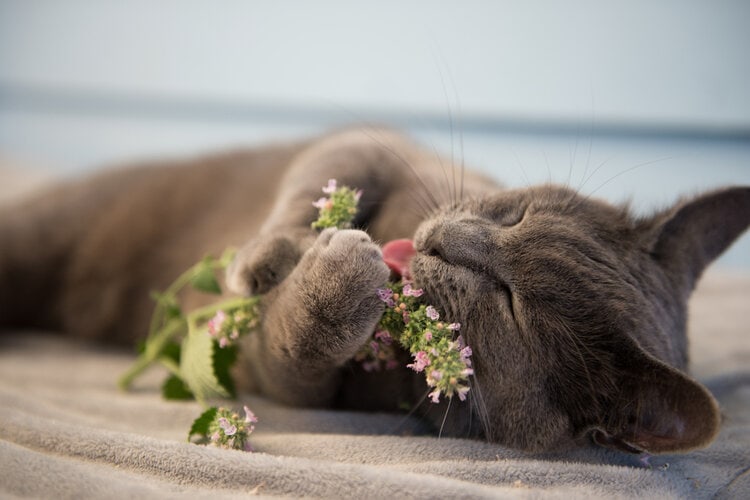
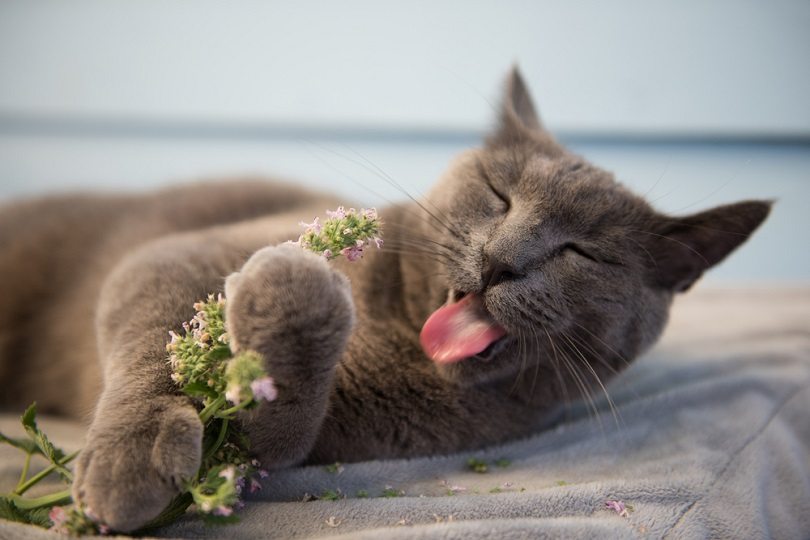
Catnip enhances your cat’s mood, but the effect depends on each cat, as they all react differently. Some cats may become playful and affectionate, wanting to bounce around the house. Others will become super sleepy and calm.
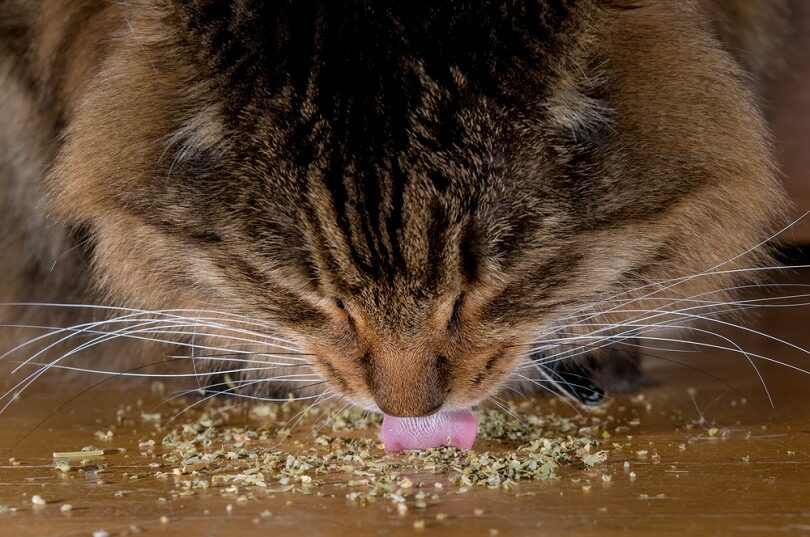
It’s also thought that a cat’s reaction to catnip can depend on whether they eat it or just sniff it. Eating catnip seems to result in a calming effect, while sniffing it results in excitement and stimulation.
The effect of catnip usually lasts for between 5 and 15 minutes. After the effects have worn off, your cat won’t react to catnip for about 1 or 2 hours.
Not all cats will respond strongly to catnip, and some cats will not react at all! Studies have found that the response to catnip is genetic. About 20% to 30% of cats don’t show any reaction to catnip other than slight confusion and total boredom!
Now that we know more about what catnip is and why some cats love it, let’s take a look at the potential health benefits. Bear in mind that if your cat seems immune to the magic of catnip, then none of these benefits will work for them!
The 7 Health Benefits of Catnip for Cats
1. Catnip Can Be a Great Enrichment Activity
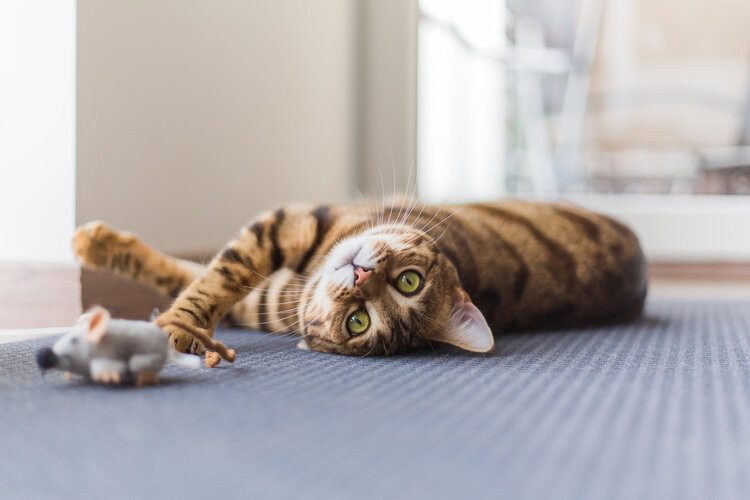
Depending on how your cat reacts to catnip, it can be used to add enrichment and encourage active play sessions. Indoor cats can benefit from regular enrichment activities to help encourage them to stay physically and mentally active.
A bored cat can find plenty of ways to create mischief around your house. Scratches all down your furniture, things pushed off the counter, or waiting behind the door to attack your ankles are all things cats can and will do to amuse themselves. Instead, provide catnip to keep your cat occupied and give them a distraction from planning their next destructive spree.
Catnip sprinkled around the house can kick off a fun treasure hunt to keep your kitty entertained while you’re at work. Spraying catnip oil on their scratching post or hiding catnip treats in a food puzzle are good ways to keep your cat occupied and engaged with their surroundings. You can even buy catnip bubbles, which is a bubble mixture containing catnip extract! Some cats love chasing and catching these bubbles, and of course, they get a little hit of catnip as each bubble bursts.
2. Catnip Might Help Relax Your Cat
Catnip can have a sedative effect on some cats, especially if it’s eaten rather than just sniffed. Plenty of owners choose to give their cat some catnip as a way to reduce anxiety or stress and encourage their cat to relax.
Sprinkling catnip treats in the cat carrier before a trip to the veterinarian, when moving to a new house, or introducing a new pet to the family might help ease tensions and keep your cat feeling relaxed.
You can also add a small amount of dried catnip to your cat’s regular canned food, to help them transition through a stressful situation.
3. Catnip Can Be Used as a Soothing Bath

If you need to bathe your cat for some reason, catnip can help make that process a bit more pleasant for both of you!
Catnip might help soothe irritated skin, while the fragrance will also help relax your cat. If your cat has rolled in something yucky and desperately needs a bath, but you’ve never given them one before, then catnip can also help make their bath more appealing.
Simply add a teaspoon of dried or half a teaspoon of fresh catnip to a cup of boiling water. Allow it to steep for 5 minutes before adding to your cat’s bathwater. Check the temperature before bathing your cat, adding their regular or medicated shampoo if necessary. The scent of catnip will linger on your cat’s coat, and the herbal infusion will penetrate through to their skin and have a soothing effect.
4. Catnip Can Be Used as an Insect Repellent
Cats might love it but pests hate catnip! It’s the active ingredient nepetalactone that works to repel mosquitos, ticks, and mites1. It’s the essential oil that has been proven to repel these insects.
Catnip oil is 10 times more effective than DEET at repelling mosquitoes2. While this hasn’t yet been tested as safe for animals or humans, you might notice that you and your cat are bothered by fewer insects if you have some catnip planted in your garden or if you use a catnip oil spray on your cat’s bed.
5. Catnip Can Be Used as a Motivator or Training Reward

Training your cat to accept certain health procedures by using positive reinforcement is a great way to make veterinary procedures less stressful. Training your cat to stand still for a vaccination, allow you to bathe them, hop into the carrier, or trim their claws makes life easier for both of you!
You can use catnip to reinforce the behaviors you want to see. Simply “mark” the good behavior using a clicker or vocal cue before giving your cat a catnip treat or sprinkling a small amount of loose catnip for them to enjoy.
While you might be more familiar with using positive reinforcement training for dogs, it’s a wonderful training tool for cats too!
6. Catnip Can Be Used as Anti-inflammatory

In humans, catnip paste has been used to decrease swelling from both wounds and arthritis. You can also try using catnip paste to soothe your cat’s joint pain. Simply crush fresh catnip leaves with a small amount of water to make a thick paste, and then apply it to the affected joints. The bonus with this is that it doesn’t matter if your cat licks it off!
7. Catnip Is Fun but Not Addictive
You don’t need to worry about your cat getting addicted to catnip because it’s non-addictive and totally safe for your cat to use regularly. It’s also non-toxic, so your cat can’t overdose on it.
Some cats may suffer from vomiting or diarrhea if they’re not used to catnip and eat too much, but they’ll soon recover and won’t suffer from any lasting effects.
Disadvantages of Catnip
Some cats don’t react to catnip at all, so if you were hoping to use it as a training tool or enrichment for your cat, you might need to find alternatives if your cat doesn’t appear affected by it.
It can make other cats, particularly males, become aggressive. This is probably linked to the fact that catnip seems to mimic the effect of certain sex pheromones. If your male cat becomes overly aggressive when you give them catnip, you might decide to stop using it.
Kittens won’t tend to react until after 6 months or when they become sexually mature. So, some of the health benefits and uses above will be that effective until your kitten starts getting a bit older.
If you’re planning to use catnip in a multi-cat household, it’s probably best to test the reaction of each of your cats separately.
Catnip, especially if ingested in excessive amounts, can cause digestive issues for some cats. If you notice that your cat is vomiting or has diarrhea after using catnip, it might be best to stop using it for a while or speak to your veterinarian if the issue continues.
Bottom Line
Far from being just something found in cat toys, catnip has plenty of health benefits that can be put to use in our homes to help our feline friends.
From enriching the surroundings of indoor cats to soothing irritated skin and helping train your cat to use their new scratching post, this versatile herb should certainly be a staple in any cat owner’s store cupboard.
How many of the seven health benefits of catnip that we’ve covered did you know about? Have you ever used it as an herbal bath or healing paste? Or do you have another benefit to tell us about? We’d love to hear from you!
Related Reads:
Sources
Featured Image Credit: Georgia Evans, Shutterstock

Expert cat care, straight to your inbox
Vet-reviewed advice, behavior tips, and the best of Catster. Free, and you can unsubscribe anytime.
By signing up, you agree to our Terms & Conditions and Privacy & Cookies Policy.
Christian started writing for a local newspaper as a teenager, and he's been involved in the publishing industry for most of his adult life. Combining his love of writing with a passion for animals, he is currently the Director of Editorial at Pangolia and the Editor-in-Chief at Catster.
Christian lives in the Philippines with his wife, son, and four rescue cats: Trixie, Chloe, Sparky, and Chopper.
Join the conversation
Ask a question, share your story, or send private feedback.