Get

In Your Inbox

Catster is reader-supported. When you buy via links on our site, we may earn an affiliate commission at no cost to you. Learn more.

Does a Dryer Kill Fleas on Cat Bedding? Here’s What Science Says (Vet Answer)

cat scratching ear

Fleas may be small, but they can cause us and our pets big problems. They are the most common external parasite of cats and breed rapidly—with female fleas laying around 2,000 eggs in their lifetime. Once your cat brings fleas into your home, getting rid of adult fleas as well as their eggs, larvae, and pupae, can be a challenging task. It’s a good idea to contact your vet for help and advice on treatment options, to get on top of the problem as quickly as possible.

If you are wondering whether putting the cat’s bedding in your dryer can help you tackle an infestation—the answer is yes, it can! The high temperatures in a dryer can kill any fleas, eggs, and larvae in your pet’s bedding and it can be helpful as part of a combination approach to deal with these pesky parasites. Read on to find out more.

divider cat faces 2 oct 2024

What Science Says

Relative humidity of less than 50% and temperatures above 40°C /100.4°F have been shown to kill all flea life stages 1. These can be achieved in a tumble dryer, and it’s recommended to continue for a 40-minute cycle. The average drum temperatures for tumble dryers are around 50–70°C/122–158°F depending on your model and so the temperatures reached should be sufficient to kill all fleas, eggs, and larvae.

Ideally, we would recommend washing bedding and other washable garments first as the washer’s water and detergent should drown most fleas and then the heat, desiccating conditions, and tumbling action of the dryer will kill any that have survived.
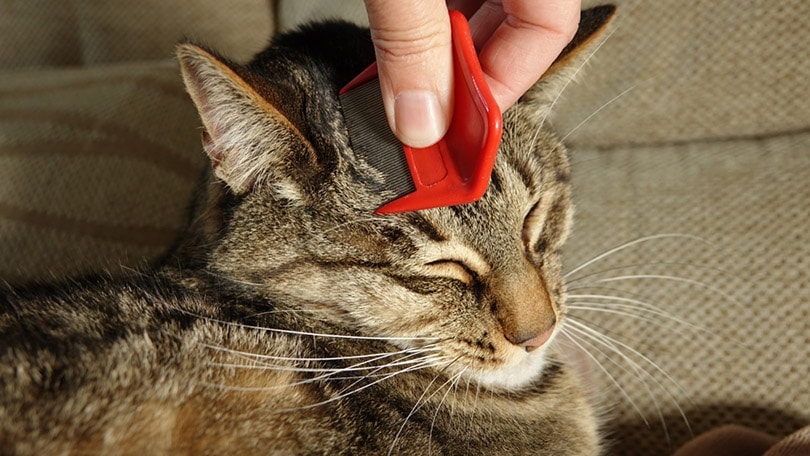
flea combing a tabby cat
Image Credit: Simone Hogan, Shutterstock

How Do I Know If My Cat Has Fleas?

Fleas are tiny dark brown insects and can be seen with the naked eye. Despite only being approximately 1/8th of an inch long, they can jump up to 8 inches high!

Cats are generally fastidious groomers, however, and during grooming often eat any fleas they come across. This can make finding adult fleas in their fur more difficult.

What you will often find instead is flea dirt, which is flea poop consisting of digested blood. These look like black specs and can easily be mistaken for normal mud and dirt. The best way to tell the difference is to collect some and put it onto damp cotton wool or white tissue paper. If they are flea dirt they will slowly dissolve, leaving a reddish blood mark.

Other signs your cat may have fleas include them itching and scratching more than normal, sometimes developing bald patches or a rash. Some cats are allergic to flea saliva and can have more of a marked reaction to flea bites.

close up fleas on cat
Image Credit: KanphotoSS, Shutterstock

divider cat faces 2 oct 2024

Flea Life Cycle

Targeting all stages of the complex flea life cycle is essential when dealing with these irritating parasites, as only about 5% of fleas in an infestation are adult fleas on your pet. The rest are in the environment in the immature stages, including on your cat’s bedding.

Female adult fleas will start laying eggs within a few days of taking up residence on your cat. They can lay up to 50 eggs a day which fall off your cat and into the environment. Flea larvae hatch from the eggs and are usually found in the highest amounts wherever your cat spends time—this means large amounts on their bedding. Larvae don’t like light so will burrow into bedding, carpets, and soft furnishings.

Larvae feed off flea dirt, which also falls off your cat into the environment. These larvae eventually develop into pupae which are protected in a sticky cocoon. Adult fleas then emerge from the cocoons when the conditions are right. The whole flea life cycle can take as little as 15 days, but fleas can lie in cocoons for up to 2 years!

This explains why these troublesome parasites are so difficult to get rid of and it’s important to tackle fleas on your cat but also on their bedding and in your home.
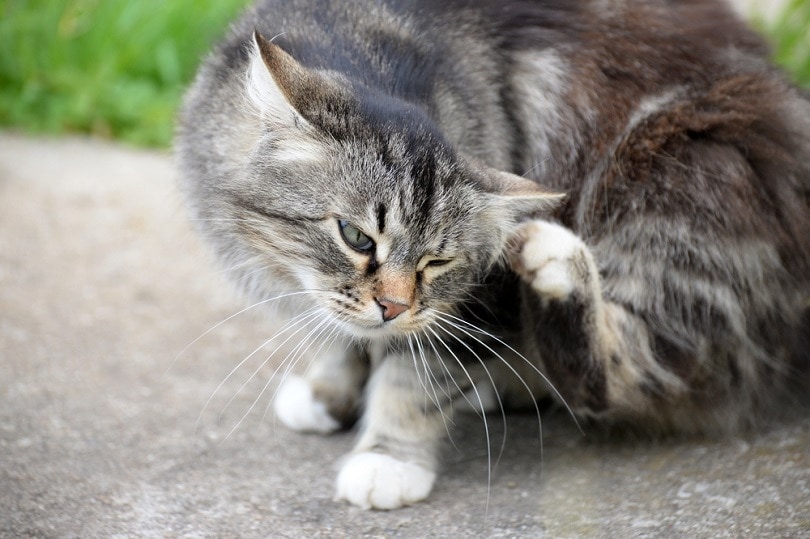
Cat with fleas
Image Credit: Maja Marjanovic, Shutterstock

divider cat faces 2 oct 2024

Flea Treatment and Prevention Measures

Dealing with a flea infestation usually requires a combination approach. To effectively tackle a flea infestation, seek advice from your vet and follow their treatment guidelines carefully.

Here are some of our top tips:
  • Treat and prevent fleas by regularly using a vet-prescribed flea treatment for your cat. This is commonly in the form of a spot-on topical treatment or tablet. Consult with your vet on the best treatment for your cat which will be based on their age, size, lifestyle, and any underlying health conditions. Only ever give them a flea treatment that’s licensed for cats.
  • Vacuum your floors, skirting, and furniture regularly. Empty the vacuum or throw away the dust bag after vacuuming to prevent flea eggs and larvae from developing.
  • Use a household flea spray, ask your vet for advice on this and always follow the guidelines carefully when using.
  • Wash your cat’s bedding (or any other washable material they lie on, such as your bedding) on a hot wash and then tumble dry on a high setting.
  • Fleas can also transmit tapeworms, so your cat should be dewormed at the same time as being treated for fleas.

Note of caution: Some dog flea products contain permethrin, an insecticide that is safe for dogs but highly toxic for cats.

If you need to speak with a vet but can't get to one, head over to PangoVet. It's an online service where you can talk to a vet online and get the advice you need for your pet — all at an affordable price!

Preventative wellness PGV mention keep cat healthy Preventative wellness PGV mention keep cat healthy mobile

divider cat faces 2 oct 2024

Final Thoughts

Unfortunately, many cats will get fleas at some point and fleas can infest even the most spotless home. Luckily, there are many safe and effective flea treatments available to help. With 95% of a flea population living in the house, including on your cat’s bedding, getting rid of fleas in these areas is a vital part of an effective flea control program. The dryer can kill fleas, eggs, and larvae on your cat’s bedding and is a useful tool in your armory for eliminating these pesky parasites.

See Also: 


Featured Image Credit: fotovictoria, Shutterstock

Want content like this delivered to you?

Sign Up For Our Newsletter

News, insights, expert advice, and everything cat

* By submitting, you agree to our Terms & Conditions and Privacy & Cookies Policy.


How useful was this post?

Click on a star to rate (you can leave written feedback after clicking submit)

Help us improve Catster for pet parents!

Your feedback really matters.

What did you like about this post? Also how can we improve it?

Join the conversation

Leave a Reply

You’re very welcome to leave a comment or question. Please know that all comments must meet our community guidelines, and your email address will NOT be published. Let’s have a positive and constructive conversation.


Talk With A Vet Online

Peace of mind,
anywhere, anytime

Affordable vet advice

550+ One-Eyed Cat Names: Great Ideas for Your Great Cat

Cats are resilient, and the one-eyed warriors are just as fierce as their two-eyed counterparts. Whether your cat was a stray that lost...

Fostering a Pregnant Cat: 9 Things to Know (Vet Approved)

Fostering any cat is a rewarding experience for you and for the cat. Taking on a pregnant cat does require more of a...

Compressed Catnip Balls: What They Are & Our Top Picks in 2026

Catnip (Nepeta cataria) and felines go together like peas and carrots. Their unique response to this perennial herb is a spectacle to see,...

Can You Use Dog Nail Clippers on Cats? Care & Safety Tips

All cat parents know that felines require regular maintenance to keep them looking clean and neat and most importantly, ensure that they’re healthy....

More related

Why Do Cats Put Toys in Their Food Bowl? Behavior Explained

Cats are curious, funny little creatures that sometimes do the strangest things. They can stare at nothing, hide in the oddest places, bring...

Can Cats Get Pink Eye? Vet Reviewed Facts & FAQ

A common eye condition cats can develop is conjunctivitis, more commonly known as pink eye. Every cat owner should know about the signs...

Why Do Hairless Cats Exist? Vet Reviewed Breeds, Origin & Care Tips (With Pictures)

When one thinks of a cat, they often envision a small, furry companion. However, not all cats have fur; some cats are naturally...

What to Do When Your Cat Dies: 8 Emotional & Practical Support Tips

Everyone who has owned a cat has probably experienced losing a cat. While the grief that comes with losing a cat isn’t always...

Keep reading

Is String of Pearls Toxic to Cats? Vet-Verified Toxicity & Safety

Plants are a popular decoration for adding a little nature to your home. Especially with more people than ever working from home, adding plants to our surroundings has experienced a real boom in popularity. But many plants, like the string...

Catster_Is String of Pearls Toxic to Cats

Do Burmese Cats Shed A Lot? Vet-Verified Facts & Care Tips

Bringing a cat home to be part of the family is a big decision. Yes, most of us are aware of the basics of cat care. They need to be fed, watered, and given a litter box. Cats, of course,...

burmese cats lying on sofa

Will My Cat Suffocate if They Sleep Under a Blanket? Vet-Approved Facts & FAQ

Once you bring a cat home, it won’t take long for them to find a blanket, a comforter, a scarf, or another type of cover to burrow beneath. While it may look cute, you may also worry about your pet’s...

grey and white cat under the blanket

Why Is My Cat Licking the Floor? 6 Vet-Verified Reasons

Cats sometimes do the weirdest things, and licking the floor is just one way that cats confound their human servants. The good news is that this behavior is relatively normal, at least by cat standards, and has some benign causes....

cat lick the floor

How To Reduce Cat Shedding: 7 Proven Methods

Unless you have a hairless breed like a Sphynx, as a cat owner, dealing with shedding and loose hair is just part of your life. While you can’t stop the fact that cats create hair, you can do something to...

hand holding cat shedded hair

Can Cats Drink Salt Water? Vet-Reviewed Facts & Advice

We all grew up knowing that we shouldn’t drink salt water. That said, gargling with salt water seems to be a safe practice. It can even reduce tooth and gum pain. But we know better than to swallow the saltwater...

Can Cats Drink Salt Water

Why Is My Cat So Demanding? 6 Vet-Verified Ways to Deal with a Demanding Cat

One of the most endearing things about cats is their unique and diverse personalities. While some cats are quiet and unassuming, others are much more outgoing. However, when extraversion spills over into being excessively demanding of attention, it can leave...

Calico cat standing up begging for treat asking for food scratching leg looking up

How to Keep Cats Away From Poinsettias: 7 Vet-Verified Ways

With the holidays comes decorating, whether hanging up pretty baubles or keeping a few lovely holiday plants around. But as a cat owner, you should be careful with what you’re decorating with, especially regarding plants. Our feline friends greatly enjoy...

Cat biting plant poinsettia

Love Cats? So Do We! Join the Catster Community

Stay informed with expert pet care insights delivered straight to your inbox! Discover professional guidance on animal behavior, feeding tips, trusted product picks, and much more.


Sign up for the Catster Email Newsletter

Stay informed with expert pet care insights delivered straight to your inbox! Discover professional guidance on animal behavior, feeding tips, trusted product picks, and much more.