9 Common Cat Spay or Neuter Surgery Complications: Our Vet Explains Important Facts

In this article
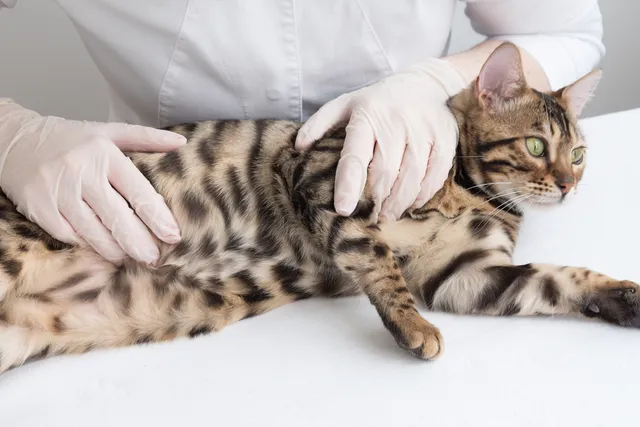
It is widely accepted that neutering (spaying or castration) is part of being a responsible feline parent. Aside from stopping urine spraying, monthly caterwauling, and your female feline attracting male cats, neutering helps prevent unwanted litters, straying, and fighting.
Neutering is a surgical procedure, and although it is one of the most straightforward operations a veterinarian performs, it still carries inherent risks. To help put your mind at ease, let’s take a look at what is involved in feline neutering, and the rare complications that could occur.

Feline Neutering – What’s Involved?
The word neutering is often used only in reference to males, but it actually describes the sterilization surgery of males and females; castration and spay. In most cases, this surgery is performed at around 6 months of age, sometimes younger if the circumstances require it. For example, cats in animal shelters being neutered prior to rehoming, or when male and female kittens are housed together. Unlike with dogs, there is no scientific evidence to indicate any negative physical or behavioral effects of early-age neutering in cats.
The preferred age of 6 months is simply to allow kittens to reach a good weight, and makes their reproductive organs a bit easier to handle!

Castration
Male cats are anesthetized but often are not intubated, as the procedure is over so quickly. Their fluffy scrotum is shaved, and two small incisions are made to expose each testicle. A knot or ligature ties off the spermatic cord and blood supply and the testicle is removed. There is very little bleeding, and the wounds on the scrotum are usually left to heal on their own, which usually takes 1–2 days. Sutures are rarely used, because the wounds are so small and close quickly.
Spay
Females are given an anesthetic either with an injection into the muscle or the vein. An area on the abdomen is shaved and cleaned, to keep the surgical site sterile. Some vets make the incision into the side of the abdomen (flank) and others prefer a midline approach; either method is safe.
Typically, the feline uterus is very small, with each horn around 2–3 inches long, and 2–3 mm in diameter. The ovaries are quite mobile, which makes it easier to place a suture (ligature) around the suspensory ligament that holds each ovary in place and makes an incision behind each ovary. A third ligature is placed around the body of the uterus, which is then cut, resulting in the removal of the ovaries and uterus.
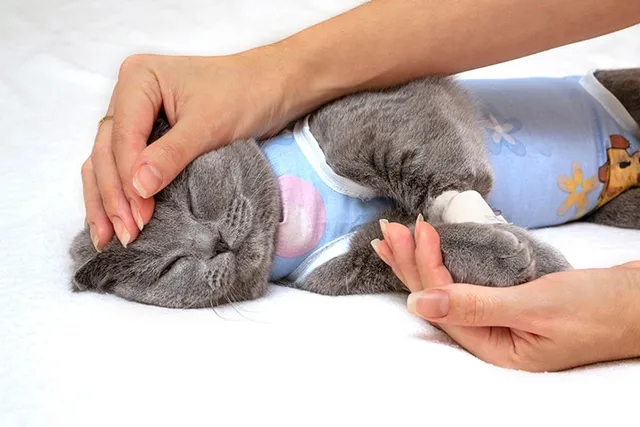
The muscular abdominal wall is closed with sutures, followed by the skin layer. Some surgeons place sutures on the outside of the skin, while others use intradermal sutures, which are buried in the skin layer and will dissolve over time.
Feline Neutering – What Can Go Wrong?
As we mentioned, serious complications from feline neutering are relatively uncommon, but they can happen. Let’s take a look at what can go wrong before, during, and after your cat’s surgery.
1. They Are Booked in for the Wrong Surgery
This happens more often than you might think—cats who were believed to be one sex, turn out to be the other! Most of the time, this is noticed when the patient is admitted, but there have been more than a few occasions when it wasn’t until a uterus couldn’t be found that the error was picked up!
2. Anesthetic Problems
This is the scariest of them all—any cat, old or young, can have an adverse reaction to an anesthetic. The drugs used are far safer than they were in the past, but anesthetic deaths do still occur. Other complications that can result from anesthesia include hypothermia (low body temperature), hypotension (low blood pressure), prolonged sedation, and blindness.
Much of the time, the blindness is temporary, and resolves once the medications have left the system, but cases of permanent blindness have been known to occur.

3. Aspiration
When cats are anesthetized, they are unable to swallow, so if they vomit, it can end up in their lungs. This is why your vet asks you not to feed your cat for around 10 hours before surgery. Inhaling a stomach full of food and liquid can cause life-threatening aspiration pneumonia, so if your cat manages to steal some food on the day of surgery, be sure to tell your vet. It is better to delay surgery than take any unnecessary risks.
4. Hemorrhage
One notable feature of feline surgery is that they bleed a lot less than dogs. Although cats can experience mild or severe hemorrhage during or after surgery, it is rarely a fatal complication unless there is a pre-existing bleeding disorder (coagulopathy). Females might have a minor internal hemorrhage, which presents as mild weakness and lethargy. Both males and female cats can bleed from their wounds, but it would be unusual for this to result in significant blood loss.

5. Swelling
By far the most common complication of cat neutering, swelling around the wound can occur for a number of reasons, including:
- Bleeding under the skin
- Too much activity
- Licking the wound
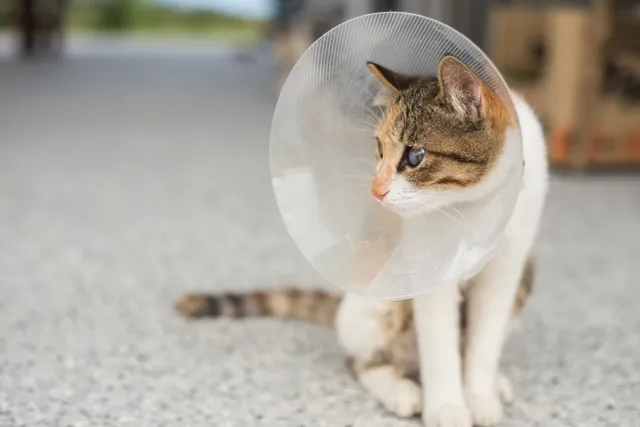
Swelling is often the result of inflammatory cells and fluid being drawn to the area as part of the natural healing process. Sometimes, there is something of an overreaction, resulting in excessive inflammation and swelling, and other times, licking and activity causes trauma to the wound, triggering more of an inflammatory reaction. The result is swelling of the skin around the wound or the formation of a pocket of inflammatory fluid under the skin, also known as a seroma. Swelling does not necessarily indicate infection, but this can be another cause of swelling. In most cases, swelling resolves with a few days of strict rest and the use of a “cone of shame”.
6. Wound Breakdown
Sometimes the suture material doesn’t quite hold, or the cat has been running around or licking their wound, and you are faced with an open wound, which can be scary. How an open wound is treated will depend on how large the wound is, which layers are involved, and whether infection is present.
Sometimes another anesthetic is needed to debride and close an infected wound, other times the solution comes in the form of a skin staple or tissue glue.

7. Infection
As with any wound, your cat’s spay or castration wound could become infected. Most surgical wound infections result from grooming or exposure to the litter box, but they can also be picked up in the veterinary hospital. It is common for your vet to swab the surgical site to make sure the infection isn’t caused by drug-resistant bacteria.
8. Damage to Other Structures
Everyone has bad days, and mistakes occasionally do happen. Fortunately, very rarely. When performing surgery on tiny organs, it is possible for adjacent structures like the bladder or ureters in females, or the penis in males, to be accidentally damaged.

9. Pregnancy
One last potential complication with female cats is the possibility of pregnancy, which can sometimes lead to unexpected circumstances during surgery. It’s not unusual for owners of outdoor female cats to be unaware their cat is pregnant at the time of the procedure. If a pregnancy is detected, the potential complications can vary depending on how far along she is. Early pregnancies typically don’t pose significant issues, though they may slightly extend the anesthesia and surgical time. However, more advanced pregnancies can require additional care and consideration from the vet team.

How To Reduce the Risks of Surgery Complications?
There are times when complications occur, despite all our best planning and care, but there are a few things you can do to minimize the risks for your beloved feline:
- Follow your vet’s instructions: Your vet has dealt with dozens, if not hundreds, of cat spays and castrates, and they know what they’re talking about.
- Use an Elizabethan collar: The only surefire way to stop your cat from licking their wound is to fit your cat with one of these bad boys. Your vet will be able to supply you with one, or you can check out some more comfortable—and fashionable—options online.
- Restrict their activity: We know that it’s virtually impossible to convince a cat to take it easy, especially when, as is usually the case, they feel fine. The more they run, jump, wrestle, and play, the higher their chances of wound swelling or breakdown. Keep them confined to a small room, away from tall furniture or anything else that they will want to jump on. If you have multiple cats, keep your recovering patient on their own for a few days.
- Even if you’re confident about the sex of your cat, it never hurts to double-check with your vet!

Final Thoughts
Cat spays and castrations are relatively straightforward surgeries, with a low complication rate. However, there are risks involved with any surgical procedure, and it is important to be aware of these. In the majority of cases, cats are up and about and wanting to play within a day or two of being neutered, and the most difficult part of the whole procedure is trying to keep them from running amok during their recovery phase!
It is comforting to know that serious complications are extremely rare, and the benefits of spaying or castrating your cat far outweigh them. If you have any questions or concerns about neutering your pet, do talk to your vet.
See Also:
My Cat’s Spay Incision Slightly Opened: Should I Worry? Vet-Approved Facts & FAQ
What Happens If You Neuter a Cat Too Early? Vet-Reviewed Facts & Advice
Featured Image Credit: Andrii Medvednikov, Shutterstock
Expert cat care, straight to your inbox
News, insights, and useful advice, delivered to you.

No spam — unsubscribe anytime.
By signing up, you agree to our Terms & Conditions and Privacy & Cookies Policy.
How useful was this post?
Click a star to rate. You can leave written feedback afterwards. (We read all feedback.)
Dr. Karyn Kanowski BVSc MRCVS (Veterinarian)
Dr. Karyn comes from Queensland, Australia, and has lived in the UK for the past 10 years. In 2010, she graduated from The University of Queensland School of Veterinary Science and also has a Bachelor’s degree in Zoology. She is passionate about using evidence, experience, and owner collaboration to provide the best solutions for pets, and believes in making reliable information about animal health accessible to all. Dr. Karyn shares her home with five cats, four dogs, and one husband. When she is not in the scrubs, she spends her time writing, gardening, and cleaning up pet hair!