6 Health Risks of Keeping a Dirty Litter Box: Vet-Approved Sickness Signs



Cleaning the litter box is one of the most laborious (not to mention smelly) tasks a cat owner must do every day, so it’s easy to let this job slide to the wayside. But did you know that slacking on your poop-scooping duties can have severe consequences for both you and your cat? It’s true, and it’s something you need to educate yourself on before you put off your litter box cleaning for another day.
Keep reading to find the most significant health risks that can occur due to a dirty litter box.

Top Tip for Cleaning & Combating Tough Litter Box Smells
Cleaning up after our pets is not the most enjoyable part of owning them. Despite keeping a clean litterbox, cat odors and stains may still exist around the house. Sometimes, even the best litter box setup needs extra help. If you're tired of dealing with bad smells from litter boxes, Hepper Advanced Bio-Enzyme Pet Stain & Odor Eliminator Spray can help with the worst pet stains and smells. Additionally, the Advanced Bio-Enzyme Cat Litter Deodorizer neutralizes odors upon contact.
| Image | Product | Details | |
|---|---|---|---|

|
Hepper Advanced Bio-Enzyme Pet Stain & Odor Eliminator Spray |
|
Check Price |

|
Advanced Bio-Enzyme Cat Litter Deodorizer |
|
Check Price |
At Catster, we’ve admired Hepper for many years and decided to take a controlling ownership interest so that we could benefit from the outstanding designs of this cool cat company!
The 6 Health Risks of Keeping a Dirty Litter Box
1. Urinary Tract Infections
When you don’t scoop out your cat’s litter, your beloved kitty may squat directly over top of old urine or feces the next time that they go to eliminate. They may also step in these old excretions. The bacteria in their waste can then travel up your cat’s urethra, leading to a urinary tract infection (UTI). A dirty litter box can cause other health conditions due to the natural fastidiousness of cats; they simply do not want to enter a dirty litter box because it’s gross and makes them feel unclean. Examples of such conditions include Feline idiopathic cystitis (FIC) and feline urethral obstructions (FUO).
Feline bladder stones often form as a result of UTIs and, therefore, are often linked to dirty litter boxes. These stones occur when organic materials accumulate in your cat’s bladder, blocking the urethra and making it difficult and painful for your cat to pee.
Signs of a UTI in cats include:
- Frequently attempting to urinate
- Only passing small amounts of urine
- Having bloody urine
- Straining to pee
- Crying while peeing
- Not urinating at all
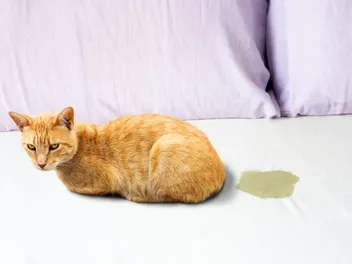
- Urinating outside of the litter box
- Licking of the perineal area
IMPORTANT
2. Cat Scratch Disease (CSD)
CSD is a bacterial infection that humans can get from dirty cat litter. It is caused by the Bartonella henselae bacteria and is most often passed to humans via cat bites or scratches; however, CSD can also occur from direct contact with dirty litter boxes.
According to data from the Centers for Disease Control and Prevention, CSD is most common in children under 9 and individuals with weakened immune systems. Those with compromised immune systems are more likely to experience complications from CSD, such as eye infections that can lead to blindness and bacillary angiomatosis, an illness characterized by skin lesions.
Signs of CSD include:
- Swollen lymph nodes
- Headache
- Fever
- Poor appetite
- Fatigue

3. Salmonellosis
Like CSD, Salmonella first infects your kitty before spreading to you. Your pet may be asymptomatic, so you might not even know they have the infection.
Signs of salmonellosis include:
- Diarrhea
- Abdominal cramping
- Abdominal pain
- Fever
Since Salmonella lives in the intestinal tract of animals, it is easy to see how it could be transmitted to you via your cat’s dirty litter. Although Salmonella can be considered normal flora for some cats, certain strains can cause issues in people.
4. Overexposure to Ammonia
Your cat’s urine is full of ammonia, which is part of the reason it smells so bad. Cat urine is highly concentrated, so it has a strong odor, leading to eye, nose, and throat irritation and headaches. Long-term ammonia exposure can cause lung irritation, coughing, bronchitis, or pneumonia.
As with CSD, children and individuals with weakened immune systems are more at risk.
5. Roundworms
Your cat’s excrement may be home to several types of parasites. Roundworms can pass from your cat’s feces onto you, causing a host of unfortunate side effects such as diarrhea, nausea, and coughing.
If you believe your kitty has roundworms, visiting the vet is in order. Left untreated, severe infestations of this parasite can cause life-threatening consequences.

6. Toxoplasmosis
Toxoplasmosis is a disease caused by the Toxoplasma gondii parasite. It’s relatively common and is generally mild in cats, but because of its zoonotic potential, all cat owners need to be aware of its health implications.
Signs of toxoplasmosis in humans include:
- Muscle aches
- Fatigue
- Headaches
- Swollen lymph nodes
- Fever
IMPORTANT

Final Thoughts
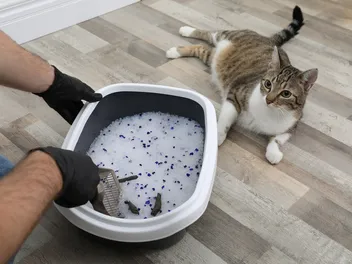
While no cat owner has ever looked forward to cleaning the litter box, it is a necessary evil that you must commit to doing daily. A clean box can not only prevent the above health conditions, but it will also stop your cat from eliminating outside of the box. The cleaner your cat’s litter box is, the happier and healthier you and your pet will be.
Sources
Featured Image Credit: catinsyrup, Shutterstock
Expert cat care, straight to your inbox
News, insights, and useful advice, delivered to you.

No spam — unsubscribe anytime.
By signing up, you agree to our Terms & Conditions and Privacy & Cookies Policy.
How useful was this post?
Click a star to rate. You can leave written feedback afterwards. (We read all feedback.)
For Chantelle, writing and animals are the two driving forces in her life. Growing up on the Canadian prairies surrounded by pets, she now shares her home with five cats, two guinea pigs, and a bearded dragon. Chantelle, her husband, and their child pride themselves on being dedicated pet parent, even spending a fortune on wall-mounted cat shelves to provide their cats with an indoor jungle gym. When she's not snuggling with her cats or photographing their humorous moments, Chantelle is exploring the Rocky Mountains, rewatching her favorite Netflix series, and reading up on various random subjects.