Can a Cat Get Parvo & Can They Get It From a Dog? Our Vet Explains

In this article
Cats have their own type of parvovirus, called feline panleukopenia virus (FPV). But they do not get it from dogs.
While cats have been shown to carry and shed certain variants of the dog parvovirus (canine parvovirus type-2), aside from a few reported cases it is not currently thought to be a common cause of disease in cats.

What Causes Feline Parvo?
Feline panleukopenia virus (FPV) itself is a small and simple virus in structure, but very effective at infecting cells. Parvoviruses primarily attack cells that divide quickly.
Symptoms of infection are related to the parts of the body that are affected, most commonly the gastrointestinal (GI) tract, bone marrow, and lymph tissue.
Parvoviruses in general are:
- Highly contagious
- Quite resistant to disinfection
- Able to survive for a long time in the environment (up to one year or more, under the right conditions)
How Do Cats Become Infected with Feline Parvo?
FPV is found throughout the environment, so pretty much every cat will come into contact with it eventually.
Infected cats shed the virus in their urine, feces, and nasal discharge. Cats can pick up the virus through direct contact with an infected cat, or by indirect contact (e.g., through contaminated food and water dishes, bedding, or litter boxes). People can even spread the virus between cats if it is present on their hands or clothing.
The virus survives well outside of the body, so thorough cleaning and disinfection is critical in preventing transmission.
The incubation period (the time from infection to illness) of FPV is usually around five days. Infected cats may shed the virus for several days before showing obvious clinical signs.

What Are the Symptoms of Feline Parvo Infection?
Healthy adult cats that have been vaccinated against FPV are unlikely to develop any signs of illness after contact with the virus.
However, adult cats that are immunocompromised, or have not been vaccinated against FPV, may become sick. Symptoms can include:
- Decreased energy
- Loss of appetite
- Vomiting and/or diarrhea (with or without blood)
- Drooling
- Abdominal tenderness
- Unkempt appearance
Cats with FPV are typically dehydrated, have a fever, and their bloodwork shows low counts of all white blood cells (hence the name panleukopenia virus). This makes them extremely susceptible to secondary infections, especially because damage to the gastrointestinal (GI) tract can allow bacteria to enter the bloodstream and cause sepsis.
Young kittens are often severely affected. Unfortunately, in some cases, the disease progresses very quickly and can be fatal before clinical signs even become apparent.
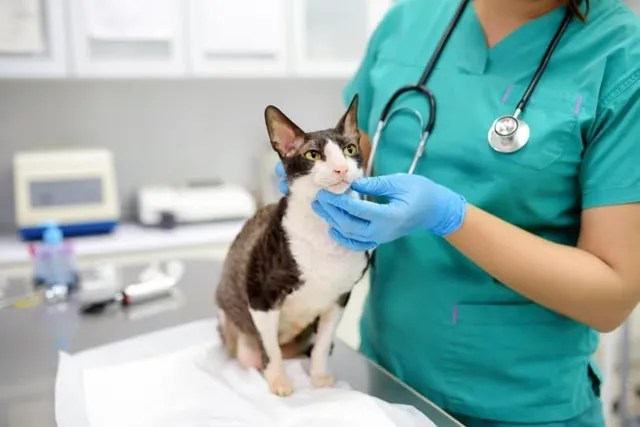
If you are concerned that your cat may be showing signs of FPV infection, please seek veterinary attention right away.
Can Parvo in Cats Be Treated?
There is no specific treatment for FPV. An affected cat requires intensive supportive care in a hospital, while their immune system tries to fight the virus.
Treatment usually involves:
- Intravenous (IV) fluids to maintain hydration, provide electrolytes, and support blood sugar
- Broad-spectrum antibiotics to protect against secondary bacterial infections
- Anti-nausea medication to help encourage appetite (nutrients obtained through food are critical to healing, particularly for the gastrointestinal tract)
- Pain management (if needed)

Can Cats Recover From Parvo?
Feline panleukopenia virus (FPV) can cause serious illness in cats. Many kittens younger than 8 weeks of age sadly do not survive. Prognosis remains very guarded until around 5 months of age.
Adult cats that receive prompt and aggressive treatment have the best chance for recovery, but the survival rate with hospitalization is still only reported to be 20-51%.
Without hospitalization, the survival rate is thought to be less than 10%.
Can I Get Parvo from My Cat?
No. Feline panleukopenia virus (FPV) is not transmissible to humans.
How Can I Protect My Cat from Parvo?
All cats will likely encounter FPV at some point in their life. Fortunately, a very effective vaccine is available.
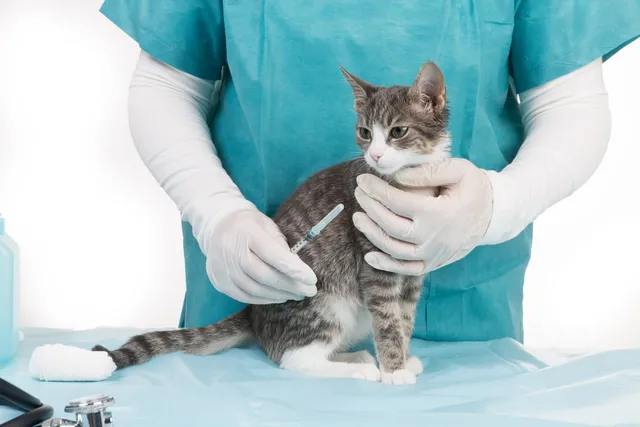
The American Animal Hospital Association (AAHA) recommends the FPV vaccine for all cats, regardless of whether they spend time outdoors. The vaccine is particularly important for kittens because their immune systems are not fully developed.
Kittens are typically vaccinated around 6-8 weeks of age, followed by a booster every three or four weeks until they reach 16-20 weeks of age. After the initial series, your veterinarian will let you know how often your cat needs to be re-vaccinated to stay protected throughout their life (usually every 1 to 3 years).
In addition to vaccination, here are some helpful tips to help keep your cat(s) safe:
- If a cat in your house has been treated for FPV infection, they can continue to shed the virus for up to 6 weeks after recovery, and should be kept isolated from kittens and unvaccinated or immunocompromised adult cats.
- When bringing a new pet into your home, it is a good idea to keep them separate from any pets you currently have for a short quarantine period (up to 2 weeks). Ask a veterinarian if your new addition should be tested for any infectious diseases, or receive certain vaccines before making introductions.
Conclusion
Cats can get parvovirus, but it is a different version of parvo called FPV. It has not been shown that cats can get parvo from dogs. Luckily, there are vaccines available to prevent cats from getting FPV, so it is important to keep up with regular veterinary care for your cat.
See Also:
Featured Image Credit: Ermolaev Alexander, Shutterstock
Expert cat care, straight to your inbox
News, insights, and useful advice, delivered to you.

No spam — unsubscribe anytime.
By signing up, you agree to our Terms & Conditions and Privacy & Cookies Policy.
How useful was this post?
Click a star to rate. You can leave written feedback afterwards. (We read all feedback.)
Dr. Sharon Butzke DVM (Veterinarian)
Sharon has been drawn to animals for as long as she can remember. She was raised in Ontario, Canada and fulfilled her childhood dream when she obtained her Doctor of Veterinary Medicine (DVM) degree from the Ontario Veterinary College in 2009. Since then, she has worked in a variety of small animal clinics, with a focus on cats and dogs. She loves sharing her knowledge and empowering people to take the best possible care of their pets! Sharon currently resides in British Columbia with her husband, daughter, and a loveable Great Dane named Parker.