
In this article
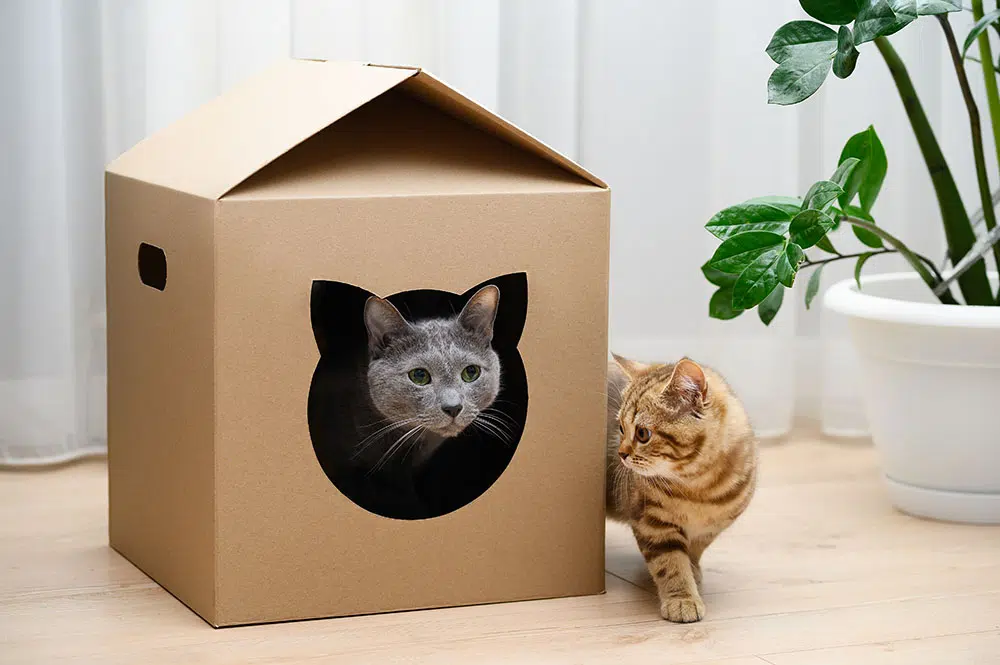
Cats love to hang out in small, enclosed spaces, and cardboard boxes are popular choices. Some cats retreat to cardboard box hiding places when they’re looking for a bit of quiet time, and others find them great places to pounce on “prey” and entertain themselves.
If you have several boxes lying around the house, you may be wondering if there’s a particular size that cats tend to prefer so you can make the perfect cardboard cave for your buddy.
While cats are often happy to hang out in boxes of any size, most love to curl up in small spaces, so look for a box that’s nice and snug, but keep in mind that your cat may have different ideas and prefer something roomier.

Are There Ways to Spruce Up Cardboard Boxes for Cats?
If you’re looking for ways to elevate your cat’s cardboard box experience, consider putting a folded blanket or towel on the bottom to give your companion a soft, cozy place to sleep and hang out. A sprinkle of catnip or silver wine can make the space extra inviting.

Why Do Cats Like to Hang Out in Cardboard Boxes?
Small, enclosed spaces help cats feel safe and secure. Some suggest that curling up in boxes reminds cats of the feeling they had when sleeping close to their mothers and siblings.
Cardboard boxes also provide insulation, and cats are notoriously warm-loving creatures. Cats generally enjoy curling up in snug spaces, and doing so may also relieve stress.
Cats in shelters, for example, are far less stressed when they have access to boxes in which to hide. Many simply enjoy jumping into and out of boxes with gleeful abandon.

- Premium Materials - Hepper's cardboard scratcher is made with dense, B-flute cardboard, and a metal...
- High, Low and Lower - A single cat scratch pad won't keep your cat engaged. 3 unique positions keeps...
- Activates Muscles - The Hi Lo isn't just a cat nail file to stop the chief cat couch scratcher. The...
We're quite fond of cardboard as a material in cat scratchers, which is why we love the Hepper Hi-Lo Cat Scratcher. Encased within a well-constructed, modern birch plywood frame, this scratcher is designed with both cats and their owners in mind. It offers three versatile configurations to keep your feline friend active and entertained while enticing them to fulfill their natural scratching instincts (and away from scratching things they shouldn't). For more details, click here!
At Catster, we’ve admired Hepper for many years, and decided to take a controlling ownership interest, so that we could benefit from the outstanding designs of this cool cat company!
What Are Some Other Common Cat Hiding Places?
Cats can be creative when finding places to curl up and relax. Closets and storage bins are popular places to nap and rest. The preference for snug spaces is likely what prompts cats to enjoy hanging out in suitcases and sinks. Many love to spend hours under bed covers; not only does your bed smell like you, but it’s also warm and quiet.
Laundry baskets are a riff on the theme; they’re enclosed and offer support for cats to curl up against. They also have the added benefit of allowing kitties to rest in clothes that smell like their favorite people. Those cats who relish hanging out in sinks may enjoy doing so in part because of the tight fit.

Are Other Options That Provide Some of the Same Benefits?
You can purchase or construct tunnels and caves that provide your cat with enclosed places to nap, or you can install a cat tree. Cat trees give cats high places to perch, which helps them feel safe and comfortable.
It’s possible to find trees with toys, scratchers, and elevated hiding places, making them great all-in-one play and relaxation centers.
Do Cats Hide When They’re Stressed?
Sometimes. Cats retreat to a hiding spot to avoid conflict; most prefer to move on when possible, so hiding can be (but isn’t always) a response to stressful situations.
Signs of stress include meowing and vocalizing excessively, peeing outside of the litter box, excessive grooming, aggression, lack of energy, and reduced appetite. It can also cause cats to have stomach issues.
It’s important to note that cats are known to hide when they experience pain and discomfort, so if this is a new behavior for your cat and you can not identify any potential cause of stress, it would be best to get them to the vet to rule out any health issues.
If you need to speak with a vet but can't get to one, head over to PangoVet. It's an online service where you can talk to a vet online and get the advice you need for your pet — all at an affordable price!

What Are Some Other Ways to Keep Cats Happy?
Physical activity and mental stimulation are key to keeping cats happy. Kitties are generally happiest when they enjoy regular play sessions and have lots of activities to keep them busy.
1. Physical Activity
Playtime provides physical activity and fun. It’s also a great way to keep cats nice and trim, which is one of the most important things pet parents can do to support their companions’ overall health.
2. Toys and Scratchers
Solo play toys give cats entertainment options they can enjoy when alone, and scratching posts provide appropriate places for them to revel in their natural need to stretch and unleash their claws.
Looking for toys that will cater to the many needs of your cat? The Hepper Hi-lo Cat Scratcher is one of our favorite cat products, and it will encourage your cat to get active. Its clever three-angle design offers multiple ways for your cat to climb, stretch, and exercise. Made of a sturdy plywood base and a replacement cardboard insert, this scratcher is an option that cats can enjoy for years to come. If your cat requires a little encouragement for self-play, the Hepper Catnip Mice Toy Set is a fantastic choice for their instinctual needs. Made with natural, bite-resistant hessian fabric and filled with organic catnip. Cats can satisfy their natural prey instincts while getting the physical activity they need to thrive. At Catster, we've admired Hepper for many years, and decided to take a controlling ownership interest so that we could benefit from the outstanding designs of this cool cat company!
Image
Product
Details
Great for Exercise

Hepper Hi-Lo Cat Scratcher
Check Price
Encourages Self-Play

Hepper Catnip Mice Toy Set
Check Price
3. Window Perches, Enclosures, and Catios
Window perches let cats keep track of what’s going on outside, which can provide hours of entertainment. Catios and backyard enclosures allow cats to relax safely in the great outdoors so they can enjoy the sounds of chirping birds and the wind rustling through the trees.
4. Puzzle Feeders and Games
Many cats love mental challenges, and puzzle feeders and games can be great ways to keep them happy. Cats must learn how to get to the hidden treats, which provide mental stimulation.
You can make simple DIY puzzle toys with paper towel rolls if you’re looking for a quick way to provide your cat with entertainment and upcycle at the same time.
5. Training
Many cats enjoy training, which can be an excellent way for pet parents and their companions to spend time together. Some cats can learn how to sit and respond to their names.
They can also be trained to walk on leashes. Leashed walks allow indoor cats to enjoy the sights and sounds of the great outdoors. Positive reinforcement-based clicker training using treats and cuddles as rewards makes the process easier.

In Conclusion
Cats enjoy relaxing and napping in small spaces, and cardboard boxes fit the bill. Although tunnels and cat caves give kitties places to hide and snooze in privacy, cats frequently gravitate toward cardboard boxes when looking for places to retreat.
Small boxes are usually best for most cats, particularly when spruced up with soft towels or blankets, but remember that some cats may enjoy cardboard boxes that provide a bit more room.
Featured Image Credit: rom_olik, Shutterstock





