Get

In Your Inbox

Catster is reader-supported. When you buy via links on our site, we may earn an affiliate commission at no cost to you. Learn more.

How to Tell if a Cat Is Scared (4 Vet-Reviewed Signs to Look For)

cat hiding

One of the hardest parts of being owned by a cat is not always knowing exactly how they’re feeling. As typically stoic animals, it can be difficult to tell if your cat is in discomfort or feeling vulnerable in some way—all we can do is learn to read the signs in the form of body language, facial expressions, and vocalizations.

Fortunately, fear is one of the easiest emotions to read in cats. In this post, we’ll explore how to tell if your cat is feeling afraid and share tips on how to calm a stressed-out, anxious cat.

divider 3 paws

The 4 Common Signs That Show a Cat Is Scared

1. Body Language

shy scared cat in bucket litter box
Image Credit: Tung Cheung, Shutterstock

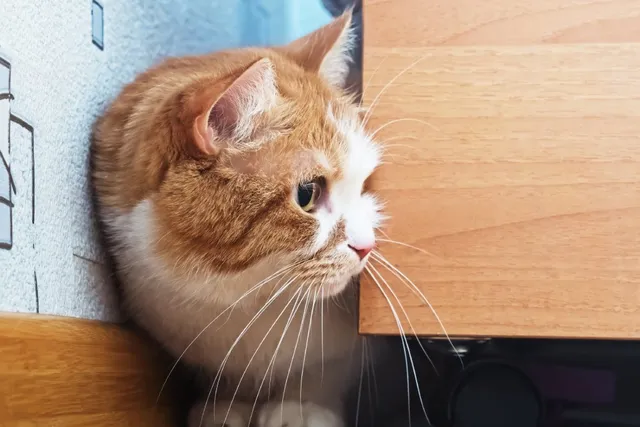
Checking out your cat’s body language is the easiest way to tell if they’re feeling afraid. A frightened cat will either freeze in one spot, run away, or go into self-defense mode. They may crouch, arch their back, puff up their fur, and swish or tuck their tail under or around their body.

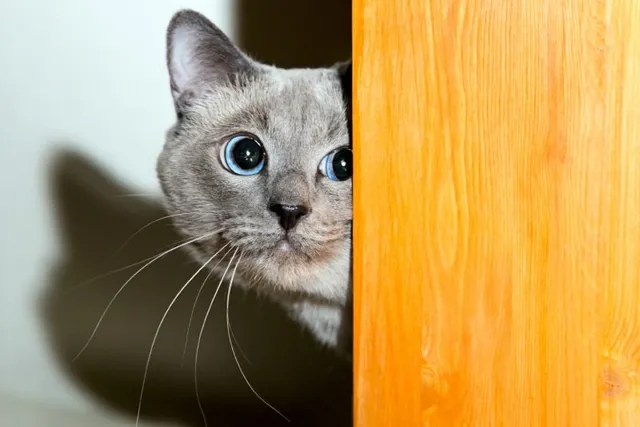
The arching of the back and puffing up of the fur make the cat appear larger and, therefore, more intimidating to whatever is threatening them. Some cats flatten their ears down or move them back and forth (to hear better) and flick their tails from side to side. A fearful cat’s eyes will often dilate.

The body language cues of a fearful cat are sometimes a bit tricky to fully understand because they often overlap with those of an angry cat (a cat that’s scared may often lash out as well).


2. Vocalizations

A cat feeling scared or threatened may express this with a range of vocalizations. If you hear your cat growling, hissing, or meowing in a different tone, this is likely a sign that they’re afraid and ready to defend themselves if necessary.


3. Hiding

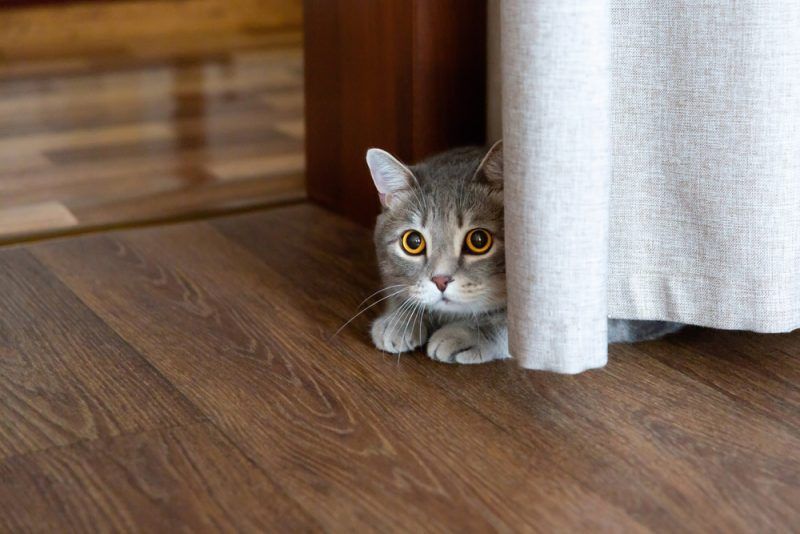
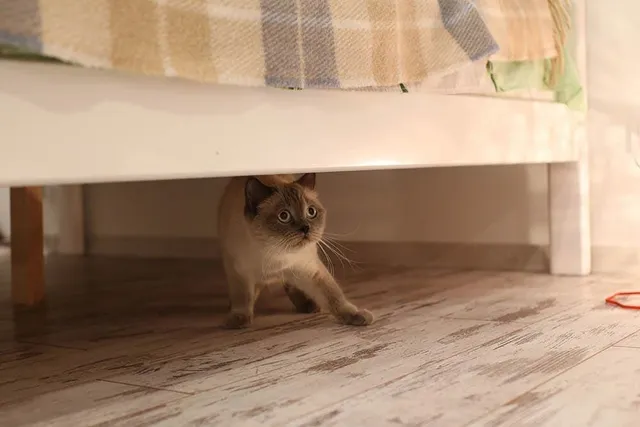
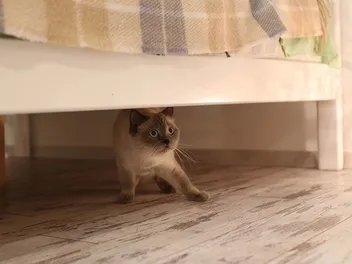
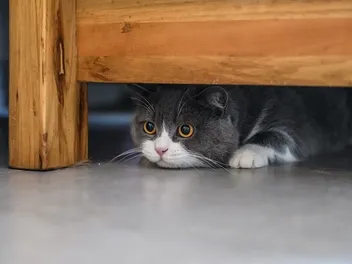
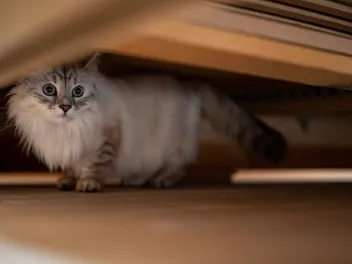
It’s natural for a frightened cat to seek sanctuary somewhere they can feel safe. If your cat is afraid, they may run away and hide under a bed, in a box, behind a sofa, or anywhere they can escape what has set off their fear.


4. Going Outside the Litter Box

It’s not unusual for anxious or scared cats to pee or poop outside of the litter box. This is a common sign of cat anxiety , so if this happens often, it would be a good idea to take your cat to the vet to find out what’s going on.

If you need to speak with a vet but can't get to one, head over to PangoVet. It's an online service where you can talk to a vet online and get the advice you need for your pet — all at an affordable price!

PangoVet_Mention-in-Content for PangoVet2 save money

divider 1 paws

What Are Cats Afraid Of?

Cats get scared for a variety of reasons. Common things that can set off a cat’s fear response or anxiety include other cats being on their territory, other animals, new people, loud or sudden noises, or new places and smells. Cats are very much creatures of routine, so any interruption in that routine, like a trip to the vet, is enough to set alarm bells ringing for them.

How to Calm a Frightened Cat: 6 Tips

Calming a frightened cat isn’t the easiest of tasks, but there are a few things you can try to reassure them.

  • Stay calm. Cats pick up on your emotions, so the more stressed you are, the more stressed they will be.
  • Keep things nice and quiet. Your cat needs to be in the most peaceful environment possible right now.
  • Make sure there’s a safe, quiet space for your cat to retreat to.
  • If your cat goes to hide in their safe space and doesn’t leave it for a while, this is a signal that they want some space. Let them stay there for as long as they need to calm down.
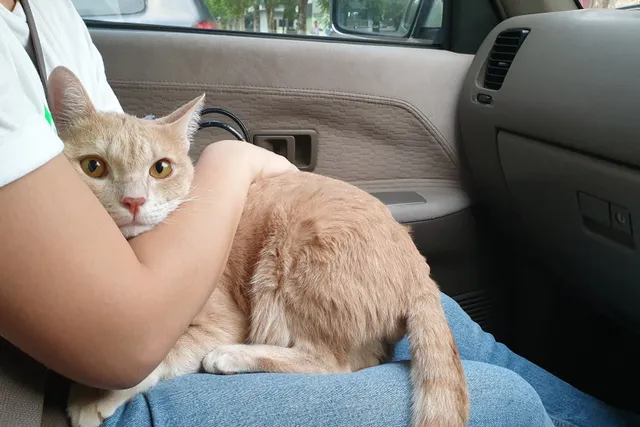
  • While some cats prefer to hide, others will seek reassurance from you. If this sounds like your cat, speak in a soothing tone and pet them to help calm them down.
  • Avoid surprises where possible—most cats don’t take them well! Let your cat gradually become accustomed to new objects.

divider 2 cats

Final Thoughts

It’s normal for cats to get scared now and then, especially if they’re meeting a new fluffy friend for the first time or getting used to something new and strange. If your cat persistently shows signs of fear or stress, they may be dealing with anxiety. In this case, your vet is the best person to help you get to the bottom of why your cat is so anxious and recommend a treatment plan.


Featured Image Credit: Mantikorra, Shutterstock

Want content like this delivered to you?

Sign Up For Our Newsletter

News, insights, expert advice, and everything cat

* By submitting, you agree to our Terms & Conditions and Privacy & Cookies Policy.

How useful was this post?

Click on a star to rate (you can leave written feedback after clicking submit)

Help us improve Catster for pet parents!

Your feedback really matters.

What did you like about this post? Also how can we improve it?

Join the conversation

2 Responses

  1. Your response helped a lot and calmed my feelings at least. My cat has been on the floor of the closet for 10 days now and I think a severe thunderstorm affected her plus lengthy severe heat

    1. Thanks for your comment, Patricia Ann Alexander. We are glad you found our post useful. If you wish to have a chat about your cat’s case with a veterinarian, our team is one click away at www.pangovet.com

Leave a Reply

You’re very welcome to leave a comment or question. Please know that all comments must meet our community guidelines, and your email address will NOT be published. Let’s have a positive and constructive conversation.

Talk With A Vet Online

Peace of mind,
anywhere, anytime

Affordable vet advice

Catster Photo Contest: Cats of the Week Winners (December 12, 2024)

This Week’s Winner Silliest Cutest Most Dignified Most Expressive Best Action Shot Sleepiest Enter Your Cat Submit your kitty for a chance to...

Cat Huffing: Why People Like Smelling Cats So Much

Cats have a unique odor that many people find appealing. In fact, some people enjoy the scent so much that they actively seek...

4 Vet-Reviewed Natural Home Remedies for Blood in Cat Stool

Since cats normally do their business in the same place, it can be easy to tell when something is amiss. Changes to your...

Do Cats Kill Rats? Vet-Reviewed Facts & Efficacy

Cats are well-known for their hunting prowess, but some cats are more talented at this skill than others. When humans began farming several...

More related

Will My Cat Eat My Bearded Dragon? Coexisting & Socialization Tips

Felines and reptiles have a complicated relationship. On the one hand, cats naturally hunt small lizards, such as geckos. In turn, these lizards...

Can Cats Eat Blueberries? Our Vet Answers!

There are many debates when it comes to what foods cats can and cannot eat. Some people believe that cats can eat any...

Is My Cat Drinking Enough Water? Vet-Approved Facts & Tips

Ensuring your cat is hydrated is incredibly important for its overall well-being. Cats need to intake around 1–2 milliliters of water per kilogram...

Paula Brown: Use Feng Shui to Increase Harmony, Health, and Love

You might have heard of feng shui, but you might not understand its full meaning and potential. Feng shui expert Paula Brown agreed...

Keep reading

How to Keep Kittens Warm: Vet-Approved Techniques & Safety Tips

Kittens are cute, cuddly, and a joy to watch as they grow and mature. However, it’s vital to keep them warm for the first few weeks of their life. The younger the kitten, the more important it is for you...

newborn kitten in man's hand

Aural Hematoma in Cats: Vet Reviewed Signs, Causes & Care

Your cat’s ears are fascinating parts of their body. They can give you information about how your cat is feeling, and petting, scratching, or massaging them will strengthen your bond. However, various ear problems can occur in cats, one being...

Cat with Aural Hematoma

How Often Should You Wash a Cat’s Bed: Vet-Reviewed Tips & Tricks

Just like you should wash your bedding every week or two, the same is true for your cat’s bedding. Ideally, you’ll want to wash it once a week, but if they don’t spend all that much time using it, you...

Cat near a Washing Machine

Why Is My Cat Purring After Giving Birth? 7 Vet-Reviewed Reasons

Cats are interesting creatures. They have a lot of quirks that make them unique. One of the most curious behaviors that cats exhibit is purring after giving birth. This can be puzzling for cat owners, so we’re going to explore...

mother cat with kittens

Are Polka Dot Plants Toxic to Cats? Vet-Reviewed Houseplants Examined

The polka dot plant (Hypoestes phyllostachya) is also known as the pink polka dot plant, the measles plant, baby’s tears, or freckle face. The green leaves have freckled markings of pink that look like polka dots. The more sunlight the...

Catster_Are Polka Dot Plants Toxic to Cats

Nulo Cat Food Review of 2025: Recalls, Pros & Cons

Review Summary Nulo is a California company that makes a wide range of cat and dog foods. It started with a man trying to take better care of his dog and blossomed into a full-grown pet care business, with high-quality...

Nulo Freestyle Cat Food Review

Does Garlic Kill Fleas On Cats? Vet Reviewed Effectiveness Safety Explained

In addition to warding off vampires, garlic has multiple dietary and medicinal virtues. This bulbous plant can spice up the flavor of almost any dish while taking care of your cardiovascular health, protecting your liver, and combatting infectious diseases. However,...

Garlic

Why Do Cats Hate Closed Doors? 6 Likely Reasons

As any cat owner knows, cats have a lot of quirks and idiosyncrasies. One of them is a hatred for closed doors, no matter what lies behind them. Sometimes, this innate drive to get into the closed room could lead...

cat sitting near the door at home