Cat Tail Language: Decoding What Their Wags Mean (With Infographics)


In this article
Felines can be quite vocal, making many different sounds to get our attention. However, their constant meows aren’t the only way that they can communicate with us. A feline’s tail is equally as expressive. Though we don’t always know for sure what their tail is trying to tell us, we can extrapolate what they’re potentially saying based on the situation and other body language signs.
Sometimes, cat tail language can be more challenging to interpret and may be quite individual and character-based. In certain instances, tail positions often present in cases of pain, fear, or illness may also be used by a cat in neutral and even positive circumstances, such as when sleeping and resting. It simply depends on the situation.
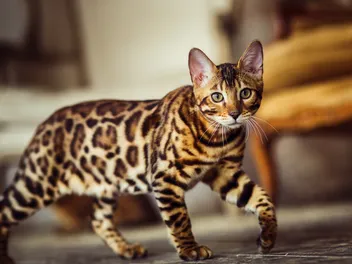
Of course, it’s impossible to describe every potential situation that may cause a certain tail position or movement, so we have focused on the most common ones. Interestingly, wild feline species, even big cats, often have the same expressions and vocalizations as domestic felines!
So, what are the common cat tail-wagging meanings? Let’s find out!

Positive Cat Tail Language

1. Straight Up
Hopefully, this one is a position you see most often with your kitty. Everything is all smiles when your cat's tail is sticking straight up. This means your pet is friendly and open to interaction.
Felines can use it when approaching humans or another, especially familiar, animal. It’s a receptive gesture that shows openness.
2. Wrapped Around You

You can liken this body language to putting your arm around someone. Cats often engage in tactile communication, whether with their owners or other felines. It’s part of their bonding. So, if your kitty wraps their tail around you, they are probably showing trust and security.
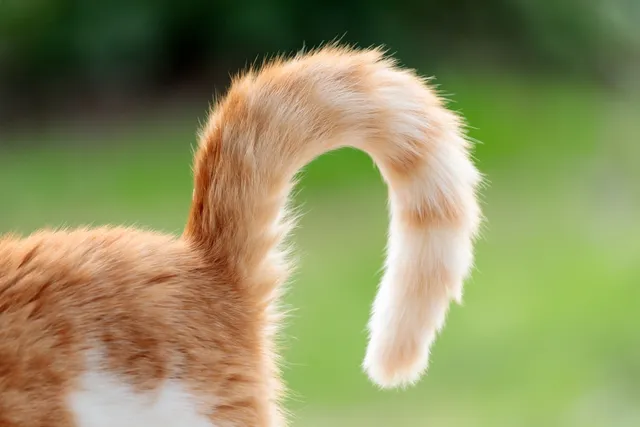
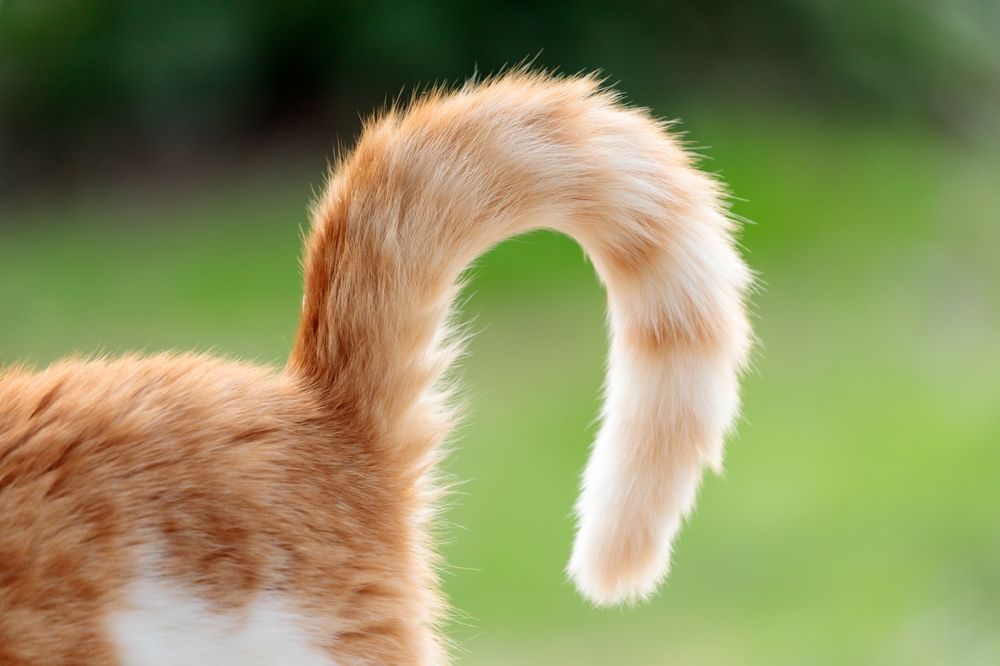
3. Question Mark
A tail in the shape of a question mark is a gesture that is often a subject of cartoons and humorous musings about cats. The question mark isn’t about confusion but instead is an invitation to play or interact. Perhaps your kitty is also suggesting they’re open to whatever you want to do, kind of like a dealer’s choice.
4. Twitching or Quivering

It’s hard not to deny the anticipation and excitement this tail position usually conveys. We like to think of it like a child jumping up and down when something good is about to happen. That’s how your cat likely sees it too. If you see a cat's tail lightly quivering, they are generally happy and ready for play or whatever love and attention you want to give them.
They are so excited that they can hardly contain their emotions. A twitching tip of the tail may also be a sign that your cat is excited or focused on potential prey or a toy, but it could also indicate mild annoyance.
You may see a male cat’s tail straight up and twitching when he is standing next to a vertical surface like a wall or tree; this is generally when he’s about to spray urine to mark his territory.
5. Slow Swishing
Our feline companions love to play, and anything can be a toy for many pets. For example, you might see a cat's tail wagging or swishing slowly when they are focused on something, like a toy or another animal. They may even be ready to pounce! This is good behavior, so let them enjoy the enrichment that they’re experiencing.

Potentially Negative Cat Tail Language

6. Low to the Ground
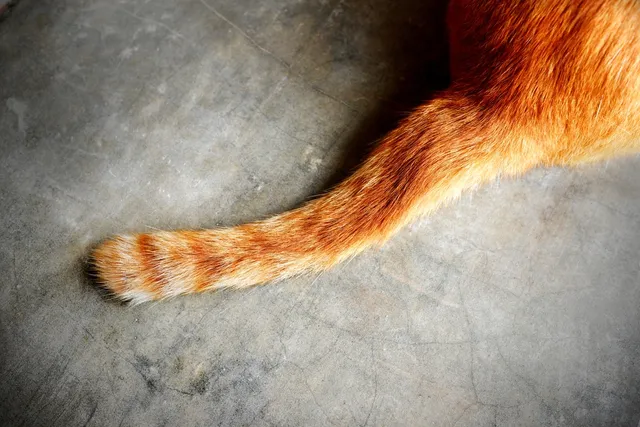
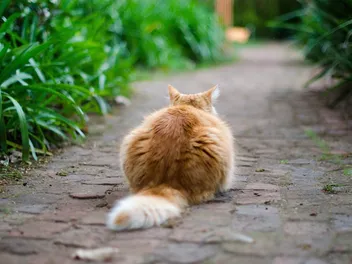
Cats may do an excellent job of hiding their pain—that is until the discomfort becomes overwhelming. An animal sitting near the ground with their tail down may be trying to keep a low profile. The kitty could be vulnerable in their present state, and they know it. Avoiding detection often means survival for a cat. We recommend approaching a pet with this stance cautiously.
That said, a low-positioned tail does not always mean the cat is feeling unwell, worried, or other negative emotions. They may be just preparing for a nap. Make sure you always interpret your cat’s tail position in accordance with the circumstances they’re exhibiting it.
7. Tail Around Their Body
Some believe a cat’s tail wrapped around their own body has a comforting effect, perhaps because they are feeling unwell or cold. If you see your cat crouched down like this often, however, along with exhibiting other general signs of illness or discomfort, it’s time to assess their environment and consult a veterinarian.
That said, this is a common napping and resting position for many cats, sometimes referred to as a loaf, and some cats will always wrap their tails around their bodies. If your cat seems well and is eating, drinking, toileting, and otherwise behaving normally, this tail position should not be of much concern.
8. Twitching the Tip
We think of this gesture as if a cat could tap their fingers on a table sitting opposite us. They are obviously annoyed by something we said or did. This cat tail sign is an early warning to watch your step. They’re irritated, but not enough to act. Felines often signal their displeasure with plenty of cues, so pay attention when you see a cat's tail twitching at the tip. Don’t say they (and we) didn’t warn you!
Cats may also twitch the tip of their tail if they are focusing on prey or preparing to pounce on a toy, so make sure you interpret their tail position in accordance with the situation and other body language cues.
9. Lashing

If your cat is lashing their tail, it means they’re really ticked off about something and are making their feelings known. Something really bad has to happen for a feline to act without a warning. There’s often a lot of posturing, vocalizing, and tail lashing before claws come out and fur flies. It’s probably best to leave your cat alone in this scenario.
10. Puffed
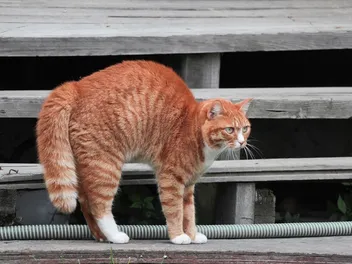
A puffed-out tail, often two or three times the size of a normal one, is either a sign of a very excited cat or one that is scared and ready for a fight. A feline may also have hair raised on their back to make them appear larger and a more formidable opponent. It’s an indication of high emotions that can go either way.
11. Drooping Down

A drooping tail often indicates something is wrong. Felines have between 20 and 23 bones in their tails. This extension of their spine is vulnerable to injury. A cat holding it in an unnatural position may have fractured or otherwise injured it somehow. Other clues that something is wrong are often behavioral, such as the animal crying out or avoiding contact because of the pain.
Issues around the butt or with the anal glands, along with wounds and abscesses in the area, could also cause an abnormal tail position.

Tips for Keeping the Peace
We like to see only the positive cat tail language. After all, who wants to make a pet upset? Felines typically genuinely love their human companions. They show it in many ways, from kneading and purring to rubbing up against you.
One often unintended way to elicit negative tail positions is through overstimulation. Cats often like their interactions short and sweet. Crossing the line can lead to tail lashing before a friendly but pointed nip.
Of course, the temptation is to give your kitty a bear hug, but we suggest paying attention to your cat's tail signs for warnings that they want you to stop. Your pet doesn’t want to bite you. However, you must read your cat's body language to know when you’re crossing the line.
Conclusion
Cats are masters of non-vocal communication. The emotions they convey with their tails are excellent examples of this ability. It’s adaptive, and it helps them avoid detection by prey or predators to get their point across silently.
It also helps them prevent physical conflicts, which ups the risk of injury or worse. Cat tail language is easy to read if you pay attention, so hopefully. This article has helped you to understand what they’re trying to tell you.
See also:
Sources
Featured Image Credit: olivier.laurent.photos, Shutterstock
Expert cat care, straight to your inbox
News, insights, and useful advice, delivered to you.

No spam — unsubscribe anytime.
By signing up, you agree to our Terms & Conditions and Privacy & Cookies Policy.
How useful was this post?
Click a star to rate. You can leave written feedback afterwards. (We read all feedback.)
Angie Bailey, an award-winning writer, podcaster, and humorist, is the author of Texts from Mittens and Whiskerslist: The Kitty Classifieds. She’s written cat humor for over a decade, and lives in Minneapolis with her fiancé and two cats — Phoebe, a sassy senior and Janet, a teenage kitty with tons of tortitude.