Do Cats Get Senile? Vet-Approved Signs & How to Help


In this article
As cats age, their behavior can change. They may sleep more, have less energy, suffer from joint problems, and suffer a decline in their cognitive functioning. By age 16, more than 80% of cats are affected by feline cognitive dysfunction, also referred to as senility or dementia 1.
Although it is more common in cats over 16, cats can show senile changes from as early as 10 years old. A senile cat will usually have a gradual decline in their cognitive abilities, so the signs can be more subtle to start with and then develop into more serious and obvious signs.
If you suspect that your older cat is suffering from cognitive dysfunction, it doesn't mean that their life is over. There are ways to help and care for your cat and give them the best quality of life.

Signs That Your Cat Is Senile
Other health issues can cause signs that may look like your cat is senile, so it's important to take your cat to the vet as soon as you start to suspect there may be a problem. Cats most commonly show behavioral changes when they are suffering from cognitive dysfunction, some of the more telltale signs are listed below.
- They are no longer using their litter box
- Eliminates in unusual spots
- Occasionally unable to recognize familiar faces
- They seem confused or lost, even in environments they know well
- Stares blankly
- Wanders around with no destination in mind
- Can no longer problem-solve
- No longer greets family members when they come home
- They aren't interested in their favorite toys or play anymore
- Becomes overly clingy
- Decrease in appetite
- Becomes scruffy and unkempt due to a lack of self-grooming
- Less responsive
- Can become agitated
- More vocal, especially at night
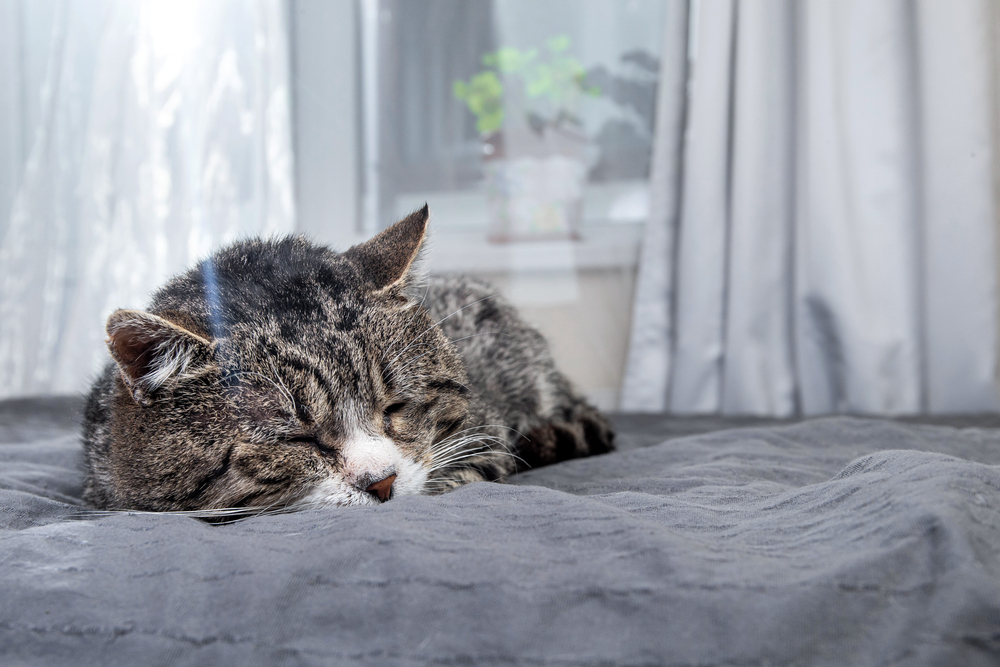
- Sleeps more
If your cat has several of these signs, take notes of the changes you've noticed. These will be helpful for your vet to make a diagnosis when you take your cat for a checkup. Your vet will need to do a thorough physical examination and may need to run several tests, as well as asking you about your cat's recent behavior.
How To Help a Senile Cat
Sometimes medications will be prescribed by your vet to help with the anxiety and altered sleeping patterns that are often present, but sadly there is no treatment that can cure feline cognitive dysfunction. There are however things that can be done to help ease their signs.
1. Dietary management and supplements

It's important to feed your cat an age-appropriate food to meet their nutritional needs, which change as they age. You should chat with your vet about the best option for your cat, there are many recipes on the market catered specifically for senior cats and there are nutritional supplements that can be helpful.
While currently there is no specific diet designed for cats with cognitive dysfunction syndrome, several studies have shown improvement in brain function of older cats when fed a diet supplemented with essential fatty acids (fish oils), antioxidants, arginine, and vitamin B. It is also believed that medium chain triglycerides (MTC) consumption may improve feline metabolism and act as an energy source for the brain. Supplements or diets containing calming ingredients such as milk protein hydrolysate, and L-tryptophan, can also be helpful to reduce fear and anxiety that is often associated with cognitive dysfunction.
2. Continuing to provide stimulation
Senior cats often lose interest in play and the toys they used to love. However, it's essential to keep their minds stimulated by interacting with them and introducing new toys or adding a new perch to a window or wall for them to have a change of view.
3. Keeping them active
Your senior cat won't be able to exercise the same way they once did, but keeping them moving is important, as a lack of exercise will be even more detrimental to their health and mental state. Encourage exercise that isn't too strenuous and that they can do at their own pace. You don't need your cat to run laps around the house, but going for a gentle walk around your garden could be very beneficial.
4. Adding more litter boxes to your home

Senile cats tend to forget where their litter box is placed and may eliminate in areas they never used to out of confusion. However, if you add more litter boxes in obvious spots around your home, they can see and access them more easily.
5. Setting up a daily schedule
Routine is one of the best ways to reduce anxiety in your cat, which often comes with senility. Your routine doesn't have to be strict, but feeding your cat, playing with them, and going to bed at similar times each day will give them the consistency and predictability they crave. It will also help them sleep better since senile cats often experience sleep changes, where they start to sleep more during the day and less at night.
6. Being patient
Your senile cat may have accidents in unusual locations, vocalize more, and become overly clingy. The worst thing you can do is punish a senile cat for their behavior because it will add to their confusion and anxiety. Instead, be patient and gently attempt to retrain or reteach certain behaviors.
How Long Can Cats Diagnosed with Cognitive Dysfunction Live?
Cats with cognitive dysfunction can go on to live several years, depending on how old they were when they were diagnosed. However, it is hard to predict how long a cat will live because some cats progress and decline much faster than others.
Your cat's overall health also plays a role, with healthier cats with cognitive dysfunction typically outlasting those with concurrent diseases.

Conclusion
If your older cat has been behaving differently, you may ask, "Is my cat senile?" If your cat is over the age of 10, it is a possibility. However, it is crucial to take your cat to the vet for a thorough examination, as many other health conditions can present similarly. Senile cats have a decline in cognitive function, and it can be very stressful for both the cat and owner. You can help your cat by feeding them a diet that meets their nutritional needs and is high in antioxidants and essential fatty acids, providing them with stimulation and exercise, making adjustments to your home for their comfort, having a regular routine, and responding to your cat with understanding and patience.
Sources
Featured Image Credit: Alex Zotov, Shutterstock

Expert cat care, straight to your inbox
Vet-reviewed advice, behavior tips, and the best of Catster. Free, and you can unsubscribe anytime.
By signing up, you agree to our Terms & Conditions and Privacy & Cookies Policy.
Keri-Beth is a freelance writer from South Africa who loves writing about cats. She's very passionate about pet care and has spent quite a bit of time volunteering at animal shelters. Keri-Beth currently has two dogs: Benji, the Golden Cocker Spaniel, and Gracie, the Boerboel.
Keri-Beth's favorite hobbies include photography and camping. She lives with her husband, who is a professional drummer.
Join the conversation
Ask a question, share your story, or send private feedback.