Dr Amanda Charles qualified as a vet from Liverpool University in 2002 and has been in small animal practice ever since. Amanda enjoys educating pet parents by giving them up-to-date and accurate information and loves the variety that being a vet brings.
Outside of work, Amanda has two very active young sons and an equally active Cocker Spaniel who keep her busy! She also has a Ragdoll cat with a big personality!
Amanda is a small animal veterinarian with over 20 years of experience and a special interest in skin conditions. She has a Postgraduate Certificate in Dermatology. Amanda works part-time in clinical practice primarily doing extended dermatology consultations, and also enjoys telemedicine alongside editing work.
Amanda graduated as a vet from the University of Liverpool in 2002 with a BVSc (Bachelor of Veterinary Science).
Grooming is a must for all cats, long-haired and short-haired alike, but do cats need to be professionally groomed? Not necessarily. You can groom your cat at home instead of splashing out on professional grooming, but there are some instances when it would be better to let a pro take over.
In this post, we’ll explore why grooming is so important and when a trip to a groomer is necessary. We’ll also share some tips on grooming your cat at home.
Why Grooming Is Essential
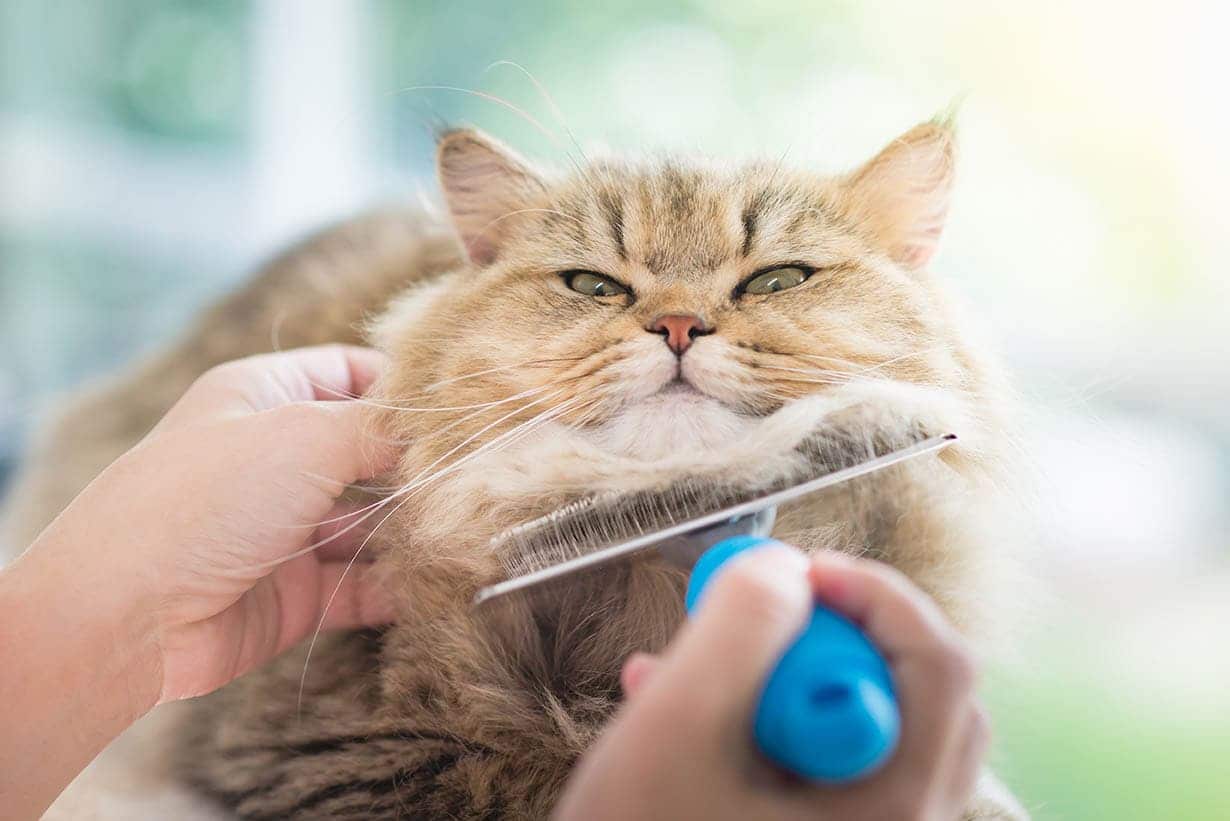
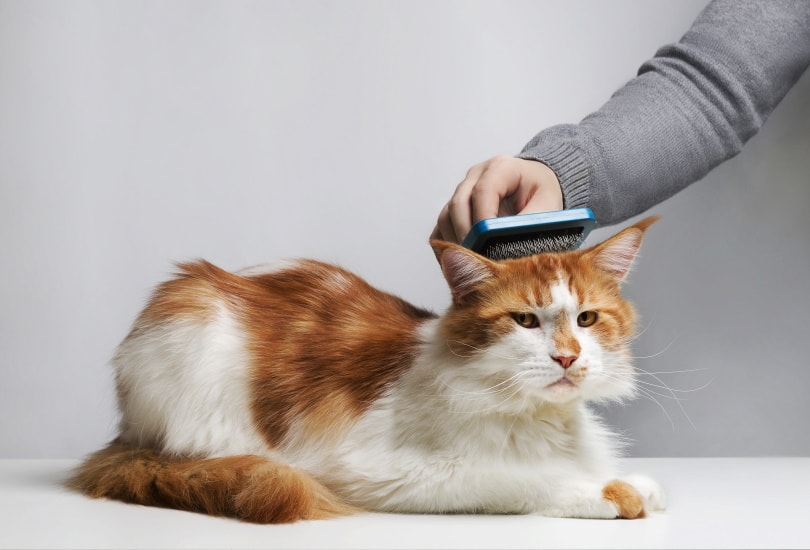
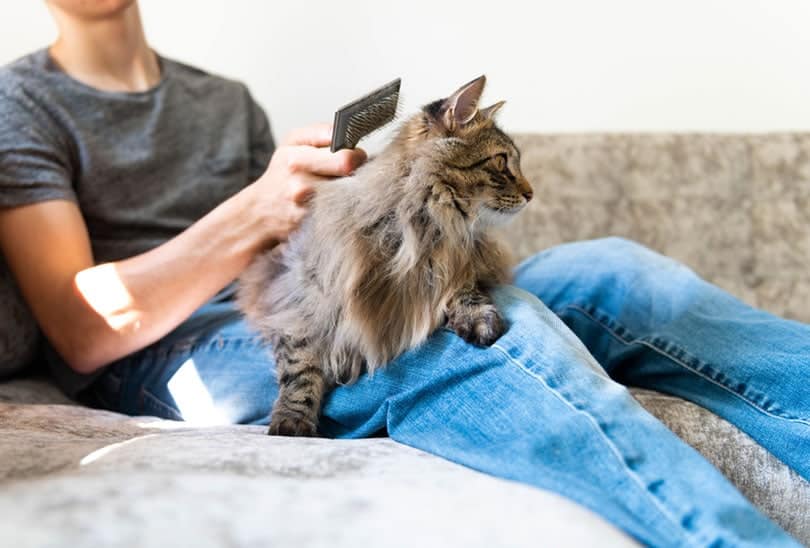
Though cats groom themselves, they still need us to offer a helping hand because there’s only so much self-maintenance a cat can do. If you have a medium or long-haired cat, they’ll need to be brushed every day to keep their coats free of knots, tangles, and mats.
Not brushing long-haired cats regularly enough can result in tight clumps that can become very uncomfortable for your cat and may need to be removed by a professional. Brushing is also beneficial for long-haired cats in that it prevents them from swallowing as much hair, therefore resulting in fewer hairballs.
Even short-haired cats need to be brushed, but not as frequently as longhaired cats. Brushing distributes the natural oils through the coat and clears out dirt, debris, and loose hair, which contributes to a healthier coat and skin. In addition, brushing gives you the opportunity to check for lumps, bumps, and injuries and is a great bonding experience for you and your cat.
All that said, grooming isn’t just about brushing: It also involves nail trimming, tooth brushing, ear checks, and occasionally bathing if recommended by a vet.
Image Credit: Stock-Asso, Shutterstock
Do Cats Need Baths?
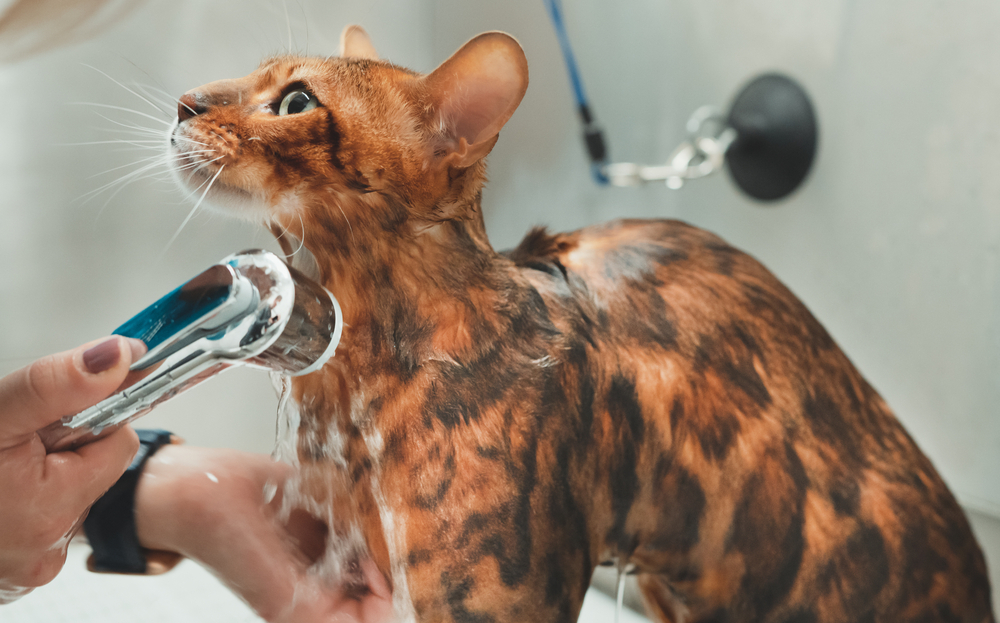
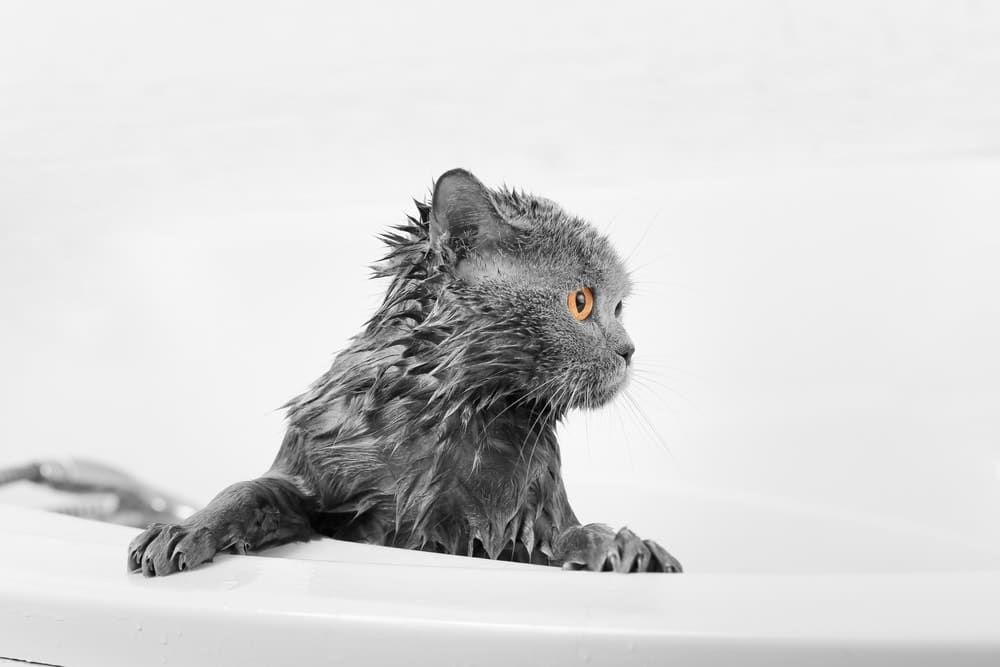
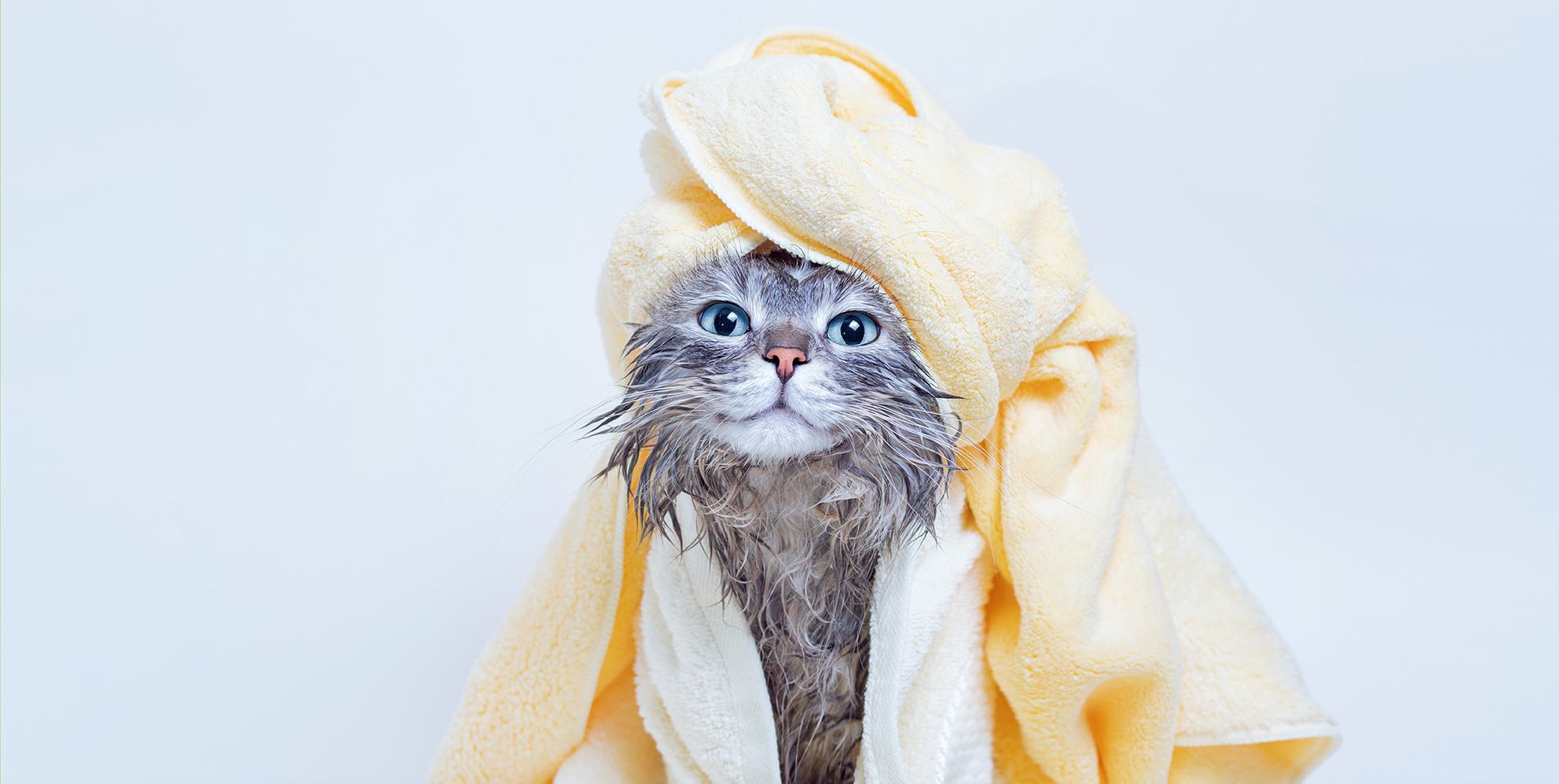
For the majority of cats, bathing is unnecessary, but some do need regular baths, either for medical reasons or because they’re hairless. The skin of hairless cats gets greasy easily because they don’t have fur to distribute the oils produced by the skin. They need to be bathed about once every few weeks with a gentle, cat-friendly shampoo.
Another reason you may need to bathe your cat is if your vet has asked you to do so for medical reasons, such as a skin condition, or if they get something sticky, nasty or toxic on their coat.
If you suspect that your cat has a skin condition, please don’t head for the bath just yet—see a vet to get a proper diagnosis and advice on how to treat it.
If you need to speak with a vet but can't get to one, head over to PangoVet. It's an online service where you can talk to a vet online and get the advice you need for your pet — all at an affordable price!
Should I Take My Cat to a Professional Groomer?
If you’re taking care of all your cat’s grooming needs at home (brushing, nail clipping, tooth brushing, and ear checks) and it’s going well, there’s no need to take them to a professional groomer. However, if there’s something you’re not comfortable doing, like trimming your cat’s nails yourself, you may feel better involving a professional.
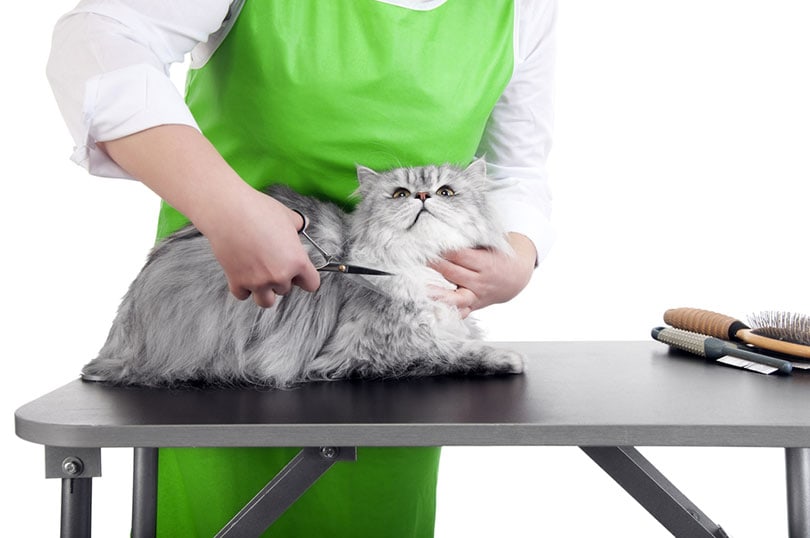
You should also contact a professional groomer or your veterinarian if your cat’s fur is seriously matted or clumped, and you can’t tackle the situation on your own without hurting them. Professional groomers are trained in dealing with all kinds of coats, breeds, and personalities. That said, if your cat is in pain or is showing signs of a skin condition, you’ll need to see a vet first.
Image Credit: Katerina Dalemans, Shutterstock
How to Groom Your Cat at Home: Top Tips
If you get into a good grooming routine at home, your cat may never have to visit a professional groomer. Here are some tips on how to approach grooming your cat in as stress-free a manner as possible.
1. Pick a Gentle Brush
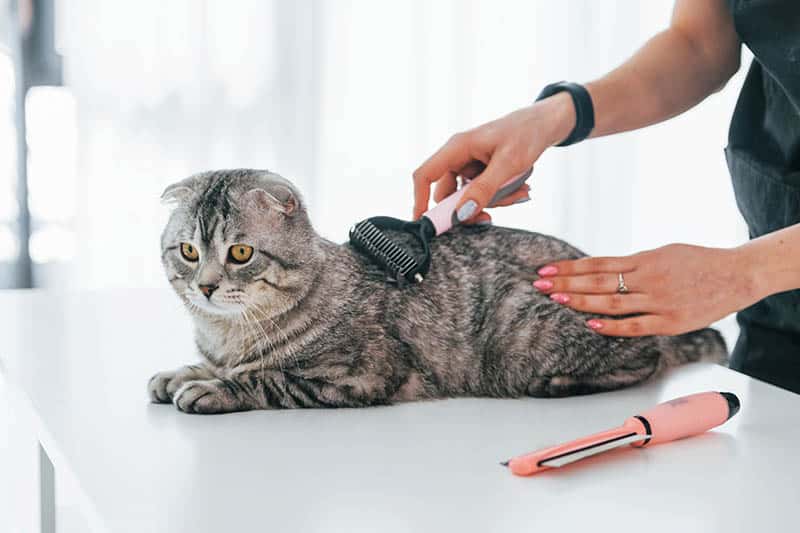
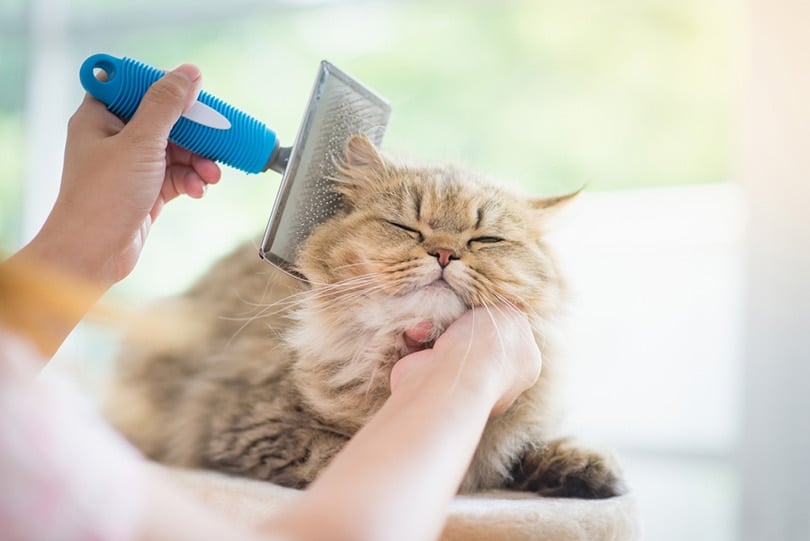
It’s best to opt for a brush designed specifically for cats and that’s gentle enough to not cause discomfort. There are plenty of types to choose from, including bristle brushes, pin brushes, slicker brushes, and grooming mitts. Grooming mitts are worth trying out for cats who are nervous about brushing because it feels more like being petted.
You’ll also want to invest in a good deshedding tool if your cat is a heavy shedder, as this will help a great deal when shedding season arrives. A comb is also a good tool to have handy to work through more detailed areas.
If you are looking for recommendations on the best cat brush, you should check out Hepper Cat Brush. You will hardly find different brush with so many pros - easy to clean, easy to use, durable and effective. Simply everything you need from a cat brush. Click here to order yours today.
ONE PUSH RELEASE - This kitten brush / cat brush pops out fur with just a simple press, leaving you...
DURABLE - Cat shedding can be a tough ordeal. Made of resilient ABS plastic and metal bristles with...
COMFORTABLE - A cat fur brush with 60 degree angled, fine bristles and rubber stoppers will bring...
At Catster, we’ve admired Hepper for many years and decided to take a controlling ownership interest so that we could benefit from the outstanding designs of this cool cat company!
2. Brush Longhaired & Curly Cats Daily
Long-haired and curly-haired cats need to be brushed daily as their coats can quickly become tangled and matted. By contrast, a weekly brush should do for a short-haired cat.
Image Credit: Sergey Fatin, Shutterstock
3. Let Your Cat Get Used to Grooming Tools
If your cat isn’t used to brushes, combs, and deshedding tools, it’s wise to give them time to thoroughly investigate these items before you start using them. This helps your cat feel more secure and in control, as cats are wary of new things.
Ideally, cats should be groomed from kittenhood so they don’t fear the experience as an adult, but you can certainly bring a reluctant adult cat around with a bit of time and patience. Put the brush near the cat and let them sniff and rub against it in their own time to let them get used to its smell, feel, and presence.
4. Go Slowly
Start brushing slowly and in small areas, like on the back or in the place where your cat most enjoys being petted. Do a few strokes, then take a break, then do a few more to let your cat get used to the sensation. Reward your cat quickly after you first start brushing to encourage them to feel positive about the experience.
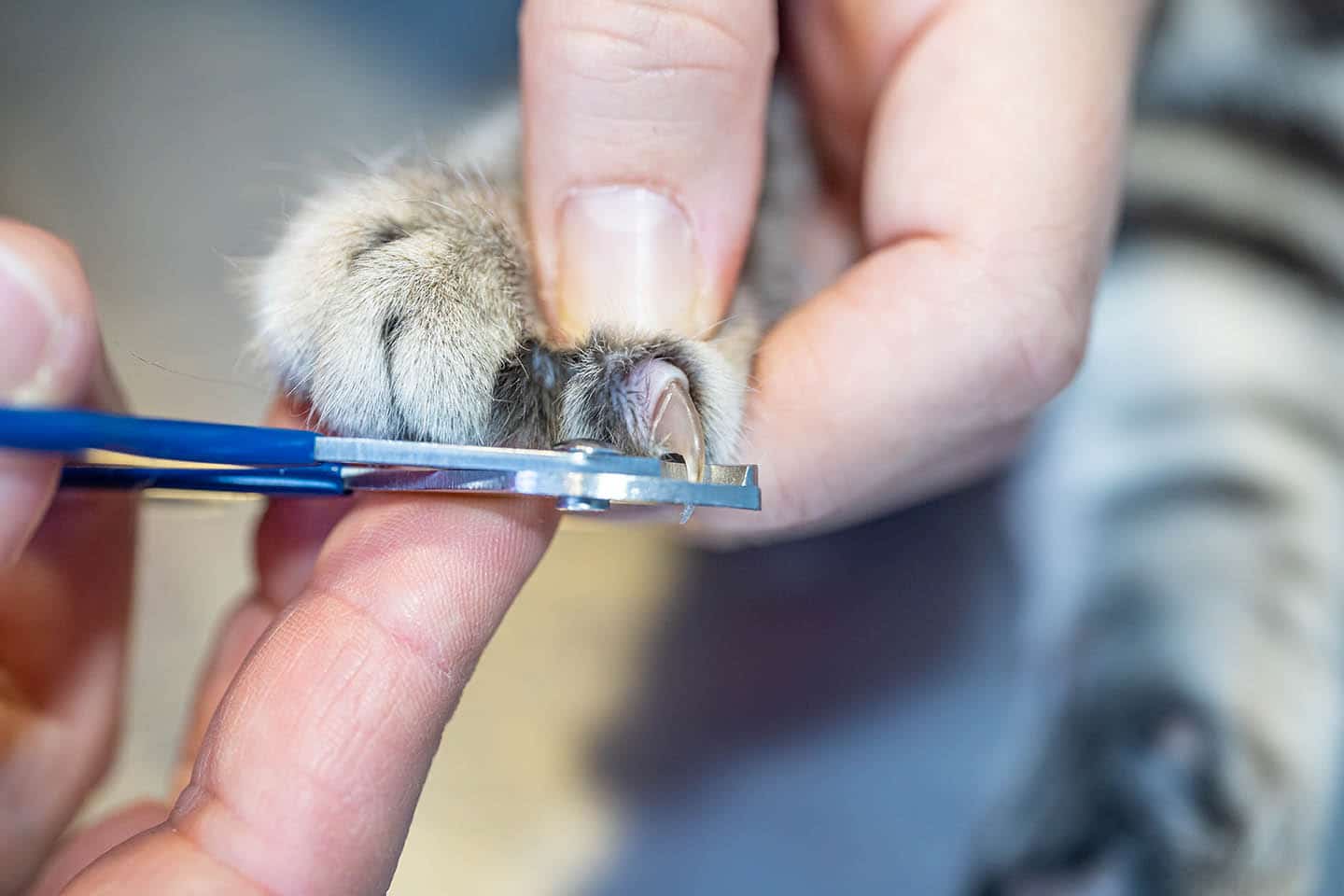
The same goes for if you’re trimming your cat’s nails. Even if you just manage one nail at a time before your cat runs away, it’s fine—you can come back to it later or the next day. If it takes several days to get all the nails clipped, that’s okay.
Complete Set - These cat nail clippers include both a large and small pair, meaning it works well as...
Razor Sharp Stainless Steel - The most comfortable cat nail clippers for indoor cats provide a fast...
Safety First - With a safety nail guard and locking spring, you can make sure every grooming cut is...
Trimming your cat's nails at home can be hard, but having a professional do it can be expensive. With the help of great tools like Hepper's Cat Nail Clipper Set, you can easily and quickly trim your cat's nails at home. This set includes two pairs of stainless steel clippers with safety guards and locking mechanisms, plus a built-in nail file and a convenient pouch.
At Catster, we’ve admired Hepper for many years and decided to take a controlling ownership interest so that we could benefit from the outstanding designs of this cool cat company!
5. Have Someone Assist
You may feel a bit more confident having someone there to hold your cat and talk to them in a soothing voice while you do what you have to do. This may be especially useful if you need to gently restrain your cat for nail clipping.
Image Credit: Serhii Ivashchuk, Shutterstock
6. Avoid the Quick
When you trim your cat’s nails, avoid cutting into the pink part of the nail. This is the quick, and it hurts and bleeds when you cut it. If you accidentally cut the quick, you can stop the bleeding with styptic powder.
7. Use Gentle Restraint if Necessary
If your cat struggles when they get their nails trimmed, you may need to do the burrito technique, which involves wrapping your cat in a blanket with their head and one paw sticking out. You can do this by placing the cat on a blanket and folding it upwards over and around them. Having an assistant hold your cat while you trim the nails could be extra helpful.
Final Thoughts
To recap, you can groom your cat at home to save money on grooming fees, but if something complex or potentially uncomfortable needs to be done (if your cat is very matted or you’re having trouble cutting their nails), it would be wise to see a professional groomer.
If you spot any signs of skin conditions, like dryness, redness, patchiness, flakiness, and so on when grooming your cat, consult your vet to find out what’s going on.
Kit Copson is a freelance writer and lifelong animal lover with a strong interest in animal welfare. She has parented various furry beings over the years and is currently a proud cat mom of two—one very chilled (unless hungry) Siamese and a skittish but adorable Domestic Shorthair—and dog mom of one—an adopted Bichon Poodle cross. When not writing about or spending time with animals, Kit can be found doodling in her sketchpad, reading, or more often than not, drinking tea.
Many of us cat owners need to leave our cats alone on a regular basis. But where’s the line between an okay amount of time for your cat to be left alone and too long? The answer depends on the...
Choosing high-quality cat food made with fresh, whole ingredients is becoming increasingly important for many people. The Honest Kitchen is a brand that is making high-quality food for cats widely available. Some of their products are premium priced, but the...
When you first got your little bundle of fluff, you might not have been ready for the shedding and grooming. But some cats, like American curls, shed tremendously, and others exhibit excessive grooming behaviors or develop allergies that lead to...
The holidays can be a stressful time for anyone, but when it comes to cats, this stress can be overwhelming. Whether it’s new decorations, changes in the home, or frequent visitors, there are multiple stressors for cats that show up...
Like dogs, cats need a regular grooming routine to stay healthy. Brushing your cat is key, especially if they have long hair, but did you know you should also check your cat’s ears regularly? This is to prevent ear infections,...
Savannah cats are beautiful hybrid spotted cats with long legs and distinctive, large ears. The hind legs are usually just a bit longer than the front legs in this breed, giving them a distinctive silhouette and gait. Savannahs are a...
A cat’s heat cycle is an indication that she has reached sexual maturity, is fertile and can become pregnant. If this is your first time going through a heat cycle with your female cat, you may be wondering what on...
Grooming is a must for all cats, long-haired and short-haired alike, but do cats need to be professionally groomed? Not necessarily. You can groom your cat at home instead of splashing out on professional grooming, but there are some instances...
Do Cats Need Professional Groomers? Vet-Reviewed Cleaning Facts & Tips
VET APPROVED
Reviewed & fact-checked by
Dr. Amanda Charles
BVSc GPCert (Derm) MRCVS (Veterinarian)
Dr Amanda Charles qualified as a vet from Liverpool University in 2002 and has been in small animal practice ever since. Amanda enjoys educating pet parents by giving them up-to-date and accurate information and loves the variety that being a vet brings. Outside of work, Amanda has two very active young sons and an equally active Cocker Spaniel who keep her busy! She also has a Ragdoll cat with a big personality! Amanda is a small animal veterinarian with over 20 years of experience and a special interest in skin conditions. She has a Postgraduate Certificate in Dermatology. Amanda works part-time in clinical practice primarily doing extended dermatology consultations, and also enjoys telemedicine alongside editing work. Amanda graduated as a vet from the University of Liverpool in 2002 with a BVSc (Bachelor of Veterinary Science).
View authorThe information is current and up-to-date in accordance with the latest veterinarian research. Learn more about Catster’s Review Board
In this article
Grooming is a must for all cats, long-haired and short-haired alike, but do cats need to be professionally groomed? Not necessarily. You can groom your cat at home instead of splashing out on professional grooming, but there are some instances when it would be better to let a pro take over.
In this post, we’ll explore why grooming is so important and when a trip to a groomer is necessary. We’ll also share some tips on grooming your cat at home.
Why Grooming Is Essential
Though cats groom themselves, they still need us to offer a helping hand because there’s only so much self-maintenance a cat can do. If you have a medium or long-haired cat, they’ll need to be brushed every day to keep their coats free of knots, tangles, and mats.
Not brushing long-haired cats regularly enough can result in tight clumps that can become very uncomfortable for your cat and may need to be removed by a professional. Brushing is also beneficial for long-haired cats in that it prevents them from swallowing as much hair, therefore resulting in fewer hairballs.
Even short-haired cats need to be brushed, but not as frequently as longhaired cats. Brushing distributes the natural oils through the coat and clears out dirt, debris, and loose hair, which contributes to a healthier coat and skin. In addition, brushing gives you the opportunity to check for lumps, bumps, and injuries and is a great bonding experience for you and your cat.
All that said, grooming isn’t just about brushing: It also involves nail trimming, tooth brushing, ear checks, and occasionally bathing if recommended by a vet.
Do Cats Need Baths?
For the majority of cats, bathing is unnecessary, but some do need regular baths, either for medical reasons or because they’re hairless. The skin of hairless cats gets greasy easily because they don’t have fur to distribute the oils produced by the skin. They need to be bathed about once every few weeks with a gentle, cat-friendly shampoo.
Another reason you may need to bathe your cat is if your vet has asked you to do so for medical reasons, such as a skin condition, or if they get something sticky, nasty or toxic on their coat.
If you suspect that your cat has a skin condition, please don’t head for the bath just yet—see a vet to get a proper diagnosis and advice on how to treat it.
If you need to speak with a vet but can't get to one, head over to PangoVet. It's an online service where you can talk to a vet online and get the advice you need for your pet — all at an affordable price!
Should I Take My Cat to a Professional Groomer?
If you’re taking care of all your cat’s grooming needs at home (brushing, nail clipping, tooth brushing, and ear checks) and it’s going well, there’s no need to take them to a professional groomer. However, if there’s something you’re not comfortable doing, like trimming your cat’s nails yourself, you may feel better involving a professional.
You should also contact a professional groomer or your veterinarian if your cat’s fur is seriously matted or clumped, and you can’t tackle the situation on your own without hurting them. Professional groomers are trained in dealing with all kinds of coats, breeds, and personalities. That said, if your cat is in pain or is showing signs of a skin condition, you’ll need to see a vet first.
How to Groom Your Cat at Home: Top Tips
If you get into a good grooming routine at home, your cat may never have to visit a professional groomer. Here are some tips on how to approach grooming your cat in as stress-free a manner as possible.
1. Pick a Gentle Brush
It’s best to opt for a brush designed specifically for cats and that’s gentle enough to not cause discomfort. There are plenty of types to choose from, including bristle brushes, pin brushes, slicker brushes, and grooming mitts. Grooming mitts are worth trying out for cats who are nervous about brushing because it feels more like being petted.
You’ll also want to invest in a good deshedding tool if your cat is a heavy shedder, as this will help a great deal when shedding season arrives. A comb is also a good tool to have handy to work through more detailed areas.
If you are looking for recommendations on the best cat brush, you should check out Hepper Cat Brush. You will hardly find different brush with so many pros - easy to clean, easy to use, durable and effective. Simply everything you need from a cat brush. Click here to order yours today.
2. Brush Longhaired & Curly Cats Daily
Long-haired and curly-haired cats need to be brushed daily as their coats can quickly become tangled and matted. By contrast, a weekly brush should do for a short-haired cat.
3. Let Your Cat Get Used to Grooming Tools
If your cat isn’t used to brushes, combs, and deshedding tools, it’s wise to give them time to thoroughly investigate these items before you start using them. This helps your cat feel more secure and in control, as cats are wary of new things.
Ideally, cats should be groomed from kittenhood so they don’t fear the experience as an adult, but you can certainly bring a reluctant adult cat around with a bit of time and patience. Put the brush near the cat and let them sniff and rub against it in their own time to let them get used to its smell, feel, and presence.
4. Go Slowly
Start brushing slowly and in small areas, like on the back or in the place where your cat most enjoys being petted. Do a few strokes, then take a break, then do a few more to let your cat get used to the sensation. Reward your cat quickly after you first start brushing to encourage them to feel positive about the experience.
The same goes for if you’re trimming your cat’s nails. Even if you just manage one nail at a time before your cat runs away, it’s fine—you can come back to it later or the next day. If it takes several days to get all the nails clipped, that’s okay.
Trimming your cat's nails at home can be hard, but having a professional do it can be expensive. With the help of great tools like Hepper's Cat Nail Clipper Set, you can easily and quickly trim your cat's nails at home. This set includes two pairs of stainless steel clippers with safety guards and locking mechanisms, plus a built-in nail file and a convenient pouch.
At Catster, we’ve admired Hepper for many years and decided to take a controlling ownership interest so that we could benefit from the outstanding designs of this cool cat company!5. Have Someone Assist
You may feel a bit more confident having someone there to hold your cat and talk to them in a soothing voice while you do what you have to do. This may be especially useful if you need to gently restrain your cat for nail clipping.
6. Avoid the Quick
When you trim your cat’s nails, avoid cutting into the pink part of the nail. This is the quick, and it hurts and bleeds when you cut it. If you accidentally cut the quick, you can stop the bleeding with styptic powder.
7. Use Gentle Restraint if Necessary
If your cat struggles when they get their nails trimmed, you may need to do the burrito technique, which involves wrapping your cat in a blanket with their head and one paw sticking out. You can do this by placing the cat on a blanket and folding it upwards over and around them. Having an assistant hold your cat while you trim the nails could be extra helpful.
Final Thoughts
To recap, you can groom your cat at home to save money on grooming fees, but if something complex or potentially uncomfortable needs to be done (if your cat is very matted or you’re having trouble cutting their nails), it would be wise to see a professional groomer.
If you spot any signs of skin conditions, like dryness, redness, patchiness, flakiness, and so on when grooming your cat, consult your vet to find out what’s going on.
See Also:
Featured Image Credit: artcasta, Shutterstock
Want content like this delivered to you?
Sign Up For Our Newsletter
News, insights, expert advice, and everything cat
* By submitting, you agree to our Terms & Conditions and Privacy & Cookies Policy.
How useful was this post?
Click on a star to rate (you can leave written feedback after clicking submit)
Help us improve Catster for pet parents!
Your feedback really matters.
What did you like about this post? Also how can we improve it?
Authored by
Kit CopsonJoin the conversation
Talk With A Vet Online
Peace of mind,
anywhere, anytime
Affordable vet advice
What Cat Paralysis?! Dr. Karyn’s Lap Lovers
Hi, I’m Dr. Karyn! Read my introduction to learn more about me and meet my five hilarious cats: Clutch, Cyril, Alex, Zelda, and...
How to Keep Cats Away From Bird Feeders: 6 Proven Methods
Bird feeders can add color and life to your yard or garden, but they can be a death trap if you have skilled...
Holiday Foods That Are Safe for Cats: Vet-Reviewed Safety & Nutrition Facts
Disclaimer: Check with a veterinarian before adding any new foods to your cat’s diet, particularly if your pet has any underlying health conditions...
Is My Cat Pregnant? 9 Vet-Approved Signs to Look For
Have you noticed some unusual behavioral or physical changes in your female cat? You’ve ruled out all potential options, but have you thought...
More related
6 Best Cat Eye Drops in 2026 – Reviews & Top Picks
Does your kitty have problems with their eyes, requiring a little extra help? Eye problems can spawn from various causes, which can be...
Miliary Dermatitis in Cats: Causes, Signs & Treatments (Vet Answer)
Miliary dermatitis, also called feline miliary dermatitis, may sound like an unusual name for a medical condition, but it is a common malady...
How Long Do Cats Live? Feline Lifespan Facts Explained (Vet Approved)
We’ve all heard that cats have nine lives. But how much of that is actually true? Do cats seem to escape brushes with...
Persian Kittens For Sale in New Jersey: Breeders List 2026
Catster advocates for adopting before shopping. We understand there are many reasons for seeking a breeder, though, so we encourage it to be...
Keep reading
How Long Can You Safely Leave Your Cat Alone? Vet Approved Tips & Alternatives
Many of us cat owners need to leave our cats alone on a regular basis. But where’s the line between an okay amount of time for your cat to be left alone and too long? The answer depends on the...
The Honest Kitchen Cat Food Review in 2026: Pros, Cons, Final Verdict
Choosing high-quality cat food made with fresh, whole ingredients is becoming increasingly important for many people. The Honest Kitchen is a brand that is making high-quality food for cats widely available. Some of their products are premium priced, but the...
9 Best Cat Foods for Shedding & Hair Loss in 2026: Reviews & Top Picks
When you first got your little bundle of fluff, you might not have been ready for the shedding and grooming. But some cats, like American curls, shed tremendously, and others exhibit excessive grooming behaviors or develop allergies that lead to...
How to Reduce Stress in Cats Over the Holidays: 10 Vet Approved Tips
The holidays can be a stressful time for anyone, but when it comes to cats, this stress can be overwhelming. Whether it’s new decorations, changes in the home, or frequent visitors, there are multiple stressors for cats that show up...
Healthy Cat Ears: 6 Vet-Verified Care Tips
Like dogs, cats need a regular grooming routine to stay healthy. Brushing your cat is key, especially if they have long hair, but did you know you should also check your cat’s ears regularly? This is to prevent ear infections,...
How Long Do Savannah Cats Live? Average Lifespan, Data & Care
Savannah cats are beautiful hybrid spotted cats with long legs and distinctive, large ears. The hind legs are usually just a bit longer than the front legs in this breed, giving them a distinctive silhouette and gait. Savannahs are a...
What Happens When a Cat Is in Heat? Vet-Verified Facts & FAQ
A cat’s heat cycle is an indication that she has reached sexual maturity, is fertile and can become pregnant. If this is your first time going through a heat cycle with your female cat, you may be wondering what on...
Do Cats Need Professional Groomers? Vet-Reviewed Cleaning Facts & Tips

Grooming is a must for all cats, long-haired and short-haired alike, but do cats need to be professionally groomed? Not necessarily. You can groom your cat at home instead of splashing out on professional grooming, but there are some instances...