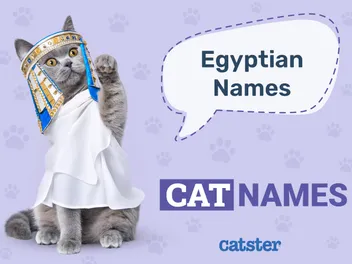
7 Cat Gods & Cat Goddesses From Ancient Cultures

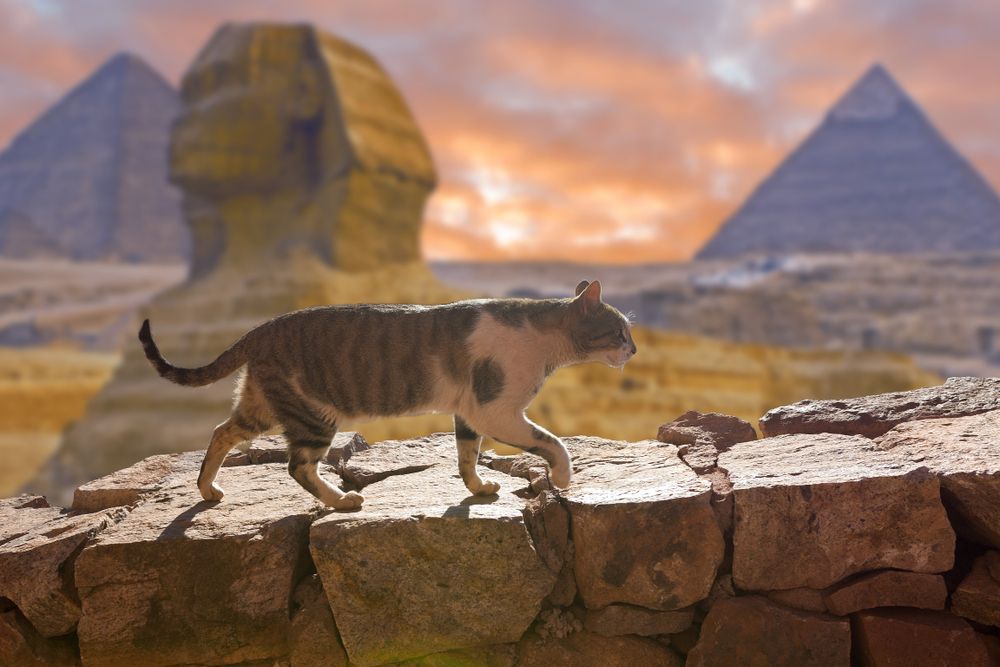
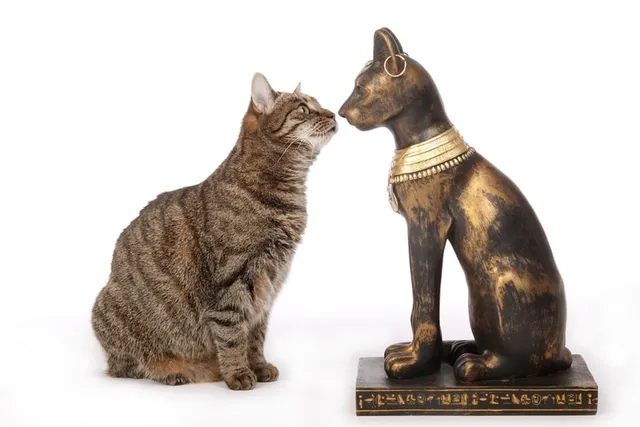
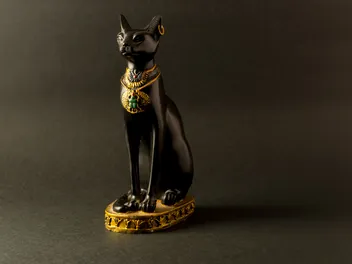
People have been sharing their lives and homes with cats for millennia, but some ancient cultures took kitties a bit more seriously than others, treating them quite well and sometimes giving their gods and goddesses feline qualities and characteristics. Cats were highly esteemed in Ancient Egyptian society, so it makes sense that majors such as Bastet and Sekhmet were depicted as cat goddesses. The Ancient Egyptian religious pantheon contained several deities who manifested as cats or with feline characteristics. They were often daughters of Ra and frequently linked to protective and mothering qualities.
While there are cats in Greek mythology (and plenty of hybrid creatures with feline features), there isn't a Greek cat god or goddess. Below, you'll find a quick rundown of a few Ancient Egyptian cat deities.

The 7 Cat Gods & Cat Goddesses From Ancient Cultures
1. Bastet
| Domain: | Home, childbirth, and fertility |
| Cult center: | Bubastis |
Bastet is the Ancient Egyptian cat goddess associated with the home, childbirth, and fertility. She was also thought to provide protection against untoward spirits and to be able to ward off diseases, particularly those linked to conceiving and bearing children.
Her protective powers made her an incredibly popular deity. Bastet's father was the sun god Ra, and this cat goddess originally took the form of a lioness; she started appearing as a rather tame housecat after kitties started to become domesticated in Egypt. She was associated with the Greek goddess Artemis.
2. Mafdet
| Domain: | Justice, punishment, and protection |
| Cult center: | Unknown |
Mafdet was a powerful Egyptian goddess who guarded and protected the sun god Ra and Egyptian rulers. She was also associated with capital punishment. Mafdet was particularly popular during Egypt's first dynastic period, but she fell out of favor with the passage of time.
This cat goddess is often shown with a distinctly catlike head, a human body, and a tail. She was commonly associated with cheetahs and was said to prefer hunting at night.
3. Sekhmet
| Domain: | War, destruction, and healing |
| Cult center: | Memphis |
Sekhmet was Ra's daughter and had several functions in the Ancient Egyptian pantheon. Dispatching her father's enemies was one of her key responsibilities, and she was considered an Eye of Ra and associated with vengeance.
The deity was also in charge of areas such as healing and medicine. Sekhet was said to be able to start and send plagues and to have the power to cure illnesses. This cat goddess was often portrayed as a lioness, but there are images of her with a human body and a lion's head. The goddess was associated with Upper Egypt.
4. Mut
| Domain: | The sky, motherhood, and protection |
| Cult center: | Thebes |
Mut was considered a maternal figure and was often depicted as a woman bearing the Egyptian royal double crown. Her name actually translates to mother. She was the god Amon's consort and the mother of Khons, and she was a core member of the famous Theban Triad.
In later periods, Mut took on some of the qualities of Sekhmet and Bastet and, as a result, began to be depicted as having a lioness' head. Many of her attributes were assigned to Hera once Egypt began to be influenced by Greek culture. Her monumental temple at Thebes was a popular religious site for thousands of years.
5. Maahes
| Domain: | Storms, knives, and war |
| Cult center: | Taremu |
Maahes was a cat god associated with war and keeping holy sites safe. In Upper Egypt, he was considered the child of Ptah, a god tasked with creation, and Sekhmet, while in Lower Egypt, his parents were identified as Ra and Bastet.
Other names for the god include Mysis, Mahes, and Miyhos, but he was also known as the "Lord of Slaughter," which perhaps clarifies his general temperament. He's often depicted as having a lion's head and the body of a human. The god allegedly had a penchant for eating captives and waging war.
6. Hathor
| Domain: | The sky, fertility, reproduction, and love |
| Cult center: | Dandarah |
Hathor was the Ancient Egyptian goddess of love and motherhood. She was also thought to hold sway over desert minerals and foreign lands. Hathor emerged as a deity during the early dynastic period, and she eventually came to be worshiped throughout Egypt.
Her name means "Estate of Horus," but she's technically the daughter of Ra. She was usually depicted as a cow, but occasionally, the deity appeared as a cat. She eventually began to be associated with Aphrodite, who was known as Venus in the Roman cultural sphere.
7. Tefnut
| Domain: | Rainfall and moisture |
| Cult center: | Heliopolis |
Tefnut was worshiped in Egypt’s predynastic period; she was responsible for the creation of rain. Ra created the goddess and her male twin, Shu, either with the goddess Hathor or from his own spit.
Shu held sway over the air, but the twins produced Nub, the sky goddess, and Geb, who was responsible for the earth. She often appears as a woman with the head of a lion and usually has a solar disk above her head, particularly when she's being shown as manifesting the sun's power. Her name is also rendered as Tefenet.

Conclusion
Cats have been sharing their lives with humans for thousands of years, but they've also been worshiped as gods and goddesses. While cats were considered divine in many ancient societies, they had a special place in the Egyptian pantheon.
Bastet, Mafdet, and Sekhmet were three Ancient Egyptian goddesses often depicted with feline characteristics. As Egypt came increasingly into contact with the Greek cultural sphere, many Greek gods and goddesses came to be associated with Egyptian ones, leading to the association, for example, of Mut and Hera.
Related Reads:
Sources
Featured Image Credit: Mountains Hunter, Shutterstock
Expert cat care, straight to your inbox
News, insights, and useful advice, delivered to you.

No spam — unsubscribe anytime.
By signing up, you agree to our Terms & Conditions and Privacy & Cookies Policy.
How useful was this post?
Click a star to rate. You can leave written feedback afterwards. (We read all feedback.)
Lorre Luther is a writer who is firmly convinced that cats are smarter than humans. She left her law career in the United States and moved to the Netherlands to follow her dream of becoming a writer. Lorre currently lives in Rotterdam, she enjoys traveling and greatly appreciates the beauty of nature. Lorre has a spot for animals and admires the intelligence of cats.