Get

In Your Inbox

Catster is reader-supported. When you buy via links on our site, we may earn an affiliate commission at no cost to you. Learn more.

6 Egyptian Cat Breeds: Info, Pictures, Facts & History
Share

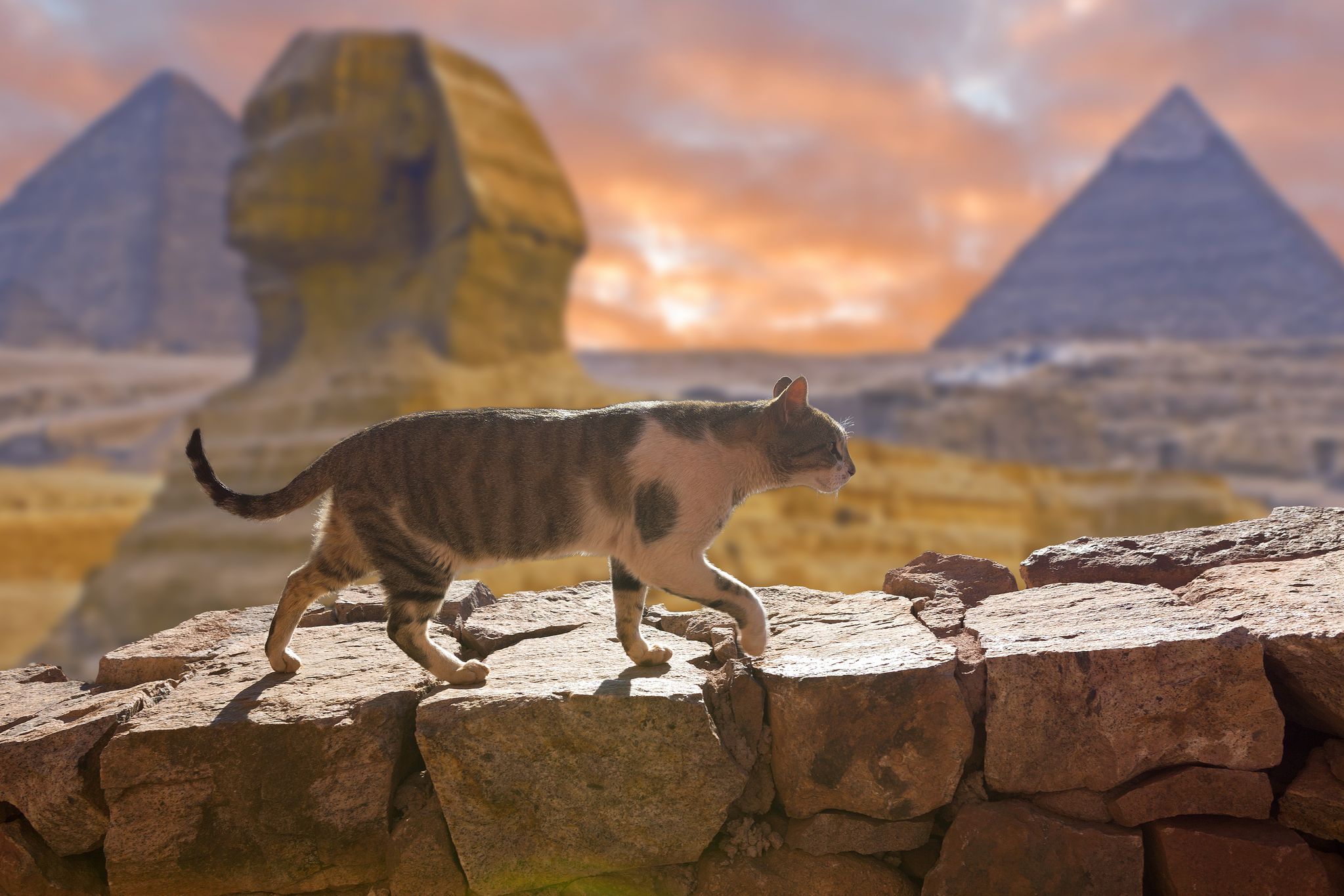
Cat walking on the background of the Egyptian pyramids in Cairo

Felines are first pictured in ancient Egyptian art that dates as far back as 1950 B.C.E.,1 and they were important to ancient Egyptians more than 4,000 years ago. That’s a long time ago, but it turns out that cats have been living with us for thousands of years before this ancient civilization even existed.

According to new evidence, however, the Egyptians likely made cats popular and helped them expand their domain further into the world. They may be responsible for a second domestication of the species.

Despite Egypt’s massive role in the domestication and popularization of cats as pets, very few prominent breeds today have their roots in this desert land. Let’s take a look at six Egyptian cat breeds that can be traced back to these roots.

divider 3 paws

The 6 Egyptian Cat Breeds

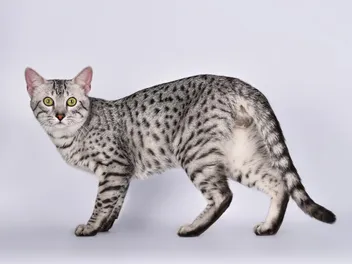
1. Egyptian Mau

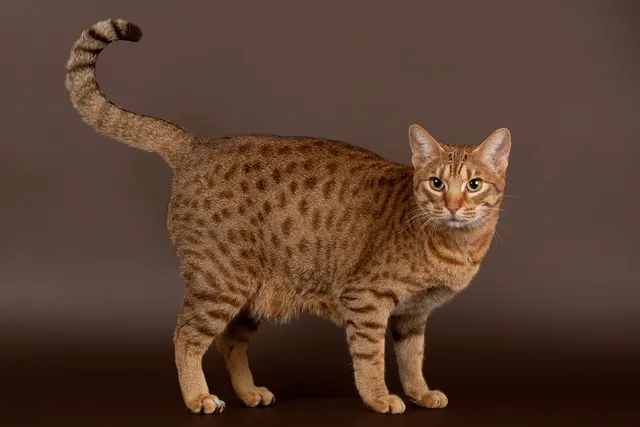
egyptian mau
Image Credit: MDavidova, Shutterstock
Height: 8–10 inches
Weight: 7–9 pounds
Lifespan: 13–15 years
Colors: Silver, bronze, smoke, solid black, blue silver, blue spotted, blue smoke, solid blue
Suitable for: Apartment living, families with older children, most lifestyles
Temperament: Strong-minded, active, fearless, playful

With a name like Egyptian Mau, it’s obvious where they come from. You could say that they’re the most Egyptian cat of all the modern cat breeds, and they have a history that likely dates back to at least 1500 B.C.E.

Spotted cats that look strikingly similar to Egyptian Maus have been found in ancient Egyptian texts and paintings that show the breed was worshipped several centuries ago.

Egyptian Mau Facts:
  • The Egyptian Mau was nearly wiped out in WWII.
  • A Russian princess saved the breed with an Egyptian Mau that was a gift.
  • They’re the only domestic cat that’s naturally spotted.
  • Egyptian Maus are the fastest of all domestic house cats, clocked at speeds up to 30 mph.

2. Shirazi

Shirazi-Cat-with-two-different-coloured-eyes
Image Credit: Mohamed Zaky, Shutterstock
Height: 9–14 inches
Weight: 7–13 pounds
Lifespan: 12–17 years
Colors: Bronze, blue, cream, black
Suitable for: Families or singles in a quiet household
Temperament: Playful, affectionate, gentle

Head to Egypt, and you’ll see several Shirazi cats roaming the streets. If the myths and ancient legends are true, the Shirazi’s origin might date back many centuries to the time when Egypt was part of the Persian empire. This Egyptian cat breed breed isn’t registered, but they’re a common sight in their homeland.

Shirazi Cat Facts:
  • Shirazis are a cross between the Egyptian Mau and Persian.
  • They have colors and markings similar to Egyptian Maus.
  • They’re known for being calmer than Maus.
  • They mix the best traits of both parent breeds.

3. Abyssinian

Abyssinian cat
Image Credit: Pandora Pictures, Shutterstock
Height: 12 – 16 inches
Weight: 6 – 13 pounds
Lifespan: 9 – 15 years
Colors: Red, cinnamon, blue, fawn
Suitable for: Active families with older children, singles around the home
Temperament: Curious, playful, intelligent

It’s believed, though not proven, that Abyssinians are native to ancient Egypt, mainly due to their uncanny resemblance to the African wildcat that is their closest ancestor. Though the roots of this breed originated in the Nile Valley, they were developed in Great Britain when a cat was brought back from Abyssinia, modern-day Ethiopia, after a military expedition.

Abyssinian Cat Facts:
  • WWII almost caused the Abyssinian’s extinction.
  • Feline leukemia nearly wiped them out again after repopulation post-WWII.
  • They have a ticked coat that gives them a cougar-like appearance.
  • Despite being susceptible to several health problems, Abyssinians can live over 15 years.

4. Nile Valley Egyptian Cat

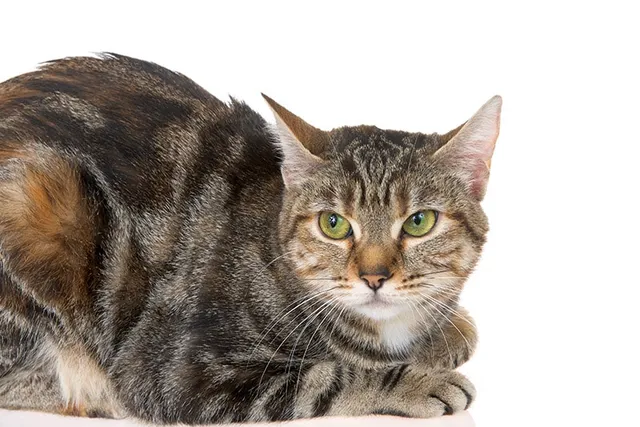
nile valley egyptian cat sitting on a sidewalk
Image Credit: Rodrigo Munoz Sanchez, Shutterstock
Height: 8–10 inches
Weight: 7–9 pounds
Lifespan: 13–15 years
Colors: Silver, bronze, smoke, solid black
Suitable for: Most lifestyles
Temperament: Active, fearless, strong-minded

There’s controversy surrounding the Nile Valley Egyptian Cat. Essentially, they’re a feral cat breed discovered in Egypt. Some consider them to be Egyptian Maus, but The International Cat Association has recognized them as an experimental breed.

The Egyptian authorities are attempting to eradicate the Nile Valley Egyptian Cat, but ongoing rescue efforts are attempting to prevent this from happening.

Nile Valley Egyptian Cat Facts:
  • There’s a rescue group dedicated to rehoming the cats in America.
  • The Nile Valley Egyptian Cat can be identified by the mantle on their back and sides, which has a different pattern from the rest of their body.
  • They come in various colors and patterns with long and short hair.

5. Chausie

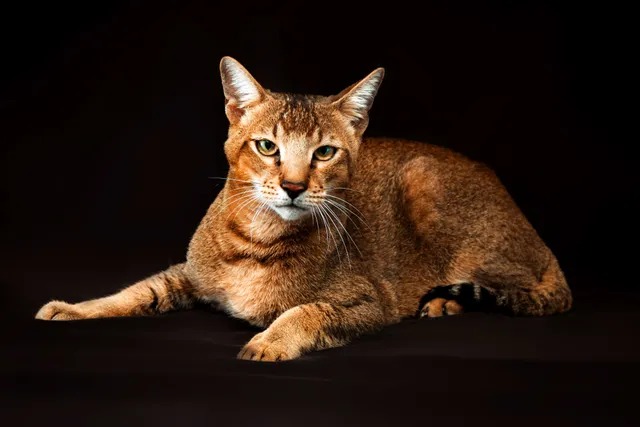
Chausie Cat on a black background
Image Credit: Tania__Wild, Shutterstock
Height: 14–19 inches
Weight: 15–30 pounds
Lifespan: 12–14 years
Colors: Orange, red, brown, cream
Suitable for: Families with older children, singles, seniors, apartment-living
Temperament: Social, attentive, active

This Egyptian cat breed was created by crossing a jungle cat native to the Nile Delta with domesticated cats. In Latin, the jungle cat is called Felis chaus, which is where the Chausie derives their name from.

Felis chaus jungle cats have been found preserved in several ancient Egyptian temples, showing that the Egyptians prized them before they were even bred into the Chausie we know today.

Chause Cat Facts:
  • They’re one of the largest breeds of domestic cats, sometimes weighing as much as 25 pounds.
  • Chausies are one of the few cats known to love water.
  • In 2013, the International Cat Association finally bestowed Championship status upon the Chausie.

6. Savannah Cat

savannah sitting on cat tree
Image Credit: AJR_photo, Shutterstock
Height: 14–17 inches
Weight: 12–25 pounds
Lifespan: 17–20 years
Colors: Brown, silver, black, smoke
Suitable for: Active families, those wanting a large cat
Temperament: Loyal, social, playful, friendly, suspicious, active, mischievous

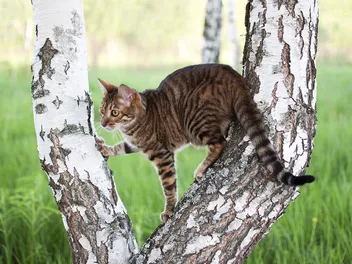
Savannah cats are some of the largest of all domestic cat breeds. They can weigh up to 25 pounds and look like their wildcat ancestors with their distinctly wild appearance. The Savannah was created by crossing a domestic cat with a Serval. There’s no proof that this breed comes directly from Egypt, but Servals have a prominent history in Egypt, so it is likely, or at least possible.

In ancient Egypt, Servals were exotic gifts, and they were traded as far back as the reign of Tutankhamun.

Savannah Cat Facts:
  • Early generations are the largest, and subsequent generations are closer to the size of an average house cat.
  • They have strong hunting instincts and are not ideal for houses with birds, fish, gerbils, and other small pets.
  • Thanks to their wild origins, Savannah cats are one of only a handful of felines known to love water.

divider 3 paws

Conclusion

There may not be many breeds today that come from Egypt, but it’s possible that all domesticated cats today owe the ancient Egyptians for their cushy lives of luxury. If the Egyptian Mau was the only Egyptian cat breed you knew before this article, then hopefully now you’ve got a clearer picture of some of the fabulous felines that can trace their lineage back to this country that may well be responsible for today’s domesticated cats.

Related Reads:


Featured Image Credit: Mountains Hunter, Shutterstock

Want content like this delivered to you?

Sign Up For Our Newsletter

News, insights, expert advice, and everything cat

* By submitting, you agree to our Terms & Conditions and Privacy & Cookies Policy.


How useful was this post?

Click on a star to rate (you can leave written feedback after clicking submit)

Help us improve Catster for pet parents!

Your feedback really matters.

What did you like about this post? Also how can we improve it?

Join the conversation

Leave a Reply

You’re very welcome to leave a comment or question. Please know that all comments must meet our community guidelines, and your email address will NOT be published. Let’s have a positive and constructive conversation.


Talk With A Vet Online

Peace of mind,
anywhere, anytime

Affordable vet advice

Why Healthy Cats Still Vomit Sometimes (And How to Respond)

A cat that just vomited needs a specific kind of care, and the feeding decisions you make in the next few hours actually...

Scientists May Have Found the Missing Piece in Feline Kidney Disease

One of the most upsetting parts of caring for an elderly cat is the knowledge that there is a very high chance that...

Ask Dr. Paola – Help! I Am Worried My Cat Isn’t Getting Enough Water! (April 6, 2026)

Welcome to our “Ask Dr. Paola” series, where every Monday we bring expert advice straight from Dr. Paola Cuevas (MVZ) to help our...

The 10 Common Causes of Sudden Death in Cats (And Which Ones Are Preventable)

Most cat owners don’t think much about heart disease, internal hemorrhage, or viral infections until they’re staring at an empty bed. Sudden death...

More related

Can a Cat Smell Human Hormones? Our Vet Explains the Science

A cat’s sense of smell is much better than ours. This can be attributed to the fact that cats are endowed with over...

How Do Cats Really Feel When You Work From Home? Cat Feelings Explained (Vet-Reviewed)

The COVID-19 pandemic made working from home more common. Many people have had to learn to make adjustments to new work habits and...

Can Cats Drink Coffee? Vet-Reviewed Risks & Precautions

Cats are curious creatures, and they tend to investigate everything that they encounter. If your cat is like most, they have stuck their...

Skin Disease in Cats: Our Vet Explains Causes, Signs & Treatments

Skin disease in cats is incredibly common. Cat’s skin plays an important role, and it is the largest organ in your cat’s body....

Keep reading

Does Catnip Calm Cats? Vet Approved Facts, How It Works & FAQ

While humans often see catnip as a “drug” for cats, it does not work in this way. Instead, catnip contains an oil that is similar to a pheromone that cats produce. This substance is called nepetalactone and can cause a...

cat smelling catnip

Can I Cut My Cat’s Nails With Human Nail Clippers? Vet-Reviewed Facts & Risks

Some cats, especially indoor cats, need to have their claws regularly trimmed. It prevents the nail from curling around and growing in on itself and can stop injuries to the soft paw pad. Outdoor cats don’t generally need their claws...

hand holding human nail clipper and cat paw

Are Irises Poisonous to Cats? Vet Approved Facts & Safety Tips

You likely know how it feels when you discover that your cat has eaten something and you have no idea whether it’s safe. Things that kitties seem quite fond of include plants and flowers, which are common in households. While...

Catster_Are Irises Poisonous to Cats

How to Tell If My Cat has a Fever: 10 Vet-Reviewed Signs

For us, it’s easy to tell if we have a fever by feeling our foreheads or using a thermometer. Unfortunately, it’s not as simple as a pet parent when you think your cat is sick and might have a fever....

man holding himalayan cat

IAMS Cat Food Review 2026: Pros, Cons, Recalls, & Verdict

As cat owners, we always strive to give our beloved furry family members the best. Unfortunately for some of us, our budget doesn’t always align with the top-tier food options. However, you don’t want to pick any old food you...

IAMS Cat Food Review

How Many Kittens Are in a Litter? Vet-Reviewed Health Facts

Is there any baby cuter than a kitten? They are soft, adorable, tiny little lion-like creatures with the cutest mannerisms. Have you ever wondered how many kittens a cat could have when they reproduce? Or, maybe you suspect your kitty...

cat breastfeed new born kitten

Why Is My Cat Peeing in Weird Places? 9 Vet-Reviewed Reasons

A cat urinating in inappropriate places is a dilemma for pet owners. One of the reasons some opt for a kitty as a pet is because they use the litter tray. You can keep them inside without the need to...

cat-peeing-on-door-rug

My Cat Is Bored but Won’t Play, What’s Wrong? 6 Common Reasons

Most cats play throughout their life, though they are most playful in their kitten years.Under human care, cats don’t need to hunt or do many other things to aid in their survival. Therefore, they often have a lot of pent-up...

sad, bored or sick cat

Love Cats? So Do We! Join the Catster Community

Stay informed with expert pet care insights delivered straight to your inbox! Discover professional guidance on animal behavior, feeding tips, trusted product picks, and much more.


Sign up for the Catster Email Newsletter

Stay informed with expert pet care insights delivered straight to your inbox! Discover professional guidance on animal behavior, feeding tips, trusted product picks, and much more.