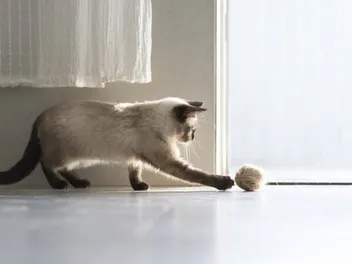
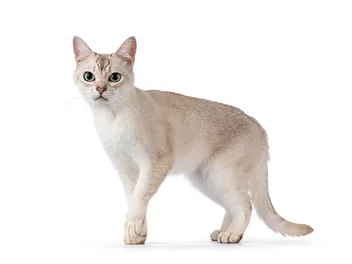
Balinese Cat Breed: Info, Pictures, Traits & Facts


In this article
Sleek, agile, and beautiful, the Balinese cat is as affectionate as they are regal. Once known only as the long-haired Siamese cat, they were first introduced in the 1950s. Since then, they have charmed their way into many cat lovers’ hearts for their adaptability, chattiness, and intelligence.
There’s more to these cats than their bloodline, though. This guide will teach you more about the Balinese cat, how to care for them, and what makes them such wonderful companions.
Breed Overview
Length:
Weight:
Lifespan:
Colors:
Suitable for:
Temperament:
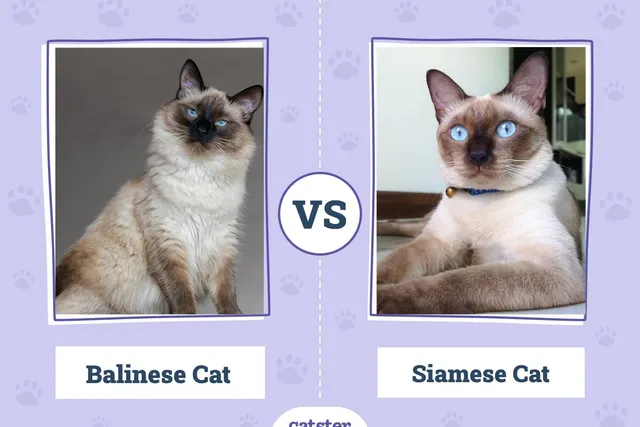
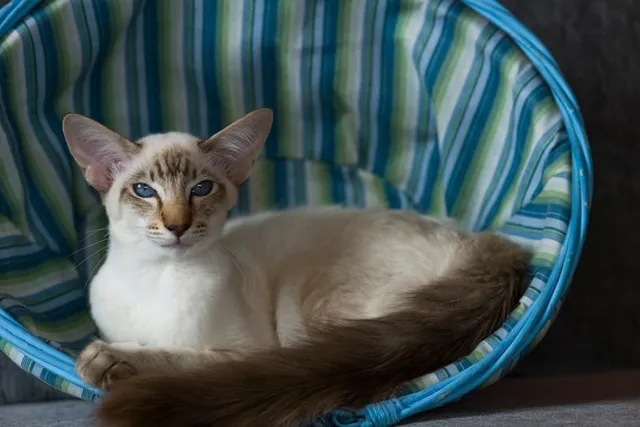
The long, wispy coat of the Balinese cat, once seen as an undesirable genetic defect, is simply the result of a recessive mutation in the Siamese. They share the same sociability, temperament, and color patterns, but with a fluffier silhouette. Their name comes from a comparison to the graceful Balinese dancers, not their actual geographical origin. In fact, the breed was officially started in the US. When first described, the Balinese consisted only of the same four colorpoints accepted in the official Siamese breed: seal, chocolate, blue, and lilac. Longhaired Siamese in non-standard colors and patterns like red, tabby, cream, or tortie were called Javanese; a name chosen for its geographical proximity to Bali. In the early 2000s, when many feline clubs and associations started accepting non-traditional Siamese colors and patterns into the breed standard, Javanese and Balinese merged under the single breed banner of Balinese.
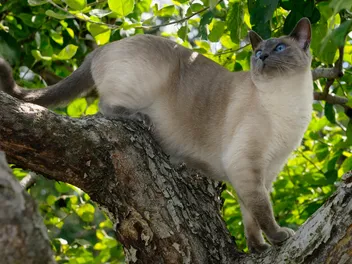
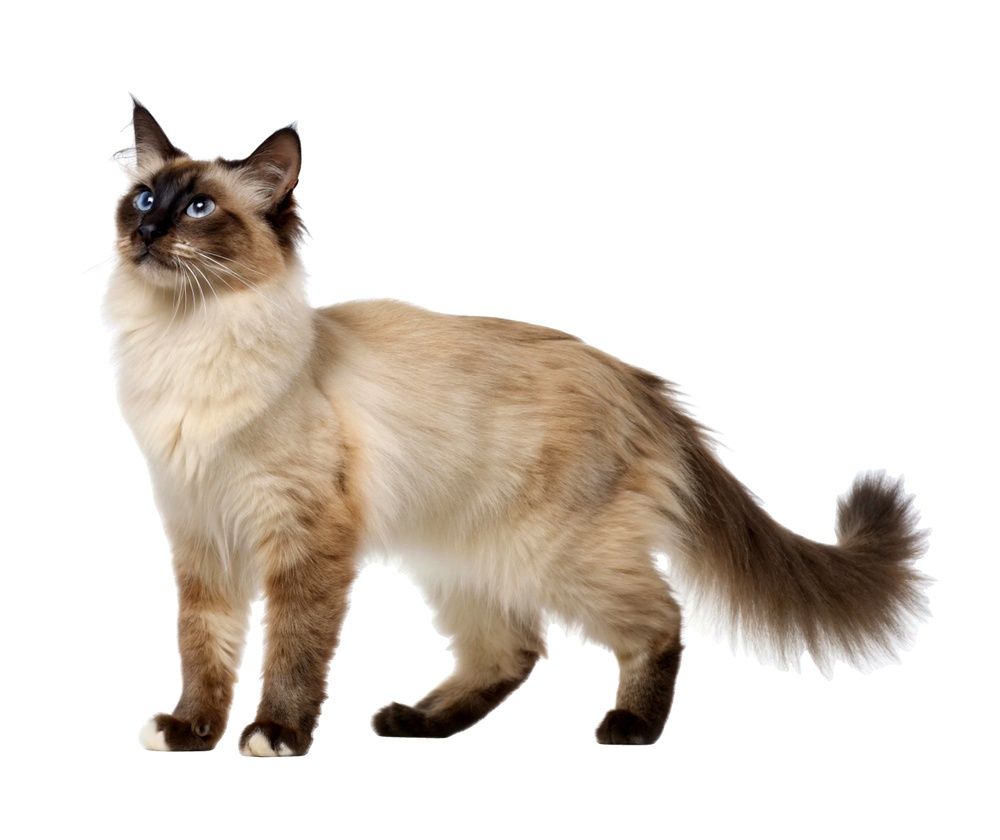
Balinese cats are often derived from the more modern, wedge-headed Siamese cat, but can also be found in the traditional, apple-head form. Their coats are long and silky, lying flat against the body, with a fluffier tail than the Siamese, but not quite as full and fluffy as the Siamese-Persian hybrid known as the Himalayan.
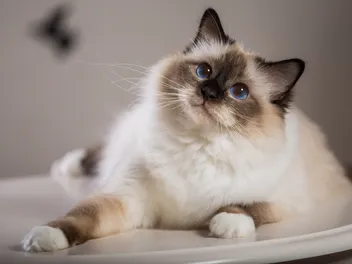
The same genetic mutation responsible for the colorpoint coloration of the Balinese coat also affects the color of the iris, resulting in their trademark blue eyes.
Happy to chatter and bond with humans and other pets, the Balinese cat is adaptable and long-lived, and despite their longer coat, does not usually require excessive grooming.
They develop strong bonds with their owners, often to the point of understanding how they’re feeling. Compared to most cats, this breed is almost dog-like in their affection and loyalty to their owners.
Balinese Cat Characteristics

Balinese Kittens

Compared to Siamese cats and many other cat breeds, the Balinese aren’t quite as popular. That said, finding a breeder shouldn’t be too difficult, even if there isn’t one in your area. You can also sometimes find adult Balinese cats or mixed breeds at shelters and rescues, as families often surrender them due to their talkative natures and high energy levels.
Like all colorpointed cats, Balinese kittens are born completely white. Their pigment production is dependent on temperature, and their mother’s womb keeps their entire body toasty warm. During their first few weeks, the extremities (feet, ears, tail, and face), which are a slightly cooler temperature than the restof the body, start to develop their pigmentation.
As kittens, the Balinese are slow to mature and often take between 18 and 24 months to reach adulthood. They will retain much of their playfulness well into their adult years and even into their seniority.
Balinese kittens are high energy, chatty, and always up to something! You also need to be ready for impromptu games of fetch or a willingness to train your Balinese to walk on a leash for strolls outdoors. They need a variety of toys, plenty of high places to explore, and a great deal of attention as they age.
One of the best ways to give your kitten plenty of exercise and entertainment is through companionship. If you’re thinking about bringing a kitten home, why not bring home two? They don’t have to be related or of the same breed, but two kittens are always better than one!

Temperament & Intelligence of the Balinese 🧠
Siamese cats are well-known to be talkative, sociable, and incredibly intelligent. As their descendants, the Balinese cat is equally expressive and adoring of its family. They’re only marginally less talkative than the Siamese and are just as athletic and graceful.
Most of all, Balinese cats aren’t fond of being alone. They need companionship, preferably from their humans. These cats also enjoy high places. They’ll hop onto your shoulder whenever they get the opportunity or perch on a bookcase, fridge, or cat tree to survey everything around them. They’re also highly trainable and can learn to walk on a leash or play fetch.
Are These Cats Good for Families? 👪
Many cat breeds don’t deserve derisive comments about feline aloofness, and the Balinese is a good example of this. While they can be stubborn and have their moments of solitude, they are also adoring and affectionate. In fact, because of the Balinese cat's personality, they don’t like being alone for long at all. This trait makes them wonderful companions for young and older families, singles, or the elderly.
You do have to be prepared for a great deal of chatter, though. If you prefer a quiet house, a Balinese cat isn’t the best choice. They will talk to you about everything and will be active most of the time. While they might entertain themselves for a while, they’ll always come back to tell you about their day or coax you into a game.
If you’re looking for a cuddly companion who’s happy to spend time with you, the Balinese is the perfect choice. Don’t leave them alone for too long, however, as they’re not nearly as independent as some other cat breeds out there. They can become destructive if they feel neglected or forgotten about.

Does This Breed Get Along With Other Pets? 🐶🐱
Balinese cats are naturally gregarious. This trait extends from their human companions to other cats and even dogs. While your Balinese will bond with everyone, there are still precautions that you need to take when you first introduce them to your home.
You need to make sure your pets—dogs especially—are happy to be around cats. This is easier the younger they and your new Balinese cat are. If you bring home an adult cat, you have to consider whether they’re used to dogs. Slowly introduce your new cat to your existing pets, and go at their speed to make sure the transition is as smooth as possible.
When properly socialized and raised with other pets, the Balinese is just as affectionate and playful with cats and dogs as they are with humans.

Things to Know When Owning a Balinese Cat
There are many things to remember when it comes to caring for different cat breeds. Fortunately, Balinese cats aren’t that high maintenance, even regarding their grooming needs. You’ll need to pay attention to their exercise and dietary requirements, though, along with potential health issues. Here’s an overview.
Food & Diet Requirements 🐡
How much you feed your Balinese cat depends on their activity, age, and how many treats you give them during training. Kittens will need to be fed three to four times a day, while adult cats can be fed once or twice. It’s recommended that you feed high-quality wet food to your Balinese, both to stimulate their appetite and to help ensure that they stay hydrated.
The breed is well-known for their fussiness when it comes to food, and wet food has a unique odor to draw their attention. It’s also easier to warm up if necessary. You can feed them kibble if you prefer or a mixture of the two types of food. Always make sure your Balinese cat has free access to clean drinking water.

Exercise 🐈
Balinese cats are almost always on the go. They love to explore, are incredibly playful, and will happily follow you everywhere. Full of energy, they’ll easily get bored if they don’t have activities to occupy themselves with.
Fortunately, they’re easy to amuse. They love toys that they can play with on their own or with a human. Another pet to interact and play with is also an option. Most of all, they adore games of fetch with their favorite humans, and you can also train them to walk on a leash.
Training 🧶
Curious and adaptable, the Balinese is a highly intelligent breed. They’ll happily solve problems on their own, which can lead them into mischief. Their intelligence does make it easier to teach them how to behave properly, though you do have to be aware of their feline stubbornness.
Use their favorite treats or toys and plenty of positive reinforcement. These cats are sensitive, especially to their owner's feelings and emotions. They like to have fun most of all, and you need to keep training sessions short and positive. This will help ensure that your Balinese cat doesn’t decide to ignore your efforts.
Grooming ✂️
Despite the length of their coat, the Balinese aren’t high maintenance when it comes to grooming. The fur is silky, and there's no thick undercoat to contend with. It also doesn’t shed much except during the shedding seasons.
A comb or pin brush are the best choices for grooming these cats, and doing so once or twice a week is plenty. These cats love spending time with their owners, and if you want to brush them more often, they won’t be averse to it. Just remember that they love to play and don't like spending too much time lazing around.
Like most other cats, the Balinese will regularly groom themselves and rarely need a bath. Most of the time, a damp cloth is good enough. Remember to check their ears, brush their teeth, and provide scratching posts for their nail care.
Health and Conditions 🏥
The Balinese are generally long-lived and generally healthy. However, like the Siamese, there are several health conditions that are more common within this breed, and as a result of intensive selective breeding for recessive genetic traits, these risks may be amplified in Balinese cats. Some diseases to be aware of are feline asthma, lysosomal storage disease, eye problems, chronic kidney disease (CKD), and arthritis. Although these issues are more common among the Siamese breeds, this doesn’t mean your pet will necessarily be affected. Researching breeders and taking your pet to annual checkups are great ways to reduce the risks of illness and stay ahead of any health concerns. Responsible breeders will screen their breeding animals for Gangliosidosis, Mucopolysaccharidosis, Primary Congenital Glaucoma (PCG), and Progressive Retinal Atrophy (PRA).1
Male vs. Female
Similar to Siamese cats, the biggest differences between male and female Balinese cats are their temperament, height, and weight. Depending on if and when they are neutered, male Balinese cats may be a few inches taller and a few pounds heavier than females. Anecdotally, males are also reported to be more confident and demonstrative of their affection. This isn’t to say that female Balinese cats aren’t affectionate, but they are often said to be more reserved and particular about whom they give their attention.
Both male and female Balinese cats are outgoing, affectionate, and adaptable. They’ll be talkative and willing to follow you everywhere.
3 Little-Known Facts About the Balinese Cat
1. They’re Not From Bali
While the Balinese cat shares the same exotic appearance as the Siamese, they originated in the U.S.A. They were developed through the efforts of Helen Smith in New York and Marion Dorsey in California during the 1950s. Smith named the Balinese cat after exotic dancers in Bali, Indonesia. Despite their name, their origins have nothing to do with the country or even the dancers themselves. Smith chose the name due to the breed’s natural grace and agility.
2. They’re Descended From the Siamese Cat
The Siamese cat is the parent breed of many of the oriental or point-patterned breeds that we know today, and the Balinese is one of them. Records can be traced back as far as 1928, but these longhaired Siamese cats—as they were known at the time—weren’t recognized as a separate breed until the 1950s. It was due to the efforts of Smith and Dorsey and their teamwork in developing the Balinese breed that allowed these cats to grow in popularity.
3. There Are Traditional and Contemporary Balinese Cats
Despite the Balinese not being around for as long as the Siamese, there are two varieties. Both share the same colors, patterning, and temperament, but one is more accepted by breed fanatics and judges than the other.
The contemporary Balinese cat is most similar in appearance to the Siamese cat. If you see a Balinese at a cat show, they’ll be a contemporary Balinese, as they are the only type accepted. Traditional Balinese cats are similar to Ragdoll cats, but they are slightly larger with much longer fur.
Final Thoughts
Also known as the long-haired Siamese cat, the Balinese cat has been a beloved breed since the 1950s, when the efforts of two American breeders drew attention to a new variation of the Siamese. When Siamese lovers protested against the long-haired kittens being considered true Siamese cats, they became their own breed. Originally, only seal, blue, chocolate, and lilac pointed cats were considered to be of the official Balinese breed, and long-haired Siamese with non-traditional colors were called Javanese. Now, both are combined under the Balinese name, though the exact rules can vary between different feline clubs and associations.
Although the Balinese cat is a separate breed, they share many of the traits of the Siamese cat. They are affectionate, loyal, and intelligent, with beautiful point patterning and coloration. While some cat owners dislike their talkative natures, others adore their willingness to chatter and have a four-legged, furry shadow following them around the house.
If you’re looking for a cat that you can cuddle and that is always ready for a game of fetch or a leashed walk, the Balinese is a good choice. They get along well with children and other pets and will always be there to greet you at the door.
Related Read:
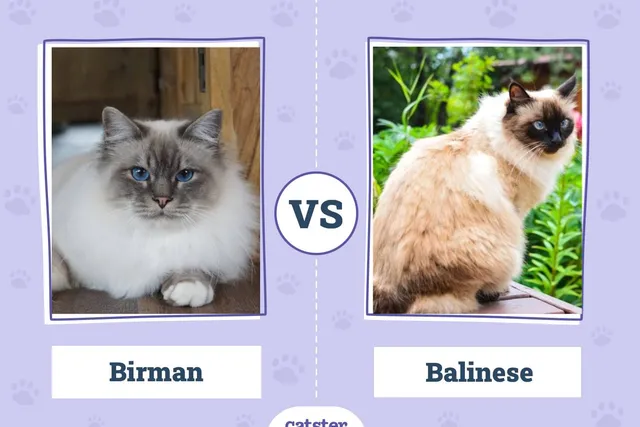
Birman Cat vs Balinese Cat: Main Differences (With Pictures)
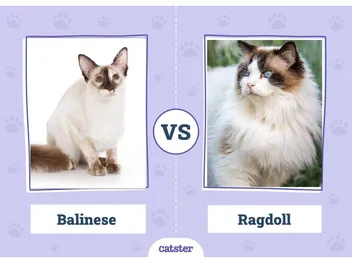
Balinese Cat vs. Ragdoll Cat: The Differences (With Pictures)
Sources
Featured Image Credit: Malik Rafiq Photo, Shutterstock
Expert cat care, straight to your inbox
News, insights, and useful advice, delivered to you.

No spam — unsubscribe anytime.
By signing up, you agree to our Terms & Conditions and Privacy & Cookies Policy.
How useful was this post?
Click a star to rate. You can leave written feedback afterwards. (We read all feedback.)
Christian started writing for a local newspaper as a teenager, and he's been involved in the publishing industry for most of his adult life. Combining his love of writing with a passion for animals, he is currently the Director of Editorial at Pangolia and the Editor-in-Chief at Catster.
Christian lives in the Philippines with his wife, son, and four rescue cats: Trixie, Chloe, Sparky, and Chopper.