What Is the Flehmen Response in Cats? Our Vet Answers
In this article
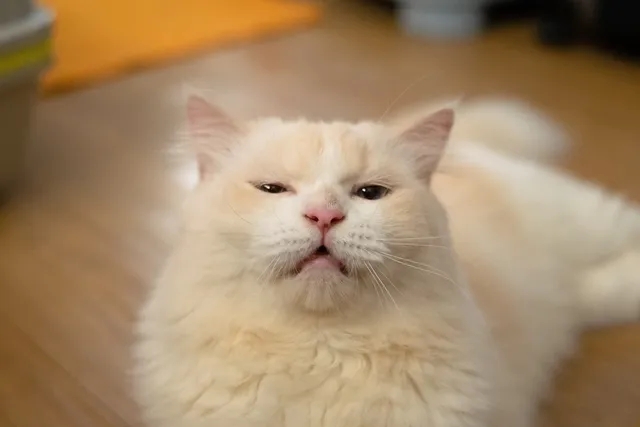
Have you ever noticed your cat pull a disgusted face as if they have just smelt something horrible? Interestingly, this is a natural reflex they possess called the Flehmen response. It also goes by the name Flehmen grimace or Flehmen reaction. The Flehmen response is a technique that cats have developed to aid in the processing of certain scents and smells.
For example, cats communicate a great deal through the release of chemical compounds called pheromones. They secrete these pheromones to help them relay important messages to other cats. These messages give the other cats information about where their territory is, mating rituals, and identification of each other and whether they are friend or foe. Other animals also partake in this strange-looking ritual, including goats, llamas, tigers, lions, horses, and hippopotamuses.
This article will discuss in depth what the Flehmen response in cats is and how it is used.

Cat Communication and the Role of Pheromones
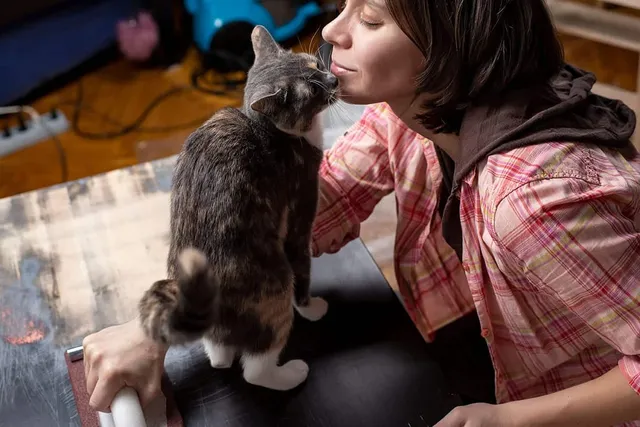
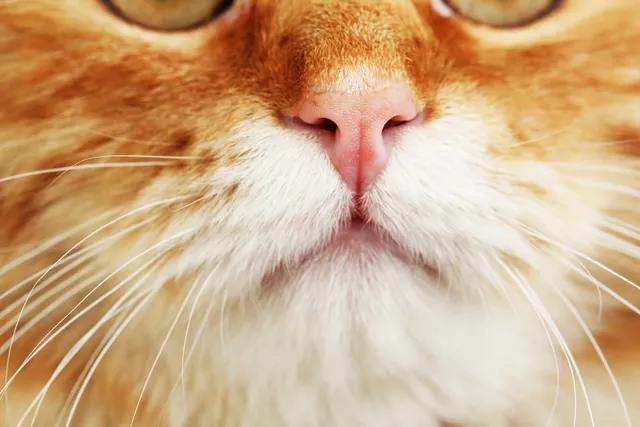
It is impossible to talk about the Flehmen response without first discussing pheromones. Cats use pheromones in many ways to communicate with each other.1 Pheromones are scent chemicals that get released by scent glands spread over the cat's body. They are located in many different places, including their paws, their chin, and their cheeks.
Cats can pick up and respond to other species' pheromones as well, such as potential predators or prey animals, but they usually focus on their own species. Cats have their own set of pheromones that they use to send signals and messages to other cats.
Ways they use pheromones include:
What Is the Flehmen Response in Cats?
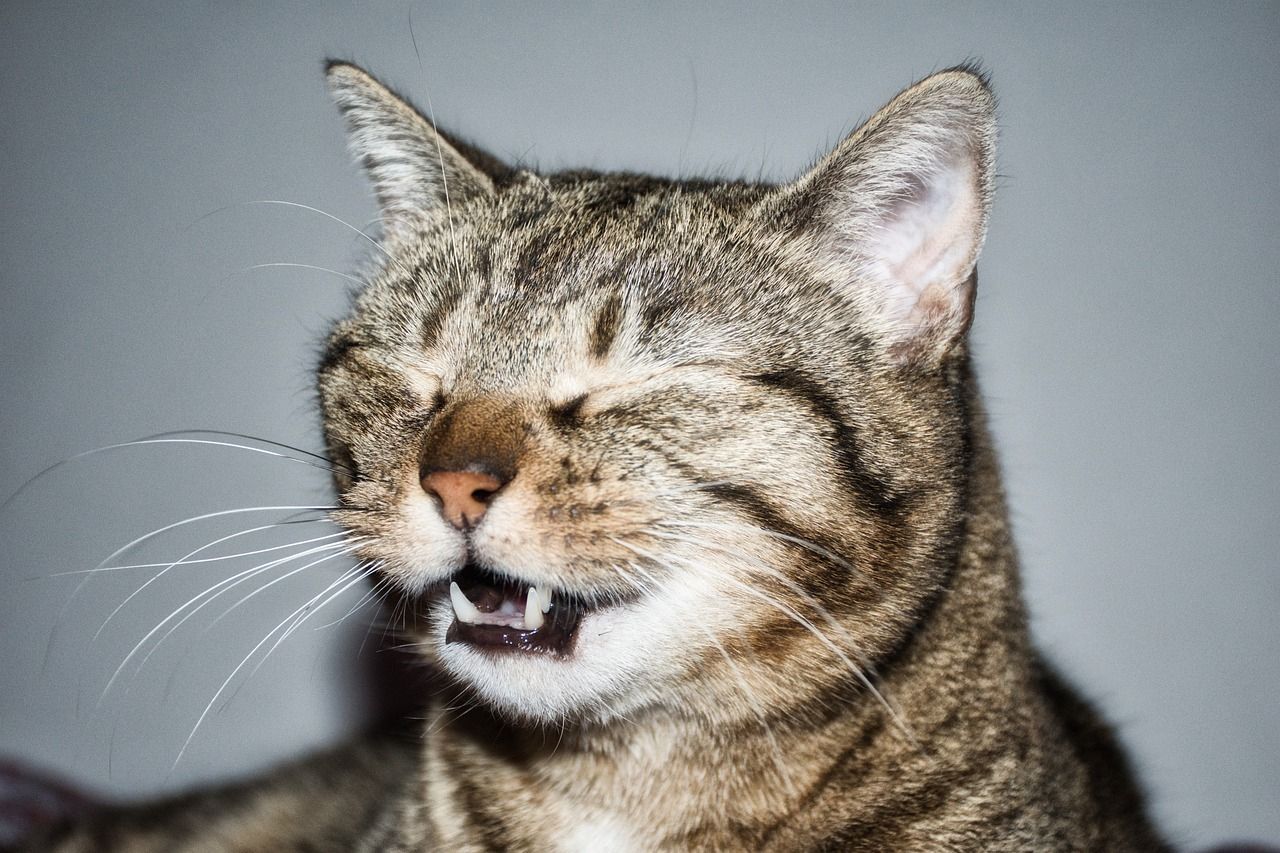
The word Flehmen comes from a German word meaning "lip curl". Some people think it is a sign of aggression, but it is a part of a normal behavioral response. Animals respond to certain stimuli, such as pheromones or other odors, which give them important information. By utilizing Flehmen response, cats are able to process smells and access the information the smell might be telling them. Interestingly, it is a voluntary response the animal carries out under conscious control to enable them to better understand the scent or odor.
The point of the Flehmen response is to bring the air holding the scent or odor over something called the vomeronasal organ (also referred to as the Jacobson's organ).

The Flehmen response opens up two small ducts located behind the incisor teeth on the roof of the mouth. These ducts are called nasopalatine canals. The scent is allowed to travel to the vomeral nasal organ. This organ is located at the bottom of the nasal cavity in the soft tissue of the nasal septum sitting above the roof of the mouth. It is an accessory olfactory organ (relating to the sense of smell). It processes pheromones, scents, and sometimes hormones released by other animals, normally of the same species, but they can come from predators and prey animals, too. When these chemicals make direct contact with the vomeral nasal organ, they are processed as a sensation that is more than just a smell; they give the cat more information than just sniffing things. The vomeral nasal organ sends neuronal signals straight to the accessory olfactory bulb.
These signals eventually make it to a part of the brain called the hypothalamus. The hypothalamus has lots of different jobs, including influencing reproductive hormones and behavior. This accounts for the fact that certain pheromones and scents can have a strong influence on things like mating behavior and territorial aggression.

What Does the Flehmen Response Look Like in Cats?
If you haven't caught your cat pulling strange faces, you may be curious as to what the Flehmen response actually looks like.
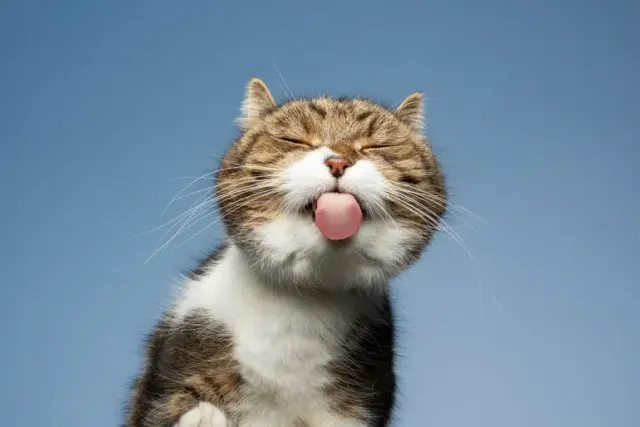
Your cat will appear to be pulling its face as if they have smelt something very unpleasant. They usually hold their mouths wide open, curl their upper lip, exposing their upper front teeth, and breathe in while doing this. In some circumstances, they will stretch their neck out or hold their head at a funny angle to optimize the processing of the scents and odors. Your cat will hold this pose for a minute or so then return to their normal facial expressions. They may repeat the response if they didn't get enough information the first time around.

What Causes the Flehmen Response in Cats?
The Flehmen response is a voluntary action taken by cats when they are exposed to an exciting scent, odor, or some pheromones from another animal. The Flehmen response is commonly used by male cats smelling female cats' urine to assess if she is ready to mate. However, it can be used by any cat when they come across a scent that they deem to be interesting enough to warrant further investigation.
Why Has the Flehmen Response Evolved?
The Flehmen response has evolved to serve an important purpose in cats. One of the main reasons for its evolution is likely to be linked to the ability to identify the reproductive status of the opposite sex. It also increases cats' chances of survival. It does this by allowing them to access and process important information from their environment concerning potential food sources and prey, but also dangerous predators. Another reason from an evolutionary stance would be to warn other cats away from their territory by marking out the space they have claimed.
The Flehmen response is also used to aid in interspecies communication to allow cats to assess if the animal they can smell is sexually receptive to them or not.

Frequently Asked Questions (FAQ)
Why do cats have a Flehmen response?
Cats utilize their Flehmen response to detect pheromones and other critical chemical stimuli in their environment to give them information about other cats and potential predators and prey animals. Pheromones are present in other animals' urine and feces and also any areas that other cats have “marked” by rubbing themselves on and depositing the pheromones on.
Should you be worried about a cat's Flehmen Response?
Despite the strange appearance of your cat when they are exhibiting the Flehmen response, there is absolutely nothing to worry about. They are not in any discomfort or pain. The Flehmen response is entirely normal and nothing to worry about.

Is the Flehmen response unique to cats?
Many other animals exhibit the Flehmen response. This includes both predator and prey species. More familiar examples are the cat and the horse; however, other species include giraffes, elephants, bison, tigers, lions, tapirs, goats, llamas, hedgehogs, pandas, rhinos, and hippopotami. It is believed that humans have a rudimentary vomeral nasal organ that is thought to be non-functional. There is still much debate about the existence and function of the organ in humans. Humans do not display a Flehmen Response. More research is required to determine the presence and use of the organ.
What other behavior responses appear similar to the Flehmen response?
There are a few other reactions your cat may display that could appear to be very similar to the Flehmen response, which actually means very different things.
If your cat is frightened or if they feel threatened, they may curl their lips and growl or hiss. If they are stressed or anxious, they may also start to curl their lips. If you are not sure how your cat is reacting, look at the situation your cat might be in to guide you. You can also look at their body position. They usually won't tilt their head back or stretch out their neck if they are defensive.
If you are concerned or have questions about your cat's health, you can also speak to a vet from the comfort of your own home to help make a plan. They can determine when an in-clinic vet visit should be made.

Conclusion
So the next time you see your cat make a disgusted face, you'll know it's the Flehmen response. This is a useful behavioral response that cats possess. They use it to gain more information about scents and odors in their environment. The Flehmen response is voluntary, meaning your cat consciously carries out the behavior when they want to gain more information about something. It can look as if your cat is frightened or angry, but they are not distressed at all when exhibiting this behavior.
It is a completely normal and very useful technique that has evolved to enable them to survive and thrive in their environment.
See Also:
Feline Facial Expressions that Kill Me Every Time (With Pictures)
Vet-Reviewed Behavior Problems in Cats: Prevention & Solutions
Featured Image Credit: Jupiter_79, Pixabay

Expert cat care, straight to your inbox
Vet-reviewed advice, behavior tips, and the best of Catster. Free, and you can unsubscribe anytime.
By signing up, you agree to our Terms & Conditions and Privacy & Cookies Policy.
Dr. Emma Chandley, BVM MRCVS (Veterinarian)
Dr. Emma is an experienced vet who is happy to share her expertise and knowledge about cats with readers. Her passion is surgery but she will happily talk about anything animal-related. Dr. Chandley graduated from The Royal Vet College and since then she has worked in general practice in Great Britain. Dr Chandley has completed a postgraduate certificate in Small Animal Surgery and has also gained Advanced Practitioner status in the same discipline. She enjoys developing her skills in animal behavior, nutrition, and clinical pathology as well.
Join the conversation
Ask a question, share your story, or send private feedback.