Can Cats Eat Popsicles? Vet-Reviewed Facts & FAQ


In this article
Most cats do not show a lot of interest in food other than the stuff that we owners put in their bowls. Therefore, we don't typically have to worry about what human foods may or may not be healthy for them. On the other hand, some cats do show an interest in human foods, and some cats eat it when they normally wouldn’t for whatever reason.
Therefore, it is a good idea to understand what human foods are healthy for cats and which should be kept away from them. One such food to consider is popsicles. Sometimes, cats show an interest in popsicles, and we might not see a problem with sharing a little with them. Can cats eat popsicles? Are popsicles healthy for cats? You should not feed your cat commercial popsicles made for humans, but there are a few homemade popsicles that are cat-friendly. Let’s find out.

Fruit-Based Popsicles
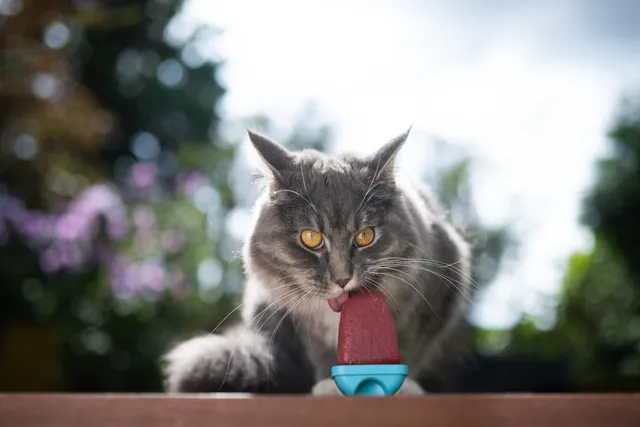
Cats cannot taste sweet flavors, so chances are that your pet will not show any interest in your fruit-based popsicles. Still, some cats may try to take a few licks of your popsicle. A lick or two of fruit-based popsicles will not hurt your kitty, but they are high in sugars and carbohydrates, which your cat does not need much of.
Also, if your cat consumes too many carbs or sugars, they could develop health problems like weight gain, which can in turn lead to feline type 2 diabetes. Such a disease can lead to problems like eyesight loss and inflammation. Therefore, it is best to keep your fruit-based popsicles away from your cat whenever possible. If your cat munches on a little of your popsicle, there is nothing to worry about.
But fruit-based popsicles are not healthy for your cat and should not be given as a treat.

Milk-Based Popsicles
Cats might be more attracted to milk-based popsicles than they are to fruit-based ones due to the fat and protein contained in the milk. Whether you are enjoying an ice cream popsicle or one that contains traces of cow's milk, cream, or even coconut milk, you may find that your cat is by your side just waiting for an opportunity to give it a lick.
Unfortunately, most cats are lactose intolerant. Kittens eventually lose the enzyme necessary to break down lactose in the body after they stop feeding from their mother. So, if your cat does get a hold of a milk-based popsicle, they could display signs of intestinal distress afterward, such as excessive gas or bloating.
Therefore, even though milk-based popsicles might contain protein and fat, which are required in a cat’s diet, eating this food could be more detrimental than beneficial. It is best to keep your milk-based popsicles away from your cat, as they are not healthy for them.
Healthy Homemade Popsicle Options
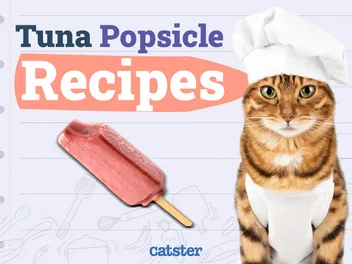
Just because your kitty should not indulge in popsicles that are meant for humans doesn’t mean that they cannot enjoy popsicles at all. You can make homemade popsicles for your cat that are just as satisfying as the store-bought kind but that are healthier for them. Homemade popsicles include ingredients that your cat will not only enjoy but will also benefit from nutritionally. Here are a few options to consider:
- High-Protein Popsicles: Mix a can of wet cat food and a cup of lactose-free or cat milk until well combined. Pour the mixture into an ice cube tray and freeze until solid. You can then offer one cube to your cat during snack time or add a cube to your cat’s meal on occasion.
- Treat Popsicles: Pour goat's, lactose-free, or cat milk into an ice cube tray, then place two to four cat treats in each tray slot. Freeze the tray until the milk becomes solid before serving. These treats act as puzzles that can help stimulate your cat’s mind and keep them busy when you can’t entertain them.
- Smoothie Popsicles: Blend a can of wet food with a little water or cat milk. Pour the mixture into an ice tray and freeze until solid. Add the frozen cubes to water or dry food at mealtime to liven things up.
There is no need to go out of your way to make popsicles, though, especially for your cat. However, if your pet doesn't seem to want to leave your popsicles alone, it is worth trying one of these recipes to see if you can’t satisfy their curiosity.
If you’re unsure of which popsicle ingredients are safe for your dog, please contact a vet for expert advice.
Final Thoughts
Almost everyone loves popsicles, and some curious cats will show interest in them too. While kitties shouldn't indulge in commercial popsicles meant for humans, homemade options can help keep them entertained. However, don't feel obligated to make homemade cat popsicles just because your cat shows an interest in the ones that you enjoy munching on.
Expert cat care, straight to your inbox
News, insights, and useful advice, delivered to you.

No spam — unsubscribe anytime.
By signing up, you agree to our Terms & Conditions and Privacy & Cookies Policy.
How useful was this post?
Click a star to rate. You can leave written feedback afterwards. (We read all feedback.)
Rachael has been a freelance writer since 2000, in which time she has had an opportunity to research and write about many different topics while working to master the art of fusing high-quality content with effective content marketing strategies. She is an artist at heart and loves to read, paint, and make jewelry in her spare time. As a vegan, Rachael is obsessed with helping animals in need both in her community and anywhere in the world where she feels she can make a difference. Animals also happen to be her favorite topic to write about! She lives off the grid in Hawaii with her husband, her garden, and her rescue animals including 5 dogs, a cat, a goat, and dozens of chickens.