Get

In Your Inbox

Catster is reader-supported. When you buy via links on our site, we may earn an affiliate commission at no cost to you. Learn more.

Can Cats Eat Pears? Vet-Verified Nutrition Facts & FAQ

Can Cats Eat Pears

Fruit is a tasty addition to a healthy diet for humans and even for dogs, as it provides plenty of dietary fiber and many other essential minerals and vitamins. It is well known that dogs can have small amounts of fruit as a part of their regular diet, but cats, however, are obligate carnivores and do not require fruit or plant foods in their diet. Still, many pet parents wonder: can cats eat pears? Are pears safe for cats as an occasional treat?

The answer is yes, even carnivores like cats can safely taste a small amount of certain fruits, including pears, every now and then. However, these foods are treats only, not a dietary necessity, and there are a few essential factors to consider before feeding your feline pears or any other fruits. In this article, we’ll take a look at some of the potentially safe aspects of feeding your cat pears, as well as the hazards to be aware of.

divider single cat paw oct 2024

Are Pears Safe for Cats?

For the most part, pears are a healthy treat to feed your cat occasionally. The fleshy part of the fruit contains beneficial vitamins, antioxidants, fiber, and moisture that can be good for your feline. The seeds, however, are not safe. The seeds of pears contain cyanogenic glycosides, which can be harmful, even fatal, in large amounts. If you decide to feed your cat a piece of pear as a treat, make sure it is free from any seeds.

While pears are safe for cats in small amounts, remember that cats are obligate carnivores and do not require anything in their diet other than the nutrition provided by meat, which is sufficient for their health. However, there are nutrients contained in pears, including vitamin A, water, and dietary fiber.

Other than the seeds, there are other hazards to be aware of when feeding pears to your cat, notably the sugar content. Pears should always be given raw and fresh and cut into small, digestible pieces. Avoid canned pears since they are often swimming in sugary syrup. Even raw pears have a naturally occurring sugar content and should only be given sparingly in small amounts.

Fiber is a vital part of any animal’s diet, and most fruits are high in dietary fiber, which is great for the most part. Cats, however, do not require added plant fiber, and excessive amounts may cause gastrointestinal upset such as diarrhea, gas, or soft stools.
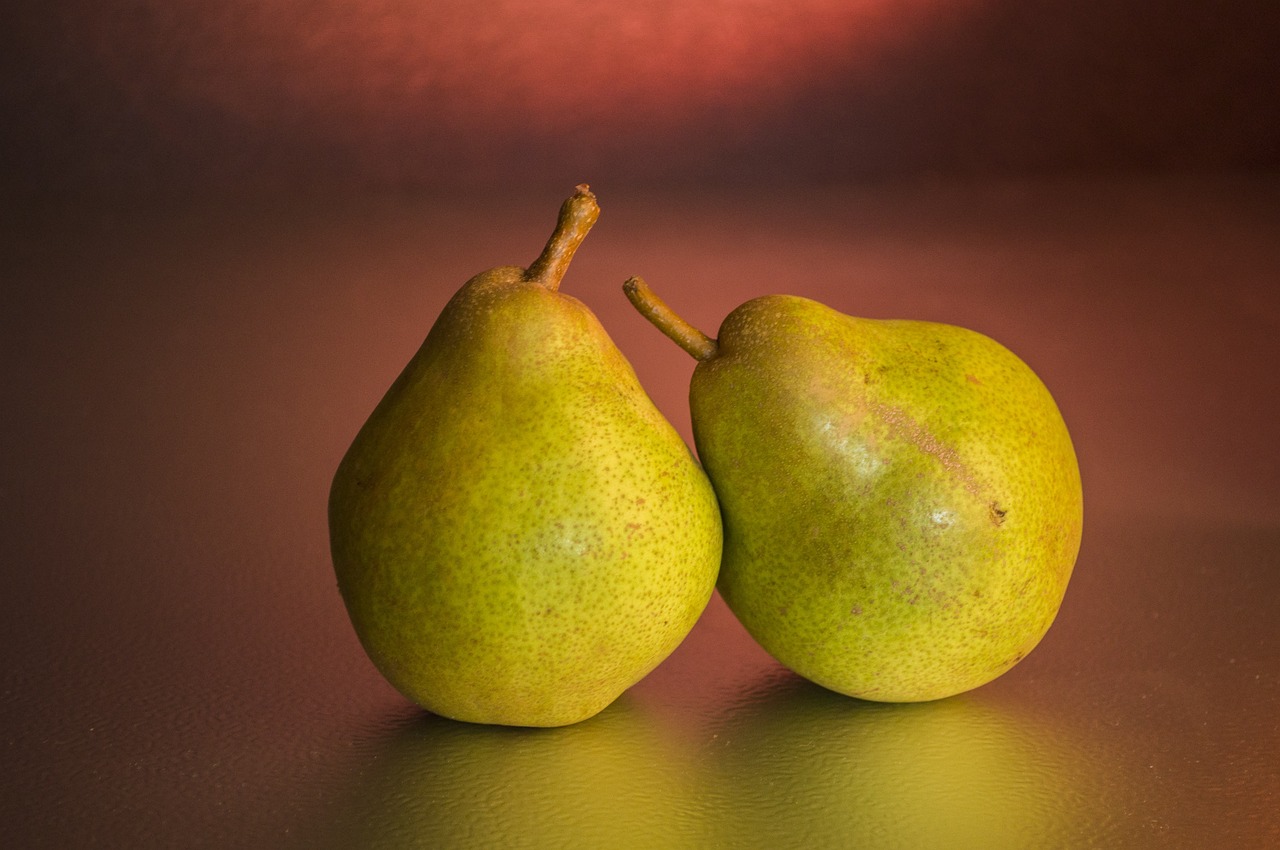
pears on the table
Image Credit: AD1981, Pixabay

Cats and Sugar

Pears contain a lot of sugar, and while it’s considered by most to be a “healthy sugar” as it is not concentrated and refined, in large amounts it is still unnecessary and can contribute to health problems for your feline. While sugar is not toxic to cats, it is still best to avoid including it in their diet as much as possible.

Most people don’t realize that cats cannot taste sweetness since they lack the receptors to detect it. Cats can taste bitterness, but they likely won’t enjoy a sweet treat like a pear anyway! Moreover, their gastrointestinal tract lacks the enzymes to efficiently process high sugar loads, and while a small bite of pear is unlikely to cause harm in a healthy cat, offering it regularly or in large amounts could disrupt the gut microbiome.

Some cats suffer from conditions like diabetes or obesity and should not have any sugar in their diet, including pears and other fruits. Sugar, even from natural sources, provides unnecessary calories to cats and may worsen certain health conditions. Cats do not require carbohydrates or sugar in their diet, and any fruit or sugary treat should only be given occasionally, if at all. In reality, cats do not benefit nutritionally from fruit.

A cat sits near a ripe yellow pear
Image Credit: Olena Belevantseva, Shutterstock

Some Fruits to Avoid

While pears, apples, and bananas are fine for cats in tiny amounts offered occasionally, there are certain fruits that you should avoid giving your cats altogether, including the following:

  • Cherries
  • Grapes and raisins
  • Lemons
  • Grapefruit
  • Persimmons

divider cat faces oct 2024

Final Thoughts

Pears are a generally safe but nonessential treat to give your feline in moderation. They contain water and some vitamins, along with dietary fiber, but cats obtain all the nutrients they need from a complete and balanced meat-based diet. Be sure that the pears are fresh, the seeds are removed, and they’re cut up into small, edible pieces. The main concern with feeding your cat pears is the sugar content, which can cause serious health concerns when fed in excess. Above all, the key is moderation, and a few small pieces now and then shouldn’t do any harm for a healthy cat.


Want content like this delivered to you?

Sign Up For Our Newsletter

News, insights, expert advice, and everything cat

* By submitting, you agree to our Terms & Conditions and Privacy & Cookies Policy.

How useful was this post?

Click on a star to rate (you can leave written feedback after clicking submit)

Help us improve Catster for pet parents!

Your feedback really matters.

What did you like about this post? Also how can we improve it?

Join the conversation

Leave a Reply

You’re very welcome to leave a comment or question. Please know that all comments must meet our community guidelines, and your email address will NOT be published. Let’s have a positive and constructive conversation.

Talk With A Vet Online

Peace of mind,
anywhere, anytime

Affordable vet advice

How to Travel With Two Cats: 16 Tips & Tricks

Most pet owners know how to travel with a dog, but feline friends are often left with pet sitters when owners go on...

Are Toygers Hypoallergenic? Vet-Approved Facts & Tips

Toygers might sound like something out of a sci-fi movie, but they are cats that live right here with us on Earth. These...

Say Goodbye to Fleas (and Hello to Happy Cats!)

If your cat has been scratching, biting, or losing fur, fleas could be the reason. These tiny pests can make your cat uncomfortable...

Black (Melanistic) Bengal Cat Breed: Info, Pictures, Care & Facts

The black (melanistic) Bengal cat is a beautiful creature, and while they are not as common as their tawny counterparts, they are certainly...

More related

Can Cats Eat Mealworms? Vet-Reviewed Diet Facts & FAQ

You’ve probably seen your cat trying to catch a bug before and maybe even eating one. A few insects may cause your cat...

Indigestion & Acid Reflux in Cats: Causes & When to See a Vet

Acid reflux and indigestion are fairly common problems in cats. If your pet is struggling with this, take heart, as you’re not alone...

4 Amazing DIY Cat Fence Roller Plans You Can Create at Home (With Pictures)

It can be a tough balance between letting your cats explore the outdoors and keeping them safe. A simple fence isn’t enough if...

15 Pet-Friendly Hotels in Tallahassee, FL (2025 Update)

Tallahassee is the state capital of Florida, located in the heart of the Florida Panhandle. It is home to Florida State University and...

Keep reading

Do All Cats Have Thumbs? Vet-Reviewed Explanation of Polydactyl Cats

Cats are agile animals that can run, jump, and scratch with ease. All cats have the same general physical features—four legs, two ears, a tail, and a stout body—that help them maintain their agility and sprightliness. However, not all cats...

tabby cat paws on backrest of couch

Can Cats Get Lyme Disease? Vet Approved Facts, Treatment & Prevention Tips

Owning a cat, especially one that enjoys roaming outdoors, comes with the concern of seasonal ticks. As a human, finding a tick firmly attached to your skin is concerning, and it evokes immediate worry about tick bite fever and Lyme...

removed tick from cat

10 Best Cat Grooming Gloves in 2025 – Reviews & Top Picks

If you have tried to pin your cat down and run a comb through their fur to help clean them, remove dead fur, or spruce them up for guests or a trip to the vet, you might find yourself thinking...

cat grooming

Can I Use Dog Dewormer on Cats? Vet Reviewed Facts

Cats that have not received preventative treatment commonly contract worms, and although seeing the parasites in your cat’s vomit or stool is unpleasant and concerning, they are typically easy to treat. If you have a dog that recently had worms...

devon rex cat take medicine

Is Food Coloring Safe for Cats? Vet Approved Facts & FAQ

In addition to taste and smell, the color of food plays a large role in making our food look tasty or a drink look refreshing. Certain colors can stimulate the appetite or turn it off, and the culinary arts consider...

Catster_Is Food Coloring Safe for Cats

Why Do Cats Like Chin Scratches? 9 Vet-Reviewed Reasons

If you own a cat, you know that cats love chin scratches. You’ve probably noticed that they will rub their cheeks against your hand or any other surface if you give them the chance. That’s because cats have scent glands...

woman scratching cat's chin

Can Cats Eat Oranges? Vet-Verified Facts & FAQ

Oranges are sweet, tart, and tasty and one of the world’s most popular fruit. They can often be found in household fruit bowls, added to fruit salads and school lunch boxes, and even used in desserts. Low in calories and...

Can Cats Eat Oranges

How To Stop a Cat From Putting Their Paws In Their Water: 3 Tips & Tricks

Cats are often considered incredibly water averse, which probably brings a smile to any cat companion who’s watched their buddy become mesmerized by a flushing toilet or transfixed by water dripping from a faucet. Splashing in water bowls is a...

cat dipping its paw in water bowl


