Get

In Your Inbox

Catster is reader-supported. When you buy via links on our site, we may earn an affiliate commission at no cost to you. Learn more.

Can Cats Eat Sage? Vet-Reviewed Nutritional Facts & FAQ

Can Cats Eat Sage

If you have a cat and like plants, you know how hard it is to keep your furry friend away from them. We try our hardest to shoo them away, but our cats always seem one step ahead of us. We don’t want our beloved kitties to eat something that they shouldn’t, so we should understand how sage affects felines.

Sage is a common herb that people like to grow indoors. So, is sage safe for cats? Fortunately for cat owners, sage is safe for cats to eat. However, it needs to be in moderation. If this is an herb that you enjoy growing, keep reading to learn more about sage and cat safety.

divider cat faces oct 2024

A Closer Look at Sage

Sage (Salvia officinalis) is native to the Mediterranean, and both fresh and dried forms are used for culinary purposes. It’s also used for medicinal purposes with promising benefits, but more research needs to be done.

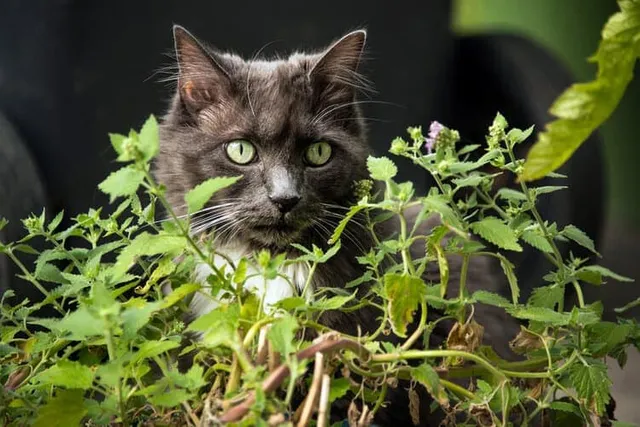
There are a few other varieties of sage, but the most popular variety to grow is common sage. Not many people know that sage is a member of the mint family—the same family that catnip belongs to. Many plants in the mint family have large leaves that grow tall and wide. It’s the perfect leaf for a cat to munch on.

Kitties won’t experience a catnip high when they eat sage, but many plants in this family are deemed safe by the ASPCA. However, essential oils are different. These are highly concentrated oil extracts and can be harmful to your kitty. If your curious cat decides to try a taste of sage oil, you should call a veterinarian for further instructions.

Need veterinary advice but can't get to the clinic? Catster recommends PangoVet, our online veterinary service. Talk to a vet online and get the answers and advice you need for your cat without having to leave your living room — all at an affordable price!

PangoVet_Mention-in-Content for PangoVet2 save money

Do Cats Like Sage?

Many different plants attract cats. It’s hard to say if cats are attracted to sage because of the scent, the wide-set leaves, texture, flavor, or novelty. Cats have strong olfactory senses, and sage has a compelling, earthy aroma with dark undertones that might be off-putting to some and attractive to others.

Sage also doesn’t have nepetalactone, the chemical in catnip that causes your cat to react to it. Your cat is probably attracted to sage the same way they’re attracted to grass. Still, some owners report that their cats love sage. If your cat likes to eat this herb, be mindful of how much they consume to avoid gastrointestinal upset.

common-sage-plant
Image Credit: Julitt, Shutterstock

How Much Sage Can My Cat Eat?

There’s no set amount of how much sage your cat can eat. Cats are obligate carnivores, so meat is what they need for a happy, healthy life. Small amounts of safe plant matter are generally fine for cats.

Some plants, like sage, are good for your cat in moderation. Even some cat treats contain small amounts of sage. If you use these treats, this might be why your cat likes your plant so much, but we still don’t want our kitties to freely feed on this herb.

Your cat may experience GI upset like vomiting and diarrhea if they over-eat sage. It’s wise to call a veterinarian if you notice any tummy issues with your cat. In more severe cases, sage could affect the central nervous system because of the chemical thujone found in the herb. However, this has only been tested on lab animals, so it’s unclear if this would affect pet cats.

orange cat eating on an orange bowl
Image By: Okssi, Shutterstock

What About Burning Sage?

Burning sage is a spiritual ritual known as “smudging.” You don’t use common sage for this ritual. White sage (Salvia apiana) is the most common variety used for this practice, but there are other varieties you can try. White sage is another safe variety for your cat to nibble on in small quantities.

At this time, no apparent studies show that burning white sage around your cat is harmful. You should avoid the practice around your cat if your cat has respiratory issues or is elderly, though. If you want to burn white sage in your home, open a window for ventilation, or put your cat somewhere in the house where they won’t have difficulty breathing. Traditional smudging ceremonies require you to open the windows to release the negative energy in the room, so it’s a win-win!

divider cat paws oct 2024

Conclusion

Sage is a wonderful herb to have in the house, and thankfully, sage is safe for cats. It’s delicious in several types of dishes and great for meats. Plus, it has unique medicinal properties should you need to use it. It’s also a lovely houseplant if you don’t intend to use the herb for anything except the occasional soup. Regardless of how you choose to use it, your cat will want to help you. Don’t be alarmed—this herb is harmless to cats in small amounts.

Related Reads:

Want content like this delivered to you?

Sign Up For Our Newsletter

News, insights, expert advice, and everything cat

* By submitting, you agree to our Terms & Conditions and Privacy & Cookies Policy.


How useful was this post?

Click on a star to rate (you can leave written feedback after clicking submit)

Help us improve Catster for pet parents!

Your feedback really matters.

What did you like about this post? Also how can we improve it?

Join the conversation

Leave a Reply

You’re very welcome to leave a comment or question. Please know that all comments must meet our community guidelines, and your email address will NOT be published. Let’s have a positive and constructive conversation.


Talk With A Vet Online

Peace of mind,
anywhere, anytime

Affordable vet advice

Why Does My Cat Grab My Hand and Bite Me? 5 Vet-Reviewed Reasons

Cats are well-loved family members and can provide endless hours of entertainment, delight, and companionship. However, cats can also bite and grab your...

Why Do Cats Sometimes Eat Their Placenta? Vet Approved Facts & FAQ

Cats evolved to eat their placenta. It is normal behavior that most females will exhibit while giving birth. But that does not mean...

10 DIY Cardboard Cat Beds to Create at Home: Vet-Approved (With Pictures)

In this day and age of online ordering, we all seem to have an abundance of cardboard. You may have been looking for...

Has Your Cat Imprinted on You? 15 Signs to Look For

Imprinting is a term that is usually used to describe when a young animal accepts another animal, person or object as its parent...

More related

How Do Cats Like to Be Held? Facts & Safety Tips

Owning a cat is a privilege that many of us acknowledge. Cats have unique quirks, fun little habits, and a sense of independence...

Kedi Film: Istanbul’s Charismatic Street Cats in Focus

Gamsız is the “neighborhood tough guy,” a loveable bruiser. Duman is a finicky eater who paws at the window of a local restaurant...

Could This Be the Future of Feline Chronic Illness Management? How Telehealth is Improving Cat Care

Over the past five years or so, the number and variety of services we can access from the comfort of our lounge chair...

National Pet Memorial Day 2026: History, Facts & Way to Celebrate

National Pet Memorial Day falls on the second Sunday in September each year. In 2026, that day will be September 13, which is...

Keep reading

13 Vet-Verified Signs You Need to Take Your Cat to the Vet Right Away

Cats are experts at hiding illnesses, a trait they’ve inherited from their wild ancestors because an unwell wild cat would often become a quick and easy target for predators. Your cat may not have to worry about predators picking them...

vet giving medicine to a cat

10 Best Budget Cat Foods in Canada in 2026: Reviews & Top Picks

How lucky are we to have cats in our lives? Our cats give us so much and ask for little in return—except for complete devotion. An important part of looking after a cat is ensuring that they are on a...

grey cat licking lips after eating cat food from bowl inside on floor

10 Essential Cat Grooming Supplies To Get You Started

So, you’re considering getting a new cat? Congratulations! If this is your first cat, you might wonder which supplies your new kitty will need once you bring them home. For example, what do you need to keep your cat clean...

Norwegian Forest Cat Being Groomed While on Human

11 Health Benefits of Cat Grass: Vet-Reviewed Facts & Tips

Cat grass is a popular addition to many cat households, offering a variety of health benefits for our feline friends. In this article, we’ll explore 11 health benefits of cat grass, providing information on its uses, tips, and safety precautions....

Gray tabby lovely fluffy cat eating fresh green grass

Do Female Cats Spray? Vet Approved Facts & FAQ

It’s a common misconception that only intact male cats spray. The truth is spraying is not a sex-specific feline behavior. Female cats can and do spray. Having a female cat that sprays at home can be frustrating, especially if you...

a white cat spraying the wooden gate

Vitamin C for Cats: 5 Vet-Approved Food Sources

You can find vitamin C almost everywhere, from your morning OJ to your spring salad. In humans, a vitamin C deficiency is a serious problem, but is it the same with cats? You might be surprised to learn that most...

cat eating cantaloupe

Cat Pouncing: Vet-Verified Behavior Explained & Solutions

Cats love to pounce! While it’s a normal activity that’s linked to their hunting skills, there are times when your cat’s pouncing can become a bit too enthusiastic and cross the line into aggression, particularly in indoor cats that don’t...

Burmese cat face before pounce hunting to toy mouse at home

Will Spaying Calm a Female Cat? Vet-Reviewed Effects, Benefits & Risks

Spaying your cat is something that veterinarians around the world recommend for several different reasons. Aside from the fact that it is the one way to reduce the number of strays that end up in animal shelters or homeless, it...

cat being examined by vet at the clinic

Love Cats? So Do We! Join the Catster Community

Stay informed with expert pet care insights delivered straight to your inbox! Discover professional guidance on animal behavior, feeding tips, trusted product picks, and much more.


Sign up for the Catster Email Newsletter

Stay informed with expert pet care insights delivered straight to your inbox! Discover professional guidance on animal behavior, feeding tips, trusted product picks, and much more.