Why Are My Cats Whiskers Breaking Off? 5 Vet-Reviewed Possible Reasons


In this article
Have you ever worried about a few split ends in your hair? If it's just an occasional strand, probably not. But imagine that every time you brush your hair you end up with a handful of broken hairs. That’s when worry sets in. Well, it's a bit like that with your beloved kitty's whiskers: a split whisker here and there shouldn’t be enough to keep you up at night, but many of them could be worrisome.
There are cases where certain issues can weaken your feline companion's whiskers, causing them to break off or fall out. However, these issues are usually accompanied by other signs, like bald patches, weight loss, dull coat, or redness and itching. So, if your furball only has a handful of split whiskers with no other symptoms, it's probably not a major cause for concern.
In this article, we’ll explore the whys and wherefores of cats' whiskers breaking. But first, let's take a quick look at what whiskers are and how they play a major role in your kitty’s life.

What Are a Cat’s Whiskers Made Of?
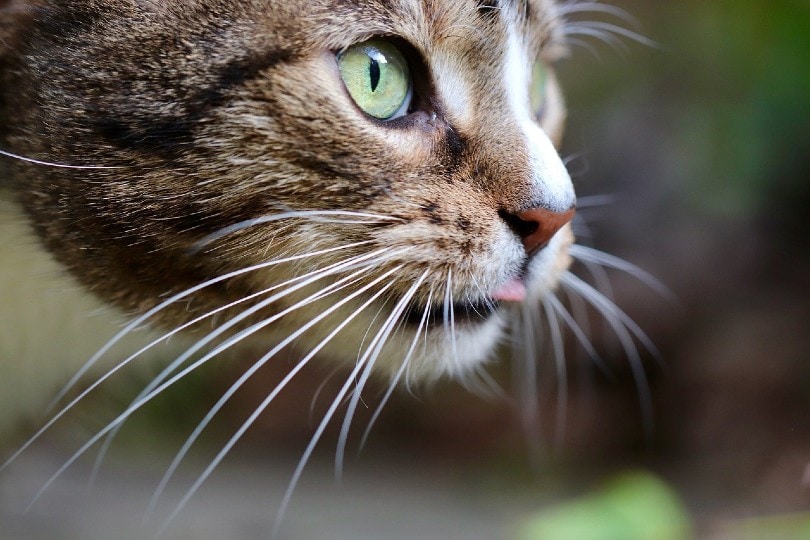
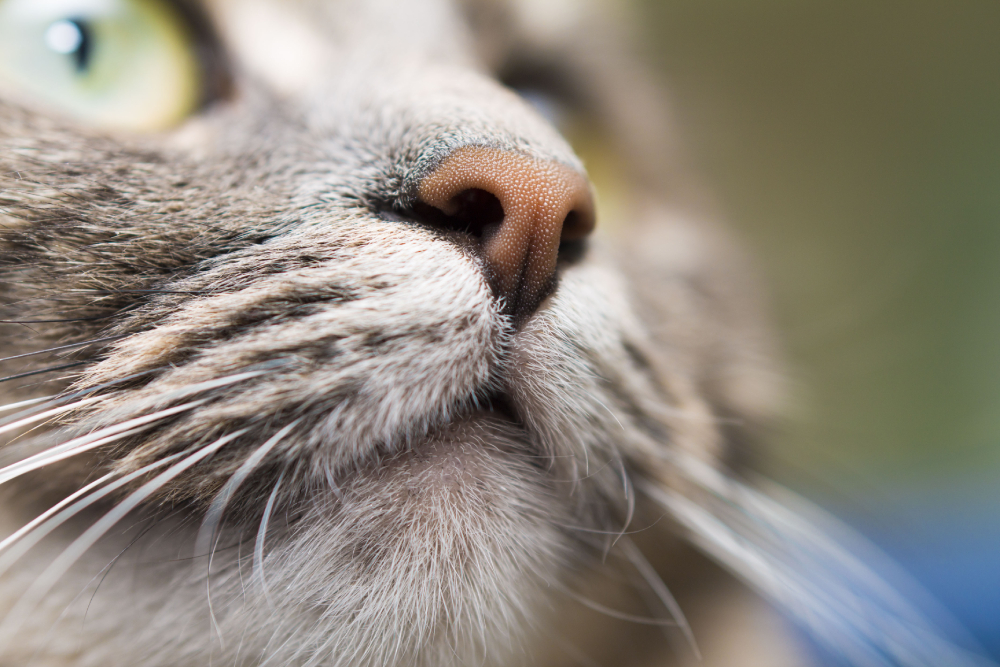
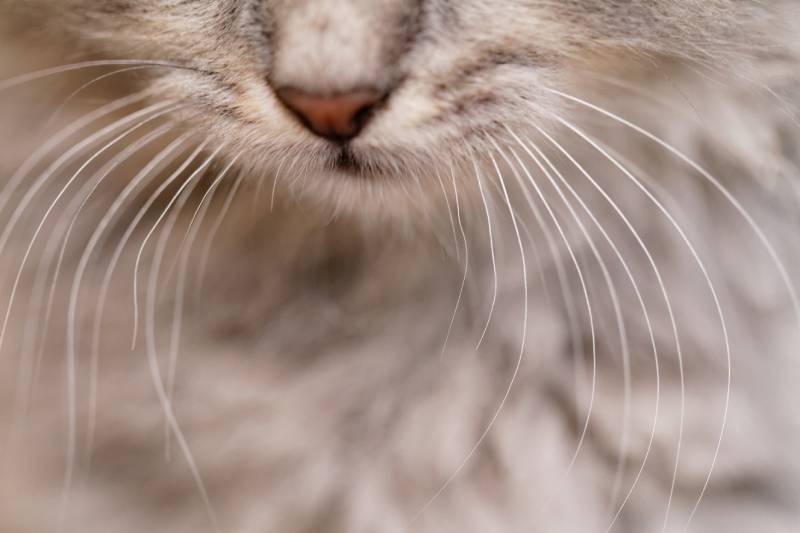
Cat whiskers, also known as vibrissae, are made of keratin—a fundamental fibrous protein found in the hair, nails, horns, and outer layer of skin of animals 1. Whiskers are longer and thicker than other cat hairs and have very sensitive nerve endings at their base. These thick and coarse hairs are pretty strong, but not indestructible. They can break by accident or with other types of trauma.

What Are a Cat’s Whiskers For?
Cat whiskers play a sensory function, that is, they are used to perceive the environment. Indeed, the nerve endings located at the base of cats' vibrissae allow extremely fine-tuned detection of the slightest movements. They allow cats to judge the size of confined spaces and sense things in their environment, such as air currents, insects, and potential threats.
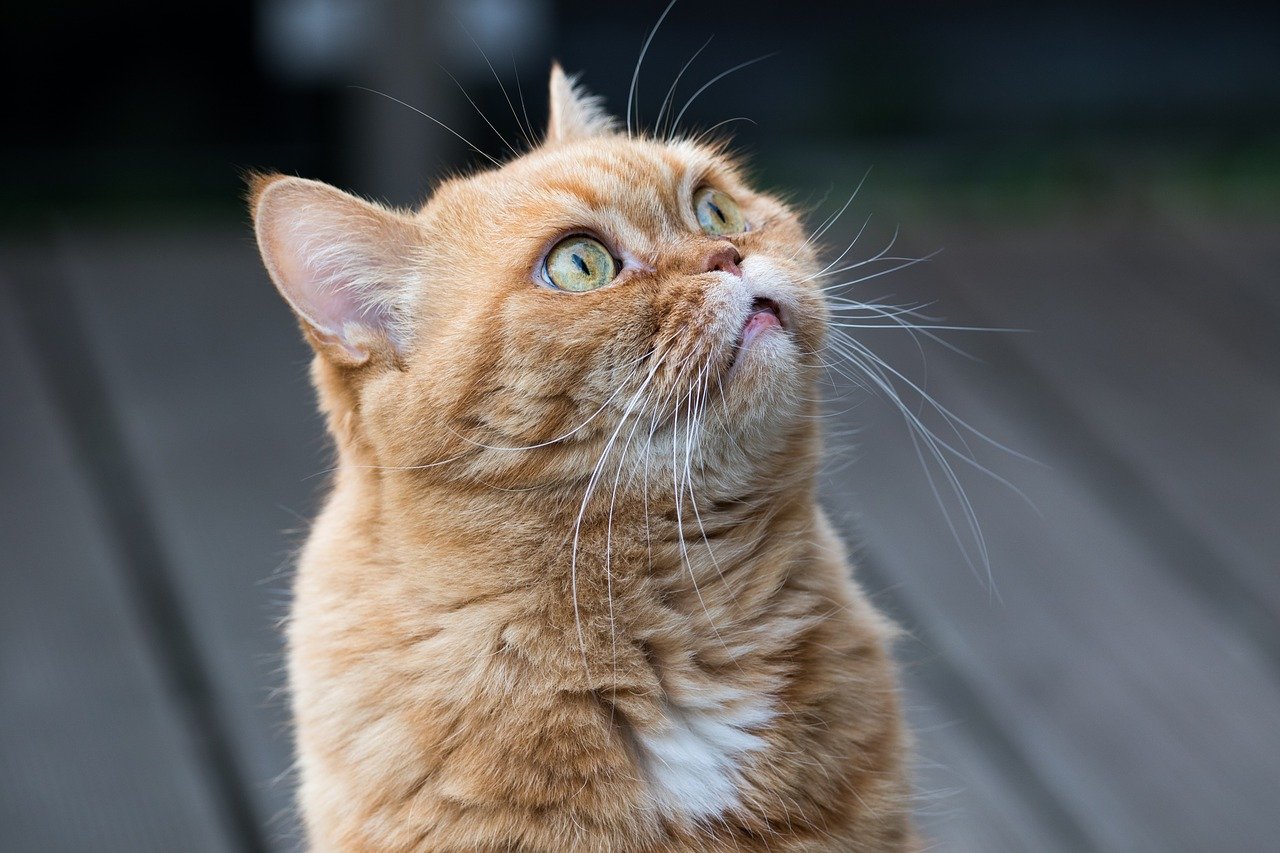
The position of the whiskers can also be a good indicator of a cat’s mood. When cats are in “relaxed mode,” their whiskers are off to the sides and slightly lowered. Conversely, when cats are playing and active, they can perk or raise their whiskers up and forward. When cats perceive a “threat” in their environment (or potential prey!), they instinctively flare their whiskers to appear larger and direct them toward the potential source of danger.

Why Do Cats’ Whiskers Fall Out?
Loss of whiskers is a natural phenomenon, just like any other type of hair loss. When whiskers reach the end of their life cycle, they fall out and are replaced by new ones, which happens throughout the year. That said, shedding periods and seasonal changes promote more whisker loss, which may explain why you find them in greater numbers at certain times of the year.

When Should You Be Concerned About Your Cat’s Whiskers Falling Out or Breaking Off?
Although it is normal for your cat's whiskers to fall out regularly and be replaced with new ones, you should monitor their condition and the frequency of breakage.
For instance, if you notice that one side of your cat's face is significantly less “whiskered”, that frequent breakage is occurring, or that your cat is losing several whiskers in a short period, you should consult your veterinarian. This is even more important if significant whisker loss or breakage is accompanied by other signs, such as loss of appetite, vomiting, itching, skin rash, dull coat, or abnormal stools or urine.
If your cat shows signs of the symptoms above or you suspect they might be suffering from underlying health issues, you should contact your vet.
The 5 Reasons Why Cats Whiskers Are Breaking Off
With that in mind, let's look at other possible reasons why your cat's whiskers may break or fall out more:
1. Normal Wear and Tear

Cat whiskers are not eternal, and, like all hair, they undergo a natural cycle of growth and shedding. Wear and tear from everyday activities, such as exploring tight spaces or rubbing against surfaces, can cause whiskers to break more frequently. As you know, cats love to poke their noses everywhere, and their tireless curiosity can contribute to increased breakage of these sensitive hairs.
2. Poor Diet
When a cat's diet lacks protein and essential vitamins and minerals, it opens the door to a host of potential health issues related to nutritional deficiencies. For example, their coat can become dry, lackluster, and brittle—and the same goes for their whiskers. A high-quality, balanced diet tailored to your cat's needs can actually make a difference in the appearance and health of their coat, so don't hesitate to ask your veterinarian for advice.
3. Trauma

Cats can also experience injuries that may affect their whiskers. Trauma, whether from a fall or a collision, can lead to the breakage of whiskers. While whiskers generally play a role in preventing such accidents by helping cats gauge their surroundings, they are not immune to injury themselves.
4. Itch
There are many conditions that can lead to itchy skin or discomfort. This in turn can result in your kitty rubbing their face and breaking whiskers. Problems such as allergies or skin infections can contribute to your cat grooming with greater frequency and as they rub their paws over their face they can cause the breakage of whiskers. Likewise, mouth pain or dental problems can also cause your cat to rub their face with paws or along surfaces such as the carpet. Any signs of skin disease, irritation, or excessive facial grooming should prompt a check over by your vet.
5. Mutual Grooming

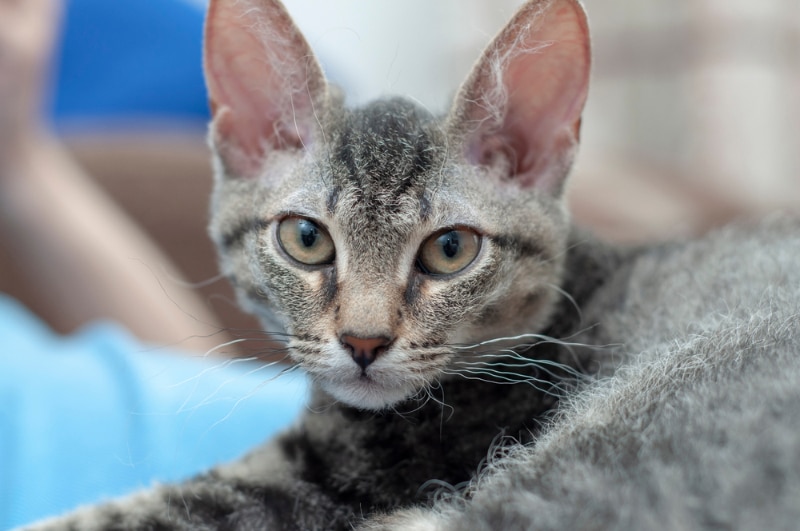
It is fairly common to see broken, or shorter whiskers on occasion if you have more than one cat. If the cats like to groom each other it can at times get overzealous and one cat nibbles the other cat’s whiskers short. This is slightly more common to see in kittens as they are playing roughly and grooming each other.
Do Cats’ Whiskers Ever Grow Back?
In most cases, yes. Like any other hair, as long as the whisker follicles have not suffered permanent damage, they will grow back. That said, it can take up to 3 months for whiskers to return to full length.

Conclusion
Whiskers are just like any other hairs on your cat’s body: they come with a limited lifespan and are renewed over time. Therefore, it is completely normal for a whisker to split or to come loose and for another one to replace it.
However, if your cat is experiencing unusual whisker breakage or loss and you notice other concerning signs, such as heavy hair loss or fluctuations in weight or appetite, it's time for a trip to your veterinary clinic.
Sources
Featured Image Credit: Nneirda, Shutterstock

Expert cat care, straight to your inbox
Vet-reviewed advice, behavior tips, and the best of Catster. Free, and you can unsubscribe anytime.
By signing up, you agree to our Terms & Conditions and Privacy & Cookies Policy.
Genevieve is both a biologist and a science writer, driven by her deep love for capuchin monkeys, pumas, and kangaroos. Her dedication to wildlife has taken her across the globe, from Bolivia and Guatemala to Canada and Australia, working and volunteering at various rehabilitation centers. As a Canadian living in Argentina, Genevieve starts her days with horses and cows greeting her from the plains outside her home office. She is the proud parent of three rescued dogs—Lemmy, Nala, and Pochi—and an energetic kitten named Furiosa. The opportunity to share her passion and expertise in animal care brings her great satisfaction.
Join the conversation
Ask a question, share your story, or send private feedback.