Seroma in Cats: Causes, Prevention, Signs & Treatment (Vet Answer)
In this article
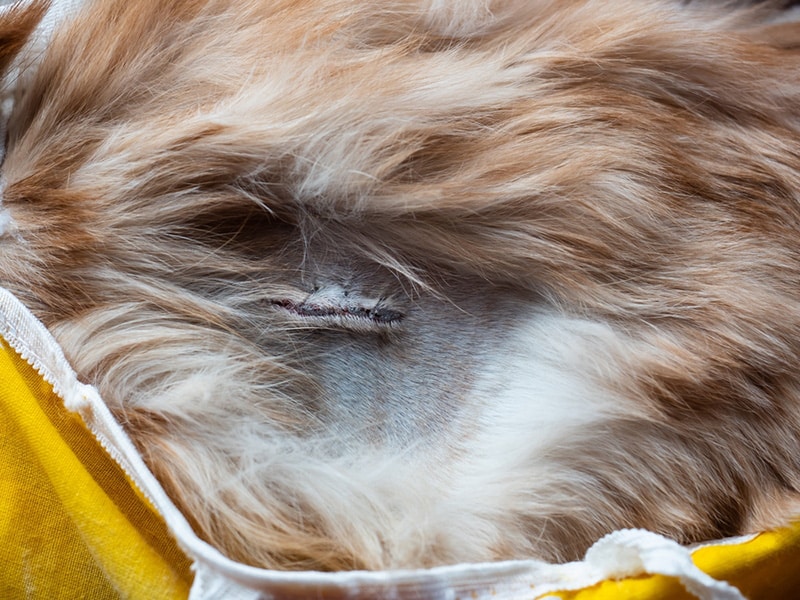
It is not uncommon for owners to notice a swelling around the area where a surgical incision has been made. The most likely reason for this is something known as a seroma, a fluid-filled mass that can vary in size depending on the circumstances in which it came about.
Post-surgery swelling, or a seroma, is not something to be ignored. While it may resolve on its own over time, some can open up and become infected, causing problems for your cat.

What Is a Seroma in Cats?
A seroma is a soft swelling that occurs from the accumulation of uninfected, clear fluid in a dead space in the body. A seroma usually contains plasma and lymphatic fluid. It is often seen after surgery. It can form in the first few days after an operation or sometimes, a few weeks later.
Seromas often develop in places where tissue has been cut through or removed during the surgery. Dead space (an empty cavity within the body) is sometimes left, which provides a space for fluid to accumulate. Damage to lymphatic vessels in the body can cause serous fluid to leak into the dead space, which causes the seroma to form.

What Are the Signs of a Seroma in Cats?
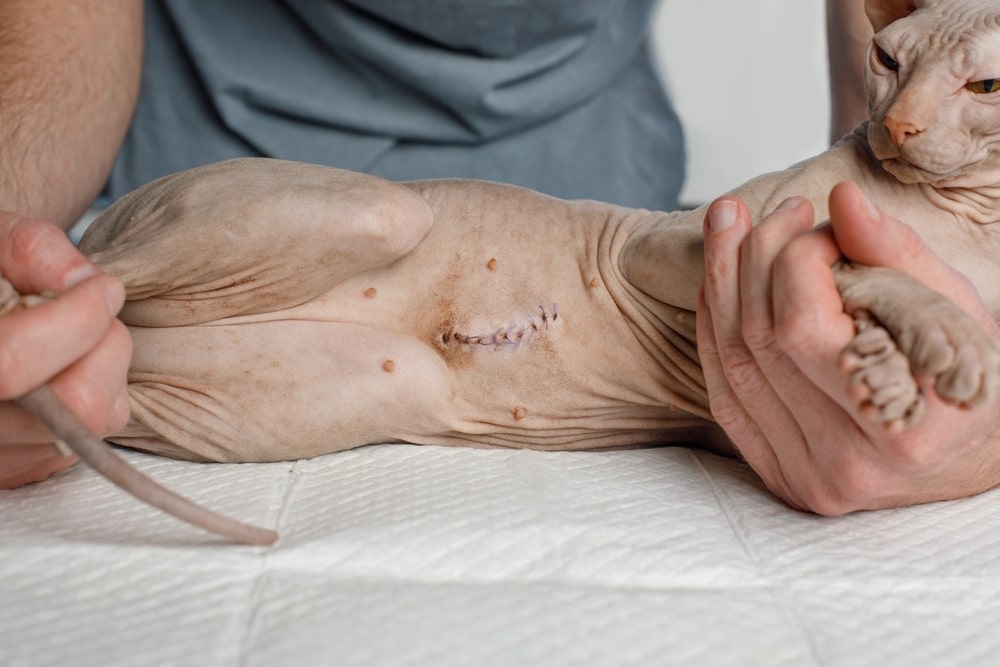
It can be difficult to spot a seroma, as in general, the tissue around any surgical incision will always be inflamed post-operation. A small amount of redness or swelling is completely normal. Seromas are more likely to develop underneath a surgical site that is over a mobile joint, such as the knee or the shoulder.
They will develop in the first few days of the post-operative period. A problematic seroma may involve some of the following:
- Noticeable swelling/fluid-filled lump underneath a recent surgical incision
- Redness in the area
- No pain (usually), unless the site has become infected
- Scabs/crusting/pus if the site has become infected
If your cat has a seroma present and you see any of the following clinical signs, you must contact a vet immediately. Do this even if the vet has already diagnosed and examined the seroma, as the circumstances could have changed.
- Your cat appears unwell.
- Your cat stops eating.
- The swelling is painful to touch.
- There is a discharge present.
- There is blood present.
- The swelling is warm to the touch.
- The skin over the swelling has changed color.
- The surgical wound has opened up.
What Are the Causes of a Seroma in Cats?
Seromas can develop when there is too much empty space between tissue layers after a surgical procedure has been performed or a traumatic injury has occurred. If there is lots of movement around the area—for example, over a joint—this exacerbates the situation. Vets sometimes place surgical drains to allow for gas or fluid to be removed from the surgical site. It is not common practice to use a surgical drain after a procedure like a cat spay.
When vets perform operations, they use suture material to close surgical incisions. Sometimes the suture knots can cause a reaction that results in a seroma forming. Often, the incision is closed in several separate layers using different suture materials. For a spay surgery, there will be sutures in the muscle layer, the tissues just under the skin, and also in the skin. There are lots of places where suture material knots can rub or cause irritation.
Sometimes the knot at the end of the sure material can stick out or poke into the tissue next to it. This can cause an inflammatory response and increase the amount of fluid in the area, leading to the formation of a seroma. On rare occasions, some cats can have a reaction to suture materials used. This can exacerbate or contribute to seroma formation too.
Inflammation in areas post-surgery or from injury causes tissue fluid to accumulate between the layers of tissue that have been disrupted. The seroma may turn into an abscess if bacteria become involved.

Diagnosis of a Seroma in Cats
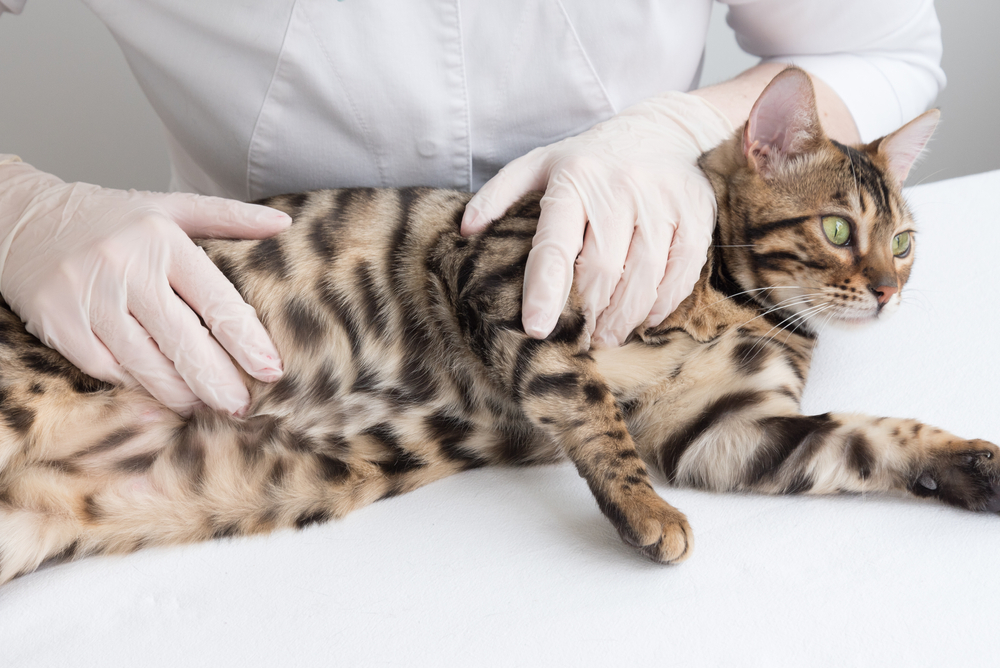
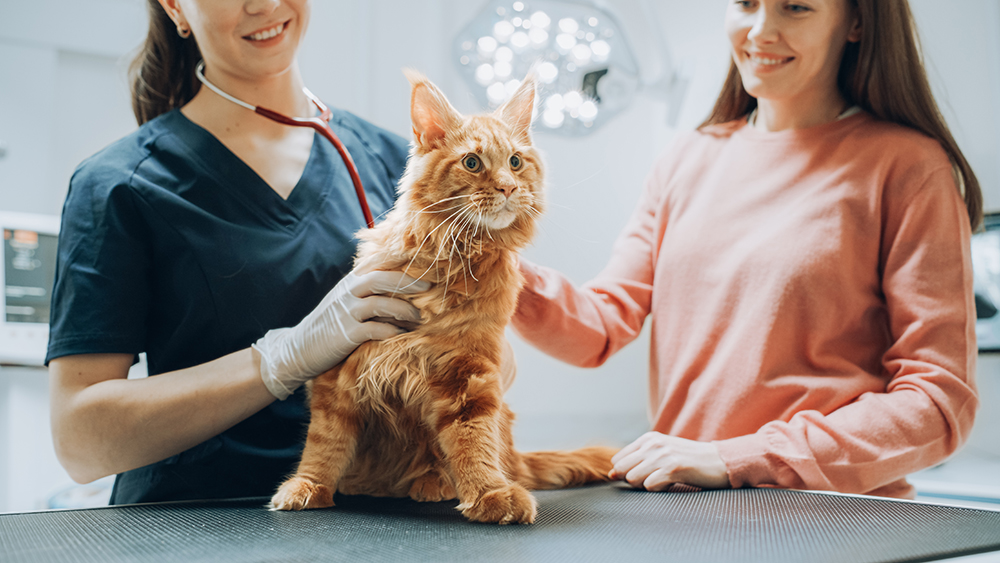
The vet will perform a physical exam and take a detailed history from you. They will need to know if any recent surgery has been carried out or if there have been any injuries or trauma that you are aware of.
They will examine your cat, and if there is a soft fluid-filled mass that is non-painful over a recent surgical wound, this is a strong indication that a seroma is present. The vet may also decide to take a sample of the fluid to send to a lab for analysis. This will confirm the contents of the swelling and whether it is a seroma or something else.
How Do I Care for a Cat With a Seroma?
Some seromas will resolve on their own without any veterinary intervention. This is the treatment of choice in the majority of cases. Your cat's body will gradually resorb the fluid, and the seroma will shrink back down. It is okay to leave them and monitor them, as a simple seroma is not painful for your cat.
If a seroma is causing concern, the vet may decide to start some form of treatment. This depends on the underlying cause and if there is any infection present. The vet will have taken a sample of the fluid, and based on the analysis, they will determine if there are any antibiotics or other medicine required. In some circumstances, anti-inflammatory drugs can help reduce swelling and inflammation. Often, animals have already been prescribed non-steroidal anti-inflammatory drugs as part of their post-operative care.
In some cases, the seroma will need draining. This can sometimes be done when your cat is conscious, using a small needle if they will tolerate it. If your cat is not kept under control and allowed to exercise freely, the seroma is likely to refill.
Occasionally, surgery to explore the seroma is required. This can be for cases that will not resolve on their own or where the seroma persists despite being drained. This is usually done under a general anesthetic. If you are caring for a cat at home with a seroma, it is important that you keep your cat confined to a small space and do not let them run or jump around. This is especially vital if the seroma is over a highly mobile area, such as the knee or shoulder joint. Excessive movement will cause the seroma to increase in size.
Generally, there is a very good prognosis with seromas, as the majority of them resolve on their own.

Frequently Asked Questions (FAQ)
Can Seromas Be Prevented in Cats?
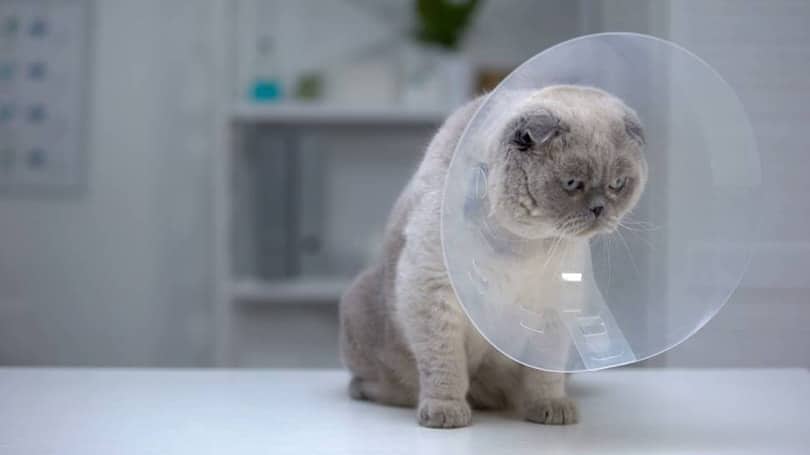
It is possible to reduce the risk of a seroma developing post-surgery by keeping your cat confined to a small space to prevent them from exercising excessively. Use an e-collar to prevent them from licking the surgical site. Keep using any anti-inflammatory medication the vet has provided. Do not bathe your cat or wash the surgical site.
Is It Normal for My Cat to Have a Bulge After Being Spayed?
It is completely normal for there to be a small amount of swelling around the incision site after an operation like a spay. This is usually your cat's body reacting to the absorbable sutures that have been used for the internal stitches. The bulge should go down within 14 days. If you are at all concerned about swelling post-operation, speak to a vet straight away.
What Does a Spay Seroma Feel Like?
A spay seroma will feel like a soft squishy lump, like an underinflated water balloon. It will be over the surgical site. It should not feel hard or warm to touch. If this is the case, it could be an abscess or a mass.

Conclusion
Seromas are a common occurrence post-surgery for cats. They can also occur after a traumatic injury. Surgical wounds in a high-motion location, such as the shoulder joint, are at a higher risk of developing a seroma.
Seromas usually resolve on their own without any intervention, as the fluid gets reabsorbed by the body. Some seromas can get infected, though, and if this is the case, medication is required. For small seromas post-surgery, usually, the prognosis is good. It is important to keep your cat calm and prevent them from licking their wounds and exercising while the seroma is present.
See also:
Sources
Featured Image Credit: DreamHack, Shutterstock

Expert cat care, straight to your inbox
Vet-reviewed advice, behavior tips, and the best of Catster. Free, and you can unsubscribe anytime.
By signing up, you agree to our Terms & Conditions and Privacy & Cookies Policy.
Dr. Emma Chandley, BVM MRCVS (Veterinarian)
Dr. Emma is an experienced vet who is happy to share her expertise and knowledge about cats with readers. Her passion is surgery but she will happily talk about anything animal-related. Dr. Chandley graduated from The Royal Vet College and since then she has worked in general practice in Great Britain. Dr Chandley has completed a postgraduate certificate in Small Animal Surgery and has also gained Advanced Practitioner status in the same discipline. She enjoys developing her skills in animal behavior, nutrition, and clinical pathology as well.
Join the conversation
Ask a question, share your story, or send private feedback.