Open vs. Closed Litter Box: Main Differences, Pros & Cons
In this article
Your cat is an important member of your family, so you want everything to be perfect for him, from food to toys and everything in between. One of the most essential items in your feline pal’s life is his litter box.
However, the days when a litter box was just a box with litter in it are long gone. Today, you can purchase everything from self-cleaning litter boxes to boxes with their own sound systems.
The biggest debate is open or closed litter boxes—which do cats prefer? The trick is to strike a good balance between what your cat wants and what you like. Because all cat parents know if your cat doesn’t like it, he’s not going to use it.

Visual Differences

Overview of Open Litter Boxes:
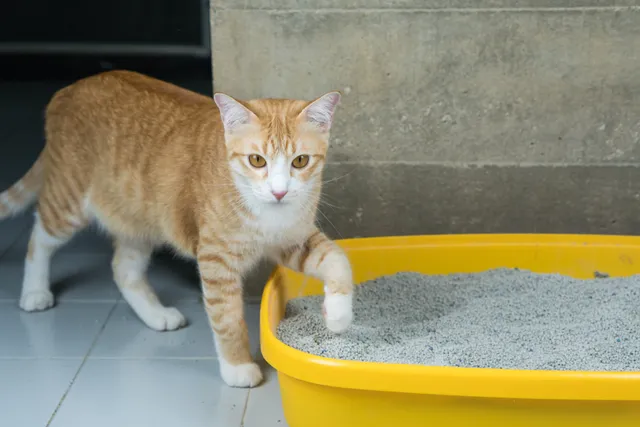
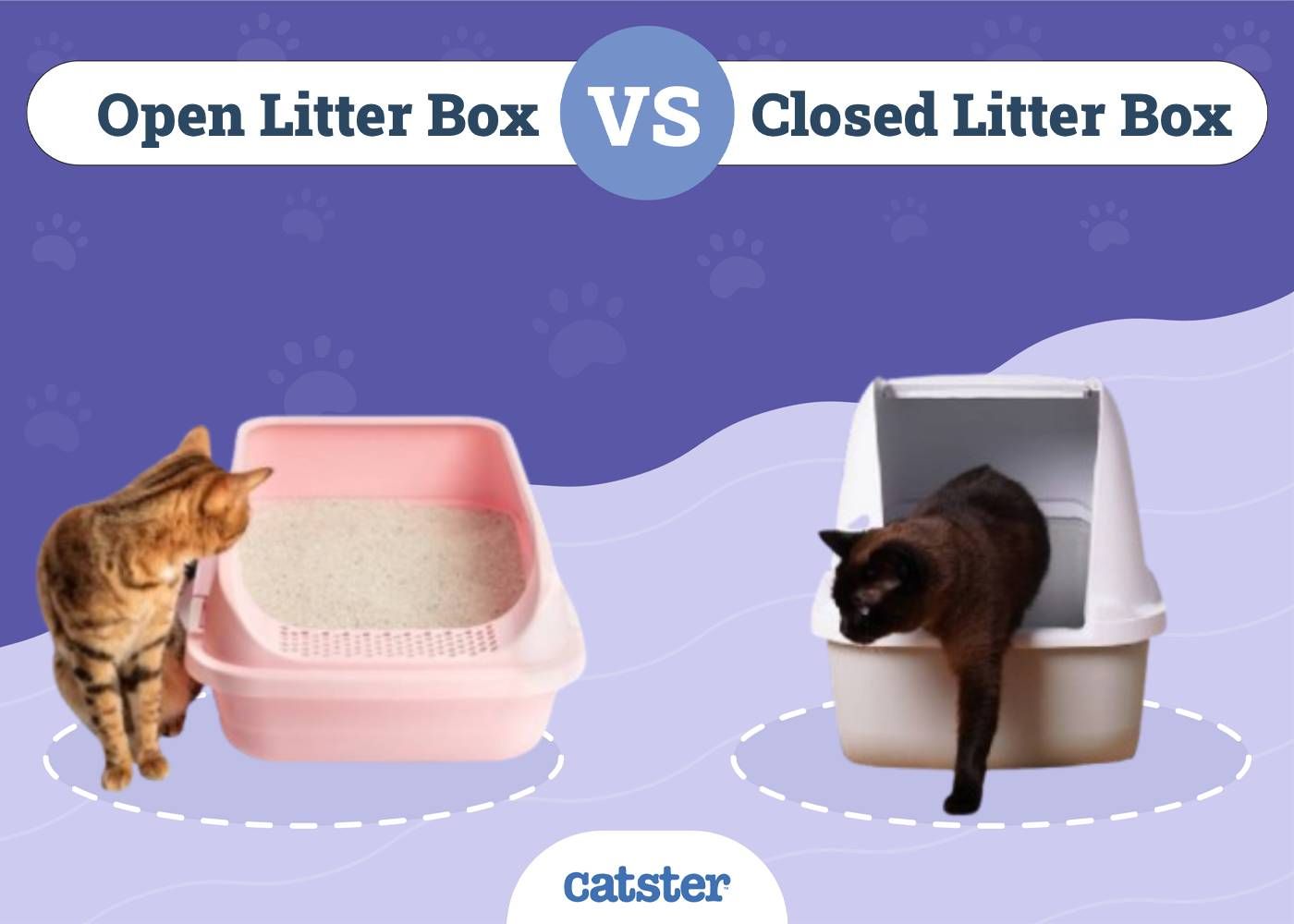
Open litter boxes are just what they sound like, boxes that have no cover in place.
It’s important to note at this point that though studies have been done with cats and open and closed litter boxes, it’s truly up to the cat as to which they prefer and the cat’s personality.
What You Need to Know
Advantages
Open litter boxes leave plenty of space for your cat to use the bathroom without them feeling closed in, allowing your cat to move around more freely inside the box. These types of boxes also are easier to deal with if your kitty covers up their waste in the right way.
These types of litter boxes also don’t retain moisture the way that closer litter boxes do, meaning you’ll have fewer clumps and smells to deal with.
Since there’s no lid, it’s not as restrictive for your cat. Some cats will use the bathroom outside of the litter box because they feel restricted when they’re inside. If you have an open litter box, this doesn’t happen.
Disadvantages
On the downside, open litter boxes are much messier than their closed counterparts, as there’s no lid to contain the litter when your cat starts scratching to cover his waste. It also circulates the smells through the air and into your home.
One of the biggest problems with open litter boxes, however, occurs if you have dogs. For some reason, dogs love to eat the waste out of cat litter boxes, and it’s easy for them to do if the open litter box is sitting there like a dinner invitation.
Pros
- Prevents dampness
- Allows cats to move around the box better
- Less restriction on the cat
Cons
- Messy
- Odors
- A dinner buffet for dogs
Combating tough cat litter smells is an ongoing battle for pet parents but luckily, there are products out there designed to help! Two products that significantly reduce odors are the Hepper Litter Additive and the Hepper Enzyme Spray.
| Image | Product | Details | |
|---|---|---|---|
|
Hepper Advanced Bio-Enzyme Pet Stain & Odor Eliminator Spray |
|
Check Price |

|
Advanced Bio-Enzyme Cat Litter Deodorizer |
|
Check Price |
At Catster, we’ve admired Hepper for many years and decided to take a controlling ownership interest so that we could benefit from the outstanding designs of this cool cat company!

Overview of Closed Litter Boxes:

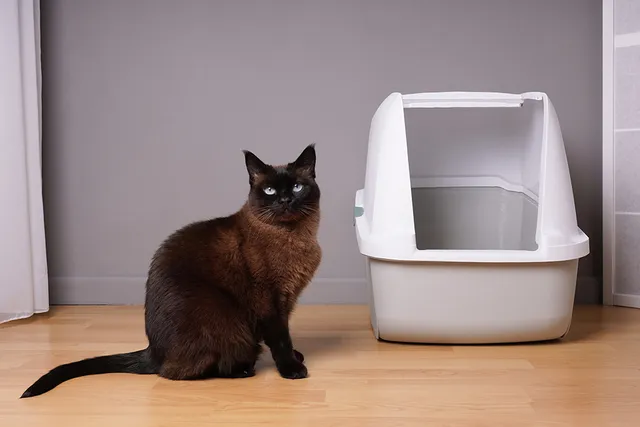
Closed litter boxes come with their own set of pros and cons, but again which you choose has a lot to do with your furry friend’s personality and what works for him. Below, we’ll go into a few of those pros and cons.
What You Need to Know
Advantages
Closed litter boxes certainly have their place, especially if you live in a small apartment and don’t want an open cat litter box staring you in the face everything you head to the bathroom or laundry room.
One of the significant advantages of closed litter boxes is the fact that they stop little children from sticking curious hands into the litter. Closed boxes also hide the smells and litter itself away from the noses and prying snouts of your dogs.
It’s also better for your décor, especially when living in cramped quarters because it hides the litter from sight, so you and your guests don’t have to see it when walking through your apartment or small home.
Most closed litter boxes have high walls that keep the urine inside the box instead of ending up all over your walls and the floor outside of the litter box.
Believe it or not, cats like their privacy just as much as people do, so a closed litter box will help them retain their modesty when they’re doing their business.
Disadvantages
There are also a few disadvantages of closed litter boxes. The biggest con is that the closed lid traps odors inside of the box, which can make it unbearable for your feline companion, which means he’ll end up looking for somewhere else to go.
It’s also possible to end up with a closed litter box that’s too restrictive and too small for a larger cat. If you’ve ever owned a closed litter box, then you already know cleaning it is harder than cleaning other styles.
Pros
- Prevents smells from entering the room
- Keeps dogs and children out of litter box
- Keeps waste hidden
- More privacy
Cons
- Traps smell inside
- Harder to clean
- Can be restrictive
- Has high back walls

How Many Litter Boxes Should You Have?
Believe it or not, even in a household with only one cat, one litter box is not enough. A general rule of thumb to follow is having one more litter box than you do cats in your home. So, for example, if you have two cats, you need three litter boxes and so forth. But, of course, that’s not always possible, especially if you live in an apartment, a small house, or have quite a few cats.
It has been noted that having too few litter boxes can result in cats relieving themselves all over your home.
How Big Should a Litter Box Be?
This is extremely important because who wants to go to the bathroom in super tight quarters? Make sure that the litter box you choose is big enough for your cat. There should be plenty of space for them to turn around comfortably and scratch without having to step outside of the litter box to do so.

How to Choose Between the Two Litter Boxes
There’s just no clear and firm answer to give when it comes to choosing between the two litter boxes. You have to try each of them and see which your cat prefers. They will certainly let you know what they choose, and as a pet parent, you know to listen.
Avoid Self-Cleaning Litter Boxes
As previously mentioned, there are now self-cleaning litter boxes that many pet parents are trying out. After all, who wouldn’t want a litter box that cleans itself? The thing is that while it may be more convenient and less icky for sure, self-cleaning litter boxes make noise, and cats can be scared by loud noises.
The last thing you want is your cat getting scared of the litter box and refusing to use it, especially after you’ve dropped quite a bit of money to purchase one.

Final Thoughts
This concludes our guide on open and closed litter boxes and which one your cat might prefer. Though there have been studies done, and some of them recommend one over the other, there’s no way to tell until your cat makes his choice. We all know that cats are independent and stubborn, so take your time, purchase one or the other, and then keep an eye on your cat to see how well he does. If he’s not taking to the first litter box, then it might be time to try the other option.
Featured Image: Africa Studio, Shutterstock/ Lightspruch, Shutterstock
Expert cat care, straight to your inbox
News, insights, and useful advice, delivered to you.

No spam — unsubscribe anytime.
By signing up, you agree to our Terms & Conditions and Privacy & Cookies Policy.
How useful was this post?
Click a star to rate. You can leave written feedback afterwards. (We read all feedback.)

Christian started writing for a local newspaper as a teenager, and he's been involved in the publishing industry for most of his adult life. Combining his love of writing with a passion for animals, he is currently the Director of Editorial at Pangolia and the Editor-in-Chief at Catster.
Christian lives in the Philippines with his wife, son, and four rescue cats: Trixie, Chloe, Sparky, and Chopper.