Leash Training Your Cat: 9 Easy Steps (With Pictures)

In this article
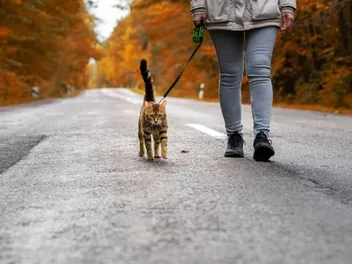
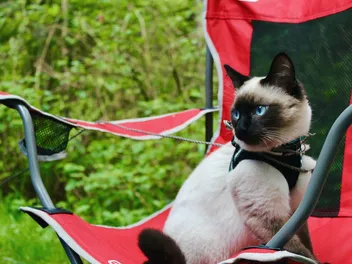
If you’ve been dreaming of taking your indoor cat on adventures outside, then the good news is that it’s totally possible to do so! From chilling out in the backyard on a summer’s day to going on a road trip with your kitty, there are plenty of adventures to be had.
But before you allow your cat to set their paws outside, you’ll need to make sure they’re properly leash trained. While leash training your cat isn’t exactly the same as leash training a dog, there’s still a process to follow. Start with the basics, and make sure your cat is comfortable before moving ahead to the next step.
With time and patience, you and your cat can look forward to enjoying everything that the great outdoors has to offer! We’ve written a complete guide to leash training your cat to help you get started!

Important Precautions
Before considering walking on a leash as a kind of exercise and adventure for your cat, think about whether this is actually appropriate and safe for them. Consider the environment: Is it safe? Noisy? Are there other loose cats or dogs? Is there a lot of traffic? Then, is this something your cat would enjoy, or would it scare and stress them? Is your cat usually withdrawn and nervous, or are they confident and inquisitive. At the end of the day, this needs to be a pleasant experience for your kitty, not one to cause them fear and anxiety.
Although your cat is unlikely to ever be out without their harness, accidents can still happen. It’s crucial they have a microchip and a collar with identification details on there, such as your name, address, and telephone number. This may be statutory in some states and countries. If your cat ever gets lost and picked up by the shelter or the vets, they will be able to reunite you based on this valuable info. Some owners may also use a GPS collar on their cats, for just-in-case scenarios.
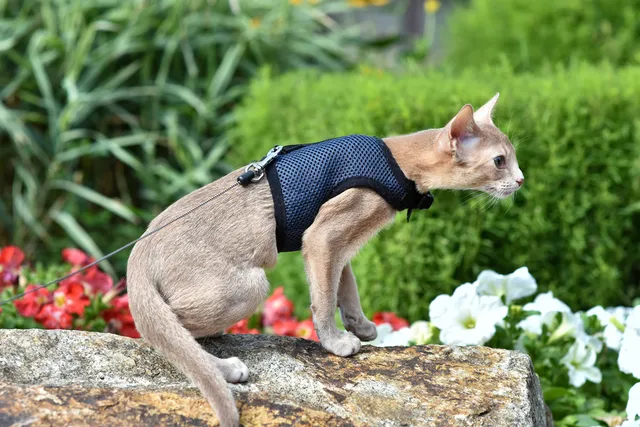
Appropriate leash and harness training is crucial, before setting your cat’s little paws outside for the first time. Too small or too big a harness can either be very uncomfortable for your kitty, or it may easily come off if you encounter another animal and your cat gets scared. Stick to quiet areas to allow your cat to build confidence.
The 9 Steps to Leash Train Your Cat
1. Introduce a Harness
Before you even think about putting a harness on your cat, you’ll need to get them comfortable with the idea of the harness itself. Once you’ve got a harness, start to train your cat to associate it with positive experiences, like food!
Hold the harness out for your cat to sniff, and as they do so, give them one of their favorite treats. Leave the harness near your cat’s food bowl as you feed them, and let it slowly become something familiar and safe. You could even try spraying catnip spray on the harness to encourage your cat to investigate it.
Strange noises can startle cats, so once your cat is comfortable around the harness, you can also start unclipping the buckles before clipping them back together or unfastening the Velcro. Clip the leash on and off as well. As your cat comes to see what you’re doing, give them a treat.

2. Place the Harness on Your Cat
Next, you want to start getting your cat used to the feel of the harness on their body without actually fastening it. With all the buckles undone, simply place the harness on your cat’s back. Only leave this on for a couple of seconds before again rewarding your cat with treats.
Repeat this stage as often as necessary for your cat to become comfortable. With some cats, this may be just a couple of sessions; others will need much longer. Allow your cat to dictate the timescale, as rushing them now will just cause issues when you try to complete the steps later.
If your cat is hesitant, place the harness on them gently just before feeding them a portion of their favorite food. This will distract them and reinforce the idea that the harness is associated with good things!
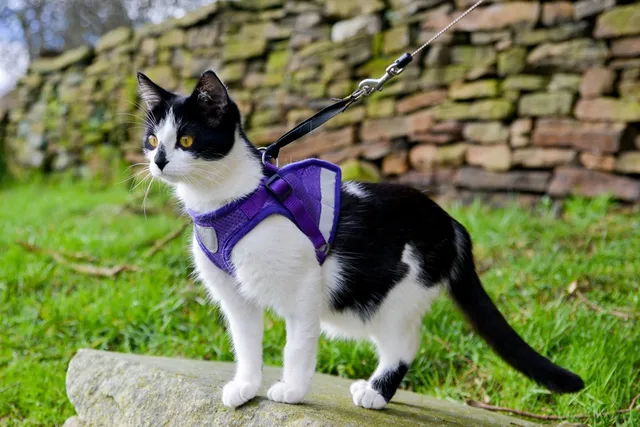
Are you looking for the perfect cat harness? We suggest Hepper's Cat Harness & Leash Set, which includes a nicely designed, machine-washable harness made from soft, sturdy velvet and mesh.
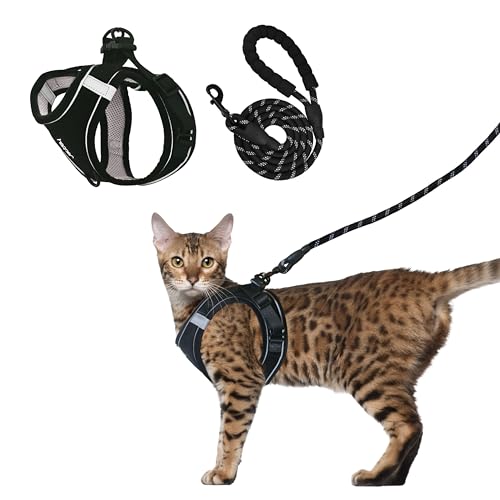
- Escape Proof - Cat leashes and harnesses for walking aren't all equally secure. Our double aluminium D-rings ensure strength when outside, as does the reinforced stitching on this step in vest.
- Superior Comfort - Our cat harnesses are lightweight, made with premium velvet fabric, breathable mesh, with soft edging and resilient cushioning. Also, it is machine washable. Looks and feels great!
- Free Extra Strength Leash - You don't need to worry about your cat escaping this harness. This cat leash is made of thick nylon climbing rope with rotating clamp to keep the strongest kitties at bay.
This harness is easy to put on and take off and features reinforced stitching, reflective stripes, and quick-release buckles. This set also includes a great leash made from durable nylon climbing rope.
At Catster, we’ve admired Hepper for many years and decided to take a controlling ownership interest so that we could benefit from the outstanding designs of this cool cat company!
3. Fasten the Harness Loosely Around Your Cat’s Neck
Once your cat is completely confident with the first two steps, it’s time to move on to fastening the harness. To start, you’re only going to fasten it very loosely. If your chosen harness has buckles around your cat’s belly, leave this undone and focus on getting them used to the sensation of the harness around their neck first. As most cats will have worn a collar at some point or other, they’re generally quicker to accept the harness around their neck than the feeling of it being tightened around their belly.
Keep giving your cat treats as they wear the harness around their neck and only leave it on for a short amount of time. Gradually start to tighten the harness by a centimeter or so at a time, until it fits snugly as per the manufacturer’s instructions. Most webbing harnesses should only be tight enough that you can fit one to two fingers between the harness and your cat’s neck.
4. Fasten the Belly Strap
Next, get your cat used to the feeling of having the belly strap fastened. Use the same process as with the neck strap, so start with the belly strap being very loose before you gradually tighten it. You’re aiming to tighten the harness so you can get one to two fingers between the harness and your cat.

5. Allow Your Cat to Spend Time With the Harness On
Now that your cat is accustomed to wearing the harness at the correct tightness, you want to get them used to moving around comfortably in it. Put your cat’s harness on just before they eat their meals and then take it off again as soon as they’re finished.
You’re aiming to gradually work up to leaving it on for up to 5 minutes. Watch how your cat reacts to wearing their harness, and only increase the time once they seem comfortable and confident. Many cats will initially react by freezing, lying down, or walking awkwardly. This is normal, but you want to make sure your cat is totally happy wearing the harness before you move on to the next step.
Don’t be tempted to leave the harness on if your cat is showing signs that they’re uncomfortable. This will just prolong the process, and they might start actively trying to avoid the harness.
As you slowly increase the time that your cat spends wearing their harness, you may need to encourage your cat to move around. Tempting them with a treat just out of their reach, playing with their favorite toy, or practicing their recall will all help accustom them to the sensations of moving around with their harness on.
Never leave your cat in their harness unattended, even for half a minute. It only takes seconds for them to get caught on something and panic, which will undo all your good work up to this point.
6. Attach a Leash
Once your cat is completely comfortable wearing their harness, it’s time to introduce the leash! Cats will reach this stage at different times, so one of your cats may be ready in days, while the others may take up to a month. Don’t rush the process, and trust that your cat will get there eventually!
How you approach this next step will depend on your cat and the type of area that you have where they can move around freely.
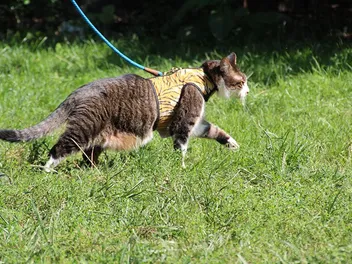
Option 1 is to attach the leash to your cat’s harness and let them get used to the sensation of the extra weight by allowing them to drag the leash behind them as they explore. This is only possible if you have a room where they won’t get the leash snagged on furniture. As your cat moves around, reward them with treats and encourage them to explore by calling them over and giving them more treats. They may take some time to get used to the leash being dragged behind them and touching their body in the process, as some cats may get startled by this.
Option 2 is better if you only have a small space to work in or your cat is nervous, and you think that they might be spooked by the sensation of the dragging leash. Instead, you can hold the leash loosely in your hand and follow your cat around wherever they’re going.
7. Teach Your Cat to Accept the Pressure From the Least
Once your cat is acclimated to the feeling of the leash, you can teach them to accept the feeling of pressure from the leash as you ask them to change direction. This is a really important step, so take your time. Some leashes have a bungee section that softens this pressure, which many cats prefer.
When your cat is wearing their harness and you’re holding the leash, choose a moment when your cat is a few feet away from you. Call them over to you with a treat, and as you do so, gently place a small amount of pressure on the leash.
Some cats react to pressure from the leash by pulling backward. They might even manage to wriggle out of their harness, which is definitely not something that you want to happen when you do go outside! Practice walking around the house with your cat, changing direction, and asking them to follow you as you do so. Again, treats come in handy here. You can watch this video to get more tips.

8. First Steps Outside
You’ll only want to start this step once your cat is completely comfortable and confident walking on their leash within your house. Your cat will likely be overstimulated for their first few trips outside, so keep these sessions short. Decide where you’ll take them before you head outside. A fenced backyard is ideal. If possible, you want to keep the first few trips fairly close to your door so your cat can go back inside if they’re feeling uncomfortable.
Don’t be tempted to open the door, and simply walk outside with your cat. This may indicate to them that it's okay for them to walk outside when they’re not harnessed, and then you could be looking at a lost cat situation. Once your cat is harnessed and leashed, pick them up and carry them outside before placing them down in the spot that you want to explore. Your cat may simply sit and look around, or they might start walking and sniffing things.
It’s good for them to know where home is in case they ever get lost, but also be mindful that the more curious the cat is, the more keen they may be to get out. Be careful not to give them an opportunity to try an escape before being ready with their harness on. Consider clicker training and bring plenty of tasty treats with you.
If your cat is timid or nervous, it’s a good idea to keep a thick towel or cat carrier close by for the first few trips outside. If they suddenly panic, you can wrap them in the towel or put them in the carrier and take them back inside without worrying about them slipping their harness and escaping.
9. Find Out What Your Cat Likes
As your cat starts to build their confidence outside, you’ll get a much better idea about what they enjoy doing. Some adventurous cats will love the opportunity to accompany their owners for a walk, while others would rather stretch out in a sunny spot for a snooze.
Let your cat decide what they’d prefer to do, rather than trying to persuade them to do something that they’re not enjoying. As cat owners, we know that rarely works in any case!
Now that your cat is comfortable and confident walking on a leash, check out these tips for making walks even more enjoyable.
Tips for Successful Walks with Your Cat
1. Always Carry Your Cat Outside
As your cat’s confidence in walking on a leash grows, you may be tempted to put their harness on and allow them to walk outside. This is not always a great idea because it increases the chances of your cat dashing out the door when you’re not expecting it. Make it a habit to always pick up your cat before you go outside.
2. Never Leave Your Harness Cat Out on Their Own
It might seem tempting to put your cat’s leash under a table leg and go back inside to grab something, but you should never leave your cat unattended when they’re on a leash. It will only take seconds for them to get tangled in something, spooked, or panicked. Cats are impressively flexible, so they might slip out of their harness and run off. Another danger if you live somewhere with wildlife like coyotes or wild cats is that your cat could be in danger and unable to escape.
Using an outdoor cat enclosure is a better option if you want to give your cat time outside but also keep them safe.

3. Start a Routine
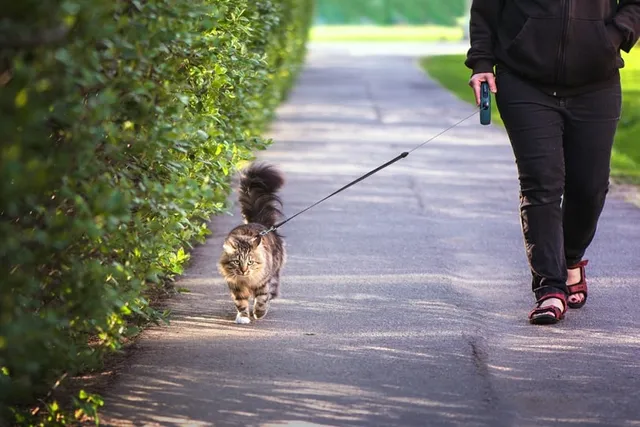
Just like cats know when to expect their breakfast (and will loudly let you know if it’s even a little late!), you can also integrate walks into their routine. If you start saying a particular phrase as you get ready to take them for a walk, your cat will likely start to associate that with the fun of getting to explore outside.
If you would need some more pointers or advice on training your cat, calling a vet is a great option.
Conclusion
Taking your cat for a walk can be a rewarding experience for both of you. Whether you’ve been dreaming of going for a hike with your cat or simply soaking up the sun in the backyard, most cats love the opportunity to spend time outside.
Leash training your cat isn’t a fast process, and you’ll have to be prepared to go at the speed that your cat wants to. But once you do it, the rewards for both of you will be worth it!
Featured Image Credit: Nau Nau, Shutterstock
Expert cat care, straight to your inbox
News, insights, and useful advice, delivered to you.

No spam — unsubscribe anytime.
By signing up, you agree to our Terms & Conditions and Privacy & Cookies Policy.
How useful was this post?
Click a star to rate. You can leave written feedback afterwards. (We read all feedback.)

Emma is a freelance writer, specializing in writing about pets, outdoor pursuits, and the environment. Originally from the UK, she has lived in Costa Rica and New Zealand before moving to a smallholding in Spain with her husband, their 4-year-old daughter, and their dogs, cats, horses, and poultry. When she's not writing, Emma can be found taking her dogs for walks in the rolling fields around their home...and usually, at least some of the cats come along, too! Emma is passionate about rescuing animals and providing them with a new life after being abandoned or abused. As well as their own four rescue dogs, she also fosters dogs for re-homing, providing them with love and training while searching for their forever homes.