3-Month-Old Kitten: What to Expect (Vet Approved)


In this article
Like children, baby cats go through specific stages of growth and development during their first year of life. As a pet parent, it’s important that you know what to look for as your kitten grows so you can best support their physical and mental health. In this article, you’ll learn what to expect from a 3-month-old kitten.
We’ll cover the nutrition, average size, socialization, training, behavior, and medical information to be aware of at this age.

What to Expect from a 3-Month-Old Kitten
Size
On average, kittens gain about 1 pound per month of life, so, you can expect a 3-month-old kitten to weigh about 3 pounds. Of course, their size may vary based on breed and early nutrition, but it gives you a bit of a basis of what to expect.
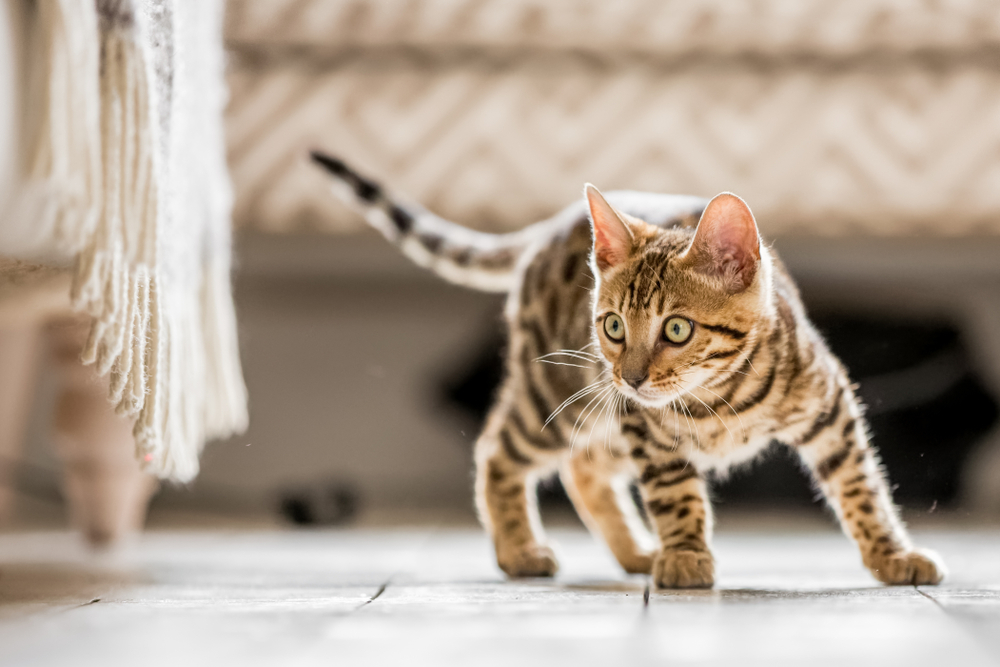
At this age, kittens have developed adult coat and eye color. They are usually more coordinated and athletic and have a better sense of balance than younger kittens.
They will have all their sharp little kitten teeth, but from 3-4 months old will start to lose these as their adult teeth begin to erupt.

Nutrition
At 3 months old, kittens should still be eating three to four times a day to maintain their energy and fuel proper growth. It’s best to feed them a diet formulated for kittens. Adult cat food doesn’t contain the protein or nutrients necessary for kitten growth and development.
Kittens can be free-fed or offered meals at specific times, but routine feeding is usually the best option for adult cats, so it’s worth getting them used to having food put down at certain times. A vet can help you choose the best brand of cat food for your kitten and devise a proper feeding schedule.
Even if you plan for your adult cat to eat dry kibble, try to include wet food in your 3-month-old kitten’s diet to ensure they are staying hydrated. Also, as adults, cats often need to eat wet food if they’re sick, to gain weight, or to take medications. If they’ve only eaten dry food before, getting them to accept the unfamiliar texture may be hard.
Exercise
Three-month-old kittens have a LOT of energy that needs to be channeled appropriately. Provide a variety of toys, scratching posts, and cat trees for them to play with. Even with opportunities for self-guided play, you’ll want to engage your kitten in one-on-one play and exercise sessions at least once a day.
Kittens need lots of playtime and enrichment, so why not help them get active with some of our favorite cat products to make playtime great? The innovative Hepper Hi-Lo Modern Cat Scratcher is a surefire way to keep your kitty out of trouble (or at least away from scratching the things they should not!). It's not only stylish, but it's functional as well, offering a 3-position design that provides cats with a variety of levels to play on, fulfilling their instinctual need to scratch. Then the Hepper Catnip Mice Toy Set is super fun, made with natural, bite-resistant hessian fabric and filled with organic catnip so cats can satisfy their natural prey instincts while getting the physical activity they need to thrive.
| Image | Product | Details | |
|---|---|---|---|

|
Hepper Hi-Lo Cat Scratcher |
|
Check Price |

|
Hepper Catnip Mice Toy Set |
|
Check Price |
At Catster, we've admired Hepper for many years, and decided to take a controlling ownership interest so that we could benefit from the outstanding designs of this cool cat company!
These play sessions provide an opportunity for you to bond with your kitten, especially if they haven’t lived with you for long. They also help ensure your kitten gets enough exercise each day. If your kitten keeps you up at night, increase their daily exercise to tire them out.
Make sure your house is kitten-proof, especially wires or any items your pet may try to chew. Kittens will soon begin teething if they haven’t already and will have the urge to chew.
Do not engage in rough play with your kitten, or allow them to grab, bite or scratch you. It might seem cute at this age, but it won’t be cute when they get older.

Socialization
Generally, 3-month-old kittens will already have been living with you for 2-4 weeks, possibly more. The vital socialization period for kittens is 2 to 7 weeks when they’re usually still living with their mother and littermates. Kittens who don’t receive human interaction during that period may be fearful and shy when they get older.
Some breeders or shelters keep kittens with their litter later, until they’re 10–12 weeks old. If your kitten doesn’t come home until they’re 3 months old, they’ll still need socialization, especially if you have kids and other pets at home.
Give your kitten the opportunity to interact positively with as many people and animals as you can. Take them for rides in the car and allow them to get used to their carrier. When you go to the vet, take plenty of treats to ease their anxiety.
Your 3-month-old kitten is still impressionable, and lessons learned at this age tend to be remembered.
Ideally, we recommend having two kittens together - in fact, most animal shelters will not allow you to only adopt a single kitten. They don’t necessarily need to be from the same litter or the exact same age, but raising a pair of kittens avoids “single kitten syndrome”. Although not a scientifically proven condition, this is where a kitten who doesn’t have a similarly aged friend to play with, wrestle with etc doesn’t learn to curb their playful aggression, nor do they have an outlet for their “crazy kitten energy”. Having two kittens together allows them to tire each other out, and through play fighting, they learn how rough is too rough.
Training
Kittens should already be litter-trained by the time they reach 3 months old. However, you can introduce other types of training at this age. For example, you can start harness and leash training if you plan to take your kitty outside.
You can also start teaching simple commands, such as how to come when called. Focus on teaching your kitten routines and appropriate behavior, too, such as using a scratching post instead of your couch.
Kittens are usually food-motivated at this age, but will have a pretty short attention span. Keep lessons short and positive for the best results.

Grooming
It’s best to introduce a grooming routine as early as you can. Three-month-old kittens can receive nail trims and short brushing sessions. If your kitten has long hair, it’s especially vital that they tolerate brushing as adults.
If your kitten is new to the family at 3 months old, make your first grooming sessions short and positive. Work slowly and give your kitten lots of treats and praise. Don’t force your kitten to accept grooming, or you may create a negative association that will linger into adulthood.
Get them used to having their mouths opened, ears examined, and feet touched. This will make life easier for you (and your vet) later in life.
Health Care
Depending on when your kitten received their first preventative vaccine, they may need their second one at 3 months old. Generally, kittens receive shots every 3-4 weeks until the first series is complete. Talk to your vet about which vaccines your kitten needs based on their exposure to different diseases.
Three-month-old kittens should also receive deworming or fecal checks as recommended by your veterinarian. Your vet can also monitor your kitten’s weight and offer tips on nutrition and behavior issues, as well as answer any questions you have.
By 3 months, all kittens should be old enough for monthly parasite prevention. Your vet can help you choose medication that prevents parasites like fleas, ticks, ear mites, intestinal worms, and heartworm.
At this age, you should start talking to your vet about when to spay or neuter your kitten. Cats can reach sexual maturity as early as 4 months old. Your vet can answer your questions about the procedure and recommend the appropriate time frame.

Conclusion
At 3 months old, kittens transition into adulthood in many ways. They’re more mature than they were but are still learning how to be cats. They can be destructive, energetic, and headstrong too.
No matter how cute they are, remember that bad habits learned at 3 months will be hard to unlearn for adult cats. Be consistent with routines, but be patient with your kitten as they keep learning.
Check out these life stages too:
Sources
Featured Image Credit: Nils Jacobi, Shutterstock

Expert cat care, straight to your inbox
Vet-reviewed advice, behavior tips, and the best of Catster. Free, and you can unsubscribe anytime.
By signing up, you agree to our Terms & Conditions and Privacy & Cookies Policy.
Elizabeth Gray is a lifelong lover of all creatures great and small. She got her first cat at 5 years old and at 14, she started working for her local veterinarian. Elizabeth spent more than 20 years working as a veterinary nurse before stepping away to become a stay-at-home mom to her daughter. Now, she is excited to share her hard-earned knowledge (literally--she has scars) with our readers. Elizabeth lives in Iowa with her family, including her two fur kids, Linnard, a husky mix and Algernon, the worldʻs most patient cat. When not writing, she enjoys reading, watching all sports, and spending time outdoors with her family.
Join the conversation
Ask a question, share your story, or send private feedback.