Get

In Your Inbox

Catster is reader-supported. When you buy via links on our site, we may earn an affiliate commission at no cost to you. Learn more.

How to Stop Older Cats From Eating Kitten Food: 6 Vet Approved Tips

Share

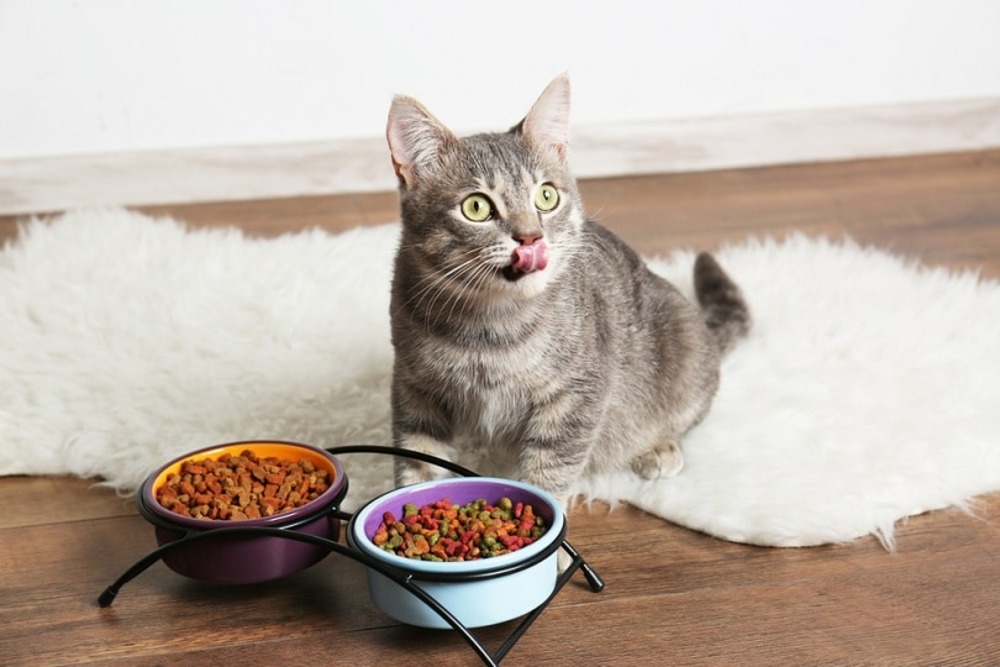
Cute cat eating on floor at home

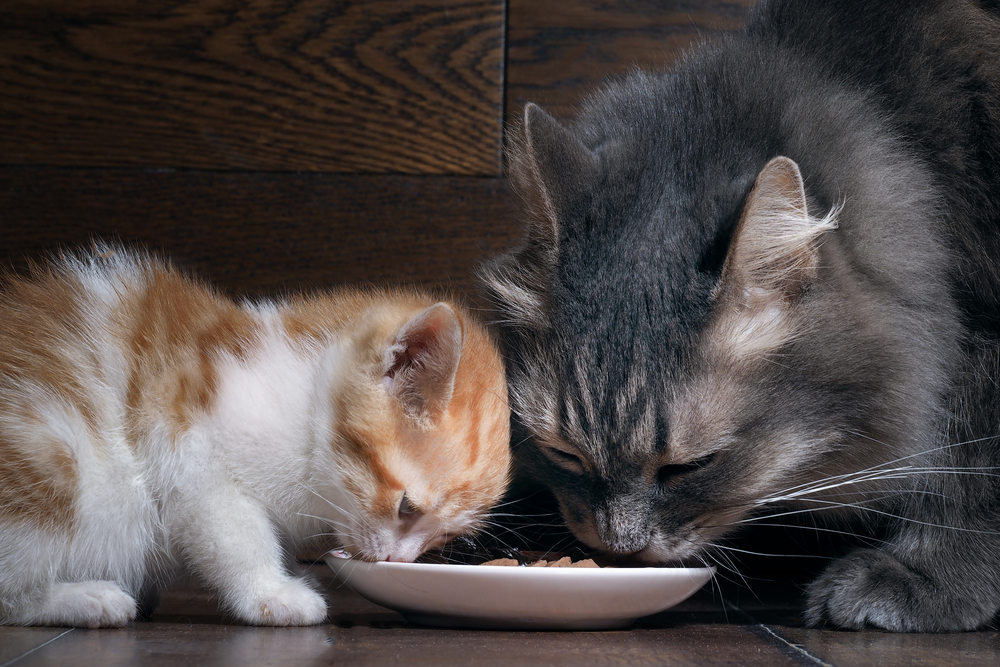
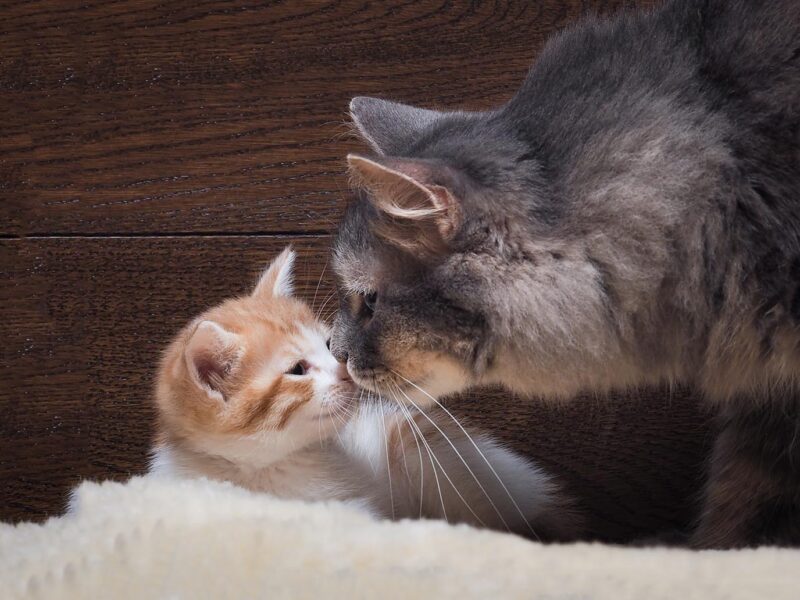
It’s common for older cats in your home to react unpredictably to a new kitten, like an older sibling adjusting to a baby in the house. Unfortunately, it sometimes comes with problems, like your older cat trying to steal the protein and fat-rich kitten food. Sometimes they just like the taste, crave extra nutrients, or even may be asserting dominance over the new little feline in the house.

Either way, it can become a big problem when your older cat literally won’t leave the poor kitten’s food alone. Read on for some ways you can fix the situation and help both cats get into a healthy feeding routine.

divider cat faces oct 2024

Top 6 Tips to Stop Older Cats from Eating Kitten Food

1. Understanding Why Your Older Cat Eats Your Kitten’s Food

Older cats have different nutritional requirements than kittens. Broadly speaking, kittens need more nutrient-dense food to fuel their muscles, eyes, and other major organs that are rapidly developing. Mature cats don’t need as many of these essential nutrients and do best on a maintenance diet with similar proportions but lower total amounts of these nutrients. When your older cat eats kitten food, it can throw their body out of balance and cause issues such as obesity, which can lead to secondary issues such as arthritis.

As mentioned above, there are a few major reasons why your adult cat might be scarfing down your new kitten’s food. Let’s highlight each in a quick list right below so you can understand your cat’s motivation better.

Possible Reasons for Stealing Kitten Food:
  • Nutritional deficiency: Cats lacking essential nutrients like protein, fat, taurine, or vitamins may be drawn to your kitten’s nutrient-loaded food, and you should consult a vet for more info.
  • Dominance: Most common when food is limited, an older cat might display dominance over the new kitten by eating their food and “guarding” essentials, like the litter box.
  • Preference: It’s possible your older cat simply discovered the tasty joys of kitten food and there’s no serious underlying problem.
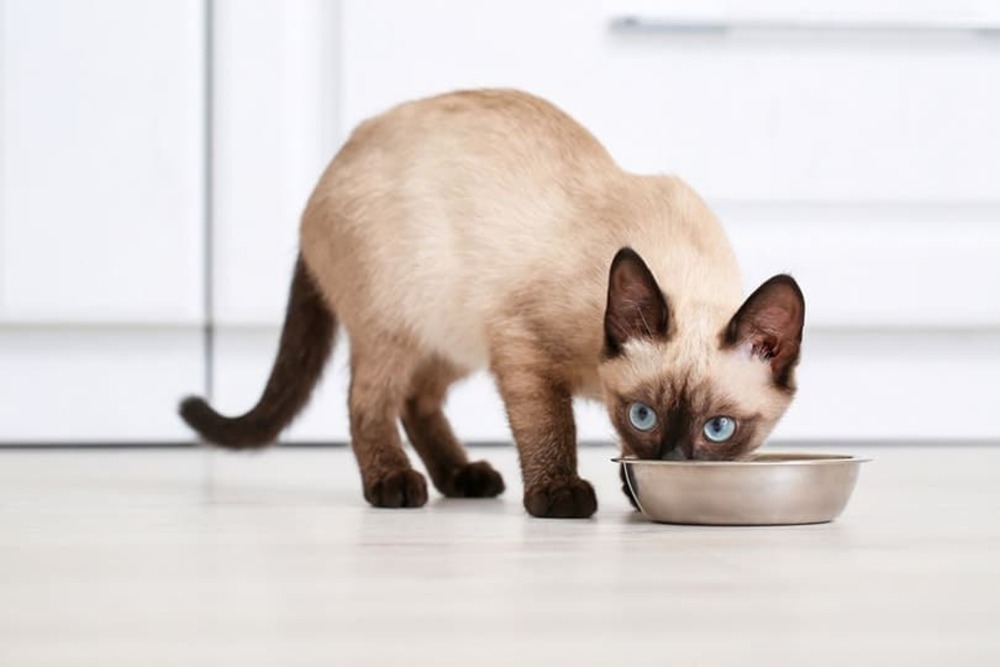
siamese cat eating food from bowl at home
Image Credit: Pixel Shot, Shutterstock

2. Separate Feeding Areas

The most effective way to solve this problem is to fully separate your older cat from your kitten during feeding times—no access, no problem. This can be done through a few methods, depending on your home’s layout and how far you’re willing to go. Let’s check out some specific ways you can go about this just below.

Tips for Feeding Cats in Separate Areas:
  • Try putting each cat’s food and water bowls on separate ends of the room. You’d be surprised how often that works to solve the problem!
  • Use baby gates to fence off separate feeding areas.
  • Cut a flap into a box that’s just small enough for your kitten but not your older cat and use it as a feeding station.
  • Feed your cats in completely separate rooms. This is pretty radical and won’t solve your problem long-term but works as a short-term fix.

3. Maintain a Strict Feeding Schedule

Over time, it may be worth concocting a feeding schedule where your kitten and older cat eat at completely separate times of the day. This way, your older cat will be full when your kitten eats instead of both kitties being hungry at the same time. Both kitties being hungry at the same time greatly increases the chances of kitten food poaching, so let’s fix that with a more regimented feeding schedule.

You should already be feeding your kitten smaller meals more frequently than the older cat, but stagger their mealtimes apart. For example, feed your kitten their meals an hour before or after your older cat. This can take some fine-tuning as you figure out a whole schedule and as your cats acclimate to the new feeding routine, but in the long run, it’s a great way to remedy your issue and promote feline harmony.

Man holding bowl with feeding for his hungry domestic cat
Image Credit: Jaromir Chalabala, Shutterstock

4. Try Automatic Microchip Feeders

A more high-tech method to stop food stealing is to invest in microchip pet feeders. These miracles of modern tech only dispense food (dry or wet) when a certain pet’s microchip or RFID collar tag is detected. This way, each pet has their own dispenser with the appropriate type of food. It doesn’t fully prevent your older cat from pushing your kitten out of the way once the food comes out of the feeder, but it certainly cuts down on the chances of that happening.


5. Engage Your Older Cat With Puzzle Feeders

Another possibility is that your older cat is feeling a little unsatisfied with their dining experience. To help engage their mind and keep them mentally occupied during mealtime, you can try using puzzle feeders. There are many different types, from maze-shaped bowls that promote slower eating to mouse-shaped pouches you hide around the house with kibble inside. Try mixing and matching them to keep your cat’s interest and, hopefully, prevent them from stealing the kitten’s food.

cat playing with an interactive puzzle toy
Image Credit: Maximilian100, Shutterstock

6. Consult a Vet

It’s possible that your older cat is suffering from a nutritional deficiency that makes them crave the nutrient-packed kitten food. If their stealing persists, the culprit could be a serious medical condition that needs to be addressed sooner rather than later. We suggest visiting a vet, who can run tests to see if your older cat is deficient in any major nutrients, thus making them crave the kitten food.

If you need to speak with a vet but can't get to one, head over to PangoVet. It's an online service where you can talk to a vet online and get the advice you need for your pet — all at an affordable price!

PangoVet_Mention-in-Content for PangoVet2 save money

divider cat faces oct 2024

Conclusion

It’s always concerning when your adult cat is constantly trying to steal your kitten’s food, but it’s far from an insurmountable problem. The most accessible ways to do this are to separate your feeding areas or use a microchip feeder, but many other solutions also exist.


Featured Image Credit: Africa Studio, Shutterstock

Want content like this delivered to you?

Sign Up For Our Newsletter

News, insights, expert advice, and everything cat

* By submitting, you agree to our Terms & Conditions and Privacy & Cookies Policy.


How useful was this post?

Click on a star to rate (you can leave written feedback after clicking submit)

Help us improve Catster for pet parents!

Your feedback really matters.

What did you like about this post? Also how can we improve it?

Join the conversation

Leave a Reply

You’re very welcome to leave a comment or question. Please know that all comments must meet our community guidelines, and your email address will NOT be published. Let’s have a positive and constructive conversation.


Talk With A Vet Online

Peace of mind,
anywhere, anytime

Affordable vet advice

Why Healthy Cats Still Vomit Sometimes (And How to Respond)

A cat that just vomited needs a specific kind of care, and the feeding decisions you make in the next few hours actually...

Scientists May Have Found the Missing Piece in Feline Kidney Disease

One of the most upsetting parts of caring for an elderly cat is the knowledge that there is a very high chance that...

Ask Dr. Paola – Help! I Am Worried My Cat Isn’t Getting Enough Water! (April 6, 2026)

Welcome to our “Ask Dr. Paola” series, where every Monday we bring expert advice straight from Dr. Paola Cuevas (MVZ) to help our...

The 10 Common Causes of Sudden Death in Cats (And Which Ones Are Preventable)

Most cat owners don’t think much about heart disease, internal hemorrhage, or viral infections until they’re staring at an empty bed. Sudden death...

More related

Best Way to Feed a Cat: Times, Amounts & Frequencies Explained

Many cats are more than happy to make it known when they want to be fed, but they may not know when and...

Can Cats Eat Coconut? Vet-Reviewed Health Benefits & Risks

Coconut has made a name for itself in the last few decades as a health food, thanks to the nutrient density of everything...

Safe & Effective Cat Shampoo Alternatives: 8 Vet Approved Options

Most cats are good at keeping themselves clean, but sometimes, your furry friend might need a little help, especially if they’ve investigated something...

Will Sibling Cats Mate? Vet-Reviewed Ethical Issues & Prevention Tips

Cats are one of the most popular pets around the world. With their cute and cuddly personalities, it is no wonder why people...

Keep reading

How Long Do Bombay Cats Live? Vet-Verified Facts & Data

The medium-sized and short-haired Bombay cat has an intriguing personality and striking appearance, which makes it an excellent companion for any pet parent. For such a human attention-craving kitty, you’ll want to give your furry friend all the loving care...

Bombay Cat

Can Cats Eat Slim Jims? Vet-Approved Nutritional Science & Alternatives

Because your cat is a carnivore, you might be wondering if your furry friend can eat Slim Jims. Although Slim Jims are likely not toxic to cats, they aren’t good treats because they are filled with preservatives and ingredients that...

Catster_Can Cats Eat Slim Jims_v1_Dec 4 2024

12 Vet-Approved Ways to Calm a Cat Down at Night

We all love our cats, but if they’re suddenly full of energy as soon as the sun goes down and you’re trying to get to sleep, it can be a little frustrating. Cats are naturally more active at night time,...

cat sleeping in the dark

Zumalka Pet Supplement Review 2026: A Detailed Look

Seeing your beloved pet struggle with illness is never easy, no matter how minor or severe the issue is. Often, we as pet parents are left to watch our pets suffer without an option to intervene. That’s exactly the type...

Catster_SAPR Zumalka Pet Product Supplement Review

Can Fleas Kill a Cat? Vet-Approved Facts & Safety Guide

Fleas are an annoying part of cat ownership. Unfortunately, your cat will likely get at least one flea infestation at some point during their life. Keeping on top of regular flea treatments should protect your kitty from harm even if...

Cat with fleas

How to Cat-Proof Wires: 9 Vet-Approved Solutions

Unfortunately, “curiosity killed the cat” can be an apt saying when it comes to electric wires and cats. They are known for their constant inquisitiveness and love for exploring every nook and cranny. Some cats are also mouthy and tend...

man-is-insulating-a-black-electrical-wire

Are Cast Iron Plants Toxic To Cats? Vet-Reviewed Houseplants Examined

If you have a green thumb and a cat obsession, you know that your two great loves don’t always coexist seamlessly. Not all flowers and plants are safe for cats, so caution is required any time you add to your...

Catster_Are Cast Iron Plants Toxic to Cats

Are Indoor Cats Happy & Fulfilled? Vet-Verified Facts & FAQ

Many cat owners wonder about the happiness and well-being of their cats when it comes to keeping them indoors. On one hand, there’s the idea that a cat should be free to roam outside; on the other hand, some argue...

white Maine Coon cat at home

Love Cats? So Do We! Join the Catster Community

Stay informed with expert pet care insights delivered straight to your inbox! Discover professional guidance on animal behavior, feeding tips, trusted product picks, and much more.


Sign up for the Catster Email Newsletter

Stay informed with expert pet care insights delivered straight to your inbox! Discover professional guidance on animal behavior, feeding tips, trusted product picks, and much more.