Get

In Your Inbox

Catster is reader-supported. When you buy via links on our site, we may earn an affiliate commission at no cost to you. Learn more.

How to Evacuate With Cats: 7 Vet-Approved Tips on Preparing for Disaster

Share

a-woman-hugging-her-cat_U

While we don’t want to think about disasters, it’s important for cat owners to set up an evacuation plan just in case. Knowing how to safely evacuate with your cats during an emergency situation can be lifesaving, and also prevent them from getting lost.

If you haven’t created an evacuation plan for your cat yet, make sure to set aside some time to develop a plan to help you and your cats get to safety as quickly as possible. Here’s how you can create an evacuation plan and prepare for disasters and emergencies.

divider cat faces oct 2024

Plan Ahead

Being prepared will help immensely with executing your evacuation plan during a disaster. It’s important to develop a plan and prepare supplies beforehand so that you know what to do and what to bring with you in the midst of an intense situation.

It’s also important to ensure that your cat has the proper identification in case they get lost during a disaster. It’s helpful to have them get used to wearing a collar with an ID tag. However, a more secure way to help identify your cat is to get them microchipped, as a collar can slip off your cat. If your cat is already microchipped, make sure that the contact information associated with the microchip is up to date.

The 7 Tips For Evacuating With Cats During A Disaster

1. Select an Evacuation Cat Carrier

In the ideal scenario during an evacuation, you’ll have located your cat and placed them inside a carrier. A carrier will keep your cat secure and by your side at all times as you navigate an evacuation.

Start training your cat to get used to being inside their carrier. You can try serving their meals inside this carrier and hiding treats inside them. Place cozy blankets inside the carrier and leave the door open to encourage your cat to rest or nap inside. Some cats can even be trained to get into their carrier on command.

If you have multiple cats, consider getting a larger carrier that can fit two cats. It’ll be much easier to keep track of one carrier than having to carry multiple while you’re evacuating. Make sure to keep your evacuation carriers in the same spot so that you can quickly access them at a moment’s notice.

cat-inside-a-cat-carrier-box
Image Credit: kmsh_Shutterstock

2. Pack an Emergency Pet Supply Bag

Keep an emergency supply bag that contains all your cat’s essentials. Here are some items that should go inside this bag:

  • A few days’ supply of cat food
  • Medication or supplements
  • Food and water bowls
  • A bottle filled with water
  • Photos of your cat
  • Your cat’s medical records
  • A travel litter box and a small bag of litter

Having a copy of your cat’s medical records will come in handy when you look for pet hotels that can temporarily house your cat. Pet hotels and boarding facilities require proof of vaccination for any pets that use their services, so it’s worth keeping their vaccination records with their carrier, but make sure they’re protected in a plastic sleeve or similar document holder.


3. Post Signs and Stickers Indicating You Have Cats

Consider placing signs or stickers on your doors that indicate that you have pets in your home. This can help firefighters and other emergency responders to be on the lookout for pets if they enter your home.

Long-haired-Persian-cat-in-a-cat-carrier
Image By: Creative Cat Studio_Shutterstock

4. Print Pictures of Your Cat

It’s important to print photos of your cat in case they get lost during an evacuation. Make sure to choose photos with clear images and avoid using blurry or black-and-white pictures. Type your cat’s name and a brief description of your cat. Include an email address that people can use to contact you if they find your cat.


5. Make Note of Your Cat’s Favorite Hiding Spaces

Cats are creatures of habit and will usually hide in the same spaces when they’re feeling scared. Make sure to familiarize yourself with these locations, as it is most likely that your cat will run to these places during a disaster.

cat-walking-out-the-carrier-in-the-car
Image Credit: Oleg-Batrak_Shutterstock

6. Practice Your Evacuation Plan

One of the best ways to prepare for a disaster is to practice your evacuation plan a few times. Make sure to involve any family members or roommates when you practice so that everyone knows their responsibilities. If you have multiple cats, you can assign cats to specific people in your family so that all your cats are accounted for during an evacuation.


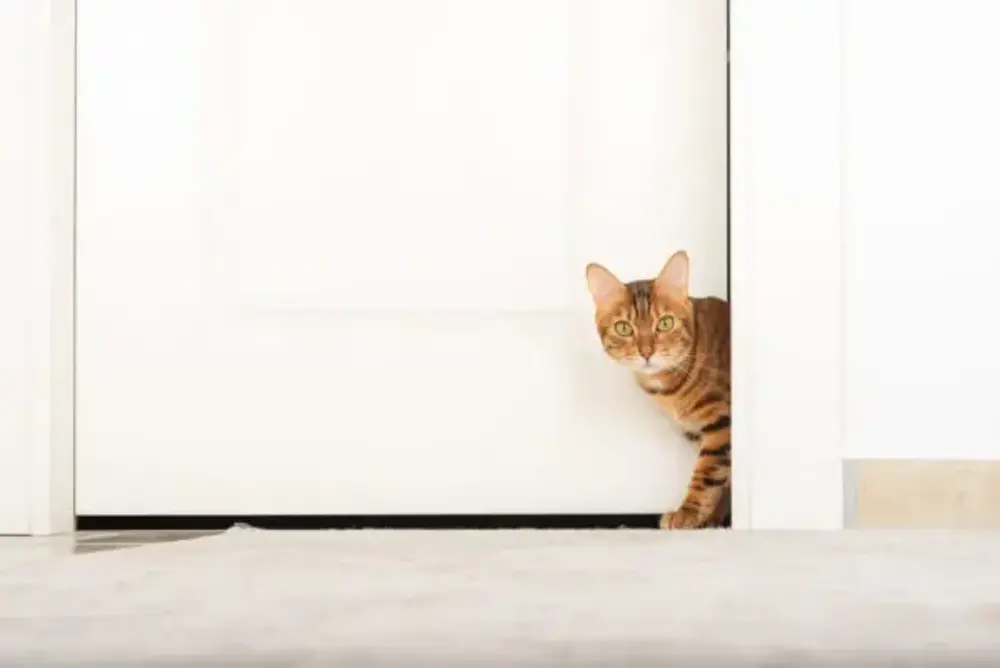
7. Leave Your Doors and Windows Open

In the unfortunate case that you cannot locate your cats, make sure to leave your doors and windows open on your way out. This will increase the chances of your cat escaping your home during an emergency.

Once you’ve settled in a safe space, make sure to contact your local animal shelters and rescue agencies to let them know that your cat is missing.

cat-walking-through-the-door
Image Credit: Svetlana Rey, Shutterstock

divider 1 paws

Conclusion

Some of the key things to consider when developing an evacuation plan for your cats are to have an evacuation cat carrier and an emergency pet supply kit that’s packed and ready to go.  Make sure to take note of your cat’s usual hiding spaces so that you can locate them quickly during an emergency situation. Lastly, practice your evacuation plan until you’ve fully memorized it.

Being prepared can help immensely with securing your cat and getting them to safety during an emergency. Even though it may be difficult to think about, an evacuation plan can save their lives. So, make sure that you have a detailed plan set in place, and hopefully, you’ll never need to use it.

See also: 


Featured Image Credit: U Photo, Shutterstock

Want content like this delivered to you?

Sign Up For Our Newsletter

News, insights, expert advice, and everything cat

* By submitting, you agree to our Terms & Conditions and Privacy & Cookies Policy.


How useful was this post?

Click on a star to rate (you can leave written feedback after clicking submit)

Help us improve Catster for pet parents!

Your feedback really matters.

What did you like about this post? Also how can we improve it?

Join the conversation

Leave a Reply

You’re very welcome to leave a comment or question. Please know that all comments must meet our community guidelines, and your email address will NOT be published. Let’s have a positive and constructive conversation.


Talk With A Vet Online

Peace of mind,
anywhere, anytime

Affordable vet advice

What a CATastrophe! A Tire-ing Ordeal For a Pony in the UK

As you would expect, our weekly news updates are usually centered around feline topics – we are a cat care website after all...

Ask Dr. Paola – Help! My Cat Has Stopped Eat His Wet Food! (June 1, 2026)

Welcome to our “Ask Dr. Paola” series, where every Monday we bring expert advice straight from Dr. Paola Cuevas (MVZ) to help our...

Chatting About Fake News in the Pet World, AI Again, and New Age Journalism | Chatty Cattys, Episode 23

Navigating the modern digital landscape requires a sharp eye to distinguish fact from fiction. In this episode of Catster’s podcast, Chatty Cattys, Nicole...

The Surprisingly Sweet Reason Behind Cats Chewing Human Hair (and Others)

Cats have a talent for turning the ordinary into something slightly bizarre. One minute, there’s a peaceful evening on the couch, and the...

More related

Inbred Cats: Vet-Verified Signs, Ethics, Problems & FAQ

Inbreeding has been, historically, a common practice in domesticated animals. Breeders have made a point of breeding closely related animals in order to...

Cat Ear Mites vs Earwax: Vet-Reviewed Ways to Tell the Difference

Earwax is entirely normal. Ear mites, on the other hand—not so much. If your cat has ear mites, they will require veterinary care....

4 Free DIY Cat Couch Protector Ideas You Can Create at Home

Cats are notorious for digging their claws into anything they can. This seems especially true when it comes to your couch. For years,...

Are Jute Rope Scratching Posts Safe for Cats? (Common Materials Explained)

Being a cat owner means stocking up on all kinds of scratching posts, especially if you don’t want your furniture clawed up! Whether...

Keep reading

Why Are My Cat’s Ears Hot? Vet-Reviewed Facts & FAQ

You may find yourself petting your beloved kitty, only to feel that their ears are abnormally hot. This can be worrying, especially if it’s something that you’ve never noticed before. Is it normal for your cat’s ears to be hot?...

cat ear close up

Petting Aggression: Why Cats Bite the Hand They Love & What to Do (Vet-Approved)

You’re sitting there ever-so-innocently petting your beloved feline, and—ouch! That really hurt! Your cat has turned to bite you. Some will flop on their bellies, grab your hand, and kick; others will sound disgruntled as if it were a warning...

aggressive cat biting human hand

Do Cats Get Jealous of Dogs? Feline Emotions Explained (Vet-Reviewed)

Jealousy is a complex emotion that humans experience when they have feelings of insecurity or fear. While we don’t typically think of our cats as having similar feelings as we do, they appear to be capable of more than we...

Golden Retriever and British Shorthair accompany their owner

7-12-Month Old Kitten: What to Expect (Vet-Verified Guide)

Most kittens get adopted before they are six months old, meaning that you get to experience the part of a kitten’s life in which they are 7 to 12 months of age. This is the stage where kittens are self-sufficient...

Australian Mist Kitten

How to Make a Cat Feel Safe? 10 Vet-Reviewed Behavior Tips

Every cat is unique: Some are fearless and bold, while others are calm and gentle. Still others cats tend to be nervous and anxiety-ridden. But sometimes, things go on in the home that can unsettle even the bravest feline, and...

happy cat with closed eyes hugging owner

Domestic Shorthair Cat Health Problems: 15 Vet-Verified Issues

Domestic shorthair cats are the perfect pet for people who want a small, easy-to-care-for animal that doesn’t require a lot of exercise. These cats have a sturdy build and average weight of around 6 to 8 pounds, making them the...

Catster_Health Problems of Domestic Shorthair

Do I Need to Give My Cat Supplements? Vet-Verified Pros, Cons & FAQ

Cats are family members, and we want to ensure they’re happy and healthy and get all the nutrients they need to thrive. Cats require protein-heavy diets, much like their wild cousins. Since they’re obligate carnivores, felines absorb nutrients from animal...

Woman at home holding her lovely Devon Rex cat on lap and gives it a pill

Can Cats Drink Sparkling Water? Nutritional Facts & Risks

If you own a cat, you always want to look after their health. After all, they are a member of the family! It should be no surprise that a hydrated pet is a healthy pet, so clean drinking water must...

Can Cats Drink Sparkling Water

Love Cats? So Do We! Join the Catster Community

Stay informed with expert pet care insights delivered straight to your inbox! Discover professional guidance on animal behavior, feeding tips, trusted product picks, and much more.


Sign up for the Catster Email Newsletter

Stay informed with expert pet care insights delivered straight to your inbox! Discover professional guidance on animal behavior, feeding tips, trusted product picks, and much more.

