History of Domestic Cats: A Look Through the Ages

In this article
House cats live charmed lives. They sleep, play, clean themselves, and generally go where they please. Watching a lazy cat hanging off your couch does not bring visions of a skilled hunter to mind, but domestic cats come from one of the most efficient and highly developed predators on the planet. From DNA evidence collected from domestic cats around the world, scientists discovered that all Felis catus (housecats) descended from the wild cat Felis lybica. Unlike dogs, cats lived near humans for thousands of years before the animals were domesticated. Let’s read more about the history of domesticated cats!

Felidae Family
Before diving into the history of cats, let’s look at where they fit into the Felidae family. Housecats evolved later than the other Felidae cats but still share similar characteristics, like hunting skills, as the larger cats. The Felidae family is divided into two subfamilies:
Acinonychinae were once considered their own subfamily, but present-day taxonomy includes them as part of the Felinae subfamily.
Prehistory
Tracking the history of cats has not been easy for scientists. Skeletal remains of ancient cats and modern Felidae species have few differences, and even experts have issues differentiating a tiger skull from a lion skull. However, most researchers believe the 37 Felidae members descended from an ancestor living in Asia 10 to 12 million years ago. Like most modern felines except for lions, the ancient cats liked to hunt alone.

Cyprus
Until recent evidence was discovered, most experts believed Egyptians first domesticated cats around 3,600 years ago. In 1983, archeologists unearthed a jawbone on the island of Cyprus that suggested that cats lived in the Fertile Crescent in the Middle East at least 8,000 years ago.
After an older site was discovered in Cyprus in 2004, scientists speculated that domestication could have occurred 12,000 years ago or more. The theory seems logical because that was the time when humans transitioned from hunter/gatherer groups to agricultural societies. When the grain was stored to feed the small villages, rodents became more common. Scientists believe that cats migrated to areas with more food, and the agricultural boom in the Fertile Crescent attracted the helpful felines. They were not herded or confined for selective breeding, but they were about to roam around as pest control animals.
The most remarkable aspect of the 2004 find was the cat’s remains were buried next to a human. Although cats have had a troubled history, it seems like their earliest owners respected the creatures enough to keep them nearby in the afterlife. The cat’s new home in the Middle East is only one part of the domestication story. Unlike dogs, cats retained their wild traits while living with humans and were not domesticated through selective breeding until the 19th century. However, the ancient Egyptians played a primary role in the cat’s evolution.
Egypt
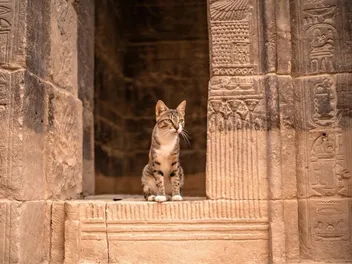
When you consider the reverence Egyptians had for felines, it’s hard to imagine why cats eventually developed a bad reputation in Europe during the Middle Ages. Archeologists are unclear when the first cats entered Egypt, but the earliest skeletal evidence suggests they were in the country around 3800 B.C.
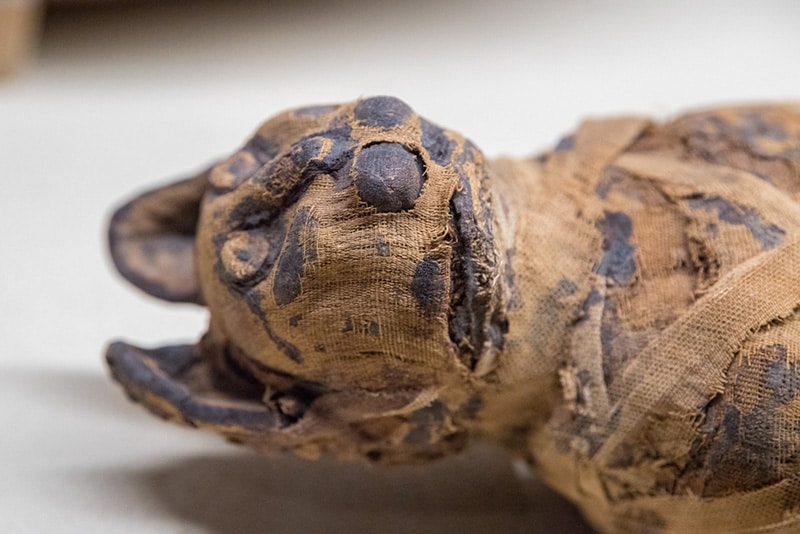
The cat’s remains beside its owner in ancient Cyprus do not compare to the burial site unearthed in Egypt. In Beni-Hassan, archeologists discovered the world’s first pet cemetery that revealed 300,000 mummified cats. Egyptians immortalized cats in prominent statues like the Great Sphinx, which depicts the head of a lion resting on the body of a woman.

Classical Era
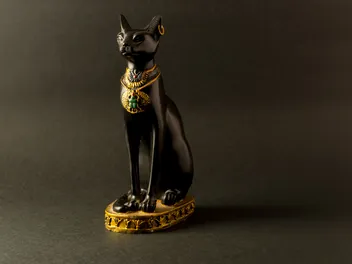
The treatment of cats in Egypt also has an ominous side. Between 700 B.C. and A.D. 300, Egypt had industrial breeding farms that raised cats to be killed and mummified with their owners. Cats were also offered as a sacrifice to appeal to the goddess Bastet. Although millions of cats were killed for sacrifice or mummification, Egyptians respected the animals enough to name their children after them. The name “Mitt” means cats, and it was a common name given to baby girls.
During the Classical era, Egyptian cats began migrating to other parts of Africa and Europe. The migration began around 1700 B.C and gained momentum from the 5th to 13th centuries. Evidence of the Egyptian cat lineage was discovered from remains unearthed in Northern Germany at a Viking trading post.
The remains suggest that cats made their way around the world as lucky passengers on ships. Rodents were significant problems on marine vessels, and cats used their hunting skills to protect the food supplies from rats and mice. Egyptian rulers banned the export of cats from the country under a penalty of death, but Phoenician merchants were able to smuggle the cats on their ships. Phoenician travelers helped cats reach new locations in Europe, but they also spread the rumors from Greek mythology that cats were associated with witchcraft.

Middle Ages
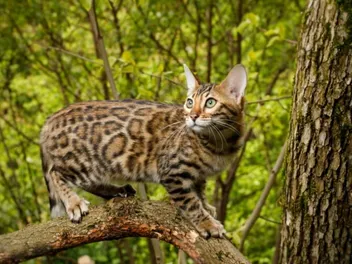
The Middle Ages were not kind to cats, but one characteristic that defines modern cats appeared during the era. Wild cats and domestic cats have few differences, but striped or tabby patterns did not occur until the Middle Ages. The tabby pattern suggests that someone practiced selective breeding before it became common in the modern era. However, separate breeds like the Bengal or Scottish fold were not created until the 19th century.
Religion, sexism, and superstition led to the downfall of cats during the Middle Ages. Although Christianity flourished in Europe, the old tale brought by Phoenician sailors that the wife of Zeus punished a servant by turning her into a cat seemed to affect the public’s opinion of the animal. Cats were thought of as feminine, and their association with women did not help them warm up to Europeans in power. Women were treated poorly during the Middle Ages, and widowed or single women with cats were even considered evil or Satanic.
The Influence of the Pope
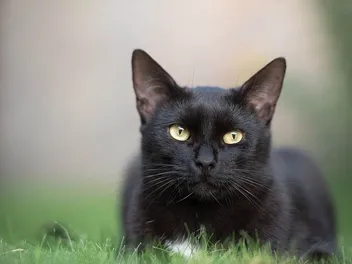
After hearing reports of heresy involving cats, Pope Gregory IX issued the vox in Rama in 1233. The decree said that cats, particularly black cats, were in league with Satan and were evil. Most Europeans were illiterate at the time, but they likely heard the decree’s message during Sunday mass.
Charges of witchcraft became more widespread, and older single women with cats were easy targets of superstitious neighbors. Nearly 80% of those charged with witchcraft during the Middle Ages were women, and most were sentenced to death. Although the image of a witch burning at the stake is often associated with witch trials, most women accused of witchcraft were tied up in a sack with their cats and thrown in the river.

The Black Death
When the bubonic plague ravaged Europe in 1347, cats were still considered evil creatures. Europeans did not understand how the virus proliferated, but perhaps they would have changed their opinions on cats if they knew that the Yersinia pestis bacteria was carried by fleas feeding on rodents. Before the plague hit, the domestic cat population in Europe had dwindled due to mass killings associated with sorcery. Although it’s only speculation, some historians predict that rodent populations were able to flourish and spread the Black Death during the 14th century because of the limited number of vilified felines.
Early Modern Era
From 1517 to 1648, the Protestant Reformation weakened the Catholic Church’s dominance over people’s minds. The Church’s opinions on cats came into question, but some people still clung to outdated beliefs about cats, like the naturalist Edward Topsel. In 1658, Topsel denounced cats as dangerous beasts and servants of witches. Persecution of cats continued during the Early Modern era until the late 17th century. The Age of Enlightenment in the 18th century convinced many Europeans that cats were not magical villains, and more people began keeping cats as pets without fear of persecution.

Modern Era
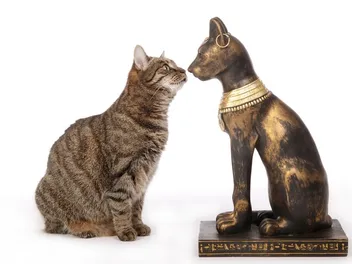
After the Rosetta Stone was deciphered in 1822, the mysteries of ancient Egypt became known around the world. The Great Sphinx, the goddess Bastet, and cats depicted in hieroglyphics displayed the culture’s respect for felines. Queen Victoria was fascinated by Egyptian folklore and was instrumental in changing European and American views of cats. She adopted two Blue Persian cats and eventually began breeding show cats.
In the United States, the periodical Godey’s Lady’s Book published stories about Queen Victoria’s love of cats, and Godey’s writer Sarah Josepha Hale wrote a column in 1836 detailing the pleasures of cat ownership. In July 1871, London’s Crystal Palace hosted a cat competition that featured over 151 cats. Some of the cats featured included Manx, Siamese, Persian, and English Shorthair cats. Over 200,000 people visited the competition, and a few years later, Harrison Weir founded the first National Cat Club in the United Kingdom.
Today, The International Cat Association (TICA) recognizes 73 breeds for championship competitions. Some of the newest breeds to receive recognition include the Aphrodite, Tennessee Rex, and Toybob cats.
Conclusion
Cats kept homes, farms, and merchant ships free of rodents during their early years with humans, but their evolution into the lovable housecats of today took thousands of years. They were not domesticated like dogs. Dogs were grouped into separate breeding groups according to the most desirable traits of the breeder, but cats enjoyed a wilder existence.
They traveled along with colonists and merchants on ships and found new homes on nearly every continent except Antarctica. Many felines were killed during the Middle Ages for superstitious reasons, but public opinion changed in the modern era. Thankfully, most humans no longer believe cats are evil!
See Also:
Featured Image Credit: Piqsels
Expert cat care, straight to your inbox
News, insights, and useful advice, delivered to you.

No spam — unsubscribe anytime.
By signing up, you agree to our Terms & Conditions and Privacy & Cookies Policy.
How useful was this post?
Click a star to rate. You can leave written feedback afterwards. (We read all feedback.)

Christian started writing for a local newspaper as a teenager, and he's been involved in the publishing industry for most of his adult life. Combining his love of writing with a passion for animals, he is currently the Director of Editorial at Pangolia and the Editor-in-Chief at Catster.
Christian lives in the Philippines with his wife, son, and four rescue cats: Trixie, Chloe, Sparky, and Chopper.