When Were Cats First Brought to America? Historical Facts & FAQ
In this article
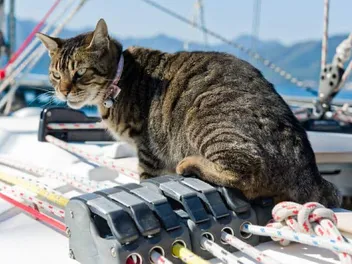
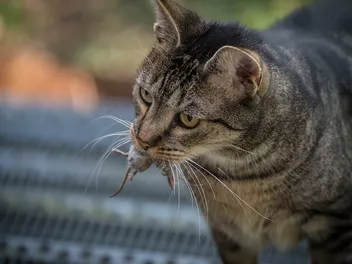
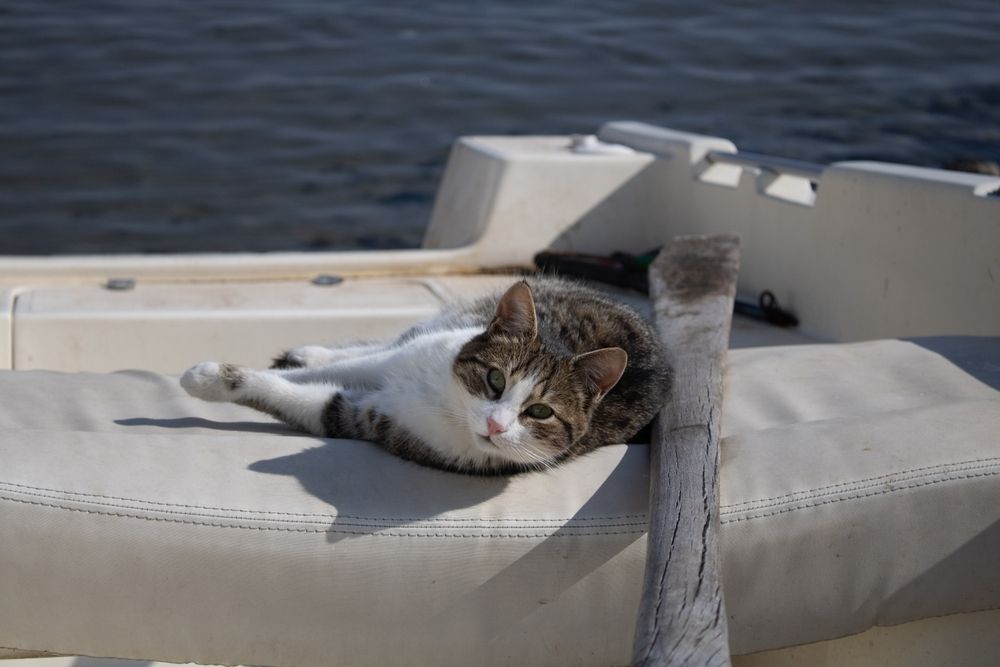
Cats are believed to have entered the U.S. by ship in the early 1600s. At the time, they were known as ship cats and had gained fame for being deadly killers of pesky rats and rodents. Colonists used them to protect their limited food supplies and the ship crew from vermin and diseases. When Christopher Columbus sailed from Europe and discovered America, the cats on his ship went ashore and multiplied.
Cats and Americans are like a match made in heaven. Incredibly, they didn’t exist in the New World before Columbus. Today, they are the second most common pet in the country, and their numbers exceeded 74 million in 2012.
Are you curious about the history of cats in America? Read on for in-depth details of how cats crossed the ocean, became domesticated, and now sit in our homes and on our laps.

The Earliest Record of Cats in America
Cats are a predatory species that was introduced into America. Contrary to popular belief, they are not native to North America. Their ancestors were wild species (Felis silvestris) native to Africa and Europe. They did not arrive in the country by ship until the early 1600s.
Legend states that early colonists, including Christopher Columbus, sailed from Europe into the New World with “shipcats. " At the time, the cats had gained status for being very good at getting rid of rodents.
Early colonists saw the benefit of making the most of their hunting skills. They welcomed them into their ships and used them for pest control and protecting their food supplies during voyages. Sometimes, they also used their fur to make clothing.
The goal of the colonists was to explore new lands and conquer them. As such, voyages were one-way trips. When the ships got to America, the people and cats aboard got off and built small villages and port cities.

Cats in the New World
Cats and humans formed a mutually beneficial relationship right from the onset. Humans gave them special treatment and made them an essential part of the ship crew. In return, cats protected their food supply and reduced the risk of diseases spread by rodents. As industrious creatures, it’s no surprise that cats pounced at the opportunity to explore the new world with humans.
Early colonists were quick to form rural settlements throughout North and South America. Cats tagged along with them, although they were merely rodent hunters. The abundance of food and the better living conditions made them increase in size by up to 16%!
Domestication of the Cat in America
Even though cats played a vital role in getting rid of rodents, it took centuries for them to be domesticated. Early settlers in North and South America still considered them “work animals” instead of pets. In fact, the United States Army hired cats long before they employed dogs. Wild cats were used throughout the 19th century to protect the commissaries from vermin and diseases.
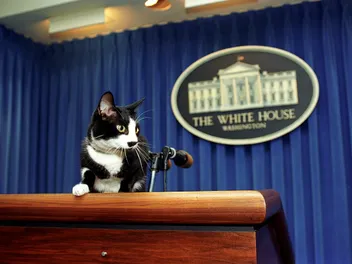
The transition from wild cats to domesticated felines happened slowly over centuries. Cats domesticated themselves around the early 20th century by helping to protect food rations in homesteads. By 1920, even U.S. President Calvin Coolidge had a cat that roamed the White House freely. It was free to come and go, and no one thought of confining it indoors.
Soon, a few creative folks started inviting cats indoors. Word spread about their pleasant companionship, and more people were accommodative of the idea. By the end of World War I, most residents in the U.S. accepted cats as house pets.

Cats Today
Today, cats are some of the most popular indoor pets in America. Their popularity steadily increases as more people opt for “fur babies” instead of children.
There are approximately 90 million domestic cats in America, and about 3.4 million are in animal shelters waiting for adoption. Their population and increased popularity have resulted in a thriving cat toy industry estimated to be $ 951 million in 2022!
FAQs
When Did Indoor Cats Become Popular in America?
The indoor cat is a modern phenomenon, even in America. Even though cats were first brought to America during the 1600s, it was not until the 20th century that people warmed up to the idea of keeping them as indoor companions. Ed Lowe, an American businessman and entrepreneur, made the transition much easier and kickstarted the indoor cat trend after inventing "kitty litter" in 1940.

What Is the Difference Between “Shipcats” and Domestic Cats?
Genetically, there is a minimal difference between wild ship cats and our domestic cats. They share up to 95.6% of their DNA, and scientists claim that changes in their living conditions mainly caused their differences in temperament. Also, studies show that stray cats from more comfortable settings can turn feral if exposed to a more demanding environment for extended periods.
Did Cats in America Go Through a Dark Period During the Salem Witch Trials?
During the Salem Witch Trials of 1692, it was believed witches owned animal familiars that did their evil bidding. They allegedly rode animals like cats, dogs, cows, and pigs to their witch meetings and attacked innocent villagers with strange illnesses and misfortune. Luckily, no cats were killed during the trials, but 25 people and two dogs, unfortunately, lost their lives.
Final Thoughts
Before Christopher Columbus sailed the ocean blue in the 1600s, no cats existed in America. The only wild cats that roamed around were mountain lions! Today, it’s hard to imagine life without our feline companions.
Census data shows steady growth in the estimated number of cats in rural and urban settings. From about 30 million cats in the 1970s to roughly 60 million in 1990, America today boasts over 90 million felines, without counting free-ranging cats.
A lot has changed throughout history. Still, one thing has remained constant: the mutually beneficial relationship between cats and humans!
See also:
“Sources”
Featured Image Credit: Mertframe, Shutterstock
Expert cat care, straight to your inbox
News, insights, and useful advice, delivered to you.

No spam — unsubscribe anytime.
By signing up, you agree to our Terms & Conditions and Privacy & Cookies Policy.
How useful was this post?
Click a star to rate. You can leave written feedback afterwards. (We read all feedback.)

Christian started writing for a local newspaper as a teenager, and he's been involved in the publishing industry for most of his adult life. Combining his love of writing with a passion for animals, he is currently the Director of Editorial at Pangolia and the Editor-in-Chief at Catster.
Christian lives in the Philippines with his wife, son, and four rescue cats: Trixie, Chloe, Sparky, and Chopper.