Get

In Your Inbox

Catster is reader-supported. When you buy via links on our site, we may earn an affiliate commission at no cost to you. Learn more.

10 Diseases Humans Can Get From Cats (Vet Answer)

Share

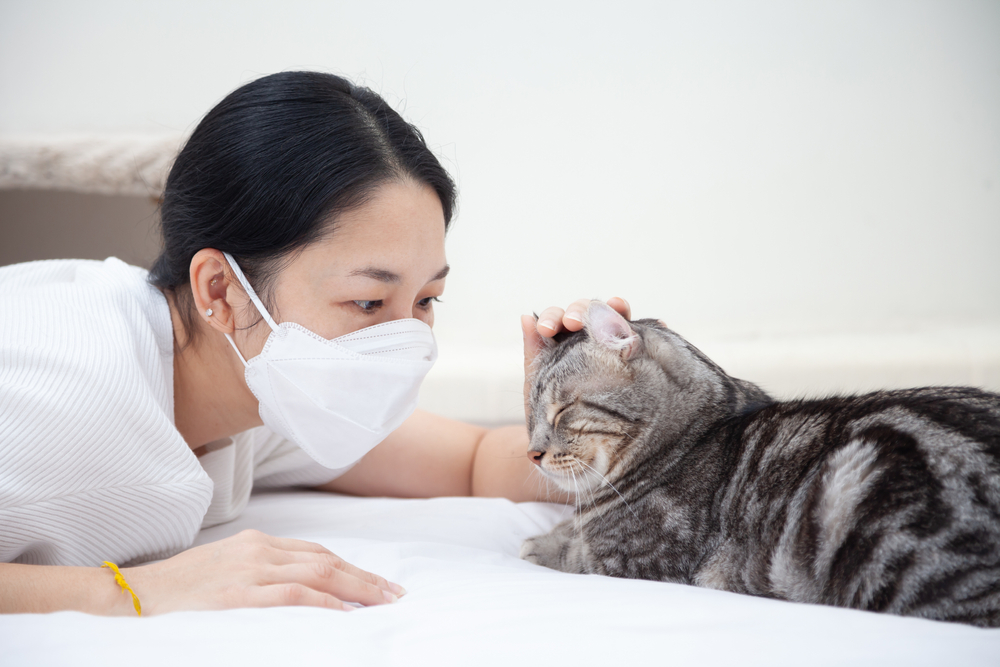
sick woman behind the cat

It’s not unusual for us to find ourselves with cats on our kitchen counter, in our bed, or even following us to the bathroom! If you’ve ever been woken by the sandpapery tongue, you might wonder: Can my cat make me sick?

Fortunately, there are very few diseases that humans can get from cats purely by sharing their home, but there are certainly some infections and parasites that we could contract from our feline friends. Let’s take a look at 10 diseases humans can get from cats, what to look out for, and how to minimize your risks.

divider 3 paws

The 10 Diseases We Can Catch From Cats

A disease that can be transmitted directly between animals and humans is called zoonotic. There are some parasites of cats that can also affect humans, such as tapeworms, that are not spread directly from one to the other, so are not classified as zoonotic.

Fortunately, most of these diseases can be avoided by adhering to good hygiene practices and avoiding interactions with feral cats. Let’s start with the most dangerous:

1. Rabies

fresh wound and blood from a bite cat
Image Credit: mydegage, Shutterstock

Caused by a deadly Rhabdovirus, rabies is a preventable disease that attacks the neurological system of those infected and is invariably fatal once clinical signs appear. In many parts of the world, dogs are the main source of human infection, but in North America, cats have the highest number of reported cases.

The virus is transmitted when the saliva of an infected animal enters the body, either through a bite, scratch, open wound, or direct contact with a mucous membrane (e.g., eyes, mouth, etc.).

Vaccination is our best defense against the virus, with vaccination against rabies mandatory in most US states for all dogs, cats, and ferrets over the age of 4 months. Vaccination for humans is not usually recommended unless your line of work puts you at a higher risk of rabies infection. Even vaccinated humans need to follow a strict post-exposure protocol (PEP) if they are potentially exposed to rabies to ensure they do not contract the virus.1

Pet cats, particularly those kept indoors, should still receive a rabies vaccination but pose minimal risk to their humans.


2. Bacterial Infections

sick man due to salmonella
Image Credit: New Africa, Shutterstock

There are three main ways in which cats are likely to transmit a bacterial infection to humans: bites, scratches, and ingestion.

Capnocytophaga canimorsus and Pasteurella multocida are bacteria that are commonly found in the mouths of cats, and a bite from an affected feline is like having bacteria injected under the skin. This can be particularly dangerous if it enters a joint or the bloodstream.

Salmonella, Campylobacter, and E. coli are all bacteria that can live in the intestinal tract of cats that we can contract through accidental ingestion of fecal particles. Equally, our cats can also become infected by the same bacteria from us. Infection can be asymptomatic or result in severe vomiting, diarrhea, and dehydration.

MRSA (Methicillin-resistant Staphylococcus aureus) is a common bacterium that, through the inappropriate use of antibiotics, has become resistant to virtually all antimicrobial treatments. It commonly causes skin infections that can invade deeper structures or cause septicemia, with potentially deadly results. In reality, most cases of MRSA in cats are likely to have come from humans, rather than the other way around.


3. Cat Scratch Disease

scratched wound on a man's leg by a cat
Image Credit: Kobzev Dmitry, Shutterstock

Also known as cat scratch fever, this condition is caused by the bacteria Bartonella henselae, transmitted from cats to humans, unsurprisingly, through scratching. It can also be spread when an infected cat licks an open wound or licks you enough to cause your skin to break.

Cats are often asymptomatic, but humans will often develop fever, headaches, reduced appetite, and enlarged lymph nodes. In rare cases, the infection can spread to the eyes, brain, heart, or other organs, requiring intensive treatment.


4. Ringworm

Ringworm on man's skin
Image Credit: Rodrigo Bellizzi, Shutterstock

Despite the name, ringworm is actually caused by a multitude of fungal organisms and is also known as dermatophytosis or tinea, with different species affecting different parts of the body. Affected cats may have dry, crusting lesions that are not always easy to detect. The infection is transmitted to humans via direct contact with the lesions, or from other objects, like brushes, that contain fungal spores. We can also be the source of infection for our cats.

Fortunately, ringworm infection is rarely severe and responds to antifungal preparations.


5. Tularemia

cat with tick
Image Credit: anastasiya parfenyuk, Shutterstock

This bacterial infection is often transmitted via ticks to cats, but humans can also become infected through direct contact with infected cats. Tularemia is often fatal in cats and is potentially life-threatening for humans but tends to respond well to antibiotic treatment. Clinical signs in humans depend on how the bacteria enter the body, but all include a very high fever.


6. Q Fever

woman checking her temperature
Image Credit: Bermix Studio, Unsplash

Caused by the bacteria Coxiella burnetii, Q fever is most commonly found in farm animal species but can also affect cats and is usually concentrated in the reproductive organs. In cats, it can cause abortion and reproductive problems, but human infections are often asymptomatic or may develop flu-like symptoms. Pregnant women are most at risk, with infection potentially leading to miscarriage, stillbirth, pre-term delivery, or low birth weight.


7. External parasites

flea on a person's skin
Image Credit: David Jara Bogunya, Shutterstock

Although fleas do not tend to stick around on humans for very long, they can still jump on for a ride and a meal. This usually only results in mild itching, but it can put us at risk for contracting diseases transmitted through fleas, such as plague (Yersinia pestis), cat scratch disease, and flea-borne typhus.


8. Cryptosporidium

Young man in gloves cleaning cat litter tray at home
Image Credit: New Africa, Shutterstock

This protozoal infection can be transmitted from cats to humans via the ingestion of material contaminated with fecal matter. In most people, the infection is asymptomatic or causes mild diarrhea, but immunocompromised people can develop life-threatening complications.


9. Giardia

woman cleaning her pet cat's litter box
Image Credit: sandyman, Shutterstock

Similar to Cryptosporidium, Giardia is a protozoal infection spread via contaminated feces, causing diarrhea, vomiting, gas, bloating, and abdominal cramping, although many individuals (cats and humans) are asymptomatic.


10. Toxoplasma

woman cleaning cat litter at home
Image Credit: New Africa, Shutterstock

These protozoa rarely cause clinical signs in cats, but if pregnant women come into contact with the urine or feces of infected cats, it can result in severe birth defects. In the past, this resulted in many cats being rehomed or abandoned by their expectant owners, but simple hygiene is enough to prevent infection from felines. Most human cases of Toxoplasmosis come from eating undercooked meat.

divider 3 paws

Final Thoughts

While it’s important to be aware of the potential diseases we can catch from cats (and from us!), it is just as important to know that almost all can be avoided by maintaining good hygiene, parasite control, and following recommended vaccination protocols.

If you are immunocompromised (e.g., HIV positive or undergoing chemotherapy), extra precautions should be taken when dealing with the cat litter box or handling cats showing signs of illness or infection.

Related Read:


Featured Image Credit: Hananeko_Studio, Shutterstock

Want content like this delivered to you?

Sign Up For Our Newsletter

News, insights, expert advice, and everything cat

* By submitting, you agree to our Terms & Conditions and Privacy & Cookies Policy.


How useful was this post?

Click on a star to rate (you can leave written feedback after clicking submit)

Help us improve Catster for pet parents!

Your feedback really matters.

What did you like about this post? Also how can we improve it?

Join the conversation

9 Responses

  1. Good Morning

    Hope you are doing well.
    I have 4 cats and life on a farm, I do give my cats every 3 months deworming and I apply drops for ticks & fleas. But I do not know if it has any thing to do with my cats, but since
    laast year November I have a sort of iching stinging feeling on my body and scull. I have
    no marks or any spots on my body so there is no signs of something that is busy to
    bite me. This is making me frustrated and at night when I go to sleep it is the worst and I can not sleep.

    1. Hello Esmarie,

      thank you for your question and sorry for a bit of a late reply. First of all we are very sorry to hear about your health issue. This is something you should definitely consult with your medical doctor as what you described could be caused by a number of reasons and correct diagnosis is most important.

      Best of luck and we hope that you will be alright soon!

  2. My daughter has MS and has both a cat and dog. She is constantly sick with intestanal issues, migraine headaches and sinus infections, She has all the problems with MS including muscle weakness, and some blind issues also. I would like to know if their is any research being done on the effects of cat and dog illnesses that cause multiple medical issues with MS patients. I definitely feel that is a major issue, since her cat's litterbox is in her bathroom and she does sleep in her bed also.

    1. Hi Claudia, you are right to notice that a person living with Multiple Sclerosis (MS) has unique health vulnerabilities. While research does not show that pets cause MS, there is significant evidence that people with compromised immune systems—including those on certain MS disease-modifying therapies (DMTs)—are at a much higher risk for zoonotic diseases (illnesses passed from animals to humans). These infections can cause the exact symptoms your daughter is experiencing, such as persistent intestinal issues, headaches, and respiratory infections, which can further aggravate MS symptoms like muscle weakness and fatigue.
      The presence of a cat litter box in the bathroom and the cat sleeping in her bed are two high-risk factors that should be addressed immediately. Litter boxes are breeding grounds for bacteria like Salmonella, Campylobacter, and the parasite Toxoplasma gondii, as well as ammonia gas, which can trigger the sinus infections and migraines she is battling. Additionally, sleeping with pets can introduce dander, outdoor allergens, or even microscopic parasites into her immediate breathing space, and cats can also transmit Bartonella henselae (cat scratch disease) through scratches or bites, which may cause swollen lymph nodes, fever, and fatigue, symptoms that can be particularly challenging for someone with a weakened immune system.

      To protect her health, it is highly recommended to move the litter box out of the bathroom, or have someone else clean it daily using gloves and a mask, use a high-quality air purifier, and establish the bedroom as a pet-free zone to reduce her exposure to these triggers.

  3. A neighbor gave me a street kitten, it has crusty ears and beige little dandruff looking crust. have not bathed him. I feel itchy on thighs and arms.

    1. Hey Myrna Maldonado Badillo. Thank you for taking in a street kitten and for reaching out!
      It's common for kittens rescued from the street to come with a few things that need attention. The "crusty ears" and "dandruff-looking crust" are definite signs that the kitten needs to see a veterinarian as soon as possible. These signs are often associated with things like ear mites, fleas, or fungal issues (like ringworm), which can all be quite contagious and are treatable by a vet.
      Given that you are now feeling itchy, it is absolutely vital for the health of both you and the kitten to seek professional guidance immediately. Please avoid handling the kitten more than necessary until a medical professional has provided a diagnosis and treatment plan.

  4. I am very ill. Bloody gravy diarrhoea. Terrible pains cramping and bloating. This is 9 th day. Sample stool now with GP's surgery. I have 2 old sick cats. Hoping for an answer.

    1. Hi MARGARET DOYLE, we wish you a fast recovery and good health. Hopefully, your MD will find a diagnosis and suitable treatment.

Leave a Reply

You’re very welcome to leave a comment or question. Please know that all comments must meet our community guidelines, and your email address will NOT be published. Let’s have a positive and constructive conversation.


Catster's Digital Magazine is Back!

Vet-approved health & behavior advice

Real cat stories & community features

Chatting About Essential Oils, Homemade Cat Food & The Color of Butter | Chatty Cattys, Episode 27

In this episode of Catster’s Chatty Cattys podcast, Nicole and Dr. Karyn tackle crucial household safety warnings and the ever-evolving world of pet...

What Normal Aging Looks Like in Cats and When You Should Worry

These days, cats can live anywhere from 13 to 17 years on average, with some making it well into their 20s. That is...

The Purr-suit of Happiness: A New Way to Measure Feline Quality of Life

How can you tell if your cat is truly thriving? It’s a question that every pet parent has probably wondered at some point....

Ask Dr. Paola – Help! How Much Pee Is Too Much Pee? (July 13, 2026)

Welcome to our “Ask Dr. Paola” series, where every Monday we bring expert advice straight from Dr. Paola Cuevas (MVZ) to help our...

More related

Rocky’s Road: How One Tabby Brought Me Closer to God

At Catster, some of the most powerful stories we share don’t come from experts or journalists — they come from you, our readers....

Short-Haired Cat vs. Long-Haired Cat: Vet-Verified Differences (With Pictures)

If you’re thinking about bringing a cat into your home but are unsure whether to choose a long-haired or short-haired breed, you’ve come...

What Cleaning Products Are Safe for Cats? 10 Vet Approved Items to Keep at Home

Cleaning when you have cats can be a worrying business. Common cleaning agents like ammonia, chlorine (bleach), phenols, rubbing alcohol, formaldehyde, benzalkonium chloride,...

Exotic Shorthair Munchkin Cat Mix: Info, Pictures, Temperament & More

The Exotic Shorthair Munchkin mix is a new breed known as the Minuet or Napoleon. They’re playful, loyal, affectionate, and make an excellent...

Keep reading

11 Best Cat Foods in Canada in 2026 – Reviews & Top Picks

Did you know that around 50%-60% of Canadian pets are considered obese?1 Obesity is a serious health concern for cats as it increases their risk of developing potentially life-threatening conditions like cancer and heart disease.2 The good news is that...

grey cat eating food

Why Does My Cat Lay on My Stomach? 5 Vet-Verified Reasons

When you’re sitting still or lying down for long enough, it’s perfectly normal for your cat to come around and try to spend a little extra time with you. But why is your cat taking every chance they get to...

cat-sleeping-on-owners-lap

Are Indoor Cats Happy & Fulfilled? Vet-Verified Facts & FAQ

Many cat owners wonder about the happiness and well-being of their cats when it comes to keeping them indoors. On one hand, there’s the idea that a cat should be free to roam outside; on the other hand, some argue...

white Maine Coon cat at home

Is It Safe for Cats to Eat Moths? Vet-Reviewed Facts & FAQ

Cats are natural predators that enjoy a good hunt, whether to catch a mouse running by or to chase butterflies in the sun. Typically, if they can catch their prey, they also have the instinctual drive to eat it. Although...

IMHA in Cats: Signs, Causes & Care (Vet-Reviewed)

IMHA, or immune-mediated hemolytic anemia, describes a condition where the immune system misfires and breaks down the body’s red blood cells, a process called hemolysis. You may see it called autoimmune hemolytic anemia (AIHA) as well. The body inappropriately attacks...

veterinary-blood-test

Detox for Cats: Vet-Verified Facts & FAQ

You’ve likely heard about many types of detox programs out there for people. It seems like there’s one for every lifestyle and budget. In fact, detoxing has spilled over into the pet world! But can cats benefit from a detox?...

cat and owner and vet

Are Snake Plants Toxic to Cats? Vet Approved Facts & FAQ

Snake plants are charming, large-leafed plants that look stunning in almost any home setting. But sometimes when we mix plants and our household pets, it can be a recipe for trouble. Can you really blame them—look at how they bend!...

Catster_Are Snake Plants Toxic to Cats

Why Do Cats Scoot? 5 Vet Reviewed Reasons & What to Do

If you live with a feline, you may have seen your buddy engage in a few less than elegant activities, including the dreaded scoot—where your cat’s dragging their butt on the floor leaving something stinky behind. Cleaning up the results...

cat-sitting-scooting

Love Cats? So Do We! Join the Catster Community

Stay informed with expert pet care insights delivered straight to your inbox! Discover professional guidance on animal behavior, feeding tips, trusted product picks, and much more.


Sign up for the Catster Email Newsletter

Stay informed with expert pet care insights delivered straight to your inbox! Discover professional guidance on animal behavior, feeding tips, trusted product picks, and much more.