10 Vet-Approved Tips for Keeping Your Cat Safe Over the Holidays


The holidays may be a magical and fun time for humans, but there are a lot of dangers that the holiday season brings to our furry friends. It’s important for their health and safety that you make yourself aware of the holiday-related dangers and find ways to create a safe environment for your kitty. There are lots of things you can do to keep your cat safe over the holidays, and most of them are extremely easy to do.

The 10 Ways to Keep Your Cat Safe Over the Holidays
1. No Glass Ornaments
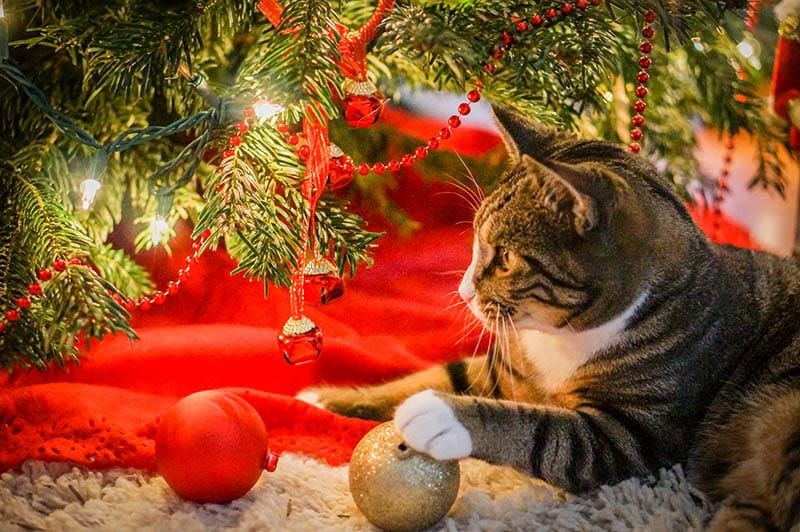
Glass ornaments are beautiful but also very delicate! Ornaments, nativity sets, and other glass Christmas décor may be irresistible to your cat. It’s not difficult for a cat to break glass items, especially things as delicate as ornaments.
Broken glass brings the obvious risk of causing cuts to your cat, but there’s also a chance that your cat may ingest broken glass. This can be extremely damaging, even deadly. Consuming glass can cause cuts to the digestive tract, and it’s also possible for sharp objects to work their way through the walls of the digestive tract, becoming free-floating foreign bodies in the body.
To keep your cat safe from glass objects, stick to plastic ornaments and décor. Many plastic ornaments have a realistic glass appearance, so nobody will know the difference—except maybe your cat!

2. No Tinsel or Ribbon
Tinsel, garland, ribbon, and other long, thin objects are extremely dangerous for cats. Unfortunately, they’re also things that cats love to play with. There are multiple risks for cats that have access to these items.
If swallowed, they can cause intestinal obstructions, even leading to serious illness, major invasive surgery, and death. They can also become lodged in the throat, leading to choking.
Sometimes, long, thin objects can become wrapped around your cat’s neck, also leading to choking. In some cases, they can become wrapped around limbs, cutting off blood supply and potentially leading to permanent damage to or loss of the limb.
If you use ribbon, garland, and tinsel, make sure to always keep them far out of the reach of your cat.
3. Secure Electrical Cords
Electrical cords can be a risk to cats throughout the year, but during the holidays, many of us have extra electrical cords lying around because of the addition of lights and other festive items. It’s important to keep all electrical cords secure and out of the reach of curious kitties, though. Some cats love chewing on electrical cords, which can lead to electrocution and electrical burns in the mouth.
There are multiple ways you can work to keep electrical cords away from your cat. Bitter spray or “no chew” spray can be used directly on cords, as long as they’re sprayed away from the outlet itself. These sprays taste bad and will discourage your cat from chewing.
It may be necessary to keep cords out of the reach of your cat entirely by keeping them enclosed in cord containers or by using baby gates and other objects to physically deter your cat from accessing the cords.

4. Stabilize the Tree
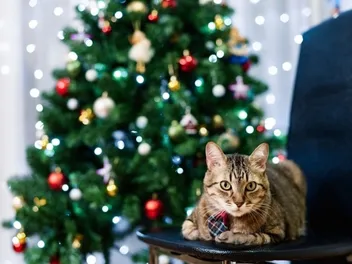
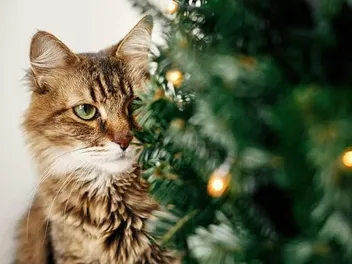
If your cat loves to climb, then they may find the addition of a tree in their home to be completely irresistible. However, Christmas trees are dangerous to cats for a few reasons, including their ability to be tipped over by a cat climbing on them. There are also risks associated with your cat chewing on or consuming parts of the tree, as well as drinking the water of a live tree.
It’s best to keep your Christmas tree completely inaccessible to your cat by placing it behind a gate or in a room that your cat can’t access, but if your little Houdini seems to always find their way around your blockades, then it may be necessary to find a way to secure the tree to the wall or a stable, heavy piece of furniture to prevent it from being knocked over.
5. Avoid Toxic Plants
During the holiday season, many people bring seasonal plants into their homes, not knowing that some of these plants are toxic to cats. Poinsettias are considered only mildly toxic to cats, but they do pose a risk of nausea, vomiting, and diarrhea if consumed by a cat.
Mistletoe, on the other hand, can be extremely toxic to cats, depending on the species. Toxic mistletoe consumption can lead to seizures and liver failure, while less toxic mistletoe can cause stomach upset. Holly should also be kept away from cats because of its ability to cause stomach upset if consumed.
Lilies and all plants in the Lilium family are highly toxic to cats and can cause kidney failure. Other plants to avoid are spring bulb plants that are sometimes bloomed indoors during the winter, like narcissi and daffodils.
If your cat accidentally eat piece of some of those plants, immediately reach out to veterinarian.
6. No Table Scraps
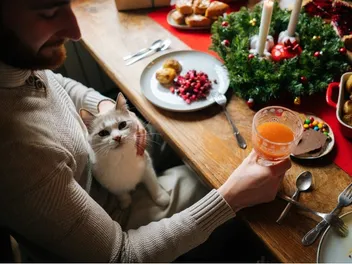
The urge to share your tasty food with your cat may be strong, but it’s necessary for your cat’s health that you avoid giving them table scraps and holiday treats of the human food variety. Stick to your cat’s regular food and cat-safe treats when treating your cat for the holidays.
There are many foods that can range from extremely toxic to causing mild to moderate stomach discomfort in cats, including onions, garlic, leeks, and sage. Fatty treats, like turkey skin, ham, gravy, and fat trimmings can all lead to stomach upset, as well as pancreatitis. Other foods that are toxic to cats and should be avoided entirely include chocolate, yeast dough, and alcohol.
7. Keep Doors and Windows Secure
It’s common for people to be coming and going a lot during the holidays. Whether you’re in and out while traveling to see family or you have people visiting your home, it’s important that you keep your doors and windows secure. Encourage guests to close doors quickly and to keep an eye out for your cat trying to slip out.
It’s not uncommon for cats to sneak out through doors that are being propped open to bring in things like gifts and dishes for holiday meals. Ensure your doors always latch securely and are not left open or cracked in a way that can allow your cat to sneak out.

8. Be Cautious With Candles
Candles are definitely a year-round risk for cats, but during the holidays, it’s not uncommon for people to burn more candles to bring holiday scents to their homes. Some people also still use real candles to light their Christmas trees. There are a lot of fire hazards during the holidays, including having a dried-out tree functioning as kindling for nearby flames.
Candles, and fireplaces for that matter, should always be kept very secure and away from cats. Cats may knock over candles, leading to house fires. It’s also possible for your cat to get too close to a flame, unintentionally burning themselves. Use extreme caution with candles and other open flames, and never leave your cat unattended around these things.
9. Provide a Safe, Quiet Space
Cats can become quickly overwhelmed by the hustle and bustle of the holiday season. Provide your cat with a quiet, safe place for them to decompress when feeling stressed. Make sure they have a space that is away from guests, children, and other pets in the home. Provide them with their favorite bedding or some clothing that smells like you.
Make sure the space is quiet and with hiding spots, allowing your cat to feel safe enough to get a good nap. If your cat feels stressed or overwhelmed and doesn’t have anywhere to go, it will likely increase the risk of injury or escape.
10. Get Your Cat Microchipped
The best way to ensure your cat makes it back home to you if they get loose is to have them microchipped. Even when taking precautions, the risk of your cat escaping during the holiday season can be quite high. A microchip will help ensure your cat finds their way back to the correct home if they get out and are found by someone.
Conclusion
Most of the ways you can keep your cat safe during the holidays are things that you can get taken care of today. Quick, easy fixes to problems that may not seem obvious at first are an excellent way to protect your cat. Don’t forget that the holidays can be hard on cats, especially if you have lots of visitors coming and going, so make sure to set aside a few minutes of your day to spend some one-on-one time with them.
See also: Should I Dress My Cat Up For Christmas?
Sources
Featured Image Credit: Alena Haurylik_Shutterstock
Expert cat care, straight to your inbox
News, insights, and useful advice, delivered to you.

No spam — unsubscribe anytime.
By signing up, you agree to our Terms & Conditions and Privacy & Cookies Policy.
How useful was this post?
Click a star to rate. You can leave written feedback afterwards. (We read all feedback.)
Brooke Billingsley, a former veterinary assistant for nine years, became a nurse in 2013. She lives in Arkansas with her boyfriend of five years, surrounded by her beloved pets: three dogs, two cats, five fish, and two snails. Brooke has a soft spot for special needs animals, caring for a three-legged senior dog and a widely known cat with acromegaly and cerebellar hypoplasia. She has developed a keen interest in fish keeping and is always learning how to provide the best environment for her aquatic pets. In addition to her passion for animals, Brooke enjoys gardening and maintains a vegetable garden during the summer. She stays active with yoga and received her 200-hour yoga teacher certification in 2020. Brooke also hosts a podcast that delves into folklore and myth, dedicating her spare time to research and writing. She embraces the philosophy that every day is an opportunity for learning and growth, continually working to acquire new skills and knowledge.