11 Fascinating Vet-Verified Facts About Tabby Cats (2026 Update)


In this article
The tabby cat is one of the most popular coat patterns in cats, inherited from their ancestor, the African wild cat, scientific name Felis lybica, also referred to as the Near Eastern wildcat. These cats still live in North Africa and parts of Asia. If you have a tabby cat and want to learn interesting facts about them, keep reading, as we list 11 fascinating facts about tabby cats.

Tabby Basics
1. Tabby Is Not a Breed

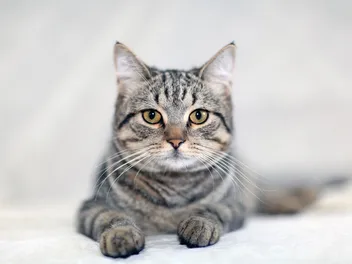
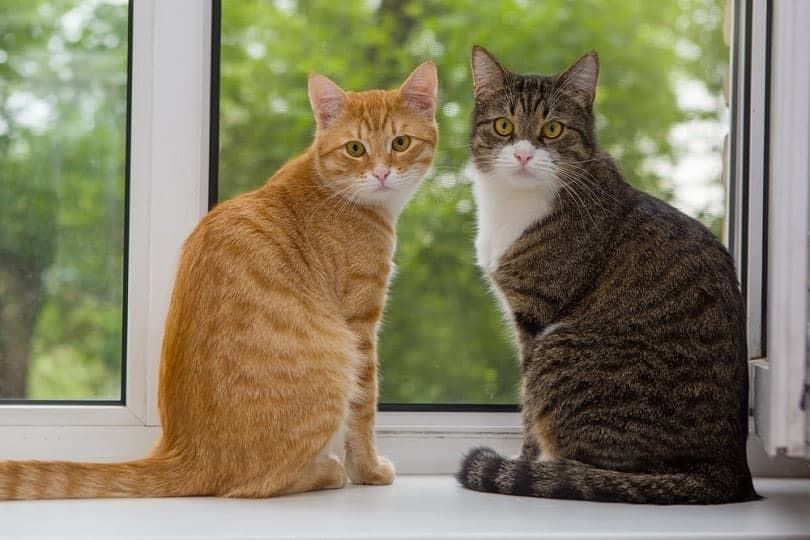
The tabby cat is not a breed but a pattern of markings on the cat’s body. Almost every cat breed has members that are considered tabby cats.
2. Tabby Cats Have the Letter M on Their Forehead
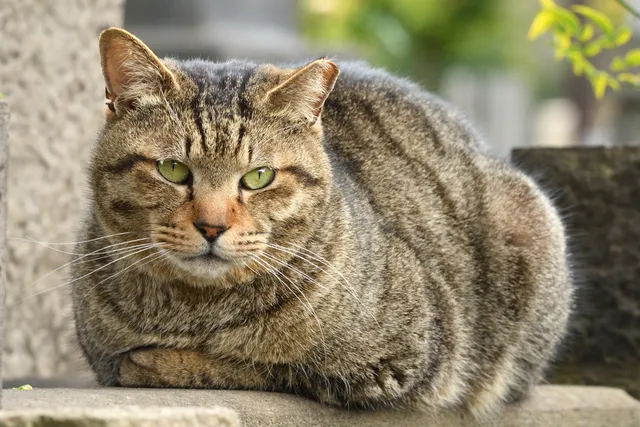
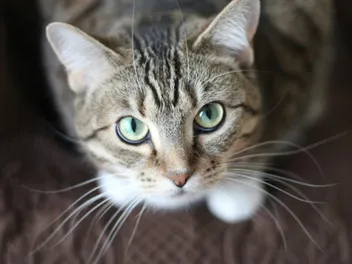
A tabby cat’s defining characteristic is the letter M’s presence on the cat’s forehead between the ears. They will also commonly have stripes by the eyes and across the cheeks.
3. Tabby Cats Can Have Several Coat Colors

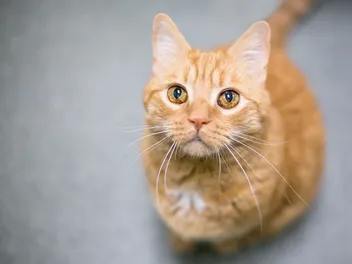
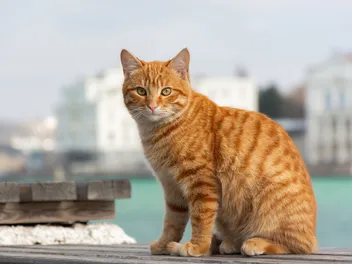
Tabby cats' coats come in several colors: brown, gray, orange, red, fawn, sable, and many more.
Tabby Patterns

4. Tabby Cats May Have Spots
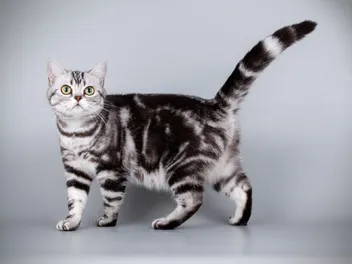
Tabby cats can have many patterns on their body, and some have spots. These spots can be of various light and dark patterns, causing the cat to have a leopard-like appearance or be nearly invisible. Some cat breeds with tabby coats and unique spots include the Bengal, Egyptian Mau, Ocicat, Savannah, and American Shorthair.
5. Tabby Cats May Have a Mackerel Pattern

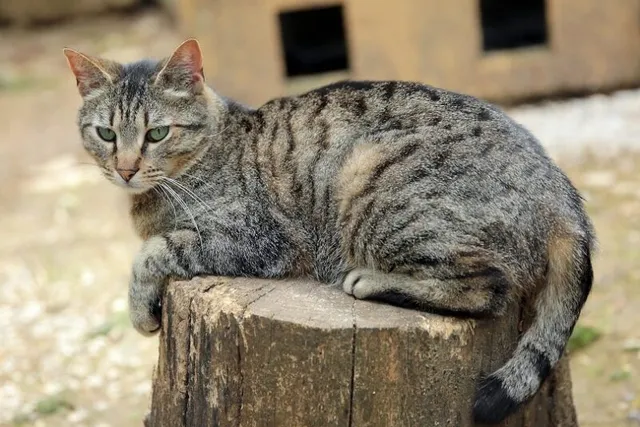
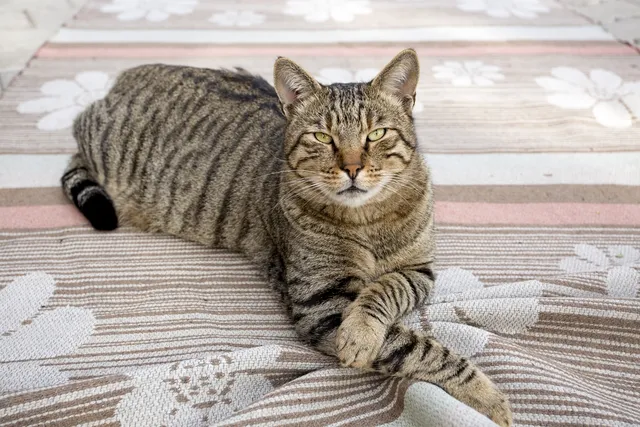
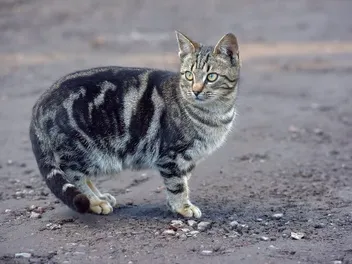
The mackerel pattern tabby cat, as the name suggests, is a pattern that resembles fish bones with a long stripe down their back from shoulder to tail and a series of vertical stripes down the sides. This pattern is one of the most common tabby variations, and genetic studies suggest it is likely the ancestral form.
6. Tabby Cats May Have a Torbie Pattern
The tortoiseshell pattern is a combination of tabby striping with tortoiseshell coloring (black or brown mixed with orange or red). This pattern is rare in male cats and much more common in females because the orange/black color is linked to the X chromosome. You can find it in any breed, such as the Maine Coon, Cornish Rex, and American Shorthair.
7. Tabby Cats Can Have Classic or Patched Patterns

Classic tabby cats have large swirling patches of color that resemble a marble cake pattern. Patched tabby (torbie) cats display tabby striping with areas of red or cream. Any breed with the tabby pattern can have patches, so it is pretty common.
8. Tabby Cats Have Agouti Gene
The agouti gene produces a protein that regulates the distribution of black pigment (eumelanin) within the hair shaft, where the dominant allele produces alternating bands of yellow and black color, ending with black tips. Cats with a non-agouti allele will have solid hair color without the bands. This banding may cause the hair to appear to change color as they move or when you pet them.
Tabby Facts
9. Tabby Cats Can Have Various Personalities
Like any other cat, tabbies may have a wide range of personalities that have been recently split into five different personality traits. Each cat has them all in varying degrees, and they include neuroticism, extraversion, dominance, impulsiveness, and agreeableness. This division was based on a study of cat personalities according to their owner’s perception and a psychological personality model used in people.

10. Tabby Cats Have Originated From the African Wildcat
Using ancient DNA analysis, today, we know that the Near Eastern and Egyptian populations of Felis lybica contributed to the gene pool of the domestic cat at different historical times. The mackerel tabby pattern was the one from which other tabby patterns originated, as breeding of cats occurred later than with most other domesticated animals.
Since ancient times, humans have used tabby cats in their homes, barns, and boats for their excellent hunting capabilities.
11. Tabby Cats Outnumber Non-Tabby Cats
Tabby cats account for a large percentage of felines, and you will struggle to find tabby cats without the trademark M on their forehead. Solid color cats are available in many breeds, including the British Blue and Angora cats, and hairless cats like the Sphynx and the Peterbald are the primary exceptions to having a tabby pattern.

Summary
We hope you have enjoyed reading about all the traits you are likely to find when owning a tabby cat and have learned more about them. Tabby cats come in various colors and patterns to suit any taste. If we convinced you to adopt one as your next pet, please ensure you send us a picture for our Cat of the Week Contest!
See also:
Featured Image Credit: Okssi, Shutterstock
Expert cat care, straight to your inbox
News, insights, and useful advice, delivered to you.

No spam — unsubscribe anytime.
By signing up, you agree to our Terms & Conditions and Privacy & Cookies Policy.
How useful was this post?
Click a star to rate. You can leave written feedback afterwards. (We read all feedback.)
Christian started writing for a local newspaper as a teenager, and he's been involved in the publishing industry for most of his adult life. Combining his love of writing with a passion for animals, he is currently the Director of Editorial at Pangolia and the Editor-in-Chief at Catster.
Christian lives in the Philippines with his wife, son, and four rescue cats: Trixie, Chloe, Sparky, and Chopper.