Get

In Your Inbox

Catster is reader-supported. When you buy via links on our site, we may earn an affiliate commission at no cost to you. Learn more.

7 Fascinating Facts About the Brown Tabby Cat (Vet-Verified)

Share

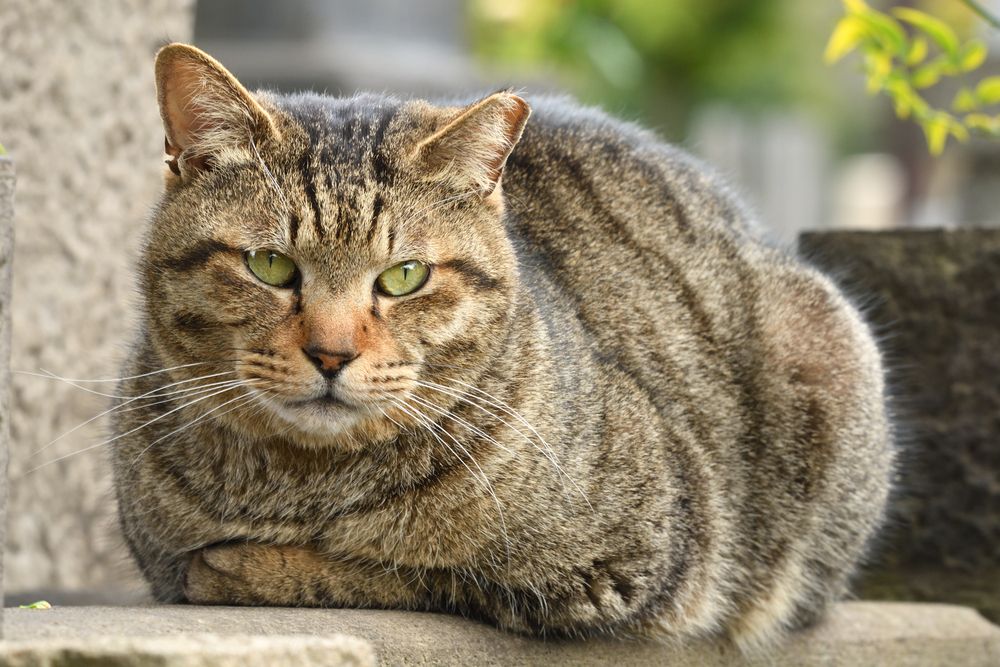
Brown tabby cat that curls up outdoors

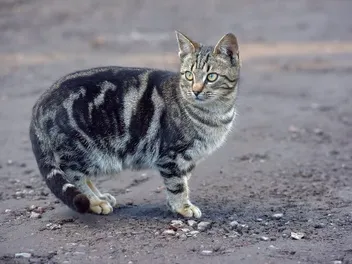
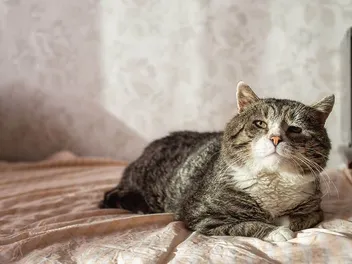
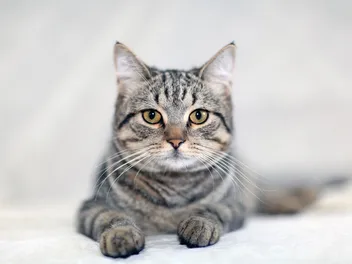
The brown tabby cat is a commonly found feline in household homes, and although they are common, they are no less beautiful. Almost everyone has owned a tabby cat or has a friend who owns one, and this is especially true of brown and orange variations. The tabby pattern is legendary among cat owners, due to the unique way that it presents itself in different breeds and its nod to the wildcat heritage of tabby cats. One only needs to think of one of the most famous cats of all, Garfield, to picture the tabby pattern in all its glory!

While brown tabbies are common, they are still an interesting variety with a fascinating history. Here are seven facts about the brown tabby that you may not have heard before!

divider cat paws oct 2024

The 7 Facts About the Brown Tabby Cat

1. The Brown Tabby Is Not a Separate Breed

The term “tabby” refers to a type of pattern, not a specific breed. Brown tabby markings can be found in almost any breed, including popular breeds like Maine Coons, Bengals, Abyssinians, and almost all crossbreeds.

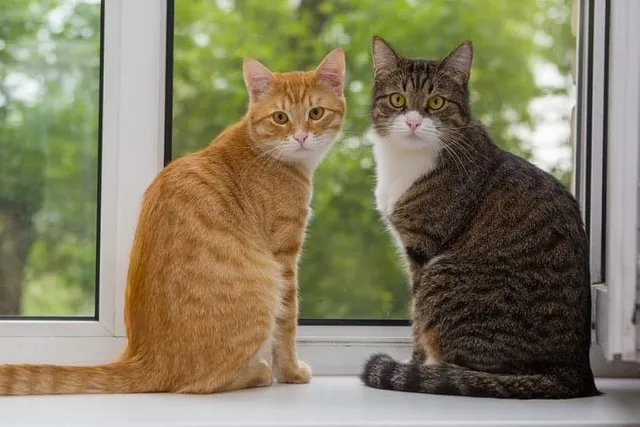
two brown tabby cat siblings standing side by side looking at camera
Image by: Nils Jacobi, Shutterstock

2. They Were Named After Arabic Silk

Due to their stripy and silky coats, some think that the tabby name came from owners comparing their uniquely striped cats to silk cloth. The term “tabby” comes from the French phrase “striped silk taffeta,” a woven silk fabric. This can be traced further back to the Arabic term, “attabiya,” which is a district in Baghdad that was famous for its striped silk cloth. The Middle French term, “atabis,” was later used to describe this silk, which soon evolved to “tabis” and then to “tabby.”


3. There Are Five Distinct Tabby Variations

Brown is only one of a wide range of colors that tabby cats can be found in. With the different colors come a host of different patterns, and there are five commonly recognized tabby patterns accepted by most breeders. These are classic, mackerel, patched, spotted, and ticked. All the patterns are believed to have come from the selective breeding and mutation of the mackerel pattern, inherited from the African or Near Eastern wildcat.

tabby cat patterns
You are free to use this image, but we do require you to link back to Catster.com for credit

4. They Closely Resemble Their Wildcat Heritage

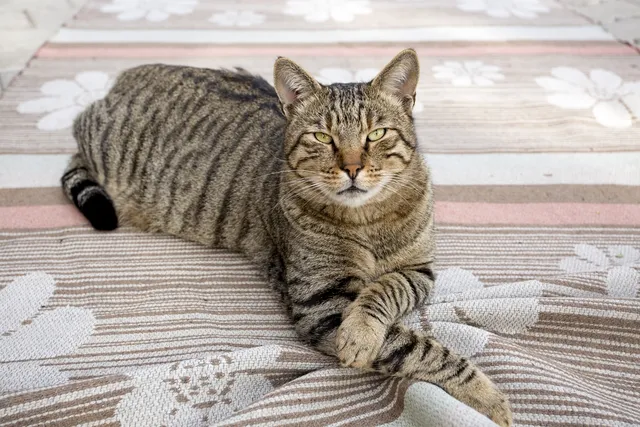
Brown tabby cats are extremely camouflaged in the wild, their dark brown coloring and unique patterning reminiscent of their African wildcat ancestry. These markings are perfect for hiding and make Brown Tabbies almost invisible in long grass.


5. Almost All Brown Tabby Cats Have a Distinctive “M” Marking

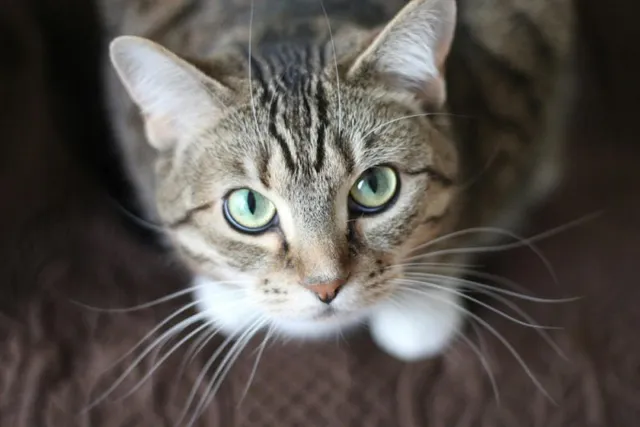
Apart from their striped markings, Brown tabby cats are characterized by a distinctive “M” on their forehead, a trait that can be seen on almost every tabby in some form, including brown and dark brown tabby cats. There are several different stories and myths of how this came to be, most of them stemming from religious origins. Some speculate that the marking came from the Islamic prophet Mohammed, who was allegedly fond of Tabbies and thus gave them the marking as a blessing. Christians and Catholics claim the same of Mother Mary, who blessed the cat for keeping baby Jesus warm.

The real reason, though, is genetics, and the “M” is a standard feature of all tabby patterns.

brown tabby cat
Image by: rihaij, Pixabay

6. They Are Highly Affectionate

While personality is difficult to link to coat color and markings, most cat owners agree that tabby cats are more affectionate than other coat types. This is especially true of both brown and orange tabbies, which are universally known for being particularly loving and affectionate cats. This trait of course also has much to do with individual cats and breeds—and almost all breeds have a tabby variation—but anecdotally, tabbies are generally highly affectionate cats.


7. Tabby Is the Most Common Coat Pattern

There are more cats with the tabby coat pattern than any other in the world. This is partly to do with the superior camouflage that the pattern offers and because the Tabby mackerel pattern was inherited from wildcats. Felis sylvestris lybica, the African wildcat, sometimes also referred to as Near Eastern wildcat, still lives today and has a similar appearance to domestic tabby cats, who have descended from them, with lighter sandy-colored coats.

divider cat paws oct 2024

Conclusion

There you have it – seven incredible facts about brown tabby cats! Which one was the most surprising to you?

You might also like:


Featured Image Credit: viper-zero, Shutterstock

Want content like this delivered to you?

Sign Up For Our Newsletter

News, insights, expert advice, and everything cat

* By submitting, you agree to our Terms & Conditions and Privacy & Cookies Policy.


How useful was this post?

Click on a star to rate (you can leave written feedback after clicking submit)

Help us improve Catster for pet parents!

Your feedback really matters.

What did you like about this post? Also how can we improve it?

Join the conversation

Leave a Reply

You’re very welcome to leave a comment or question. Please know that all comments must meet our community guidelines, and your email address will NOT be published. Let’s have a positive and constructive conversation.


Catster's Digital Magazine is Back!

Vet-approved health & behavior advice

Real cat stories & community features

Chatting With Dr. Matt McGlasson About Special Needs Kitties, Social Media Fame, and Rating Cat Toe Beans | Chatty Cattys, Episode 32

In this episode of Catster’s Chatty Cattys podcast, Dr. Karyn and Nicole sit down with a very special guest: veterinarian and social media...

Does Your Cat Need A Friend? How to Tell If Your Cat Is Lonely

Cats have a reputation for being perfectly happy on their own – independent, self-sufficient, and solitary. But, like many stereotypes, this one does...

Proof That Moving Cats Indoors Is Easier Than You Think

We know that indoor cats live longer and have significantly lower rates of illness and injury than those that spend part or all...

Why Cats Love To Get High

If you’re trying to find a cat in any home, the search almost always ends by looking up. They’ll be on top of...

More related

Nutrisource Cat Food Review of 2026: Recalls, Pros & Cons

Review Summary Nutrisource is an all-American pet food brand, and they’ve been making pet foods in the same small town of Perham, Minnesota,...

Can Cats Eat Caviar? Vet-Verified Benefits & Precautions

Have you ever wanted to give your cat an expensive treat, like caviar (raw fish eggs)? Before you open up the caviar jar,...

How to Cook Chicken for Cats: 5 Vet-Approved Recipes

Quality, store-bought cat food is formulated to give your cat everything they need to grow to be healthy and happy, but there may...

What Causes Limp Tails in Cats? Our Vet Explains

Has your cat appeared back at home with a limp tail? Has their tail gone limp after it got caught in the door?...

Keep reading

Weruva Patés Cat Food Review (2026 Update)

Review Summary You may be familiar with Weruva, as it’s a brand that’s been around since 2006, but you might not be as familiar with all their food lines. One of their lines is the patés line, featuring patés high...

Weruva Classic Cat Paté Review

How Much Should You Feed a Kitten? Vet-Approved Chart

Bringing home a new kitten is exciting but can also be overwhelming, especially for first-time cat owners. It’s very important to nail your kitten’s nutrition to ensure they grow up to be strong and healthy. If you’re not sure what...

siamese kitten eating from a stainless bowl

Fear-Free Vet: Vet-Verified Advantages, Disadvantages & FAQ

Vet visits have always been instrumental in promoting our pets’ health and longevity. But for most cats, the experience can be more stressful than anything. The strange setting and unwanted interactions with unfamiliar people make a perfect formula for anxiety,...

vet holding a cat

Can Cats Eat Nuts? Vet Approved Facts & Safety Guide

Cats can enjoy eating many different kinds of foods. With that being said, cat owners must still be mindful of what types of food and treats their cats eat because certain foods can still be bad for cats, even if...

Can Cats Eat Nuts

Pheromone Diffuser for Cats: Vet-Reviewed Pros, Cons & FAQ

Pet parents use pheromone diffusers to reduce stress and anxiety in cats. They release continuous streams of synthetic pheromones that can decrease anxiety and are frequently suggested as ways to manage unwanted stress-related behavior, such as marking and scratching. Cats...

Synthetic Pheromene Diffuser and Tabby Cat

5 Vet-Reviewed Reasons Why Your Cat Won’t Leave You Alone

Cats are unusual animals with some strange behaviors at times, but cat owners have learned their strange rituals and gotten to know some of the reasons behind specific behavior. Every pet parent adores cuddling and spending every minute of their...

ginger-cat-on-a-shoulder-of-its-owner

Is It True That All Cats Chirp? 5 Reasons Why They Do It

Cats use various vocalizations to communicate with us, and one of these vocalizations is the cute chirping sound you become accustomed to hearing when your cat is obsessed with a bird or bug on the other side of the window....

white cat chirping

Cats Peeing on Shoes: 7 Vet Reviewed Reasons & How to Stop It

Nothing is worse than slipping your feet into a pool of cat pee—in your own shoe. If your cat has made a habit out of weeing into your Nikes, you’re looking for solutions. But before you can stop the problem,...

tabby-cat-pees-on-shoes

Love Cats? So Do We! Join the Catster Community

Stay informed with expert pet care insights delivered straight to your inbox! Discover professional guidance on animal behavior, feeding tips, trusted product picks, and much more.


Sign up for the Catster Email Newsletter

Stay informed with expert pet care insights delivered straight to your inbox! Discover professional guidance on animal behavior, feeding tips, trusted product picks, and much more.