Ocicat vs Bengal: What’s the Difference? (With Pictures)
In this article
With their wild and exotic appearance, both the Bengal and the Ocicat look as though they’ve just stepped out of the jungle. However, both cats are domestic breeds, and their distinctive coats are the only “wild” characteristics. They are as loving, loyal, and affectionate as any other house cat.
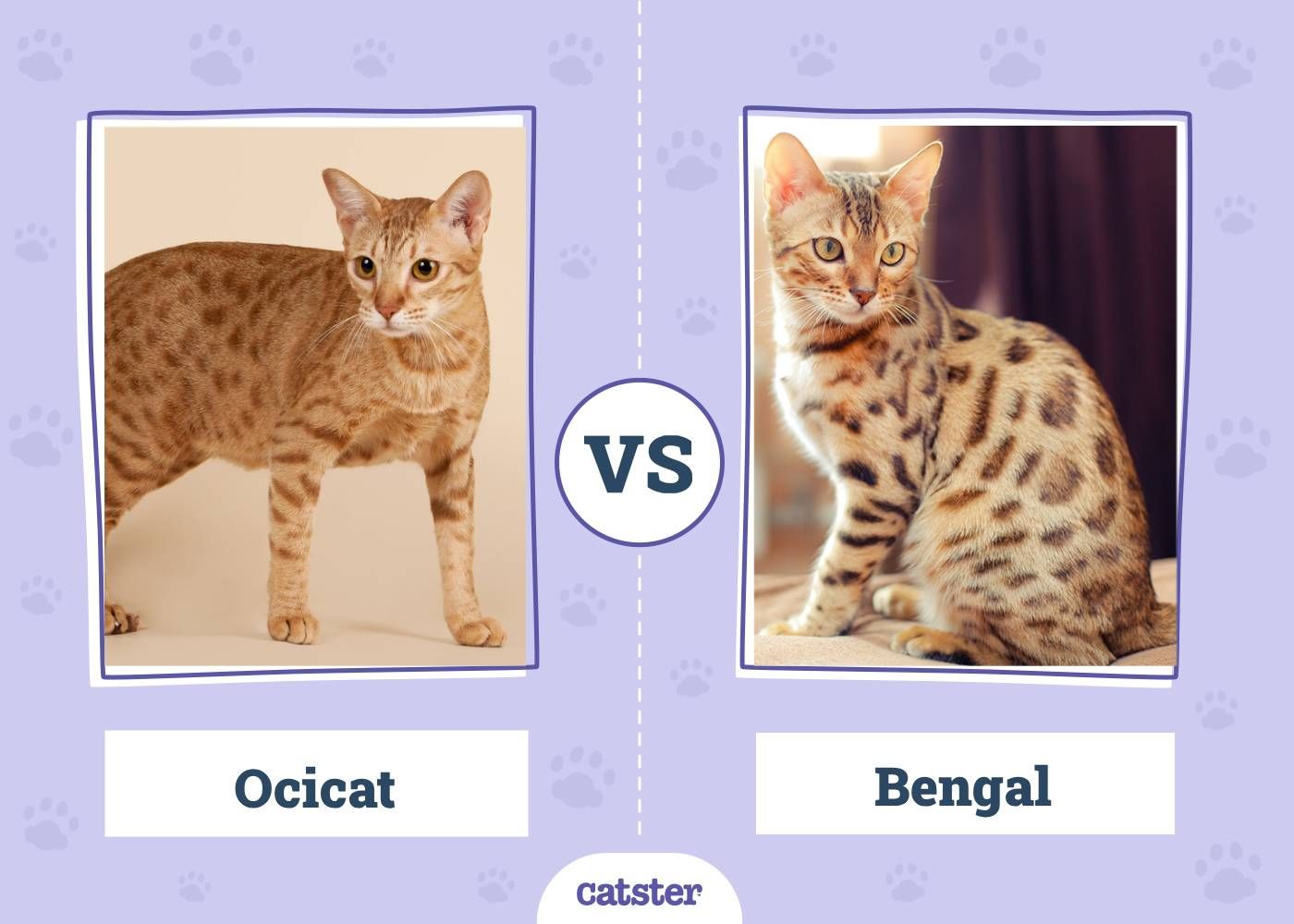
It’s easy to confuse the breeds since they both have distinctively spotted and striped markings, short coats, and large ears. It is their unique temperaments that make the distinction, but there are notable physical differences, too. In this article, we’ll take a closer look at each breed and detail what makes them unique.

Visual Differences

At a Glance
Ocicat Overview

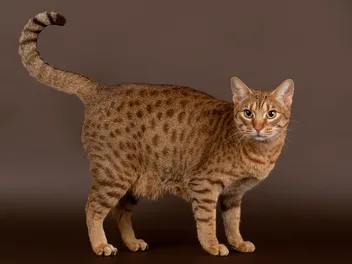
The Ocicat may look wild, but in reality, they are far from it. These cats are a fully domesticated breed, developed through crossing Siamese, Abyssinian, and American Shorthair breeds. They got their name from their resemblance to the small South American wildcat, the Ocelot, but they have no wild genetics.
The spotted and wild-looking coat resulted from a fortunate accident in a Seal-Point Siamese and Abyssinian crossing, and the Ocicat was born. They were recognized by the Cat Fancier’s Association (CFA) in 1987.
Personality / Character
The Ocicat may have a wild appearance, but they are domestic cats at heart, with loving, affectionate, and even-tempered personalities. They are social cats that love to be close to their owners and are happy to be handled, picked up, and cuddled. Ocicats are highly intelligent and easy to train and have been known to learn tricks with ease.
Their Siamese heritage has made them outspoken and vocal cats—albeit not as much as their Siamese cousins—and they are known to vocalize when they need food or attention. While Ocicats love attention as much as any domestic breed, they are not overly needy or demanding and are happy to do their own thing, too.
They are highly adaptable cats that can adjust to indoor and apartment living but don’t enjoy being left alone. Again, due to their Siamese genes, they benefit significantly from having a playmate around to prevent boredom and destructive behavior.
Training & Exercise
Ocicats are intelligent cats and are thus a breeze to train. They pick up commands quickly and will come when called. They can also be trained to sit, stay, fetch, and walk on a leash. They are outgoing cats who love interacting with their owners, so training sessions are highly anticipated daily activities.
They love toys, especially puzzle toys, which can keep them entertained and physically and mentally stimulated for hours. Incorporating some form of exercise into your Ocicat’s daily routine is essential for their health and good behavior.
A well-exercised cat is a well-behaved cat! Toys, interactive games, and climbing trees are all great ways to keep them entertained and exercised, especially if they spend most of their time indoors.
Health & Care
Ocicats have short and smooth coats, and grooming an Ocicat is a breeze. Weekly brushing is all that’s needed to remove dead hair, and bathing is rarely required. They have large, upright ears that can be prone to collecting dirt and grime, so be sure to check them regularly for any redness or infection.

The Ocicat is a healthy breed with few genetic diseases. However, they can inherit issues from the breeds used to create them. They may inherit kidney problems, such as renal amyloidosis, and hypertrophic cardiomyopathy has been seen in some Ocicats. More rarely, progressive retinal atrophy has been seen in the breed at times.
Suitability
The Ocicat is an ideal family cat! Despite their wild appearance, they are gentle and loving and make great companions for children, families, and seniors. They are friendly and outgoing felines who love to be around people, and they make fast friends with other cats and even dogs.
They are adaptable felines that can do well as indoor cats, and as long as they are getting sufficient mental and physical stimulation, they are a breeze to train, groom, and look after, with few hereditary genetic issues to be concerned with.

Bengal Overview

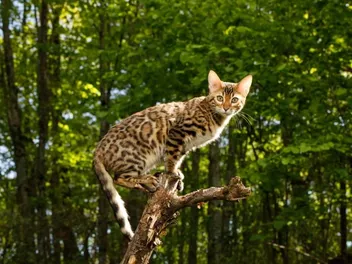
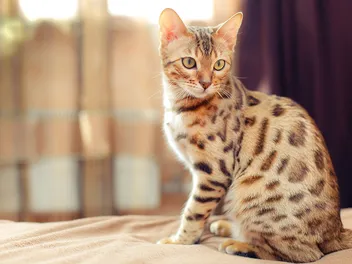
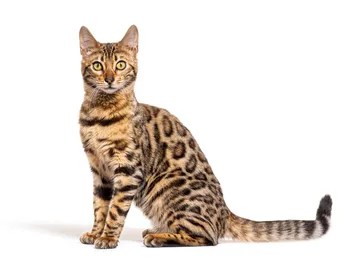
The Bengal, like the Ocicat, has a distinctively wild appearance, and although they have wildcat ancestors, they are domestic cats at heart. They were developed from the small Asian Leopard Cat, the Felis Bengalensis, from which they got their name and domestic shorthairs in the 1960s.
Even though Bengals have this wild cat genetic heritage, the breed must be four generations removed from any wild bloodlines, so they are domestic cats. The Bengal is a comparatively new breed and was only accepted by the CFA in 2016 but was accepted by The International Cat Association in 1983.
Personality / Character
Bengals are active and agile cats that love to climb, and you can often find them perched high above the action, quietly observing. Bengals are social cats that love to be around people and are known to bond strongly with their owners.
They are curious and playful felines that retain their kitten-like playfulness well into adulthood and love playtime with their owners. Unlike most cats, Bengals love water and are known to join in their owner's evening shower!
This could pose a real threat if you have a home aquarium, too. Bengals are affectionate and loyal cats but are not overly attention-seeking or needy and are far less likely to be up for cuddling than the Ocicat. However, they are still up for a cuddle on their owner’s lap when they are in the mood and are happy to be picked up and handled.
Training & Exercise
Bengals are brilliant cats that are easy to train. They can be easily taught commands like “sit” and “stay” and are known to walk on a leash with their owners. Their love for climbing makes a cat tree an essential item, and they love toys and games that mentally challenge them.
Puzzle toys, scratching posts, and “lure” toys are great ways for Bengals to remain mentally and physically stimulated since they can mimic their natural hunting and prey instincts. Bengals are large house cats, and they don’t have any unique requirements compared to other breeds.
Health & Care
Grooming a Bengal, like the Ocicat, is a breeze. They have a short, low-shedding coat, and weekly brushing is all that’s needed to remove dead hair and keep their fur smooth and shiny. Bengals rarely need to bathe unless they get excessively filthy, but they’ll love to get in the water nonetheless!

Bengals are a relatively healthy breed and suffer from few genetic disorders. Hypertrophic cardiomyopathy has been seen in Bengals, especially in older cats, as well as eye issues like progressive retinal atrophy and cataracts. Their large size and high activity levels make them somewhat prone to joint diseases, such as hip dysplasia and patellar luxation.
Suitability
The Bengal is a great family cat. They are suitable for families with small children and families with other cats and dogs. Bengals love to be around their owners and are highly affectionate, but they are not overly needy and are great for owners who are not always at home. They are intelligent cats that are easy to train and will learn commands quickly and easily, making them perfect for novice owners.
What Are the Differences?

The Ocicat and Bengal are quite similar, both in appearance and temperament. They are highly athletic and agile and have comparable intelligence and trainability. Minor distinctions can be made between the two breeds, however. The Bengal was bred from the Asian Leopard cat, and although breeding standards dictate that they must be at least four generations removed, the breed still retains “wild” habits, such as climbing and swimming.
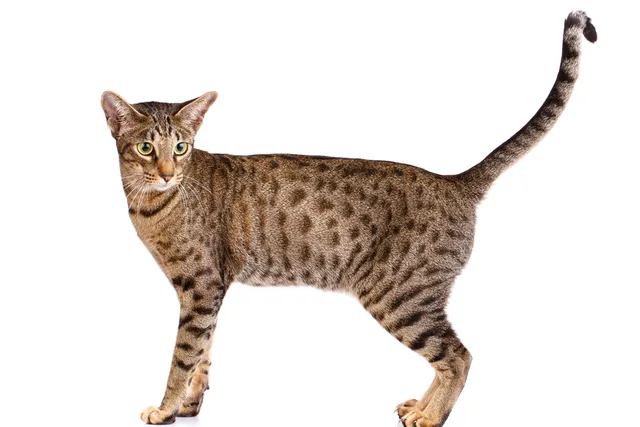
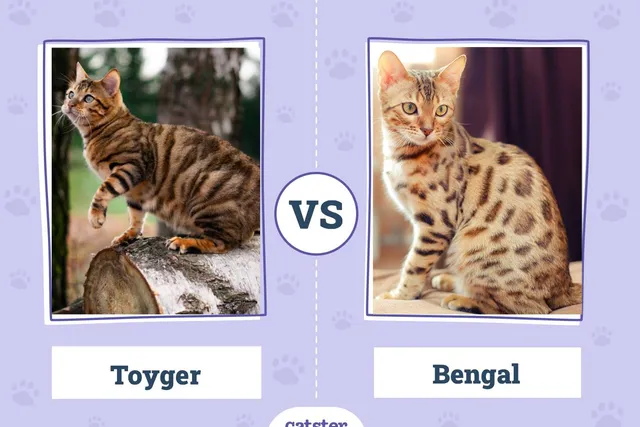
Bengal cats are typically found in a couple of pattern variations, whereas the Ocicat is found in over 12 different colors and patterns. Ocicats have distinctive spots throughout their body with occasional stripes, and the Bengal is more tiger-like in appearance. Both breeds are easy to train, but Bengals have more independence and stubbornness and are more content to be left at home alone.
See also:
Featured Image Credit: Left -dien,Shutterstock | Right - Shvaygert Ekaterina, Shutterstock
Expert cat care, straight to your inbox
News, insights, and useful advice, delivered to you.

No spam — unsubscribe anytime.
By signing up, you agree to our Terms & Conditions and Privacy & Cookies Policy.
How useful was this post?
Click a star to rate. You can leave written feedback afterwards. (We read all feedback.)

Christian started writing for a local newspaper as a teenager, and he's been involved in the publishing industry for most of his adult life. Combining his love of writing with a passion for animals, he is currently the Director of Editorial at Pangolia and the Editor-in-Chief at Catster.
Christian lives in the Philippines with his wife, son, and four rescue cats: Trixie, Chloe, Sparky, and Chopper.