Ocicat vs Egyptian Mau: Main Differences (With Pictures)
In this article
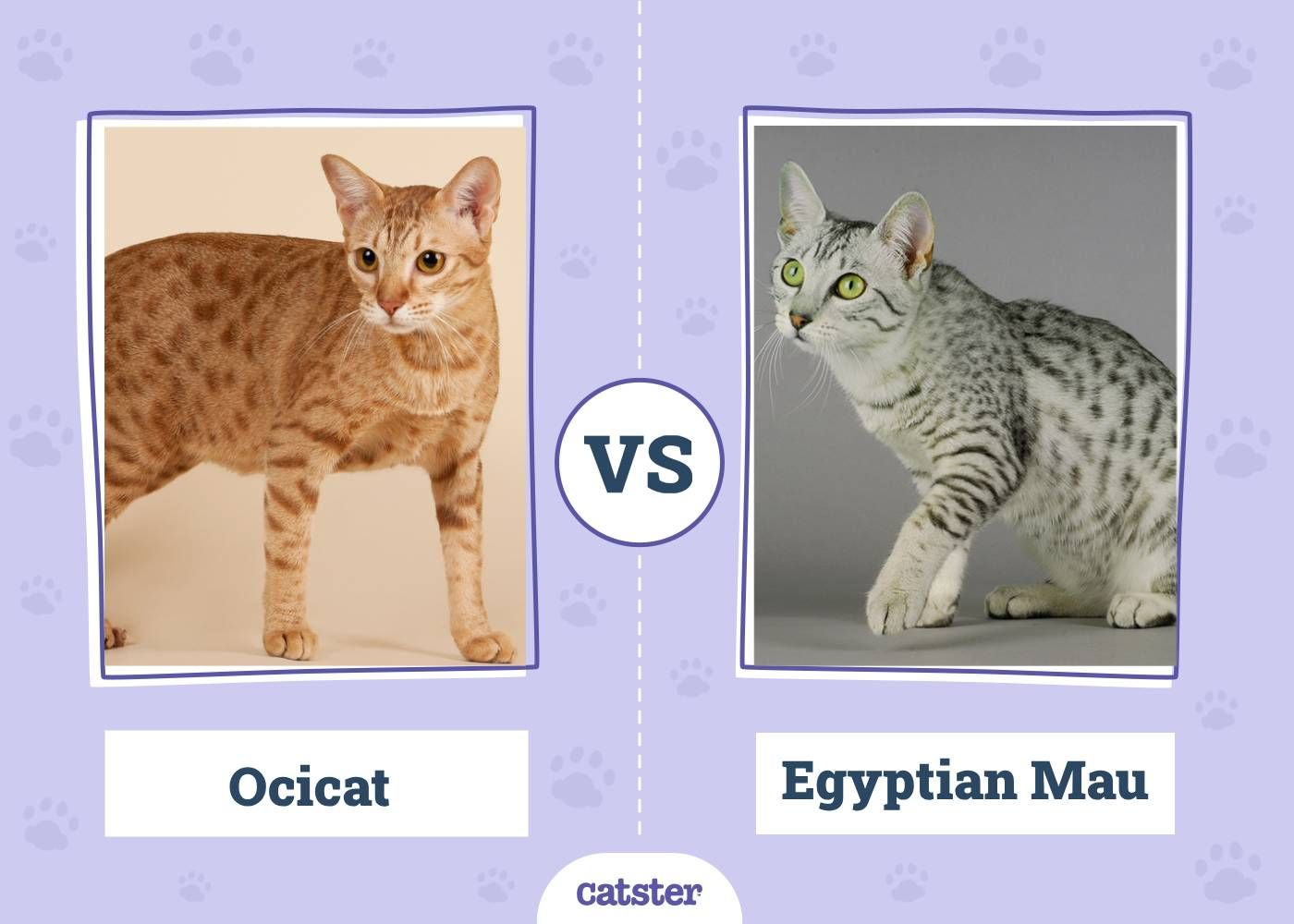
The Ocicat and Egyptian Mau should be top considerations for your next pet if you are looking for an exotic feline without the wild cat genes. Unlike hybrid cats like the Bengal or Savannah cat, these spotted cats are 100% domestic, leaving little doubt about how they’ll engage with people and pets.
The only question is which one is ideal for you and your family. Find out all these gorgeous breeds have to offer a loving home in this deep dive into the differences between the Ocicat and Egyptian Mau.

Visual Differences

At a Glance
Ocicat Overview

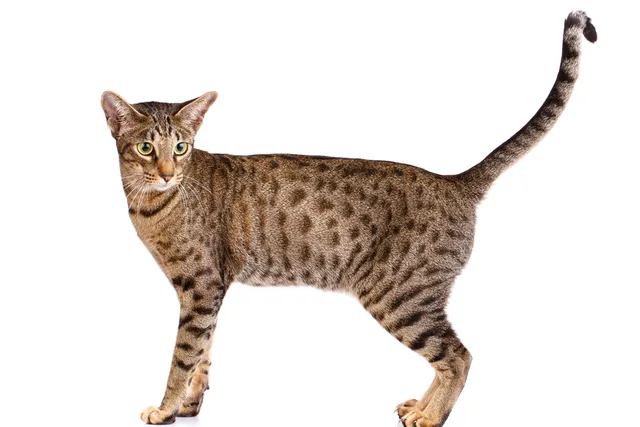
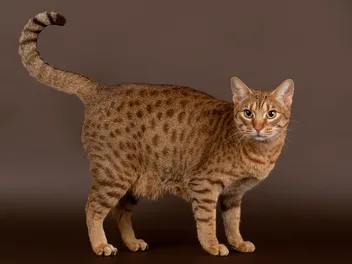
The Ocicat is well-known for their magnificent spots, but the unique coat arose by accident when the breed first appeared in 1964. Michigan breeder Virginia Daly tried to cross a Siamese and an Abyssinian to create a Siamese with Aby points. Though successful, Daly’s first litter included an unexpected spotted cat.
As he wasn't the desired outcome from Daly's breeding attempts, she neutered and adopted out the first Ocicat, Tonga. However, Tonga catalyzed interest in a new purposefully bred spotted cat. Further breeding for the Ocicat earned it CFA recognition in 1966.
Breeding waned the following decade but picked up significantly again in the 1980s. In 1987, the Ocicat achieved CFA championship status. Today’s Ocicats mix the American Shorthair alongside the original Siamese and Abyssinian parents, introducing silver coloration, bulkier bone structure, and greater muscularity.
Personality/Character
The Ocicat is an adoring feline. They’re confident, vocal, and outgoing and engage with anyone willing to show affection. Curling up with a stranger isn’t uncommon, and they thrive with other pets in the home. They are happiest in an energetic environment with companions to keep them busy. Although they are active, their even temperaments allow Ocicats to keep calm in various situations and easily stay in step with their housemates, whether playing or hanging out on the couch.
The extroverted character can be detrimental when Ocicats are alone during the day. They generally adapt well to changing circumstances, but between their energy level and social nature, they aren’t well-built to spend time without engagement. Lacking another animal or family member in the house, your Ocicat may become anxious or depressed when you leave for several hours.
Training
Like the Abyssinian and Siamese, the Ocicat is well-known for having a dog-like personality. They seek attention, are playful and energetic, love toys, and often enjoy swimming. Training is easy. With their high intelligence and devotion to their owner, Ocicats are receptive to more advanced teaching than many cats.
Ocicats respond to leash training, and you can teach them numerous games, tricks, and verbal commands. Fetch is an excellent way to bond and expend energy. The cats may keep up with clicker training and learn to respond to sit, stay, and come commands with practice, patience, and positive reinforcement.

Health & Care
Ocicats are low-shedding and short-haired, allowing for a simple grooming experience. Weekly brushing with a rubber brush will work the skin, remove loose hair, and distribute the body oils. Otherwise, a chamois cloth is all you need to keep the coat healthy and shiny. They are typically open to getting in the water if you need to give them the occasional bath, making the process much easier.
The Ocicat is a long-living breed prone to few genetic disorders. The primary issues related to Ocicats and their parent breeds involve heart and kidney disease and, in rare instances, progressive retinal atrophy. Illnesses that may be more likely to appear include:
- Renal amyloidosis: A buildup of amyloid protein in the kidneys, which, though rare, affects Abyssinians with a genetic mutation
- Hypertrophic cardiomyopathy: A thickening of the heart’s walls that could lead to failure
- Pyruvate kinase deficiency: An enzyme deficiency seen more commonly in Abyssinians that results in fewer red blood cells and subsequent anemia
Suitable For:
Since they’re easy-going, intelligent, and friendly, Ocicats will delight almost anyone. However, if you can’t give them the attention they deserve, either through you, a family member, or another pet, bringing one into the home would be a disservice to the cat.
The best home has somebody to entertain your cat and plenty of enrichment activities like puzzle toys, games, and cat trees. And don’t rule Ocicats out if you have allergy sufferers. Though not 100% hypoallergenic, they are much friendlier to those with allergies than most breeds.
Egyptian Mau Overview

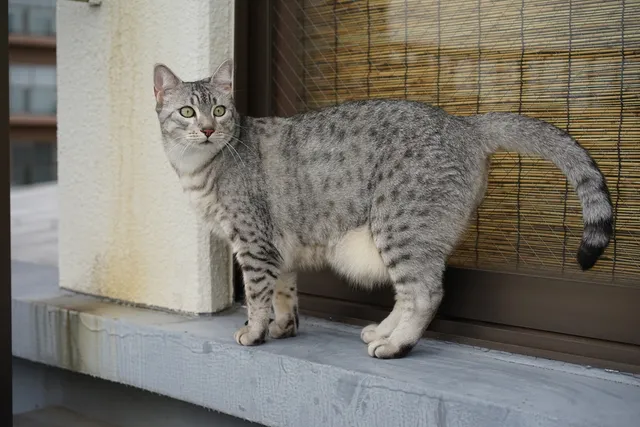
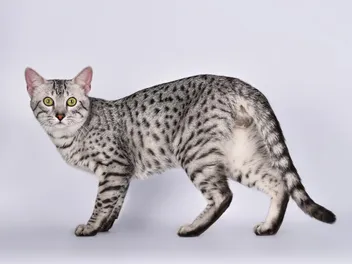
While the Ocicat is the only 100% domestic breed created for their spotted coat, the Egyptian Mau is one of the few naturally spotted domestic cats. The Egyptian Mau’s cloudy history reaches back over 4,000 years. There’s much debate around their regional origin, but most consider them an Egyptian breed due to similarities to ancient depictions and artifacts.
Early cats, including the Egyptian Mau, were rat catchers protecting food in the fields and storage areas. The Mau may have even filled additional duties as a hunting companion. Though we know little of their spread over the generations, Maus were likely at least bred around France and Italy by the 20th century. Yet, the modern Egyptian Mau owes most of their existence to the work of Russian princess Natalie Trubetskaya in the mid-1900s.
As pet numbers dwindled in Europe from the strife of WWII, the Egyptian Mau was in danger of extinction. In the early 1950s, the princess, exiled in Rome, received the first of her Egyptian Maus and immediately set about revitalizing the breed. She moved to New York City from Italy in 1956 with three Maus in tow. With these, she founded the Fatima cattery and began regrowing the cat population.
Personality / Character
Unlike the Ocicat’s boundless affability, the Egyptian Mau’s approach to people is much more measured. They are fiercely devoted to their family and will typically forge a unique bond with one person. Outside the immediate circle, Maus are aloof without being aggressive. Strange people and pets may need to work to earn the Mau’s trust, but they can eventually become good friends with the cat.
Intelligent and even-tempered, the Egyptian Mau doesn’t make life difficult for owners. They are highly energetic and athletic. Games are a huge hit, particularly those that involve chasing toys and engaging their prey drive. Their vocalization is moderate, typically involving only a few chirps, chortles, and light meows to gain attention and show excitement.
Egyptian Maus shower affection on their people and display plenty of confidence in their domain. They have their idiosyncrasies and will often insist on doing things their way. As a positive, that independence makes them less susceptible to anxiety than Ocicats when they’re alone. Expect an active curiosity and exploratory nature to enhance their playful, fun-loving attitudes.
Training
Egyptian Maus are exceptionally bright, giving you more room to test their tolerance for training. They love playing games like fetch. Over time, you can leash-train them and teach them commands and tricks like shaking or rolling over.
Proper training and an environment with sufficient enrichment activities are essential in setting boundaries and keeping your cat well-behaved and content. Egyptian Maus aren’t hyper but are energetic and demand frequent activity. They can jump, climb, and run with the best of them, often making their perches on top of fridges and high shelves. Ideally, a Mau’s home will have abundant cat trees, puzzle toys, and games to help them focus their energy in positive directions.

Health & Care
Egyptian Maus are moderate shedders at most, requiring little grooming. Nail trimming, teeth brushing, and ear and eye checks are no less crucial with these cats, but brushing only needs to happen about once weekly to remove dead hair and dirt. A curry brush or grooming gloves are excellent tools to massage the skin and remove debris from their short coats.
Although Maus aren’t overly susceptible to genetic health issues, a few conditions appear more frequently. The breed is more prone than others to certain infections and, like the Ocicat, may be more likely to develop hypertrophic cardiomyopathy and pyruvate kinase deficiency. Urate urolithiasis is prevalent in the breed. Uric acid stones develop in the urinary tract, potentially causing pain, bloody and cloudy urine, and tract blockage.
Suitable For:
The Egyptian Mau is another dog-like cat that provides a wealth of love and affection. They will easily transition from playtime to cuddles, though they prefer the latter, and their independent nature allows them to handle alone time for a few hours in most cases. Although generally relaxed and gentle with children, they are sensitive. Loud noises and overly aggressive play can be stressful, so you may consider getting a Mau when the kids grow up a bit.
Which Breed Is Right for You?

Ocicats and Egyptian Maus are similar in their exotic looks and delightful, people-loving temperaments. With Ocicats, you have pets that need no introductions to make new friends. They accept anyone with a caring touch, though they can also become stressed if they don’t have anybody. While Egyptian Maus are more standoffish, they show more independence, making it easier for them to adapt. Regardless of which spotted cat breed you choose, you can be sure you’re getting an openly affectionate, playful, and highly intelligent pet. When you provide love and attention, they’ll return the favor in spades, gracing the home and your family with an uplifting spirit. See also:
Sources
Featured Image Credit: Left -dien, Shutterstock | Right - COULANGES, Shutterstock
Expert cat care, straight to your inbox
News, insights, and useful advice, delivered to you.

No spam — unsubscribe anytime.
By signing up, you agree to our Terms & Conditions and Privacy & Cookies Policy.
How useful was this post?
Click a star to rate. You can leave written feedback afterwards. (We read all feedback.)

Christian started writing for a local newspaper as a teenager, and he's been involved in the publishing industry for most of his adult life. Combining his love of writing with a passion for animals, he is currently the Director of Editorial at Pangolia and the Editor-in-Chief at Catster.
Christian lives in the Philippines with his wife, son, and four rescue cats: Trixie, Chloe, Sparky, and Chopper.